Comments
Spoiler warning: this review contains spoilers for The Altruists.
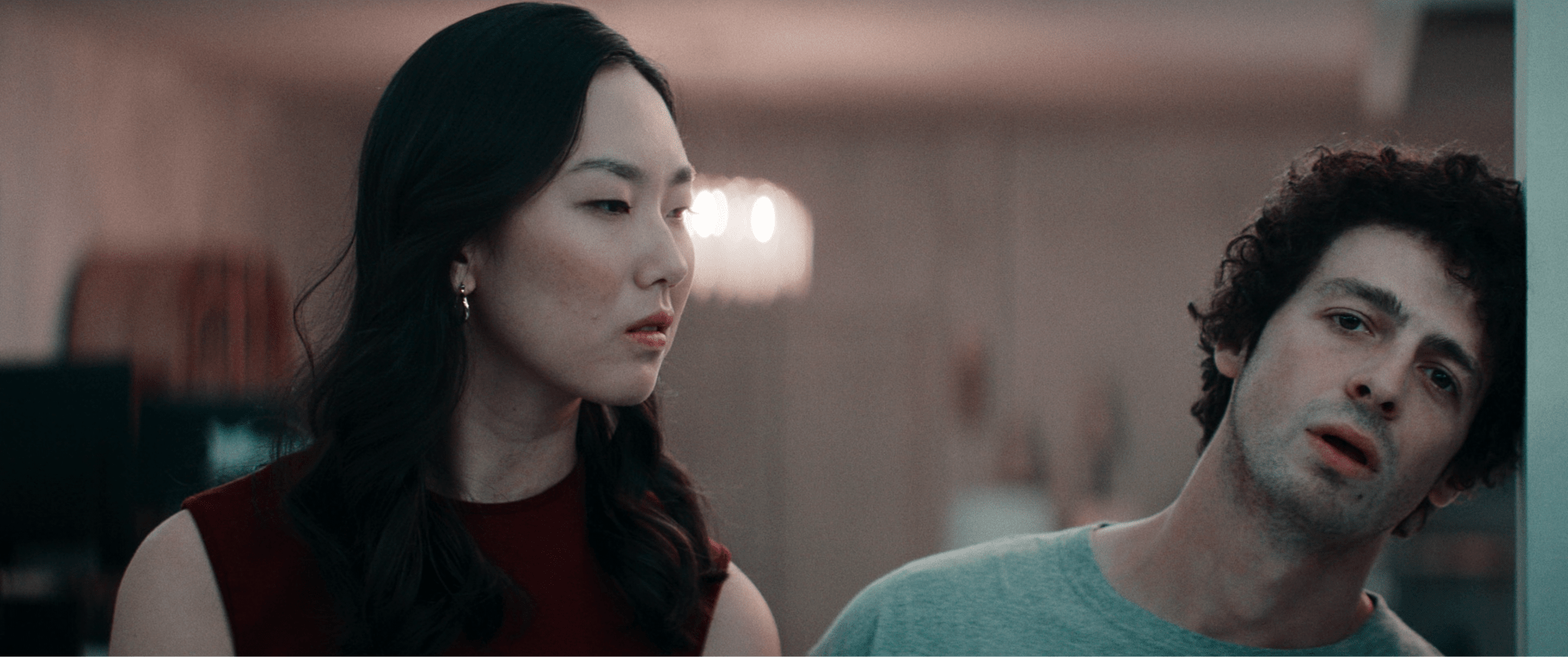
Based on the little I know about the true story of FTX, Netflix’s new show The Altruists feels like a wacky cartoon loosely inspired by true events. The main characters, fictionalized versions of former FTX CEO Sam Bankman-Fried and former Alameda Research CEO Caroline Ellison, don’t — as far as I know — think or talk like the real Sam Bankman-Fried or Caroline Ellison. In fact, I’m pretty sure these characters don’t think or talk like any real human beings who have ever existed. The dialogue is vaguely reminiscent of a multi-camera sitcom like The Big Bang Theory. It’s unnatural, goofy, and too on the nose — a crude pastiche of how nerdy people talk, rather than a realistic portrayal.
As an example, in a tender scene on an airplane, the fictionalized Sam Bankman-Fried confesses, with embarrassment, to the fictionalized Caroline Ellison that he’s afraid of flying, even though he knows, statistically, the odds of crashing are low. With complete earnestness, he asks her, “Have you ever felt something that doesn’t make mathematical sense?” By way of response, Caroline writes out the Bernoulli equation on a piece of paper to explain how airplanes generate lift. That seems to reassure Sam. (Even though the statistics didn’t? Why does more math help?) The couple holds hands. Gentle, inspiring music plays. I believe the word for this is “twee”.
Apparently quite unlike the real people they’re based on, the show’s two protagonists are depicted as innocent, pure, and even child-like — a pair of well-meaning ingenues. It’s an odd choice. Maybe more than anything else, this makes the show feel like an alternate universe fan fiction inspired by the FTX story, rather than a dramatization of what actually happened. Our fictionalized Sam and Caroline feel like two adorkable kids who kind of accidentally got into big trouble.
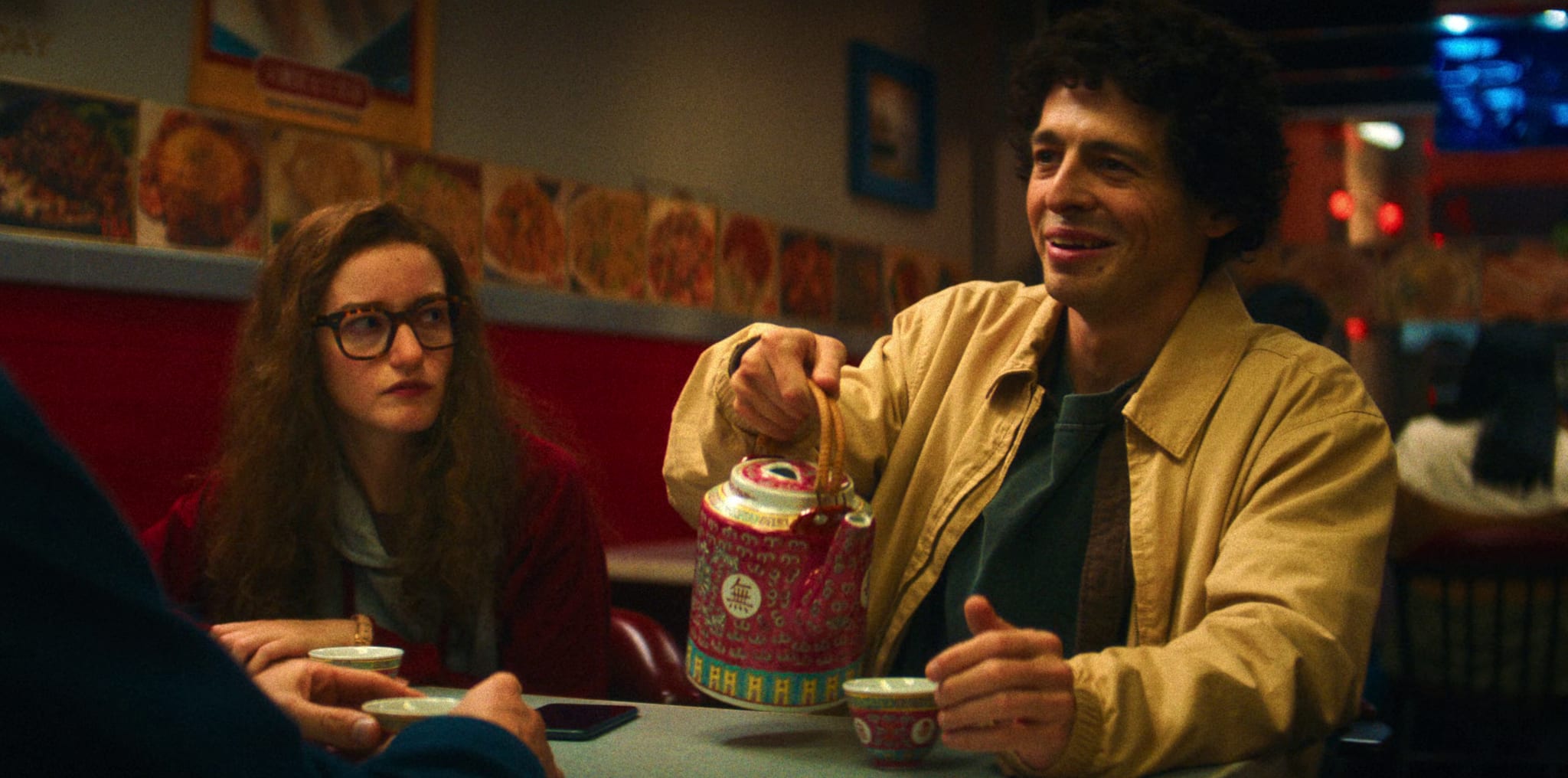
In the first scene that shows us what Sam Bankman-Fried's life is like as CEO of FTX, he’s pestered by employees while he attempts to do a phone interview with Bloomberg. For some goddamn reason, his employees don’t leave him alone during the interview. (It doesn’t really make sense.) They surround him and desperately try to engage him in multiple conversations at once while he’s on the phone. Their urgent concerns include getting some Diet Coke to Katy Perry, who FTX has hired to perform at a company event. (I don’t know why you need CEO-level approval to get Diet Coke.)
This fictionalized Sam Bankman-Fried is earnest, gentle, and put-upon. He’s also brilliant. He apologetically ends the call with the Bloomberg reporter and abruptly rattles off solutions to each of the employees’ different problems in rapid succession. Apparently, while attempting to interview with Bloomberg, he was also solving their problems in his head. Katy Perry will get her Diet Coke!
Contrast this with the real Sam Bankman-Fried. During his first TV interview, Bankman-Fried reportedly multi-tasked by playing a video game, maybe League of Legends. This was apparently a habit: he played League of Legends during an important investor meeting. (Incidentally, Bankman-Fried apparently only attained Bronze tier in League of Legends, which would have put him in the bottom 30% of players at the time. Maybe it’s true what they say: multi-tasking makes you worse at both things!) The Altruists shows us a Sam Bankman-Fried who earnestly tries to focus an interview but whose employees — unbelievably — won’t let him. Playing video games during interviews and meetings indicates something bad: maybe recklessness, poor impulse control, a worrying level of disinhibition, or contempt for other people. We don’t really see that version of Sam Bankman-Fried in The Altruists. Instead, we mainly see a shy, doe-eyed, tender-hearted boy who wants to do the right thing and who has fallen in love with a girl for the first time.
Although the show sort of lets Sam Bankman-Fried and Caroline Ellison take turns being “the bad guy”, overall it seems to want to insinuate that Caroline, more than Sam, masterminded FTX’s shady moves and financial crimes — at least up until the very end. We sort of see Caroline pull Sam’s innocent heart down the path of corruption, at least more than he does to her.
Based on their respective prison sentences, I’m fairly certain the courts came to a different conclusion about who was more responsible. (Moreover, this storyline seems to play into an unfortunate romance trope where devious women callously break the hearts of innocent men, seemingly much more frequently on screen than the inverse.) Similarly, Caroline, more than Sam, is depicted as the one pushing for riskier and riskier bets. But we know from a public interview that Bankman-Fried had a gambling addict’s attitude toward risk.
By the end of the show, the Sam Bankman-Fried character takes a darker turn, doubling and tripling down, while spinning ego-defensive narratives. Meanwhile, the Caroline Ellison character shows more self-awareness and regret. So, ultimately, by the end, there is a sort of role reversal. Yet Caroline is dubiously portrayed as having more responsibility than Sam for the original crime and cover-up.
The philosopher Will MacAskill, a co-founder of effective altruism, appears in the fourth episode to deliver dialogue about morality to Sam and Caroline. Although it’s narratively useful to have a character be the show’s conscience, in my understanding, nothing like this ever really happened. MacAskill seemed to eagerly embrace the money from FTX from the very beginning — after all, he helped popularize the term “earn to give”. MacAskill reportedly waved away the concerns that were brought to him about FTX and Sam Bankman-Fried, since to him they sounded like unverifiable rumour. When FTX finally collapsed, he claimed to have been blindsided.
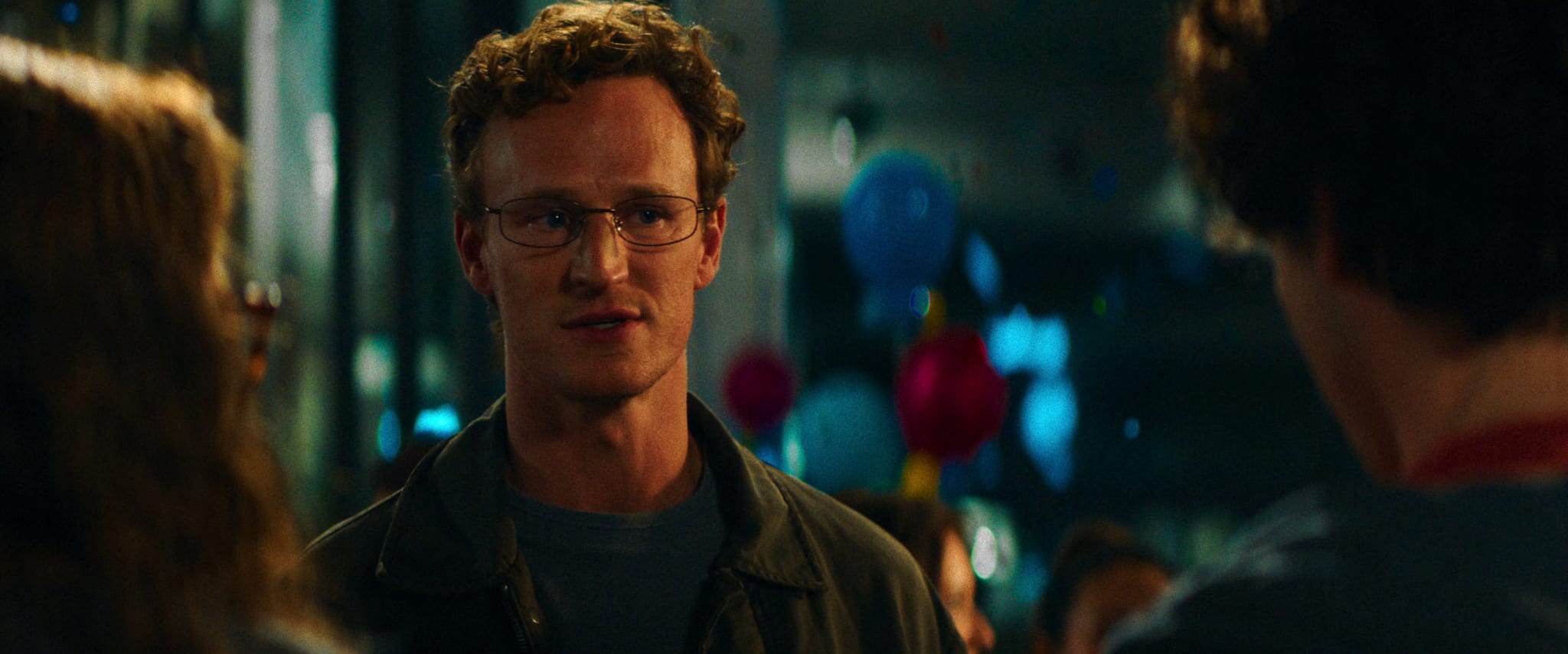
Evidently, many parts of the show are completely fictional, including the dramatic subplot where the CEO of Binance pressures FTX to commit a financial crime called front running. One reviewer argues that even the romance between Sam and Caroline at the centre of the show didn’t really exist in the way it’s shown on screen. The show insinuates Sam was so in love with Caroline that he let her lure him into corporate wrongdoing. Or at least, it wants us to believe the two somehow egg each other on. Sam and Caroline’s intoxicating romance — “magic to make the sanest man go mad” — launches them into a spiral of corporate irresponsibility. If no such grand romance actually existed, then — in a very deep sense — The Altruists isn’t really the story of FTX.
So, in The Altruists, we have less of a docudrama grounded in facts and more of an imaginative fanfic inspired by FTX. What if we just accept that and move forward with the understanding that it’s a fanfic? Can we still learn anything about real life effective altruism? The show misses the mark in terms of accuracy in so many ways: how nerdy people actually talk, the true story of FTX, and — as I have barely touched on — a lot of its discussion of real world ideas (e.g., the recurring theme of feelings vs. mathematics), which tends to be quick and shallow. And yet…
The Altruists — surprisingly! — hits the bullseye when it shows us how effective altruists like Sam Bankman-Fried and Caroline Ellison can feel the excruciating pain of not belonging, of not being accepted. The show is often too goofy for me to take seriously, but when Caroline feels awkward and out of place at a bachelorette party, that sucked the air out of my lungs. At the party, Caroline is the odd one out. She doesn’t fit in. And she’s not really wanted or accepted there. At Alameda, she’s the boss — the queen — but at the party, she’s reduced to feeling small and left out.
Sam explicitly tells us how he feels. In a session with his therapist, Sam describes how his parents always looked at his childhood friend Nishad with pride and admiration, but not their own son. Sam longs to be “a normal person”, but he’s convinced he’s not, and never could be. So, instead, Sam found his salvation in entrepreneurship and effective altruism:
Then I figured, fuck it, you know? Like… If I’m not normal, I can be special. I’m not just gonna do good. I’m gonna do the most good, but then when I fail, I feel like… that’s when people can, like… they like… they see me… who I really am.
This feels like the truest and deepest part of the show.
Young people sometimes come to effective altruism with a sense of deep shame and vulnerability, like our fictionalized Sam. There are a hundred different reasons — all of them false but persuasive — why someone can feel like they’re not normal, and like they don’t belong anywhere. They might be autistic or have social anxiety.[1] They might have experienced severe childhood bullying. They might have grown up with abusive or neglectful parents — or just parents who imparted them with a lot of shame and stigma.
Effective altruism often attracts a nerdy and weird crowd, so it can be a great source of community for nerdy, weird people. It also tantalizes recruits with the possibility of extraordinary achievement and super sophisticated esoteric knowledge, which can deliver that feeling of specialness that Sam talked about. Don’t just do good, do the most good. Don’t just solve problems, solve the world’s most important problems.
When I look around effective altruism, I detect this ache beneath the surface. The feeling of not being good enough, not being “normal”, not being acceptable, not being okay as you are. As often occurs in other walks of life, many effective altruists seem to have decided that the cure to a feeling of inadequacy is a sense of superiority. But, as the emotions researcher Brené Brown says, superiority and inadequacy are just two sides of the same coin. Both are shame-driven and evince a lack of grounded confidence.
The extent to which effective altruists indulge in feeling special and superior occasionally reaches absurd heights. A recent post featured on the Effective Altruism Forum asserted — without evidence or argument — that it’s “plausible” that effective altruists and employees of AI companies are among the few people on Earth who actually exist. In this telling, all the other 8.3 billion or so people who appear to exist are nothing more than illusions created by the computer simulation in which we supposedly live. Effective altruists are quite literally the centre of the universe, and almost everyone else is irrelevant.
The post received a generally positive reception. The Centre for Effective Altruism employees who run the Effective Altruism Forum decided to promote it to the forum’s readers, featuring it as one of the best posts on the forum.
There are healthy alternatives to the desperate attempt to feel special that Sam describes. Among the most important are shame resilience and self-compassion. Rather than a hierarchical, zero-sum mindset on human worth, we can embrace a more expansive view of love. Ironically, effective altruism has its roots in humanitarianism, where this non-hierarchical view has often been strong. Paul Farmer, a co-founder of Partners in Health, expressed the humanitarian ethos beautifully when he said, “The idea that some lives matter less is the root of all that is wrong with the world.”
Self-licensing is a thought process that goes: I’m a good person generally, so I can do a bad thing in this one instance. Self-licensing is dangerous because it’s such a convenient and alluring excuse for bad behaviour.
In The Altruists, Sam and Caroline have an argument about whether to commit the financial crime of front running. Sam is having a crisis of conscience. (Sam’s suddenly powerful conscience seems out of place in the show. It just appears out of nowhere. We don’t see any evidence of such a strong conscience in his behaviour before this crisis or after.) Caroline tries to persuade Sam to do the front running by saying, “I’m a good person. You’re a good person. You’re doing good for the world.” Sam ripostes, “Yeah, because we don’t fucking front run, okay?”
This is a beautiful little encapsulation of self-licensing. Caroline’s logic is: we don’t normally commit crimes and we do a lot of good things, so committing a crime this one time is fine. In this moment, Sam’s logic is: either we stick to our principles or we don’t. Our track record, our intentions, and the other things we do don’t make a difference. Front running is wrong, period.
In real life effective altruism, self-licensing is one of the most frequently employed defense mechanisms against the idea that something might be wrong in the movement, such as sexual harassment, racism, or avoidable mistakes borne of epistemic trespassing. Often combined with “the ends justify the means” reasoning, effective altruists frequently downplay or hand-wave away problems rather than work on solutions. The reasoning is exactly what Caroline said in the show: we’re good people, we’re doing good for the world, and so this one little problem doesn’t matter. It would be wonderful if more effective altruists would give Sam’s riposte: a generally good track record does not excuse you for doing something wrong, even once.
When you combine self-licensing logic with the sense of superiority and specialness described above, there’s almost nothing effective altruists can’t talk themselves into excusing. Such as…
The Altruists is a story about characters who continually make more and more reckless decisions, forever doubling down on risk — both legal and financial — rather than ever easing off the gas pedal. While they dress up their decisions in the language of rationality, it’s apparent that there is no rational justification for their choices, either based on ethics or even from a purely selfish, amoral point of view. The Sam Bankman-Fried and Caroline Ellison characters — and, to a lesser extent, their enablers — repeatedly exercise terrible judgment. It seems to come from just wild impulsiveness, disorganized thinking, or severe emotional dysregulation. As circumstances around them descend into madness, rather than pull back, their own inner madness drives them to steer again and again deeper into the storm.
In real life, effective altruism has largely gone the same way. Earlier this year, after the real life Caroline Ellison was released from prison, an EA charity called Manifund hired her… to manage its finances. I’m not joking, this really happened. After she perpetrated an $8 billion fraud while doing similar work, an EA charity decided to put her in charge of developing the financial platform it uses to raise funds from donors and redistribute them to other charities. You can’t make this stuff up.
The rationale for the decision is worse than just reckless, it’s brazenly corrupt. FTX gave millions of dollars to various charities, including Manifund. After FTX went bust, most charities voluntarily returned the money. Manifund refused, so it’s being sued for $1.5 million. The CEO of Manifund, Austin Chen, said because of this money, he feels “a keen debt” to FTX and to Caroline Ellison. In a list of reasons for hiring Ellison at Manifund, his “keen debt” to her was number two. Number one was that he liked her Tumblr.
At Manifund, Austin Chen also gave a work trial to Nishad Singh, FTX’s former head of engineering who pleaded guilty to criminal charges of fraud but avoided prison time. Sam Bankman-Fried will be in prison for a long time, so Manifund can’t hire him. But if Austin Chen had the chance to do, he probably would. Last year, long after Sam Bankman-Fried’s criminal trial had concluded, Chen defended Bankman-Fried and said, “We should free SBF and put him to work.”
Hiring Caroline Ellison to manage finances at an EA charity — particularly based on a “keen sense of debt” to her over ill-gotten gains from FTX — is a crazy and unethical decision. While many individuals in EA voiced strong criticism in response to Manifund’s announcement, EA organizations and EA leaders have mostly stayed silent. Little action has been taken. The Centre for Effective Altruism (CEA) has banned Manifund from promoting itself through programs the CEA runs, such as “recruiting booths” at EA conferences organized by the CEA. However, Austin Chen and Caroline Ellison are not personally banned. No further sanctions have been imposed by the CEA or any other EA organization.
In The Altruists’ final scene, Caroline finally tells Sam she loves him. Even as the Bahamian cops cuff Sam, he smiles, eyes full of tears. (Shoutout to the actor Anthony Boyle, whose ability to access emotion and convey it to us is incredible.)
Ultimately, it’s all about love. And I don’t just mean The Altruists. I mean everything. This is what effective altruism has forgotten, or never properly learned.
Love is not an extra, not a “nice to have”, not an indulgence, not a luxury good. It’s the whole ballgame.
There is no such thing as good in the absence of love. No matter how we might try to fight or escape it, everything will always still revolve around love — or its lack. Good intentions and good ideas are meaningless in the absence of real love. And maybe that’s the truest thing The Altruists can say. That it was all about love all along.
Take a drink every time one of these things happens:
I’m somewhere between the average neurotypical person and the average autistic person. I’ve also had the fortune of loving and being close to several autistic people throughout my adult life.
In the LGBT community, of which I’m a part, acceptance of autism is sky high compared to the straight world. Part of this is that the LGBT community just tries really hard tot be accepting in general. There are also some interesting statistics about how a disproportionate number of autistic people are trans or non-binary and, conversely, a disproportionate number of trans and non-binary people are autistic. In the trans community, at least in my experience, autism is so normalized that you can almost forget it’s stigmatized in the outside world.
I wonder if autistic people in the straight world feel like they belong in the EA community because it’s more autism-friendly than most social contexts. Plus it seems — just based on gut feeling — to have an above-average amount of autistic people. Acceptance and belonging are fundamental human needs and autistic people deserve communities where they can relax and be themselves. On one hand, it’s nice if the EA community can provide that. On the other hand, it’s sad because the EA community offers such a conditional and tenuous form of acceptance, which is based on how much you can convince people you’re useful to the cause. To be valued as a means to an end rather than end in yourself is not true belonging.
As the emotions researcher Brené Brown says in her book Braving the Wilderness, true belonging also requires authenticity, autonomy, and a concept psychologists call differentiation — the ability for connection and warmth to exist across difference and disagreement. In the EA community, the conditions for true belonging are not really there. There’s too much pressure to conform, too many tactics of psychological control, and too little tolerance of difference and disagreement.