Comments
by Nick Allardice, GiveDirectly CEO
The New York Times reports that “between $37b and $100b could become available to charities annually” from a wave of wealth generated by rapidly growing AI companies like Anthropic and OpenAI.
We’ve been speaking to a number of existing GiveDirectly donors in the AI space about what they expect will happen. While we’re skeptical that giving will be that high, it is likely very large sums of philanthropic money will move from AI and other sources over the coming years.
We’ve already seen billion dollar gifts go to global health and development. And there’s meaningful interest in reducing extreme poverty with cash transfers. Donors have told us they're drawn to the combination of (a) evidence and cost-effectiveness, (b) how fast a donation improves lives, (c) simplicity and dignity, and (d) the potential to rapidly scale.
Cash transfers can scale more effectively and quickly than most interventions: it’s technology-enabled, has no fragile equipment, and no clinical staff to train. That’s why when COVID hit, nearly every country on earth sent out cash, paying 1.4 billion people worldwide. And there’s no shortage of who GiveDirectly could help: over 800m people live in extreme poverty and the cost of lifting them above that line has been put at ~$340b a year.
But the potential to scale is not the same as the ability to do so.
At the end of last year, GiveDirectly had the ability to deliver ~$500m in 2026 through our existing operations, far more than we had in donations to deliver. But that is far less than what this new AI wealth has the potential to fund and far less than our maximum potential. We’re determined that our ability to scale will never limit how much philanthropy goes directly to people in need.
At the same time we need to responsibly balance the impact, cost, risk and reward of doing that work alongside our normal operations.So we’re making a set of no-regrets investments - funded by private donors rather than general donations (including from GiveWell) - aimed squarely at the bottlenecks that money alone can’t fix on short notice. Cash can buy a lot, but it can’t instantly buy regulatory approvals, large strategic partnerships, bespoke technology, or new suppliers.
Our goal: have the ability to confidently absorb $5 billion (or more) per year by 2028 - 10x our capacity at the end of 2025.
To be clear: we’re not assuming we’ll receive that much funding nor betting our future on it. Our scale-up investments are sized so that if the AI philanthropic wave never comes, we've still built a better, leaner, more resilient GiveDirectly. And if it does, we are ready to deliver it to people in poverty.
Getting even a fraction of that amount into the hands of people in extreme poverty would mean millions more families able to meet their most basic needs. The cost of preparing and being wrong is small. The cost of not preparing and being wrong is enormous.
Below are our first investments toward that goal, and the six hard questions they’re designed to answer.
Importantly, readiness alone doesn't move money. Even as we build the pipes to deliver billions, we still need the dollars to flow through them - your donations are more important than ever to fill this capacity!
—-
We cannot simply deliver billions through those same systems we’ve used to date. GiveWell laid out our scaling challenge well in a recent podcast:
“[GiveDirectly has] a very intense recruitment process. They’ll physically visit these villages, they’ll manually enroll people, and they’ll check people's ID cards to make sure that the person they want to give cash to is indeed that person… It's not trivial to massively scale that up because you need to hire people, you need to physically get to these villages.
One question we're discussing: is there a more scalable recruitment model? Are there ways we could use digital tools to enroll people remotely? What would the trade-offs be if we did that? Would there be an increased risk of fraud? Would there be an increased risk of exclusion where legitimate people are just excluded because they don't have phones?” - Adam Salisbury, Senior Program Officer at GiveWell
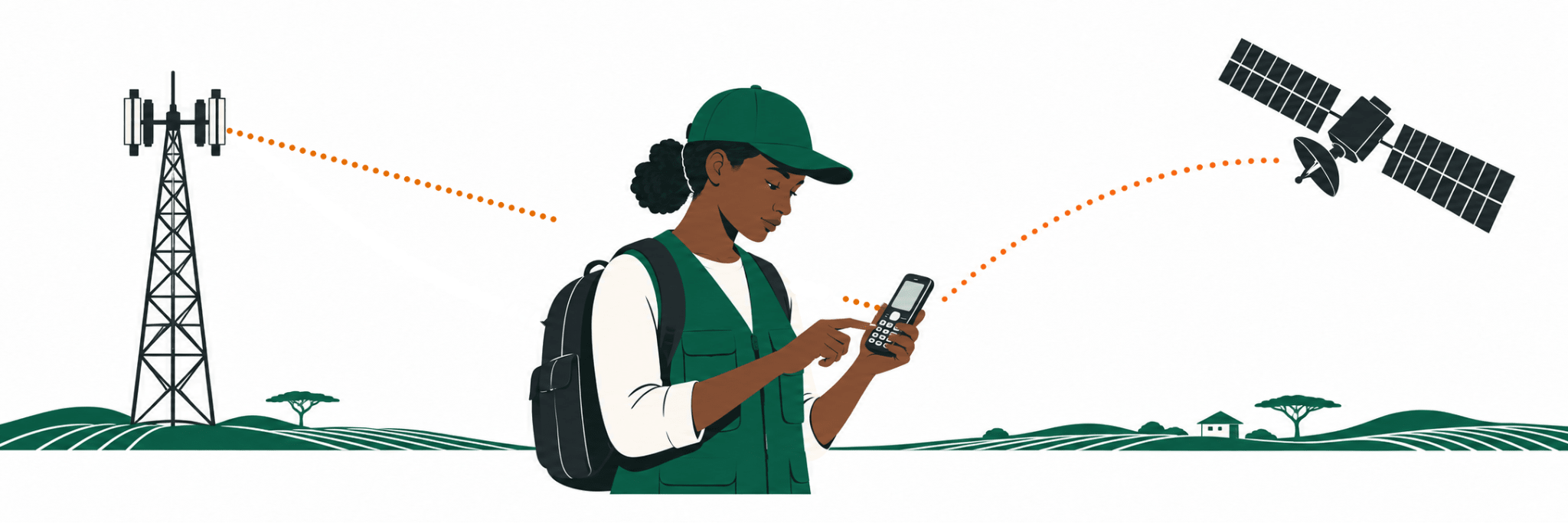
We are exploring ways to create a more scalable, remote-enabled version of our programs:
We've tested much of this individually, so the work now is putting them together. 3 in 4 people in Africa own a phone; done right, the cost of enrolling one of these people could be almost zero. But going remote creates new risks for fraud or exclusion and could decrease our impact. Getting that right - whether the end model is fully remote or a mix of remote and in-person - is the critical piece we're still solving for.
Click here to read more on risks associated with a remote approach and here to read what recipients are telling us that will inform our design
Our low fraud loss rate (consistently below 0.5%) is built on in-person verification: field visits, follow-ups, and internal audits. We know from experience that pulling back on that contact carries risk:
None of this means we shouldn't change; it means we should change carefully, watching for new vulnerabilities at each step. And done right, reducing physical presence isn't just a risk to manage; it can make our programs safe and more secure:
We're also tightening our case management systems and eligibility criteria, and will keep reporting transparently on rates of fraud and abuse as we go.
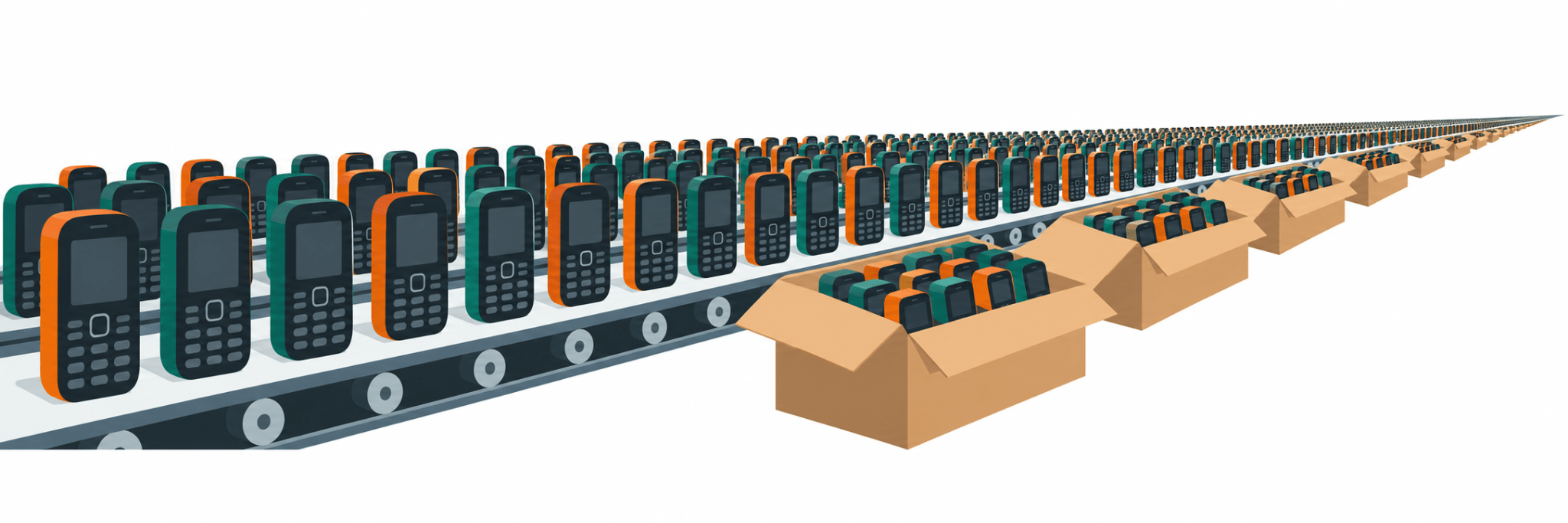
We deliver cash transfers via mobile money, which requires the recipient to have a simple feature phone. Some recipients already own a phone; but many do not, instead opting to receive one from us before enrollment. Last year, we gave out nearly 125,000 phones. If we plan to give out 2 to 3 million phones a year, that would make us one of the largest phone buyers in Africa. How do we procure, store, and distribute that many phones? Should we continue our own distribution or work with governments and telco companies for a national push?
We're already moving on this. We're combining our buying power across countries to negotiate better prices directly with phone manufacturers, rather than buying piecemeal through local retailers. And we're building a better live, real-time tracking of every phone we own, anywhere in the world: where it is, whether it's under warranty, which recipient it went to, etc.
We're hiring for a Global Phone Procurement Manager to run this full-time; and if you work in manufacturing, distribution, or telecom and have ideas on solving this at scale, reach out! This is just one of our many infrastructure investments, including building a more scalable payments platform.
Our earliest programs paid a few villages at a time. Today, we’re sending cash to thousands at once across entire districts, a cash injection equivalent to 85% of the local GDP.
Evidence shows this can act as an economic stimulus, creating a multiplier effect as recipients spend their transfers locally, increasing demand for goods from local businesses and increasing opportunities for work.
But it could also create price or wage inflation. Rigorous studies of our smaller programs in Kenya & Malawi found very little inflation, potentially due to existing ‘slack’ in these poor, rural economies.
We cannot assume that holds true if we start sending hundreds of millions of dollars. To study this as we scale, we are…
We’re also considering other macro-economic factors: can volatile exchange rates interrupt our plans for large-scale transfers? Do the transfers themselves, if given at large enough scale, start to distort exchange rates in ways that affect other sectors of the economy? What plans need to be in place to identify, mitigate and manage risks like these?
Ending extreme poverty is ultimately the responsibility of national leaders; we are there to offer support and, we hope, to inspire.
Delivering lots of cash requires government approval and support - something we have today, in the countries where we already work. Scaling further could mean launching in new countries, and building relationships at the local and national level will take time. Registration alone can take 6 to 18 months, and only then can you start proving your case.
We've learned the hard way that this investment is not optional. Early on, GiveDirectly didn't invest enough in government partnerships. Then, in Uganda, during a volatile political moment, rumours emerged linking our cash transfers to political influencing. Too few people in the relevant institutions knew our work well enough to vouch for us so our operations were suspended, millions of dollars in planned transfers were put on hold, and it took nearly two years to rebuild trust and resume delivery. Government engagement can't start when there's already a problem - relationships, transparency, and shared understanding have to be core to how we operate from the beginning.
Beyond permission, governments are vital for our remotely-enabled designs by providing IDs, data privacy regulatory support, access to national registries, and other digital and payments infrastructure - all possible because our work complements their own poverty reduction and wealth creation goals.
To prepare, we're starting registration in new priority countries, growing our government relations team, and expanding our existing relationships & approvals. We're also working more closely with governments on their existing anti-poverty plans, showing them real results and data on how cash transfers are helping meet their goals.
Everything above is unique to cash transfers. This isn't. Every organization that scales fast breaks in predictable ways – decisions get slower just when they need to get faster, and the informal fixes that made $150m a year possible (the ‘database’ that’s just a giant spreadsheet, the one person who knows how everything connects) make $5b impossible.
So alongside the delivery work, we're rebuilding how we run internally:
Look out for new roles on our engineering, government relations, procurement, and talent teams posting soon.


G’day Nick, this is super inspiring! As well as just a large-scale distribution of phones, have you given much thought to trying to expand telco coverage also? It feels like this might start to become a bottleneck for your work, and there would be many other organisations that would benefit from better telecommunications (not to mention just the raw economic benefits of doing so).
I imagine there’s some obvious reason why this doesn’t work, but just curious!
We have experimented with this! In Liberia we co-financed new cell towers together with the mobile network operator MTN. More info about that here: https://www.givedirectly.org/mobile-phones
Doing more of this is not a priority for us right now, as there’s a very large number of the extreme poor reachable with existing network coverage, but exploring opportunities to incentivise expansion of high quality cell coverage and phone penetration is something we’re thinking a lot about and it’s definitely part of that mix.