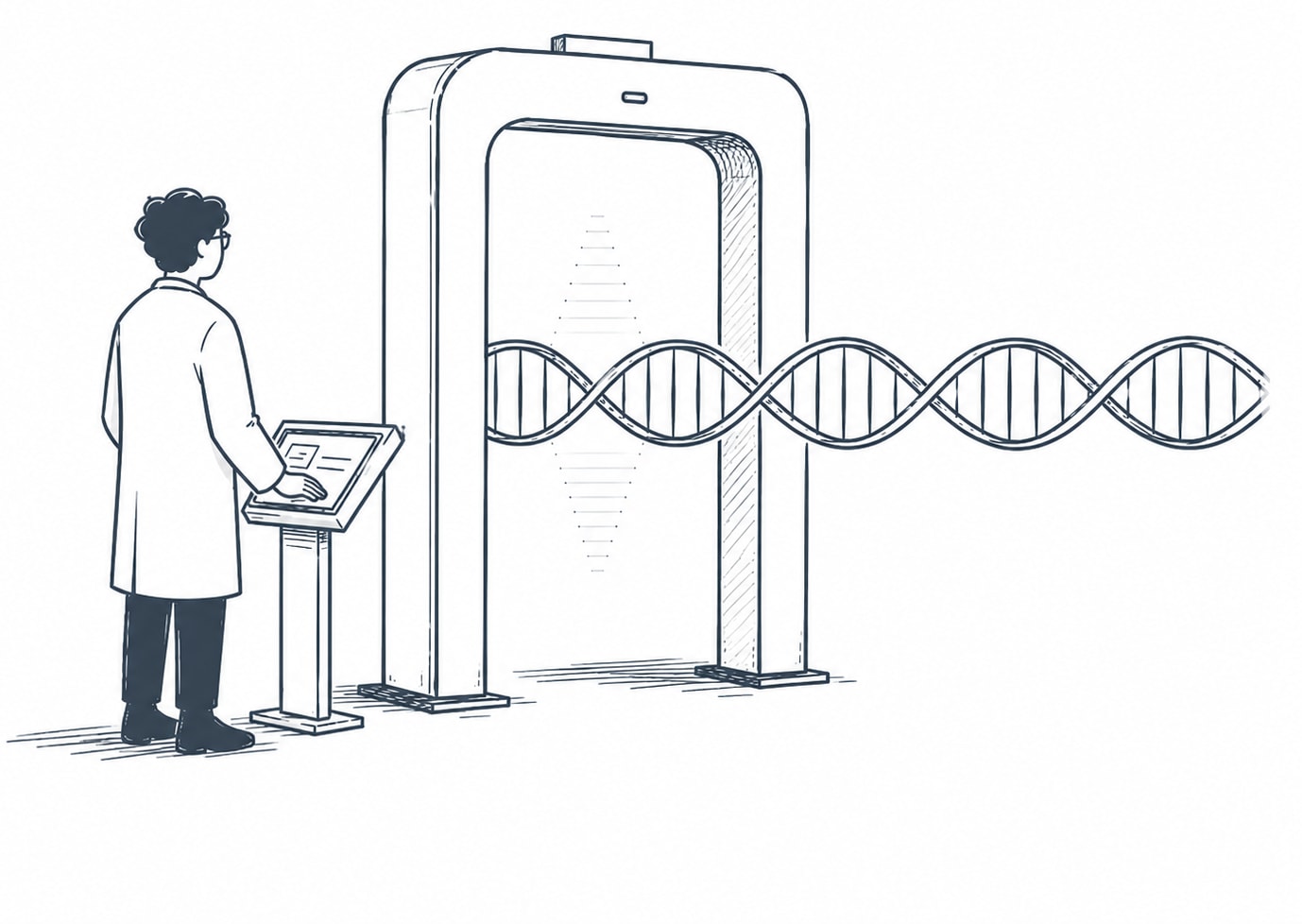
I’ve created a ready to use lesson plan for teaching DNA synthesis screening through an adversarial lens. The lesson compares several screening methods, examines the assumptions and gaps behind each one, and connects the technical discussion to worldwide adoption and policy. The presentation is attached with speaker notes included.
Disclaimer
This lesson reflects my own work and interpretation of the sources cited throughout the presentation. If you notice any errors, unclear points, or areas that could be improved, feel free to contact me. The topic includes dual-use material, so it should be taught responsibly.
Lesson Structure
Set the stage - introduce DNA synthesis, screening, and the threat model.
Traditional sequence screening - explain sequence matching and where it breaks under adversarial pressure.
Adversarially resilient screening - show how newer approaches address those weaknesses, and what limitations remain.
Look ahead to functional screening - introduce functional screening and the challenge of de novo designs.
Deployment and adoption - examine adoption, market coverage, and regulation.
Takeaways - summarize what current screening can and cannot solve, and where the field may need to go next.
Teaching Approach
Each method is introduced as a response to a specific gap, then it’s challenged from an adversarial perspective before continuing to the next approach.
Problem → Current solution → How it fails → Better approach → Remaining gap
Lesson Takeaways
By the end of the lesson, participants should be able to:
Explain the purpose and core challenges of DNA synthesis screening.
Compare several screening methodologies, including the assumptions, strengths, and limitations of each.
Analyze how adversarial manipulation can expose weaknesses in screening approaches.
Evaluate the current technological, operational, and policy gaps.
Prerequisites
A basic understanding of biosecurity is recommended, including familiarity with biological threats and misuse of biotechnology. No prior background in biology, artificial intelligence, or cybersecurity is required - these topics are introduced to the level needed for the lesson.
Estimated Duration
The lesson typically takes about 45 minutes without questions, but it is highly recommended to leave room for conversation.
About Me
My name is Idan, I work in cybersecurity and study biology in my spare time. DNA synthesis screening immediately caught my attention because it sits at the intersection of those two worlds: applying security thinking - adversarial behavior, and layered defenses - to biological systems. That unique connection of the fields led me to explore the topic and create this lesson.
TL;DR
* GOAL 3 is a social enterprise that created IMPALA, a patient monitoring and digital platform system for low-resource settings. There is also a GOAL 3 foundation that raises funds to ensure underserved communities will be reached.
* A recently completed report from Rethink Priorities calculated IMPALA to have a cost per DALY averted of $7–17 in paediatr...
This month effective altruism has gotten lots of attention, including a cover story in The Economist. It feels pretty surreal to be on the receiving end of it. But I feel grateful these ideas have caught on, and even more grateful for the drive, earnestness, and compassion of so many people who took strange but well-argued ideas seriously and then actually acted on them....
Impressions from the 21st Annual U.S. Cluster Headache Patient Conference, organized by Clusterbusters.
On the morning of the last day of the conference, E. was hanging out with other “clusterheads” outside the conference hotel when he started having a cluster headache attack. Before he could go back to his hotel room, J. offered E. his DMT v...