I am writing up two charity ideas I’ve wanted to investigate, but haven’t been able to, in the hopes someone will investigate them further. If you end up investigating either, I'd be most interested to see what conclusions you come to!
Vulture preservation as a global health intervention
Since the mid 1990's the vulture population in India has been rapidly declining. The reason is due to a few chemicals which are fed to livestock, which is highly poisonous to vultures.
...
Summary
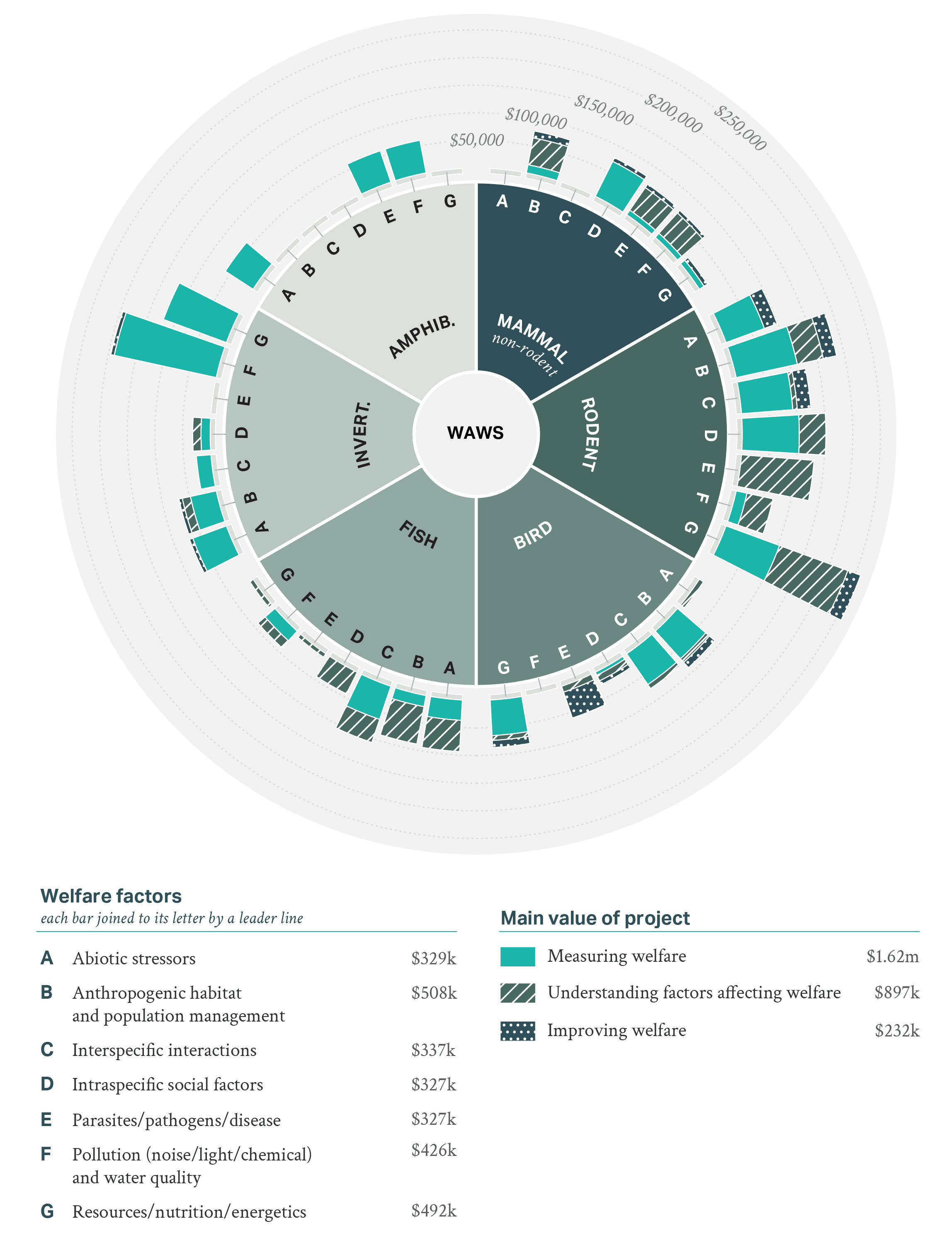
This post will summarize the trajectory of Wild Animal Initiative’s field-building for wild animal welfare science so far, along with patterns and indicators we want to see more of going forward. Beginning with an initial phase focused on establishing credibility and awareness of the field, through a second phase that has placed more emphasis on the distinctiveness and broad priorities of the field, we are now moving into a third phase designed to co...

Most AI-geopolitics analysis concentrates on frontier production. I've been exploring a complementary question: what happens to the capabilities the frontier leaves behind?
Downloadable models can persist after commercial support and meaningful developer control disappear. As inference and adaptation costs decline, some of these systems may become accessible to actors that could not have exploited them at release.
The longer piece develops this through the ideas of capability sedimentation, temporal capability arbitrage and “compute-poor but model-rich” states.
I'm especially interested in whether this should affect how the AI-governance community thinks about model-release decisions and proliferation below the frontier.
https://fabiofrettoli.substack.com/p/the-geopolitics-of-model-graveyards?r=sb1v&utm_campaign=post-expanded-share&utm_medium=web