Comments
This is an adapted version of the introduction to my book Meat, crossposted from my Meat Matters substack. It lays out both my trajectory to founding the Good Food Institute and the alt meats theory of change.
***
Let me get one thing out of the way right now: I’m not here to tell anyone what to eat.
You won’t find vegetarian or vegan recipes in this book, and you won’t find a single sentence attempting to convince you to eat differently. This book is not about meat at the micro level: what you choose to eat. It’s about meat at the macro level: how meat is made and how it can be made better.
Here’s the question: What if we could make the meat that so many people love, make it just as delicious, and produce it more efficiently, so that it costs less? And what if it could create significant economic growth and good jobs, improve food security, and mitigate some of the adverse consequences of modern meat production?
I think we can, and that’s the topic of Meat: what that could look like, and how we get there.
My path to this work started a long way from food technology.
I spent my early years in Oklahoma, and I spent much of every summer and every Christmas holiday in Minnesota, where my parents grew up and all four of my grandparents lived. Oklahoma is the land of cattle and steak houses, and Minnesota is the land of fishing, hunting, and turkey and pig farms. It’s also the home of Hormel (the makers of Spam) and Cargill, America’s second-largest meat company (and my maternal grandfather’s employer for his entire professional life).
Growing up, I ate meat for lunch and dinner every day, and my favorite foods were McDonald’s Big Macs and KFC chicken. As far as I can remember, those were the favorite foods of all my friends, too. I can’t recall meeting any vegetarians in Oklahoma or Minnesota, and the first time someone told me that she didn’t eat meat, she may as well have told me she didn’t breathe oxygen. I thought maybe she had some kind of disease.
Was she allergic? It felt impolite to ask.
I was confirmed into the Lutheran Church in 1984, at the height of the Ethiopian famine. Our pastor at University Lutheran in Norman, Oklahoma, David Klumpp, was devastated by the suffering there, so my 2 years of confirmation classes focused on global hunger and how Christians should respond.
Matthew 25 provided the answer: “As you did it to one of the least of these, you did it to me.” That and the story of the good Samaritan, which teaches that all of humanity is our neighbor. Our moral obligation as Christians, Pastor Klumpp told us, was to help whoever in the world was suffering the most.
That early exposure to injustice, my own privilege, and what it means to act ethically in a world of want set me on a lifelong path of trying to make the world better.
At Grinnell College in Iowa, I joined a campus group called “Poverty Action Now!” and volunteered in a Des Moines homeless shelter run by a Catholic priest named Frank Cordaro, who remains a dear friend. I also read Diet for a Small Planet by Frances Moore Lappé, which argues that feeding crops to animals for meat is an inefficient use of food and land. In a global economy, that inefficiency leads to hunger and malnutrition.
That book changed my diet, inspired me to major in economics, and led me to write my senior thesis on how the global economy has created an agricultural system that entrenches extreme poverty.
After college, I spent six years running a Catholic Worker homeless shelter for families in Washington, D.C. (and converted to Catholicism) and two years teaching in inner city Baltimore through Teach For America (teacher of the year for my school, thank you very much!). I also earned a teaching degree from Johns Hopkins and a law degree from Georgetown, and I worked to improve laws and regulations related to farm animal treatment and ran public education campaigns to (try to) inspire people to eat less meat.
I thoroughly enjoyed running the shelter for families, loved teaching even more, and enjoyed my work to improve farm animal welfare and inspire people to change their diets. But I also wondered constantly, “Is this the most effective thing I could be doing to make the world better?”
Inspired by a handful of food systems pioneers you’ll meet in chapters 6 and 7, I came to believe that there is a promising option that—if it works—will do tremendous good for the world: Plant-based and cultivated meat that is designed to be just as delicious and affordable as conventional meat.
That vision inspired me to launch the Good Food Institute in 2016 with a focus on accelerating the science of plant-based and cultivated meat (the plurality of GFI’s team members around the world are scientists). Our top goal is to build a maximally robust scientific ecosystem, and we do that both through direct scientist-to-scientist outreach and community building, as well as by working with governments and the food and meat industries.
This book is my invitation to you, to join me for an abridged version of the journey I’ve been on. I hope you’ll come away from these pages feeling as energized as I am about what’s possible, and perhaps also inspired to help make it happen.
Making meat better starts with understanding the costs of producing it today. Chapters 1-4 explore four of them:
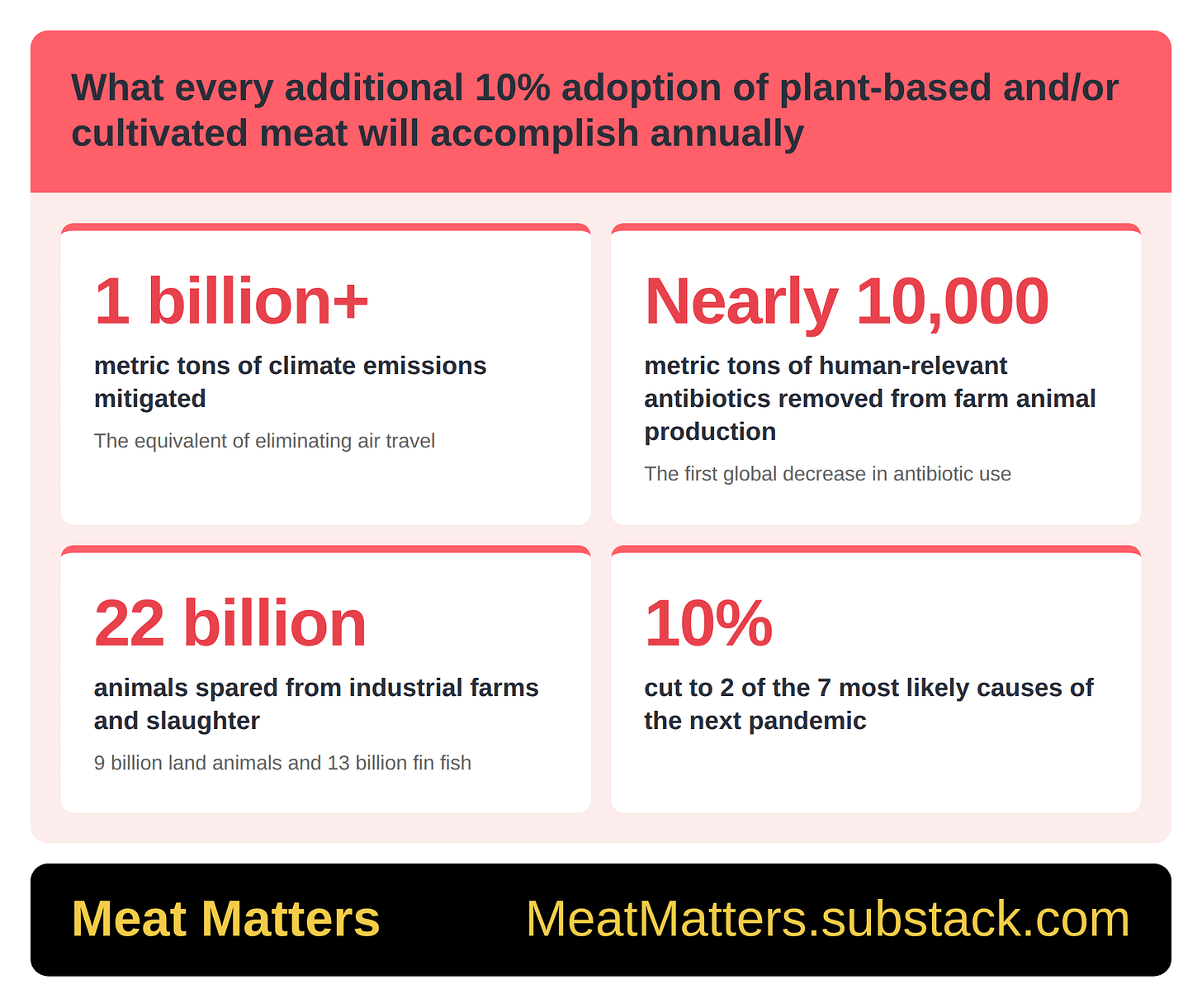
One of the questions I get more than any other comes from vegetarians and vegans: What’s the point of plant-based and cultivated meat in a world that has bean burritos and falafel and tofu and limitless plant-based entrees? Can’t we just convince everyone to eat less meat?
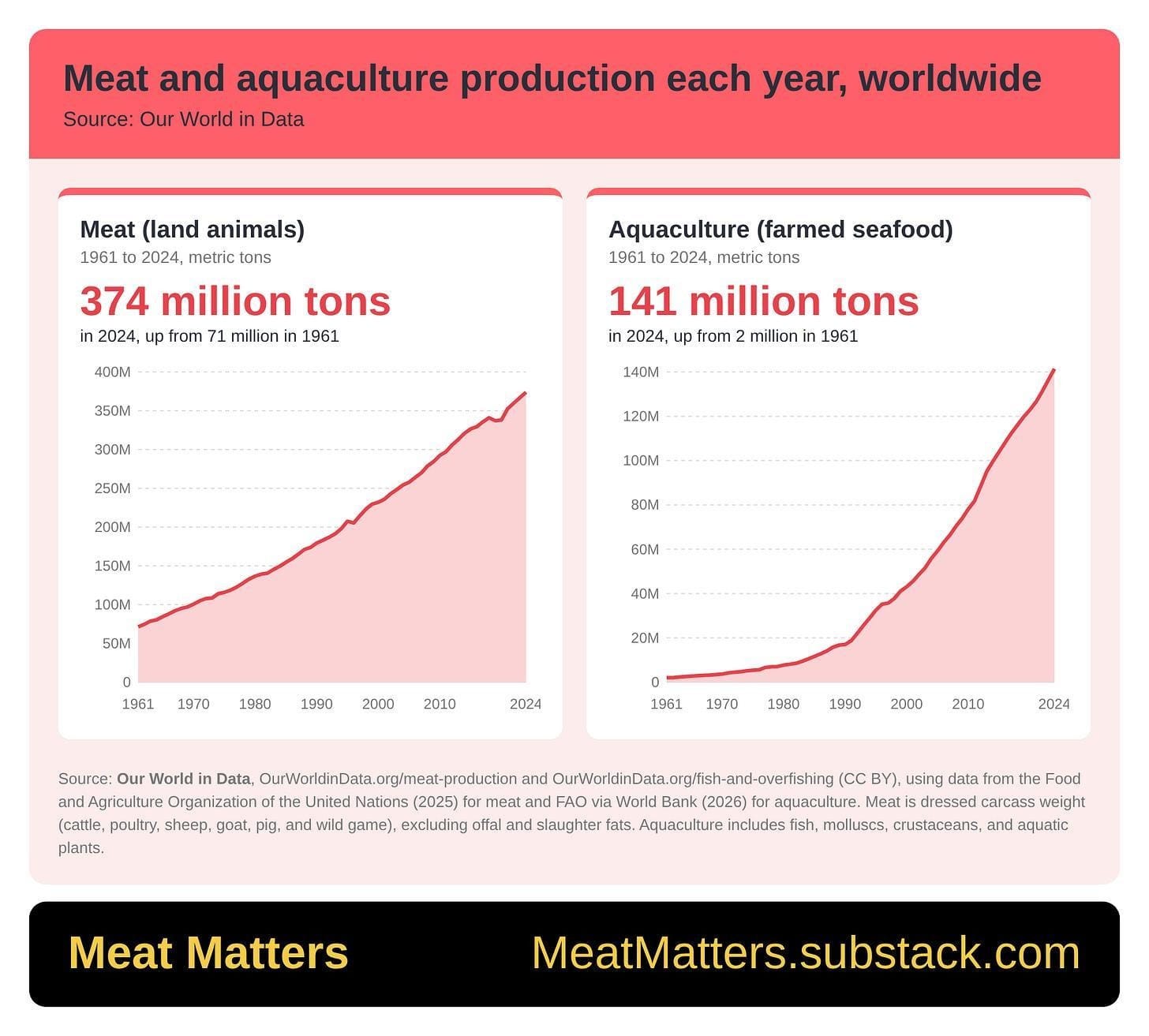
Apparently not, as I discuss in chapter 5. For at least 50 years, environmentalists, global health experts, and animal advocates have been trying to convince the world to eat less meat. Yet consumption is as high as it’s been in world history. Every year we set a new record, and absent a global recession or another Covid-like shock, we’ll be setting records every year through at least 2050; that’s as long as anyone’s forecasting.
So I’ve come to believe that the most promising response to rising global meat demand is to learn the lesson of the environmental movement. Every year, the world consumes more energy and drives more. Energy efficiency endeavors are worthwhile, and so are efforts to decrease car use (e.g., bike lanes, public transportation, walkable cities). But we also need cost-competitive renewable energy and electric vehicles.
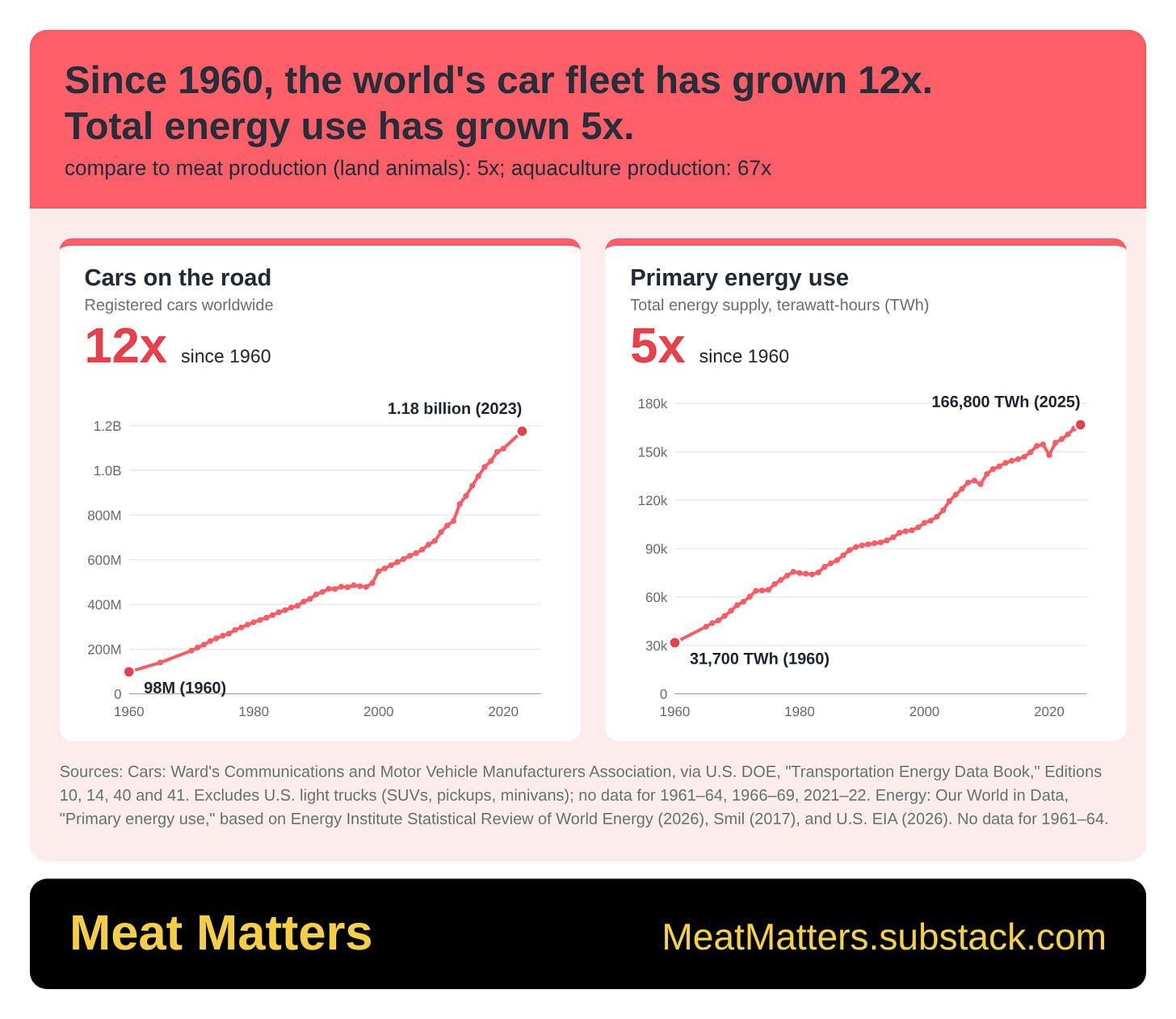
The supply-side answer to meat’s steady rise is to give people the meat they love, produced differently: Cultivated and plant-based meat.
Cultivated meat: Similar to how we can grow a plant from a seed or cutting, we can grow real animal meat from a small sample of animal muscle or fat in a cultivator that looks like a beer fermentation tank. While we have work to do before it can achieve any kind of scale, scientists are making progress on this technology all over the world. To be clear, this is the same animal meat you’re eating now; it’s just produced differently.
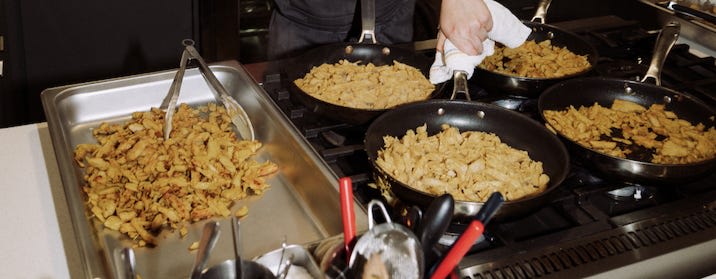
Plant-based meat: When I say “plant-based meat,” I’m not talking about the veggie burgers and veggie dogs you may have had in years past; I’m talking about making meat from plants that is indistinguishable from animal-based meat: the flavor, the texture, how it cooks, all of it. With further innovation and production scale-up, costs will come down, making it competitive with conventional meat. We’re not there yet, but we’re moving in the right direction.
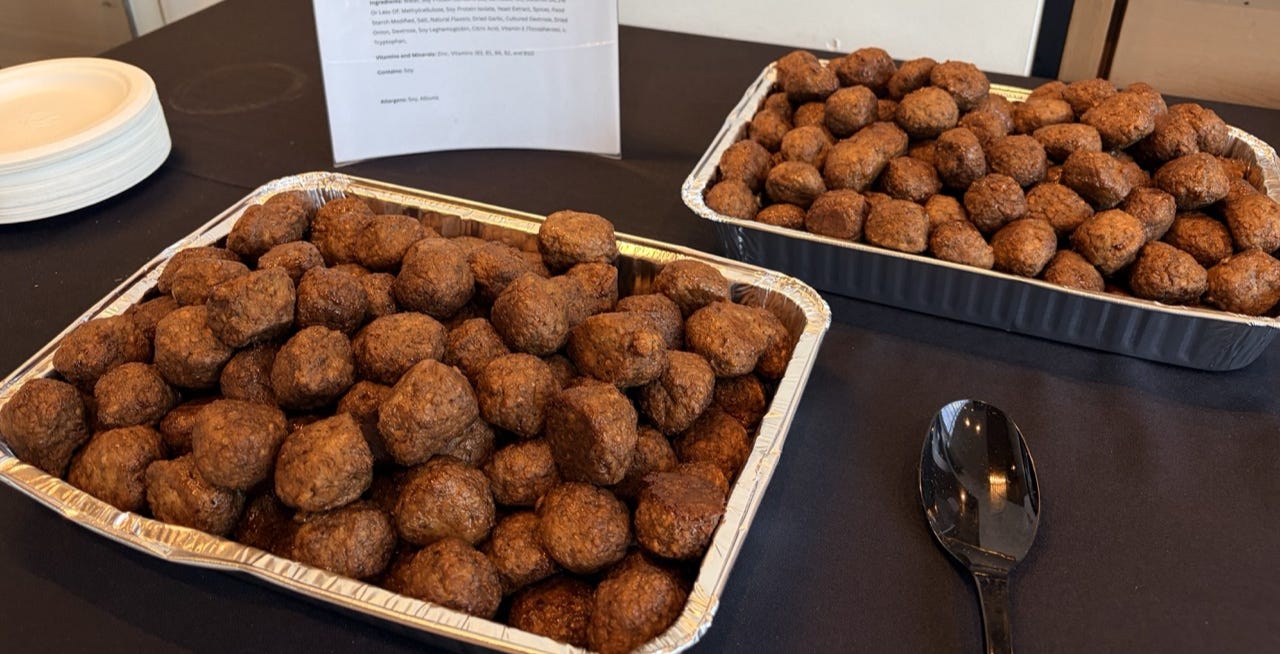
Chapters 6 and 7 explore the theory and reality of cultivated and plant-based meat: how each was developed and the most common questions and objections, including whether consumers will adopt them and whether scientists and engineers can overcome the remaining technical hurdles. (I also discuss those two topics here and here on Substack.)
The theory of alternative meats is simple: With scale, prices can come down, offering consumers the meat they love, but without all the adverse impacts for our environment and global health, and without the contribution to hunger, malnutrition, and animal suffering.
While recent scientific progress regarding both plant-based and cultivated meat offers cause for optimism, neither is scientifically simple. That difficulty has led to struggles for plant-based and cultivated meat startups as well as pessimism in some quarters about the entire idea of making meat in these new and better ways.
The skeptics’ case goes like this: Plant-based meat is too expensive, and most of it doesn’t taste very much like animal meat. Cultivated meat is not yet widely available and costs are way too high, despite more than $3 billion in sector-wide investment.
The observations are accurate, but the conclusions ignore how innovation happens, how young both fields are, and how little $3 billion really is, especially when spread across more than 150 companies and more than a decade. Plus, that $3 billion has gone toward all the companies’ costs, not just research.
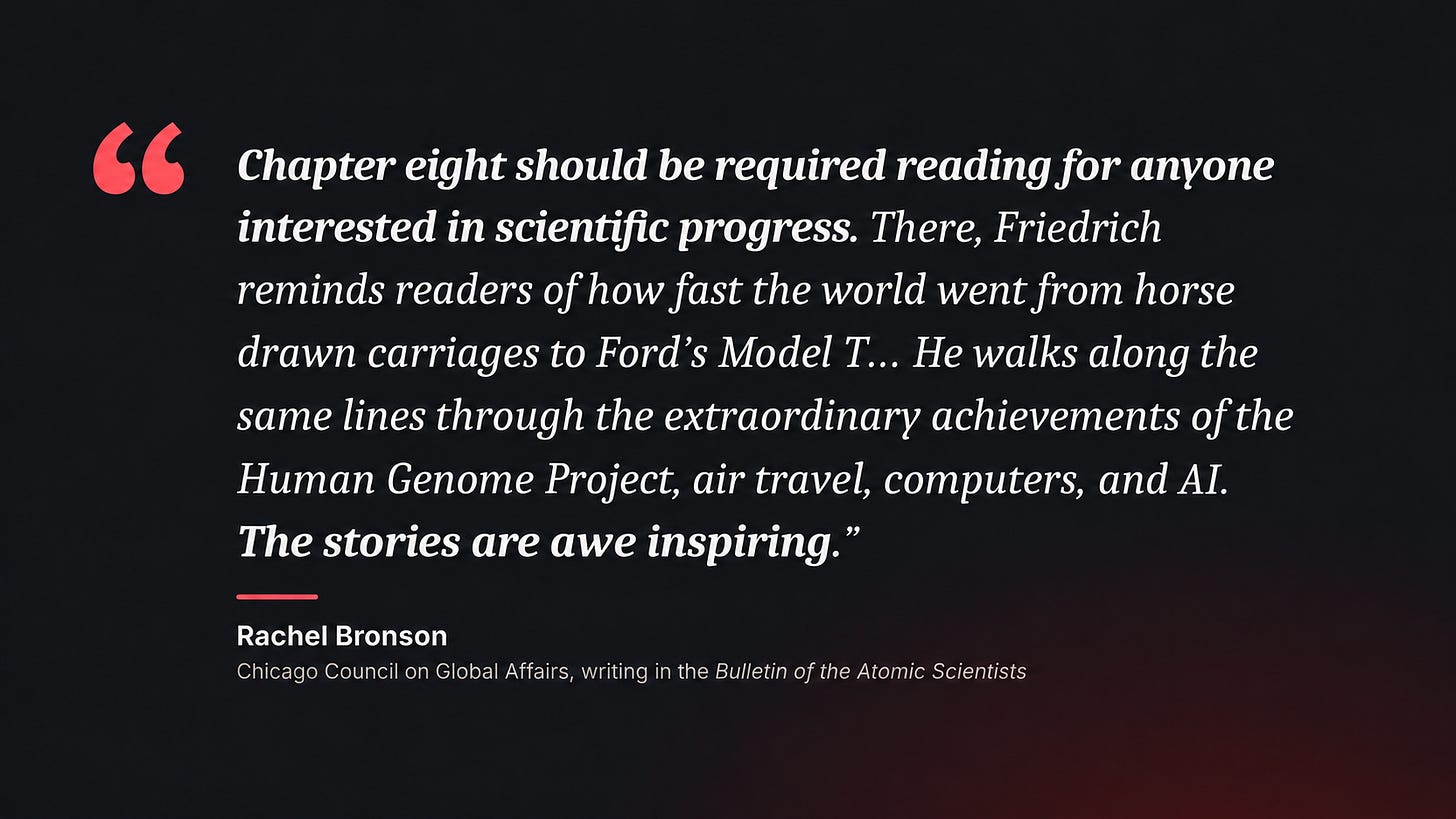
The struggles of plant-based and cultivated meat are typical in the annals of innovation. In part three, I discuss other technologies that struggled in their early years and only reached mainstream adoption after critical improvements to early iterations: from cars to airplanes to personal computers to internet commerce to large language models that can write poetry and outperform doctors in diagnosing disease.
Perhaps most on point: electric vehicles and solar energy. Remarkably, just 10 years ago, many of the world’s top experts believed that solar energy would always be more expensive than fossil fuels and that electric vehicles would never meaningfully decrease climate emissions: They were too expensive, there was no charging infrastructure, and the cars didn’t go far enough.
Instead, innovators innovated and governments invested: Prices for solar and EVs came down, battery range improved, and both companies and governments worked together to create charging infrastructures. As a result, we’re seeing exponential growth for both solar and electric vehicles.
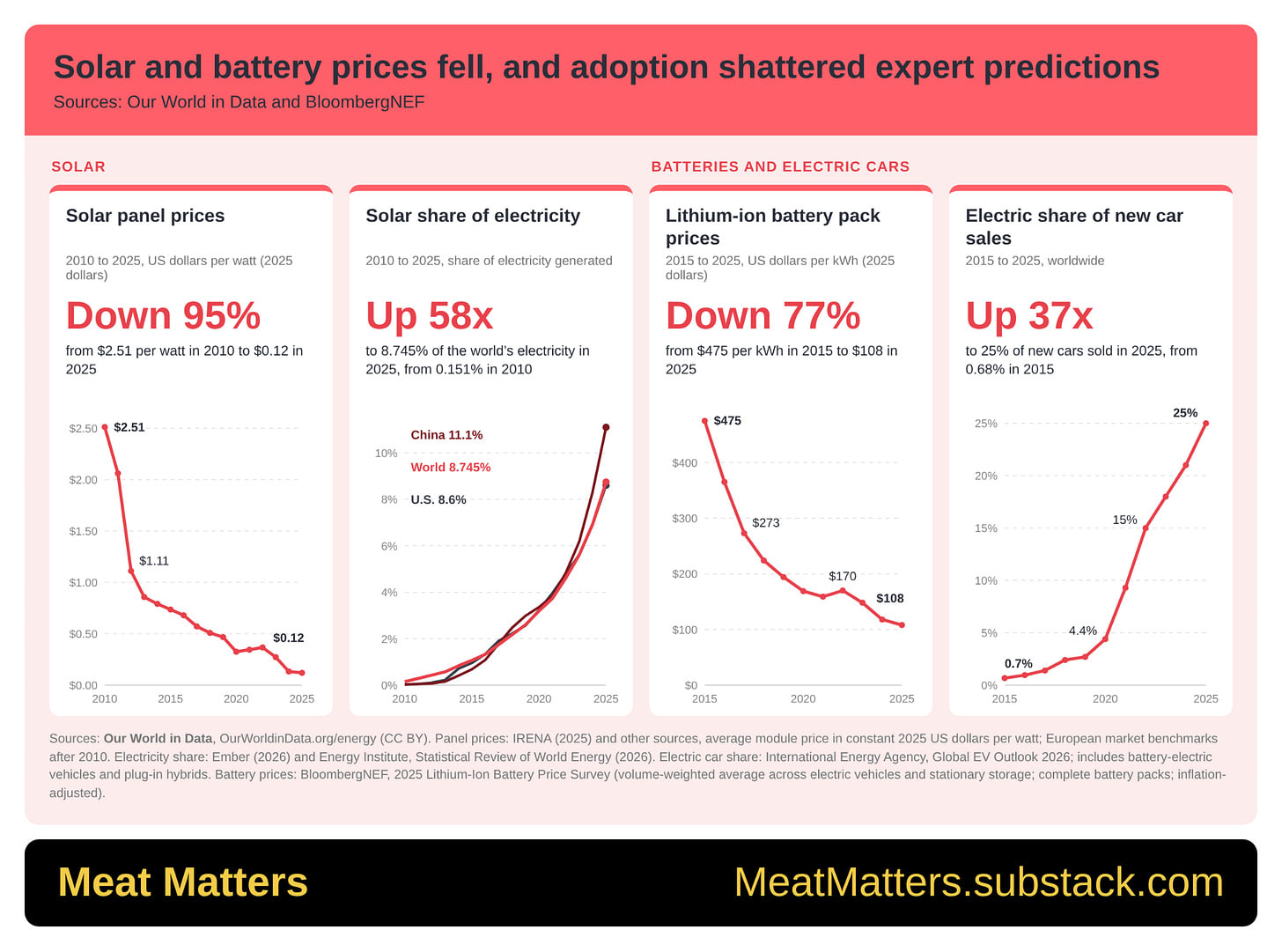
I believe that alternative meats have the potential to do precisely the same thing. In fact, plant-based and cultivated meat seem likely to require less investment than solar or EVs, and the incentives for corporations and governments are even stronger for their success.
Those are the topics of chapters 9 (the economics) and 10 (food security). We’ll look at a Center for Strategic and International Studies report on the economic competitiveness and food and water security benefits of alternative meats, and we’ll explore some of the excellent plant-based and cultivated meat scientific work that governments around the world are supporting.
We’ll close part three with the question that all of us at the Good Food Institute (GFI) hear more than any other: How quickly can we expect to find taste- and price-competitive alternative meats in our local grocery stores and fast-food restaurants? Put another way: How soon until we can drop the “alternative” from alternative meats?
There’s reason for optimism. In less than 10 years:
Since the first cultivated meat prototype in August 2013, the cost of production has fallen by 99.999%, so a factor of 100,000, at Mosa Meat, and to a comparable level at Wildtype, Upside Foods, Vow, and other companies.
None of that is to say success is guaranteed; there’s a lot of science and engineering work still to be done, and that will require resources. We need to make sure the trajectory we’re on now of more and more scientists, more and more government funding, steady regulatory approvals, and so on, continues.
So I’ll close the book with some unsolicited career advice for anyone who is convinced that alt meats offer tremendous value to the world and who would like to make sure it happens and that it does so as soon as possible.
Welcome to the next agricultural revolution.
***
This is my third Meat Matters substack essay. Essay one explored the scientific viability of plant-based and cultivated meat, and essay two explored issues related to consumer acceptance. If you would like to receive a monthly dose of urgency and optimism around alternative meats, please subscribe.
Read more about my recently published book Meat, including reviews, endorsements, and ordering information, at MeatBook.org.