Thank you for sharing this so openly, and for your work on this project over the years! As a fellow community builder, I really recognise how hard this work can be, especially when it comes to funding and impact uncertainty.
I can confirm that what you describe matches the reality for many community builders. I’ve been running Hive on a paid basis for almost three years, and funding has consistently been one of our biggest challenges. Tracking and evidencing impact is also genuinely difficult in community building, even when the work feels clearly valuable on the ground.
Given that context, your decision to transition feels thoughtful and solid. I appreciate you taking the time to reflect on this publicly. I think pieces like this are really important for setting more realistic expectations about what long-term community building actually looks like!
Thanks for this, Sofia. This really helps. The "valuable on the ground but hard to prove" tension has been the story of my (admittedly short) CB career. Eight months in and I was already feeling that friction constantly. How do you show that someone's entire trajectory shifted because of a conversation you had? Or that a community exists because you showed up every week?
I'm glad we wrote this openly. I hope more CBs write openly about this reality. The work matters, but the system around it needs rethinking.
Thanks a lot for sharing your own experience which feels genuinely validating of ours, Sofía. We really admire the work Hive and other communities are doing, and hope that by being more open about the many obstacles community builders face, we can help bring about a more constructive and transparent dialogue between CBs and funders.
Thank you very much for taking the time to write this, @Melanie Brennan 🔹 and @Anthony L ! It must have been difficult at this time of turmoil.
First, congratulations on all you (and past CBers) have accomplished in Barcelona and in Spain more generally. Your recap in this post clearly shows that much was done, and I think your sustained work has probably created a lot of positive impact.
Second, I think this post is important for reminding all of us that EA community building is at a strange place: it is clearly important, but it is also very hard to get funding for. Like many other roles in EA, we (counting myself) are precarious workers, relying on yearly renewals and decent-if-you-can-live-frugally salaries. Off the top of my head, I'd say with confidence that fewer than 50 people in the world do principles-first EA community building as their main source of income. And I think perhaps fewer than 30 have been at it for more than 2 years.
Good luck to both of you, and looking forward to see the switch to a community/volunteering-led system works out!
Thanks Guillaume! Honestly, writing it was both hard and weirdly cathartic. The precarity aspect didn't hit me until I was in it... the yearly renewal anxiety, the lack of feedback, the feeling of building things on sand. Less than 50 people globally is crazy! Sometimes I wonder if that's by design or just how things turned out to be.
Really appreciate you taking the time. Means a lot from someone who's been going through this longer. We'll see how the volunteer model works as it's an experiment, really, and hopefully we can share learnings either way.
This is a very commendable journey. I learnt alot from the Team in Barcelona. The Team in Rwanda has alot to learn because we are at that Transition process from a few dedicated Team leaders into a community of vibrant and amazing individuals ready to impact career wise and otherwise. Your story is an encouragement indeed
Thank you for sharing 🙏
The reality of long-term EA community building: Lessons from 3 years of EA Barcelona
We are Melanie and Anthony, the two community builders at EA Barcelona. In this post, we share where the group stands today and reflect on key learnings from nearly three years of grant-funded community building, including a recent, sudden funding cut. We hope these reflections are useful to other community builders, funders, and CEA, particularly around what it realistically takes to build and sustain EA communities over multiple years, from funding stability and feedback loops to the personal sustainability of professional community builders.
TL;DR
EA Barcelona was funded by the EA Infrastructure Fund between May 2023 and December 2025 (<1.2 FTE). Over this period, it has grown into a thriving local community and informal coordination hub for EA activity in Spain.
Unexpectedly, EAIF decided not to continue funding our project in 2026. We subsequently explored the current funding landscape for EA community building, but found no viable path to stable funding for 2026 that didn’t involve a high level of personal and professional risk. As a result, we’ve decided not to continue with a funded community-builder model for EA Barcelona for now, and will instead focus on transitioning to a volunteer-led structure.
Background: EA Barcelona (2023-2025)
Present-day EA Barcelona began as a casual meetup group circa 2021-2022, led by Sam Baskeyfield, Pablo Rosado and Melanie Brennan. We received our first EAIF grant for part-time community building in May 2023. Since then, we’ve been funded by the EAIF across three main grant periods (2023, 2024, 2025) to support our community building efforts.
What follows is a brief overview of how EA Barcelona has grown in scope and impact over the past ~3 years.
2023: Establishing EA Barcelona as a city hub
With one part-time community builder (Melanie) and volunteer support, 2023 focused on reviving EA Barcelona from a semi-dormant baseline into a visible, active local community. By collaborating with local companies and NGOs, and prioritising accessible introductory events, we rebuilt momentum and established regular engagement.
Over the year, we ran a mix of introductory talks, discussions, coworking sessions, and social meetups, alongside light-touch 1:1 advising. We also rebuilt the group’s basic communications infrastructure, including a WhatsApp community and Facebook page.
Early outcomes included:
Community growth from a handful of participants to ~20 active members (including ~12 highly engaged EAs) and ~50 in the wider network,
Initial career and giving impact (first pledges, donation redirection, and career advising outcomes)
Seeding future leadership, including support for members who later took on organising roles or pursued EA-aligned projects.
Overall, 2023 laid the foundations for more structured programming and deeper impact in subsequent years, establishing EA Barcelona as a credible base for growth.[1]
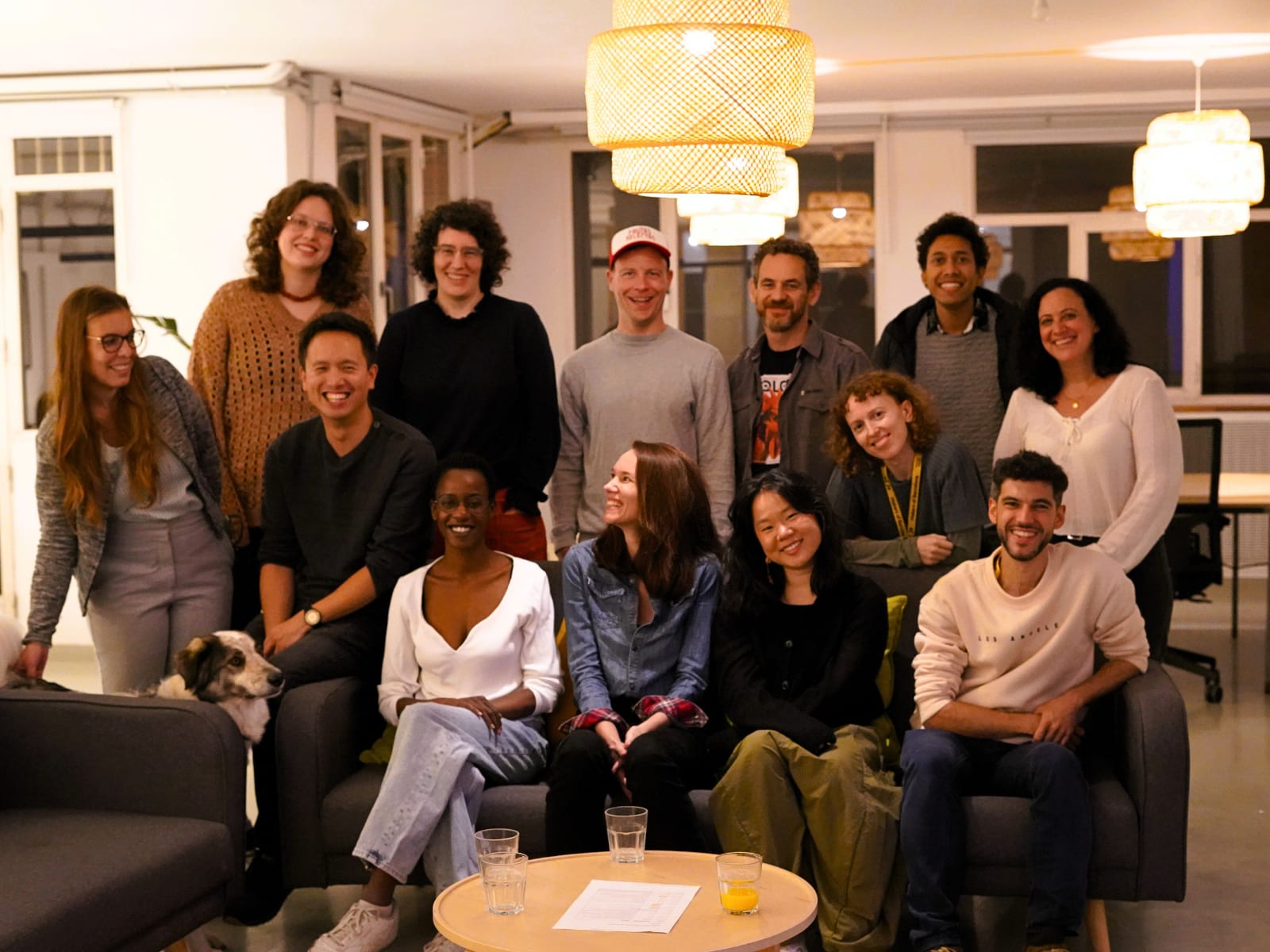
EAGxVirtual viewing at MOB Caterina in November, 2023.
2024: Deepening engagement and seeding national growth
With EA Barcelona consolidated into a more tangible community, and Ricard Soler joining the community building team, 2024 focused on deepening engagement, strengthening partnerships, and beginning to seed adjacent groups. We shifted from broad to higher-depth outreach, prioritising expert talks, fellowships, and member-led initiatives.
Key outcomes in 2024 included:
Community growth: Active membership increased from ~20 to ~37, including ~17 highly engaged EAs.
New groups & projects: Supported the early formation of AI Safety Barcelona and new effective giving platform, Karoteno; advised the relaunch of EA Madrid; supported the creation of Spain’s first EA university group.
Careers & volunteering: Members took concrete steps across AI safety, alternative proteins, and animal welfare, including one joining the UK’s AI Security Institute and others volunteering with EA-aligned organisations.
Effective giving: Multiple members reported taking giving pledges or redirecting donations.
Infrastructure & comms: Built more robust operations including a new website, LinkedIn presence, monthly newsletter, and YouTube channel.
Bonus: Five members participated in the 2024 Project for Awesome online fundraising campaign, helping redirect ~$37k each to AMF and GiveDirectly.[2]
While not all experiments succeeded, 2024 clarified what had the potential to work best - thus setting the stage for a more focused, national-level approach in 2025.
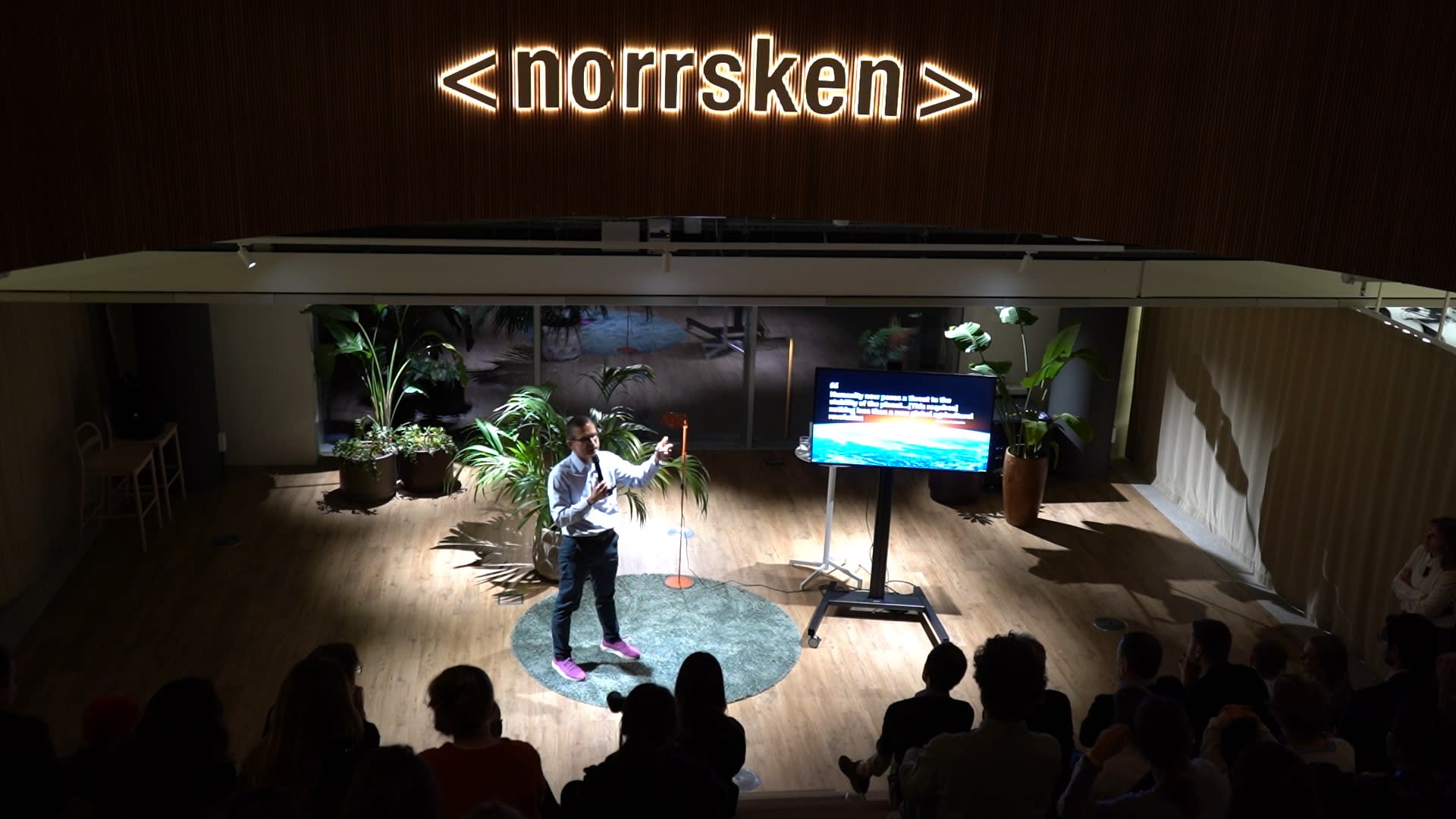
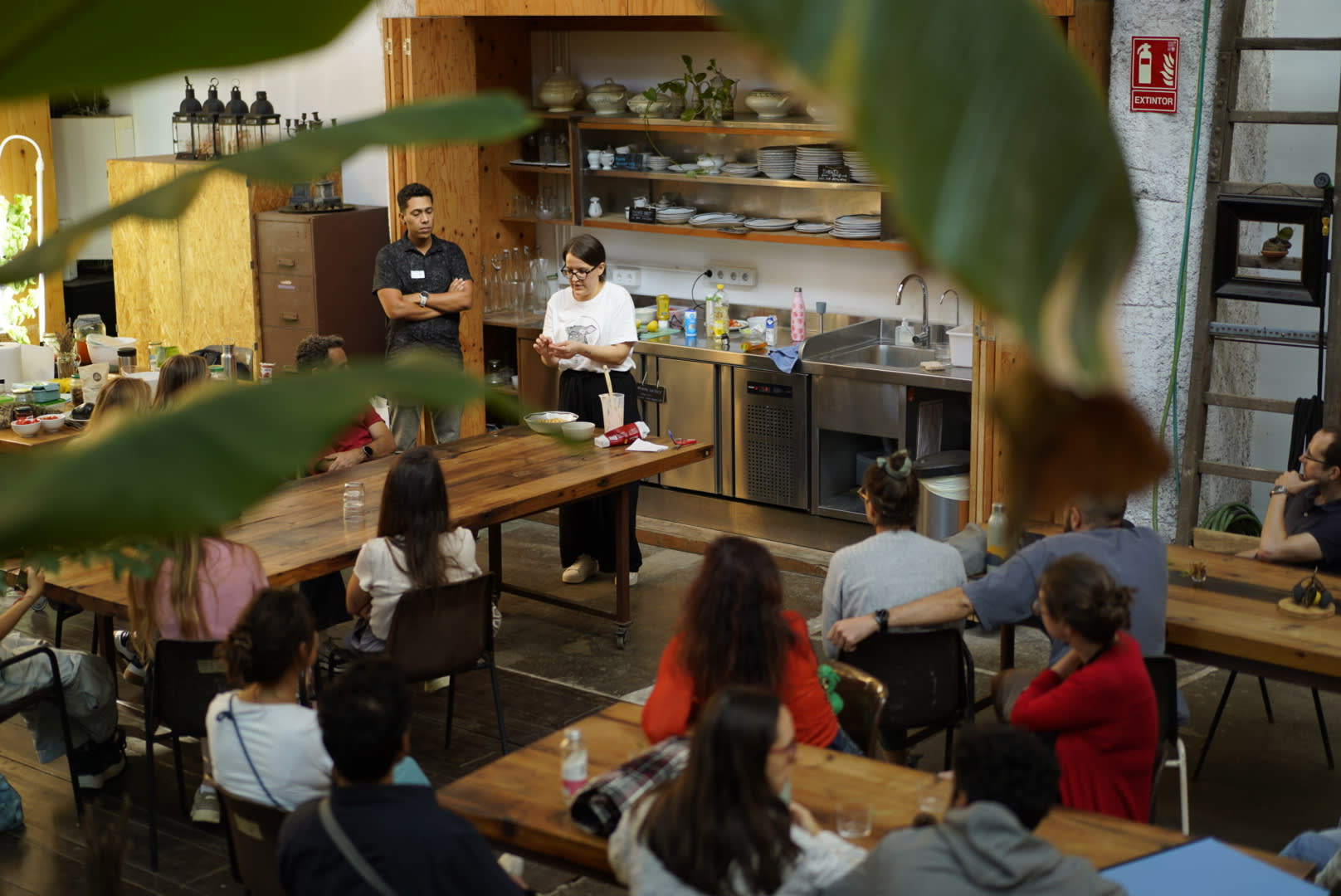
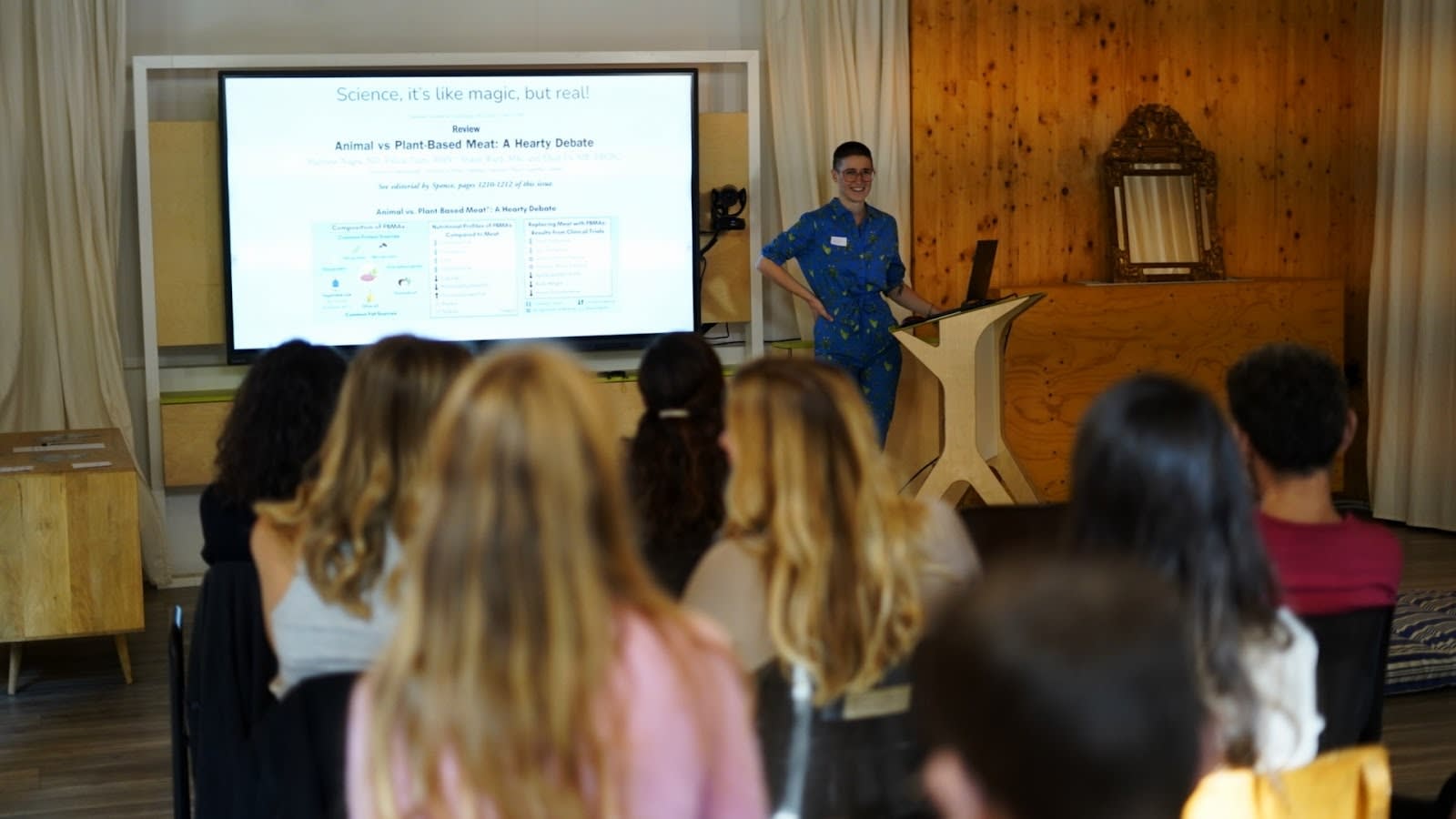
Bruce Friedrich speaking about the future of alternative proteins at Norrsken House in February, 2024.Pablo Rosado (third from left) facilitated a deep dive discussion into nuclear safety at Norrsken House, April 2024.Camilla Ariano and Anthony Lara gave a "Veg-Curious" workshop at Apocapoc Nest City Lab in September, 2024.
A 2024 case study
Anne Reshetnyak first discovered EA at an introductory talk in 2023, and described the ideas as “profoundly impactful,” reigniting her motivation to work on alternative proteins. Recognising Anne's potential, EA Barcelona provided her with a platform, and in 2024 Anne delivered three talks on alt protein science (e.g. this one), inspiring others to engage with sustainable food systems. Anne also helped EA Barcelona establish a partnership with Heüra, Spain’s leading plant-based meat company, and a sector leader in Europe. Later in 2025, Anne transitioned into a Research Analyst role at the Good Food Institute.
In Anne’s words:
"My involvement in EA planted a seed of thinking about how to have a big impact with my career, and prioritising working on EA related areas. This later motivated me to pursue a career at GFI where I could better contribute to the growth of the alternative protein sector to fight farmed animal exploitation.”
Anne shone as our local alt protein expert, pictured here at Apocapoc Nest City Lab in September, 2024.
2025: Transitioning from local hub to national coordination
In 2025, EA Barcelona expanded its role from primarily local community building to acting as a coordination hub for EA activity across Spain. Following Ricard Soler’s departure to focus on local vegan outreach, Anthony Lara joined as co-lead community builder, with Tobi Baur and Pablo Rosado established as strategic advisors. Alongside maintaining EA Barcelona’s core programs, we increasingly focused on supporting other groups, organisers, and national-level initiatives.
Key outcomes in 2025 included:
Community growth: Active EA Barcelona membership grew to ~50, including ~20 highly engaged EAs, with a wider network of ~150+.
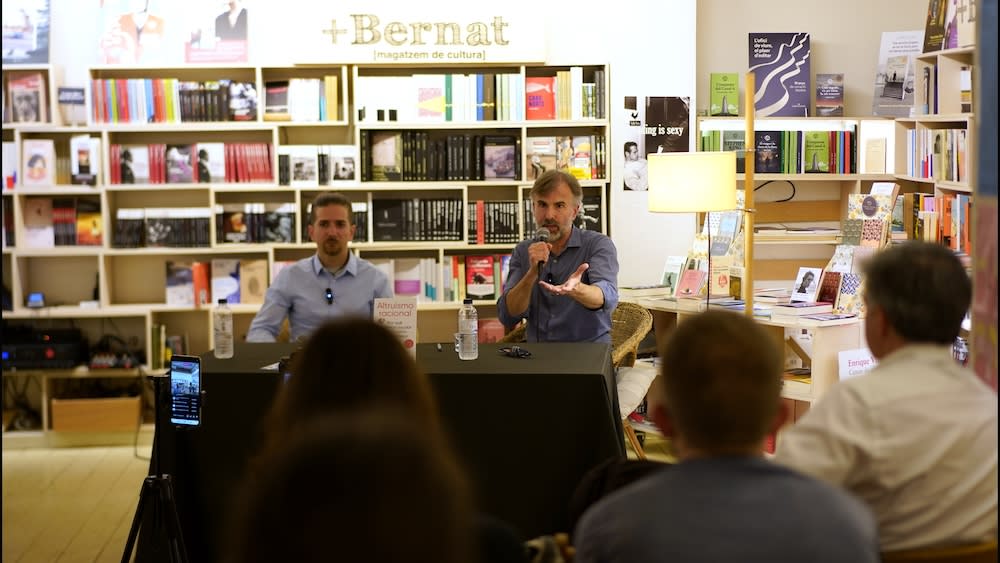
National coordination: Successfully co-organised the first EA Spain Retreat (22 participants), bringing together organisers and highly engaged members from across the country and strengthening cross-city collaboration. Supported the launch of Pablo Melchor's Altruismo Racional (the first book about effective giving written in Spanish) and ran two successful iterations of Spanish-language book clubs.
Sub-groups & leadership: Supported a successful leadership transition and continued growth for EA Madrid; provided ongoing support to AI Safety Barcelona (which became a registered association); launched a new university group, EA UPF (with stronger traction than previous attempts).
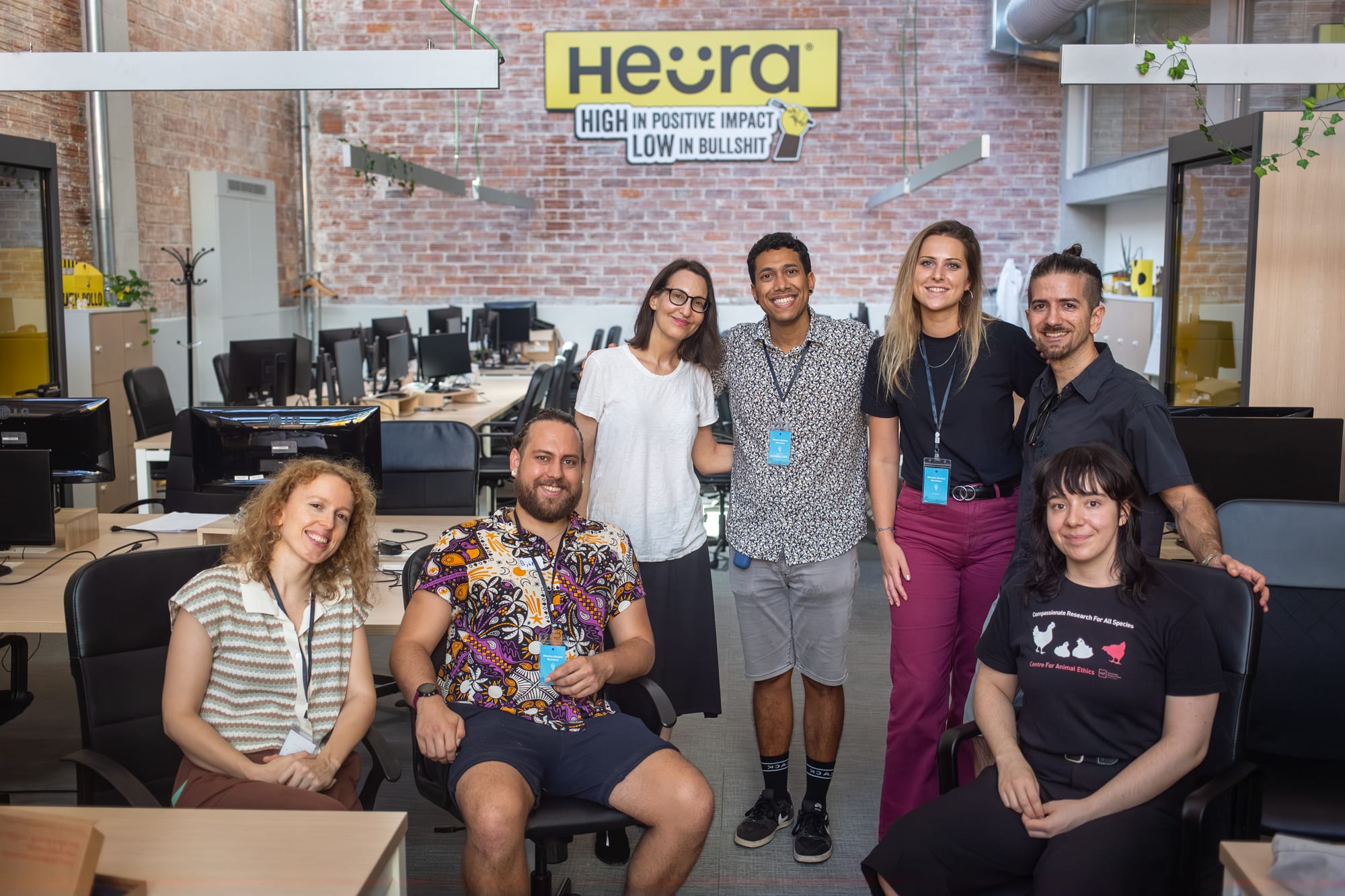
Partnerships: Deepened collaborations with Heüra (hosting a Melanie Joy workshop at Heura HQ) and the Centre for Animal Ethics (co-hosting an effective animal advocacy expert panel with speakers from Rethink Priorities, Faunalytics, and the Animal Welfare Observatory). Helped to bridge academia, grassroots activist groups, and industry - particularly around effective animal advocacy and plant-based defaults.
Careers & projects: Members took concrete steps across AI safety, alternative proteins, effective giving, and project work, including career transitions into AI Safety Labs and the Good Food Institute, the official launch of Karoteno, and student-led fundraising and course initiatives.
Effective giving: Approximately €7–10k in redirected donations and trial pledges were reported, alongside peer influence and workplace donation initiatives. Furthermore, EA Barcelona supported Karoteno’s December campaign through community promotion and fundraising activities, which raised more than €6000 for effective charities working in global health, animal welfare and safeguarding the future of humanity.
Infrastructure & comms: Consolidated national-level support, retreat infrastructure, and Spanish-language book club materials to support cross-city coordination.
Overall, 2025 demonstrated that EA Barcelona could function as a lean national coordination hub - supporting multiple groups, organisers, and initiatives across Barcelona and Madrid - and laid the groundwork for a more cohesive EA Spain network.
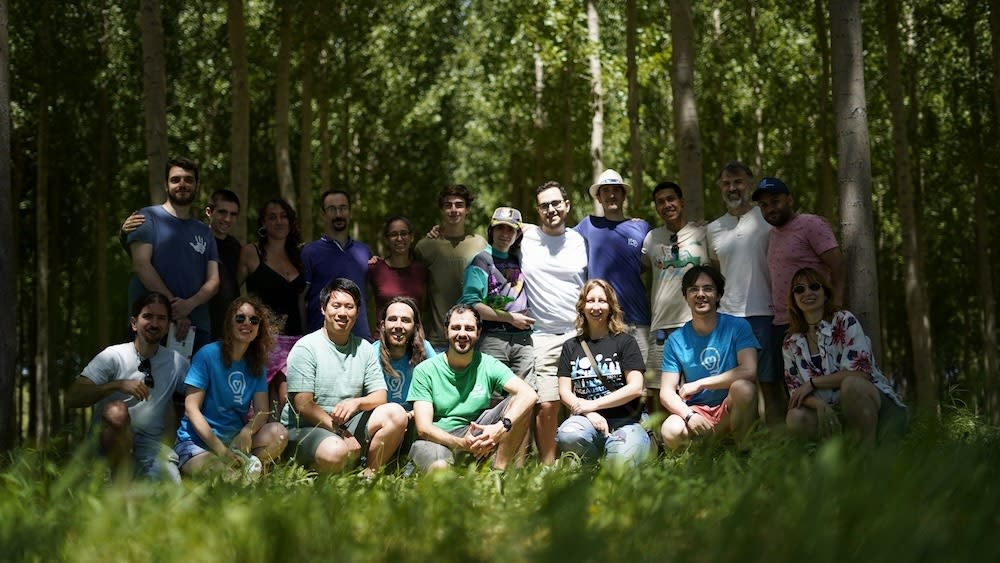
The first EA Spain national retreat in Cabañas de Ebro in July, 2025.Pablo Melchor (right) answers a question from the audience at his Barcelona launch of Altruismo Racional. The conversation was facilitated by Pablo Rosado (left) at Llibreria +Bernat in October, 2025. EA Barcelona crew pictured with Melanie Joy (back row, centre) at her workshop on reducing infighting in the vegan movement. At Heüra House in September, 2025.
A 2025 case study
David Bravobecame involved with EA Barcelona in May 2025, and quickly grew into a leadership role through sustained engagement, mentorship, and exposure to the wider EA ecosystem. After attending EAG London 2025 and the EA Spain Retreat, David joined Darcy Robertson as co-leader of the EA Universitat Pompeu Fabra (UPF) student group, where they co-facilitated an Introductory Fellowship and a number of other activities together.
Building on this experience, David developed a strong interest in AI safety community building and, with continued mentorship from EA Barcelona, is now applying for funding to lead AI Safety Barcelona in 2026. We believe he is well positioned to take on this role and further grow the local AI safety ecosystem.
In David’s words:
“[...]It's hard to overstate how important EA Barcelona has been to support my transition period. Through the group and the EA Spain Retreat, I've built meaningful friendships and collaborations. The community exposed me to the opportunity of running EA UPF and AI Safety Barcelona, and managing them would have been much harder without the mentorship and assistance of Mel and Anthony.”
Last but not least, David became vegan several months ago and shared his personal reflection on that lifestyle transformation, including the importance of having a supportive community, in this post.
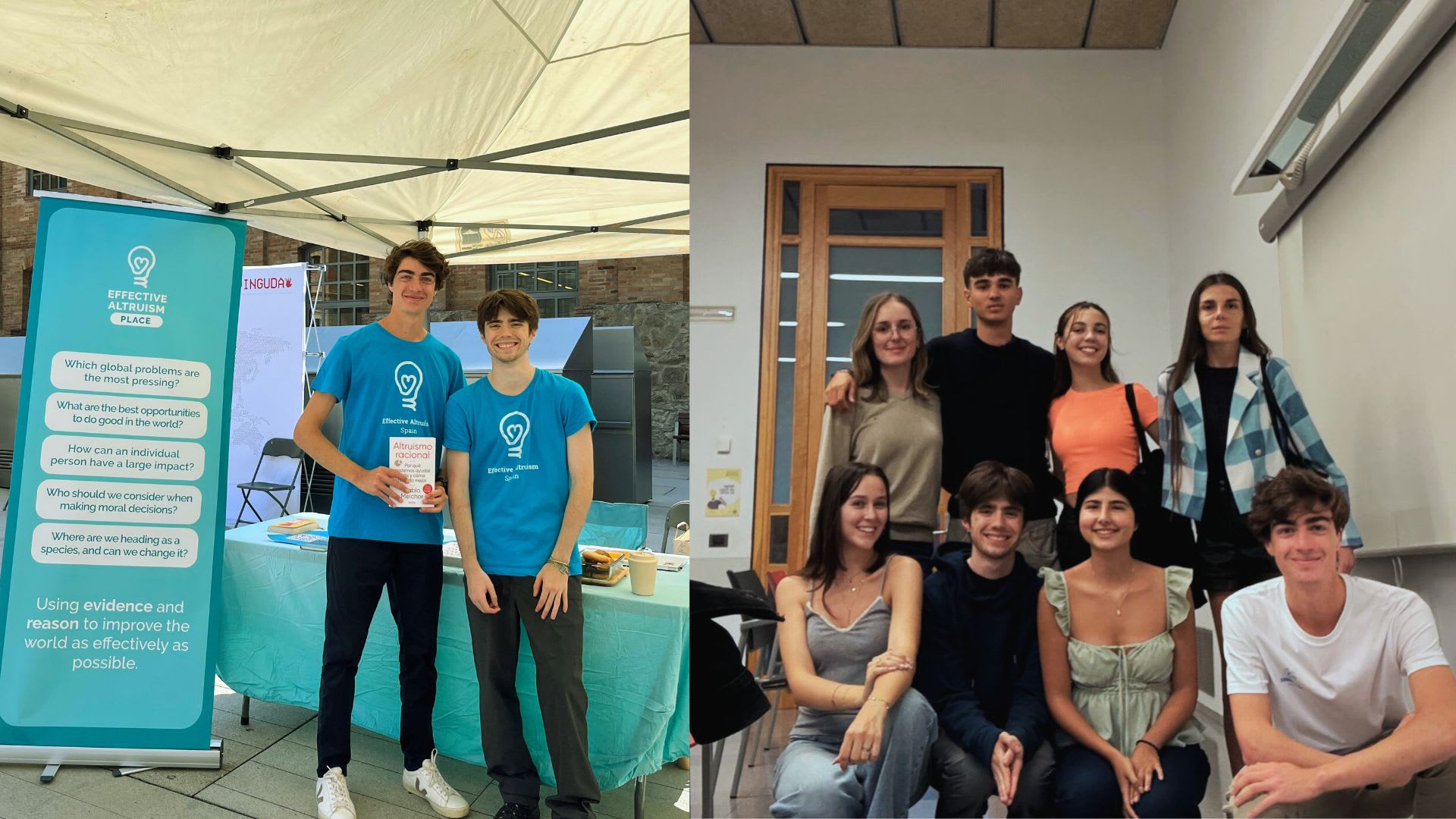
David (far left) grew into a leader of the EA UPF group (pictured tabling at a university fair, and during an introductory fellowship in 2025), and is now commandeering the AIS Barcelona community in 2026.
Late 2025: Navigating the Transition
Initial Funding Cuts
In late October 2025, EAIF informed us that we no longer met their bar for continued funding (we didn’t receive concrete feedback as to why)[3] and advised us against applying again in 2026. At the same time, they retroactively reduced our remaining 2025 budget[4], creating an immediate financial shortfall for work already completed or underway. After negotiations, we secured a limited exit grant to complete existing commitments through December, but this left us with very little runway to properly explore alternative funding paths for 2026.
The news was difficult to process. EA Barcelona had been on a clear upward trajectory, we had ambitious plans to finally create an EA Spain national organisation in 2026, and genuine momentum behind us. So the idea of suddenly needing to let that go felt frustrating, disappointing, and, frankly, difficult to accept.
What we did next
Our initial reaction was to immediately start researching: How did we end up here? Have other groups been in this position before? How did they handle it? And what could we have done differently?
We spent time reading about and talking to community builders from other countries (primarily EA Poland, EA Philippines and EA New Zealand) which had faced abrupt EAIF funding cuts in late 2023 (see here and here). Reading their posts made us feel less alone; clearly, we weren't the only ones to navigate a difficult transition like this.
Looking back, we now realize we'd been so focused on delivering a strong portfolio of events that we hadn't invested enough time in the “meta” meta work of building funder relationships, exploring alternative revenue streams, or creating financial buffers. This meant that when EAIF's priorities shifted, we didn’t already have a network or strategy in place, and had very little time to adapt.
Despite being in a challenging situation, we did what we could in the time we had left, and explored every viable path forward. We drafted detailed proposals for building EA Spain as a national organization, applied for funding through Meta Charity Funders (unsuccessful), reached out to Coefficient Giving and CEA, and had multiple conversations with advisors and other group organizers about what funding sustainability could look like. We also looked into crowdfunding models like Manifund, and reached out to community members or supporters who might contribute individually.
Clarity starts to emerge
Through this process, a few things became clear. Firstly, the EA funding landscape appears to have shifted again since 2023, with funders increasingly focussing more on supporting community building efforts in low and middle income countries. Secondly, the bar for new or continued funding has risen substantially, and funders now seem to require more specific (yet unstated) outcomes which are harder to guarantee or prove in many community building contexts. And thirdly, most alternative paths, whether via crowdfunding, local grants or individual donors, tend to require substantial time investment with very uncertain returns.
By early January, we had to face the difficult question of how to move forward. By this point, Mel had already been operating in this space for nearly three years with year-to-year funding punctuated by uncertain waiting periods of 1-3 months at a time. Anthony had moved into community building in 2025 seeking more stable, mission-aligned work. The prospect of spending several more months continuing to explore funding options with no guarantee of success meant taking on a high level of professional and personal financial risk, which didn’t feel responsible given our circumstances.
Where we are now
We have decided to stop pursuing further grants to compensate our time as community builders for now. This doesn’t mean we’ve given up on EA Barcelona, or more broadly on supporting the expansion of EA in Spain (see below), but it does mean we’ve chosen a different path forward without requiring either of us to take on unsustainable personal risk.
So, this isn't the post we thought we'd be writing back in mid-December. But it's taught us something important: sometimes the right decision isn't to find a way to make it work at all costs, but to transition thoughtfully and preserve what's been built for the future.
Our plan for 2026: transition toward a volunteer-led community model
Our goal for 2026 is to rely on already existing infrastructure and develop a sustainable, volunteer-led community. We aim to do this carefully and realistically, maintaining:
Weekly community announcements about events & opportunities
Regular coworking sessions & social gatherings
A gradual transfer of resources, knowledge, and light-touch guidance to active groups (EA Madrid, EA UPF, AI Safety Barcelona)
Peer-led coordination, with occasional support from both of us when helpful.
If there’s sufficient interest and volunteer capacity, we may also:
Run the occasional expert speaker event, book club or deep-dive discussion
Look at collaborating occasionally with Ayuda Efectiva and Karoteno to strengthen effective giving in Spain.
We don’t have false illusions: we know that momentum will likely slow, and our community size will probably shrink. However, by maintaining the activities outlined above, we hope to preserve a strong core of engaged members and continue providing coordination and mutual support across the active EA groups in Spain, as they independently support their members in pursuing high-impact paths.
Quick disclaimer: Are either of us Spanish?
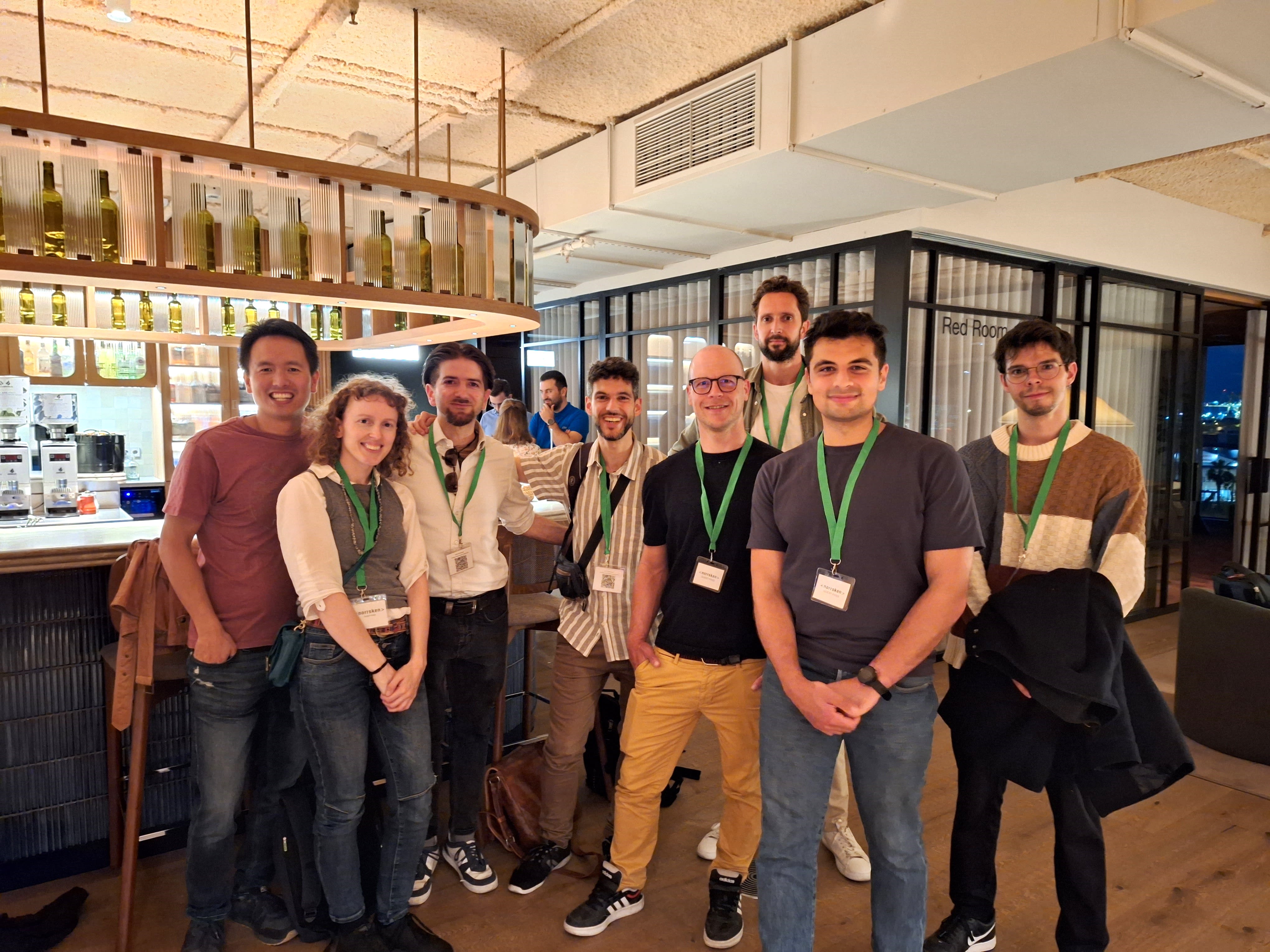
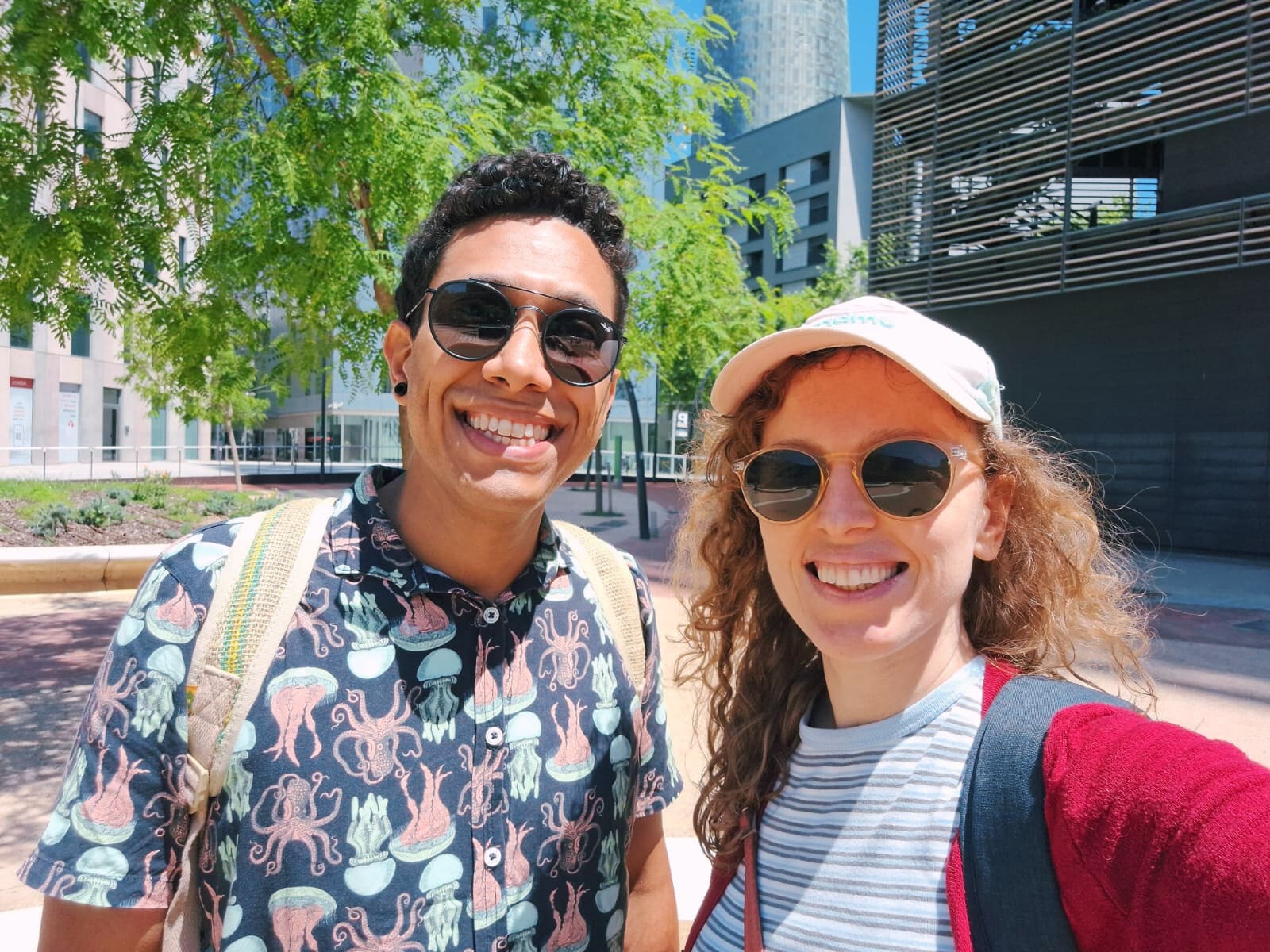
CBs in the sun: Anthony Lara & Melanie Brennan☀️
Good catch! You might have noticed that neither of us have Spanish-sounding names, and indeed, we are not originally from Spain.
More about Melanie: I’m originally from Australia, majored in Spanish at university and studied/worked/lived in Mexico and Argentina. I’ve now spent the past ~9 years living in Barcelona with my Spanish partner, Pablo Rosado (co-founder of EA Barcelona), and 3 years dedicated to growing the EA movement in Barcelona and Spain.
More about Anthony: I’m originally from Colombia, so Spanish is my mother tongue, and I’ve been living in Barcelona for 2.5 years with my Spanish-British-Colombian partner, Laura. I joined EA Barcelona as a member/volunteer in 2023, and moved into a community building role in March 2025.
We’re also fortunate to have our work be continuously supported by key Spanish advisors like Pablo Rosado (Principal Data Scientist at Our World In Data) and Pablo Melchor (Director of Ayuda Efectiva), among many others.
Thank you!
EA Barcelona exists because of the many people who keep choosing to participate - by speaking at events, listening & learning, offering feedback, preparing food, organising a meetup, or quietly supporting others. We’re deeply grateful for all the visible and invisible contributions that have sustained this community throughout the past three years.
Long and incomplete list of thank yous: Pablo Rosado, Pablo Melchor, Tobi Baur, Guillaume Vorreux, Sara Tegler, Andy Masley, Sandra Malagón, Jaime Sevilla, Antonia Boetsch, Lynn Tan, Joan Montoya, Tristan Williams, Sergio Diaz, Isabel Johnson, Lukas & Darcy Robertson, David Bravo, Martín Soto, Marcel Mir, Chengheng Li, Adriá Garriga, Clara Torres, Guillem Lajara, Michael Haeuslmann, Jakob Givoni, Anne Wytzes, Pau Vidal, Laurie Tan, Angelo Romasanta, Anne Reshetnyak, Camila Ariano, Björn Jóhann Ólafsson, Olatz Aranceta, Ricard Soler, Laura Correa.
This is our assumption. It’s difficult to know what the outcome would have been had we not participated, due to the lack of transparency from the Project for Awesome organisers. That said, we think there’s a non-negligible chance that one or both of these charities would not have been selected and therefore wouldn’t have received any money without our participation. You can watch our videos here.
Although we don't have a clear idea of what EAIF expected from us, we inferred what funders might prioritize based on patterns from other communities navigating similar transitions. Groups that successfully secured alternative funding or regained funder confidence often emphasized "high-fidelity" programs i.e. more structured fellowships with demonstrable talent pipelines into priority organizations. In our experience, community building grants rarely come with actionable feedback (continued funding serves as the feedback itself) leaving organizers to reverse-engineer which strategies meet funders' unstated criteria.
What "retroactively reduced" means here: EAIF reduced the budget allocation for our remaining work in September-December 2025. This meant we needed to negotiate for additional funding to cover work already in progress, which consumed nearly a month of our limited remaining time. To clarify, we don’t think this was intentional, but rather an unfortunate side effect of processing our application in the middle of the pending grant period.
Epistemic status: Speculation from two decently informed advocates armed with anecdata.
Note on process: After having some version of this conversation several times and saying, “we should probably write about this publicly,” we took the less heroic route: we recorded one of our conversations, fed the transcript into an LLM, and then substantially revised the structure, substance, and framing ourselves. We will not be sharing the transcript, as it is in...
I want to start by noting that I am amazed and somewhat in awe of what's been accomplished by the EA animal welfare movement. I am enthusiastically supportive of all campaigns that make living and dying conditions less bad for farmed animals.
I worked on such campaigns for almost 20 years, and I'm proud of that work.
That said, I do think it's a strategic error that the EA animal movement has so thoroughly moved on from advocacy for animal liberation and diet change.&n...
The swarm has made me feel AI risk in my bones for the first time
Until the Hugging Face / OpenAI swarm thing, I think I deep down felt pretty skeptical that extinction or serious loss of control scenarios were plausible in the next few years.
I’ve been lurking on LessWrong for years, and I remember being freaked out by Yudkowsky’s ‘List of Lethalities’ in 2022, and thinking that this did seem intellectually convincing, and maybe I should do something about it. But it didn...



Thank you for sharing this so openly, and for your work on this project over the years! As a fellow community builder, I really recognise how hard this work can be, especially when it comes to funding and impact uncertainty.
I can confirm that what you describe matches the reality for many community builders. I’ve been running Hive on a paid basis for almost three years, and funding has consistently been one of our biggest challenges. Tracking and evidencing impact is also genuinely difficult in community building, even when the work feels clearly valuable on the ground.
Given that context, your decision to transition feels thoughtful and solid. I appreciate you taking the time to reflect on this publicly. I think pieces like this are really important for setting more realistic expectations about what long-term community building actually looks like!
Thanks for this, Sofia. This really helps. The "valuable on the ground but hard to prove" tension has been the story of my (admittedly short) CB career. Eight months in and I was already feeling that friction constantly. How do you show that someone's entire trajectory shifted because of a conversation you had? Or that a community exists because you showed up every week?
I'm glad we wrote this openly. I hope more CBs write openly about this reality. The work matters, but the system around it needs rethinking.
Thanks a lot for sharing your own experience which feels genuinely validating of ours, Sofía. We really admire the work Hive and other communities are doing, and hope that by being more open about the many obstacles community builders face, we can help bring about a more constructive and transparent dialogue between CBs and funders.