Note: This post was crossposted from the Coefficient Giving Farm Animal Welfare Research Newsletter by the Forum team, with the author's permission. The author may not see or respond to comments on this post.
Subtitle: On vegan advocacy, effective altruism, and FIFA
I turn 40 today. Here are some hot takes.
On factory farming
1. Our biggest challenge is salience. If factory farming led the evening news, it wouldn’t last lo...
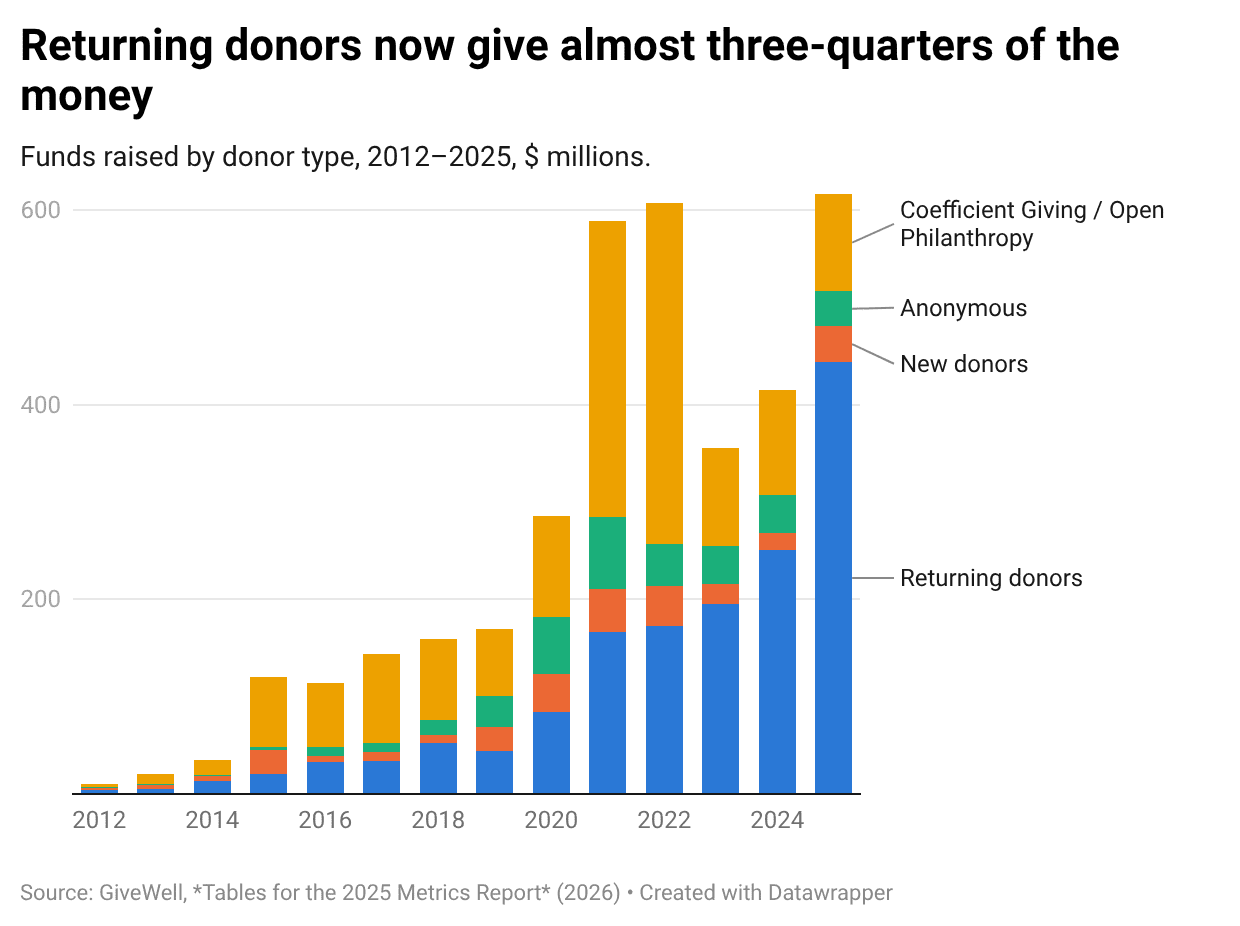
Previously: GiveWell raised less than its 10th percentile forecast in 2023 · GiveWell fundraising up 17% in 2024
GiveWell has published its...
Summary
Over the course of a year, the Fieldshaper program develops you into a field-leading grantmaker. You’ll steward $1,000,000 in grant capital, receive a $125,000 annual stipend, and deploy that capital within a sub-field of one of three key areas (farmed animals, global health, or philanthropic infrastructure); building the track record to become a grantmaker who can shape a field.
Role Details
* Title: Grantmak...

I don't think McMahan would find what you call a 'solution' very appealing: McMahan doesn't think that morality is demanding in the way e.g. Singer does. Further, what you suggest ought to be the default position - morality is really demanding - is something only a small percentage of philosophers (although many EAs) believe is correct.
He doesn't indicate that there is a reason to consider it unappealing. It's not a matter of whether he agrees, it's a matter of whether it's a substantive view that ought to be addressed.
The literature on moral demandingness is fairly split. The proposition that morality is demanding is different from the proposition that demandingness is not a moral problem. The majority of philosophers believe in theories which happen to not turn out to be very demanding in our current world; that does not necessarily mean that they did so because those theories are less demanding, so their views don't really diminish the viability of positing demanding moral principles in response to a new moral problem.