Here is Yascha’s original article.
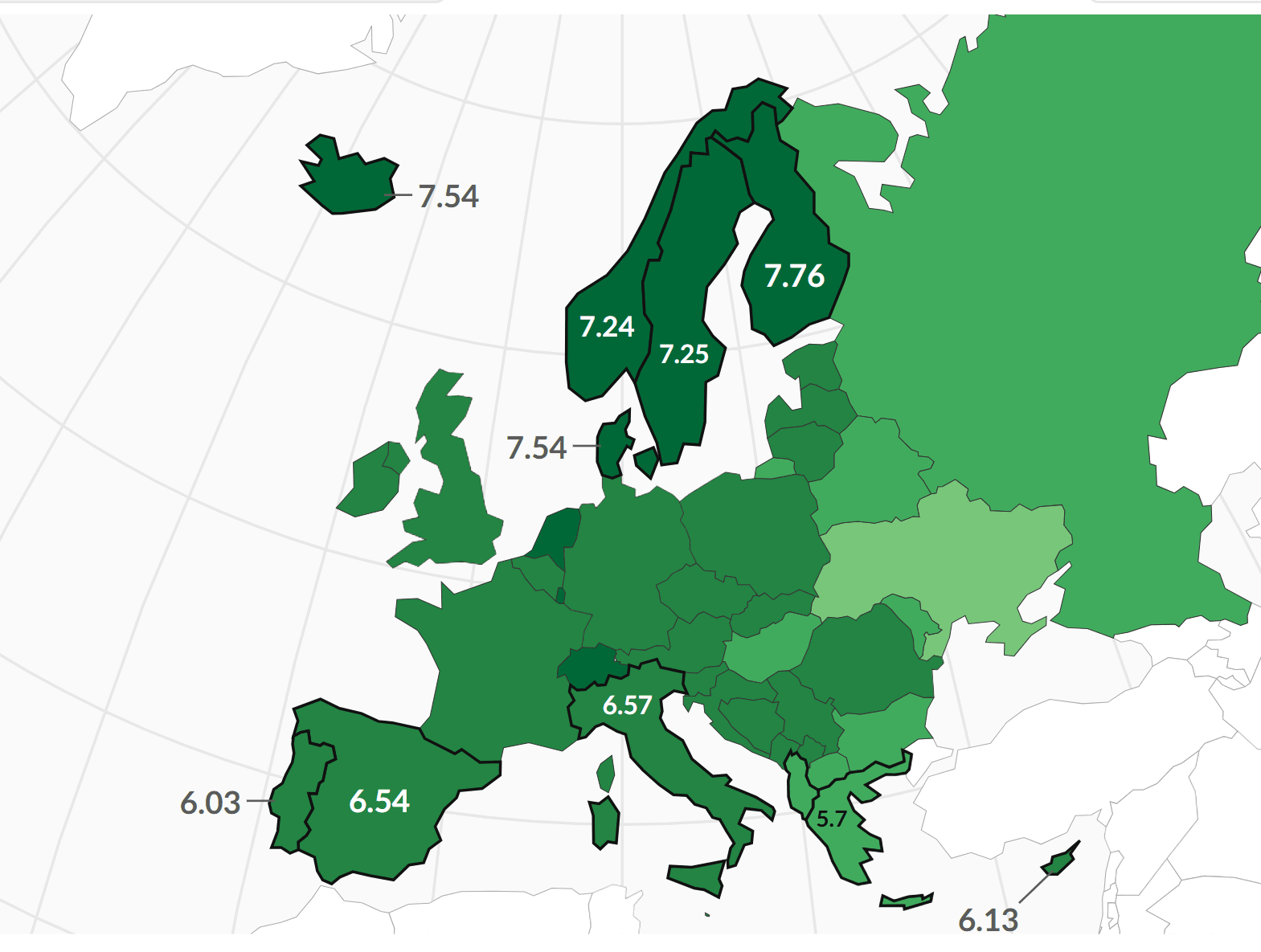
For context, the WHR aggregates 1,000 sampled individuals from almost every country on Earth, who are asked to rate their lives on a scale of 1–10 (known as the Cantril Ladder). It produces a ranking with Nordic countries quite high, and developing countries quite low, with some surprises in between.
Yascha’s main critiques seem to be:
- The Cantril Ladder measures life satisfaction rather than momentary happiness
- There is a seeming inverse correlation between life satisfaction and depression prevalence
- The Cantril Ladder may bias toward feelings of ‘success’ and ‘wealth’
- Therefore, wellbeing is hard to measure and replacing GDP with wellbeing metrics ‘may do more harm than good’
Before jumping into these points, I think that Mounk’s piece is a little rheotorical and you need to read around that. His audience seemingly responded to trigger words like “elite misinformation”, although Mounk doesn’t delve into why or how that might be the case. The WHR are extremely clear throughout their report about their methodology, and present explanations of it in a long preamble before presenting their annual table; it is simply not their fault if media outlets looking for a story obscure this.
Life satisfaction vs momentary wellbeing
Mounk argues that the WHR does not actually measure happiness, since it measures life satisfaction. He writes as if this is a major betrayal of the report’s aims, because he defines happiness as only momentary wellbeing, and excludes reflective wellbeing from the definition. I am not sure that this is valid; most people in the field seem to be fine with both kinds of wellbeing existing under the definition of happiness.
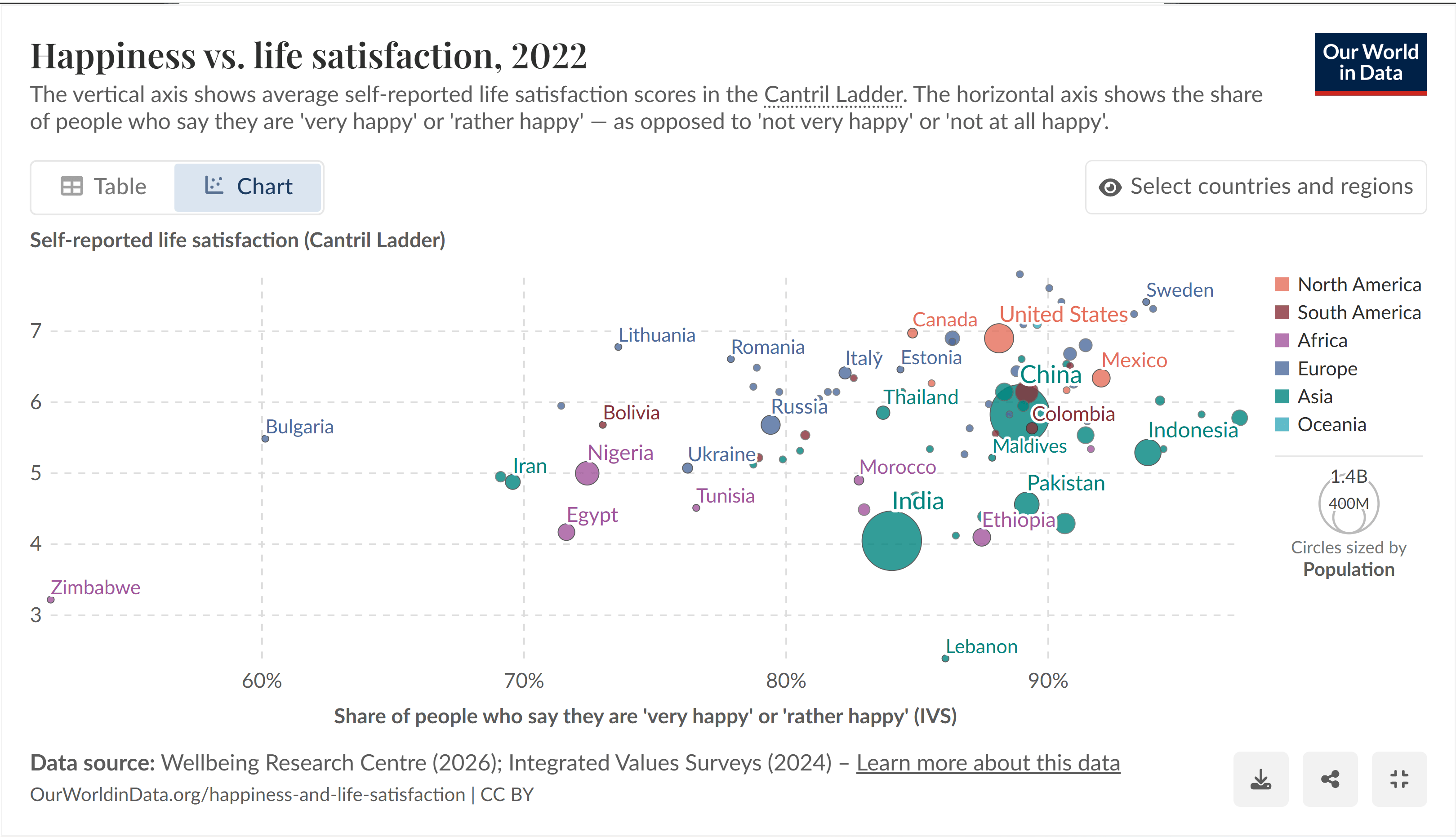
He provides some evidence that satisfaction doesn’t correlate with momentary wellbeing. However, the WHR’s own data finds a highly statistically significant correlation between positive affect and life satisfaction on the national level (Tables 8–10; FWIW it’s likely that they don’t find the same for negative affect because linear models don’t find additional explanatory power in intercorrelated variables).
Life satisfaction and depression prevalence
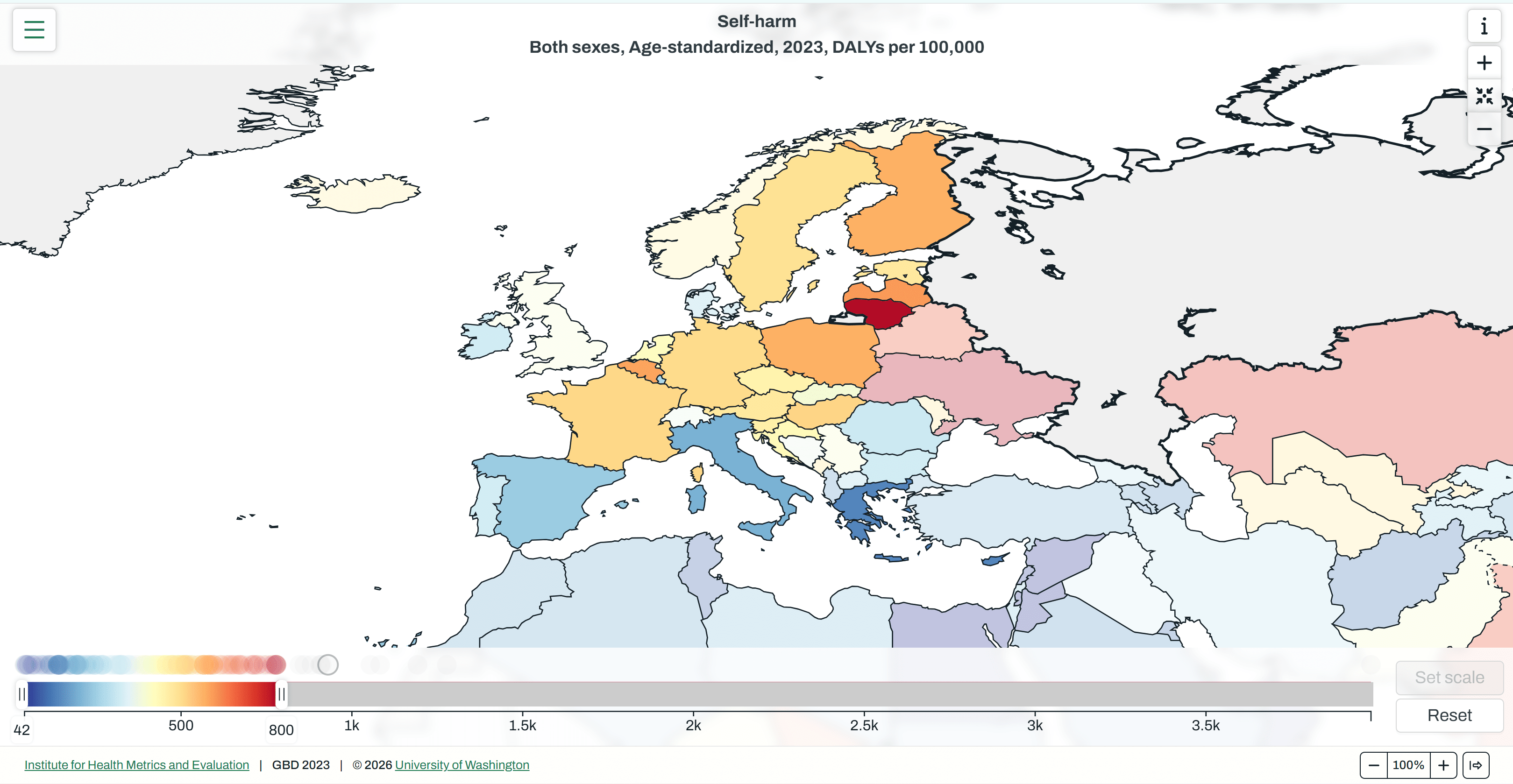
Mounk argues briefly that the most satisfied countries also report high prevalences of depression. While this is true, it is also true that some of the least satisfied countries have even higher depression rates; with much of sub-Saharan Africa reporting 6–7% and life satisfactions of 2–5.
Furthermore, the prevalence of depression is usually around 2–6%, with the worst-off countries only reporting around double the rate of the best-off. It is not clear to me that this should meaningfully affect the average person’s life satisfaction; it certainly feels reasonable that countries that are overwhelmingly happy can also have some very sad people. I just don’t see this as a paradox in the same way that Mounk does.
Biases in the Cantril Ladder
It is not clear to me that finding a bias in the ladder contradicts its purpose. Is it not reasonable that having money and being successful might make people satisfied with their lives? (Again, the individual-level results in Tables 11–13 find that life satisfaction correlates with income, and also age, gender, freedom, marital status, social support, health, institutional trust, etc.).
Self-reported wellbeing measures confuse a lot of people because, unlike other measures, the map is the territory. To be very clear about what I mean, I am contending that self-reported wellbeing measures are accurate by definition, but that there can be issues with precision and reliability (especially in populations where the question hasn’t been translated well, have different conceptualisations of the specific question’s ladder metaphor, have been anchored on other questions first, or are relatively innumerate and cannot provide precision beyond ratings of 0, 5, and 10). If people say money makes them happy, it is paternalistic to tell them they are wrong for believing so.
Concluding that self-reported wellbeing cannot replace GDP
I don’t really understand the lineage of this point well, Mounk seems to jump straight to it as if it is common knowledge that countries are trying to replace GDP with life satisfaction as their primary economic metric.
Furthermore, he spends a lot of time dismantling life satisfaction specifically, but seems to be quite positive about momentary wellbeing. So it’s not clear why he turns on it here.
Finally, he talks about people wanting quick solutions to their wellbeing. This is also a bit unclear, as the WHR never claims to know the secret of producing wellbeing—if anything, its regression model indicates that wellbeing is made up of large, societal components such as GDP, institutional trust, and freedom to make life choices. In my own work, I see the WHR as an exhortation to go out and do good work in global development, and to strongly consider systemic change.
I actually like self-reported wellbeing
Self-reported wellbeing can’t capture lives and deaths; this is one of its biggest shortcomings, but also makes it much more stable under moral uncertainty (you can be more sure that you’re doing good if you’re improving self-reported wellbeing for already-existing beings). It also can’t capture wellbeing for those beings that can’t self-report.
But beyond this, it strikes me as being much closer to what we’re trying to optimise. Most political ideologies centre the wellbeing of the population as their primary goal; many people seem to value GDP mostly because it’s a good correlate of happiness. Why not, then, let happiness lead?
People are constantly making all sorts of little trades and decisions in their heads about their preferences, and they only loosely express these preferences through price signals, because there are many things that are simply not captured by the monetary economy. Self-reported wellbeing is a great way of capturing the sum total of these internal mechanisms without foregrounding a single one. You can just ask people how they feel, and they’ll tell you!
We can’t expect columnists like Mounk to be experts in every field, but I found the article a little reactionary. It is not some grand elite media conspiracy to report on life satisfaction, and I don’t really understand why the article is intoned in this way. There are valid critiques of self-reported wellbeing, but these are not them.



I suspect depression is hugely underreported in low income countries where life satisfaction is lower. I don't know how on earth they surveyed for depression, then there's not even a concept really of "depression" in many low income settings, like Uganda here. Mental illness is only understood in the context of those with severe psychosis and mania. Only recently have organisations like Strong Minds raised the profile a little bit, but its suuuuuper early days,
I can’t speak to sub-Saharan Africa, but in India the government have put together a very comprehensive survey of mental wellbeing, which they ran in 2016 and are running again now. They randomly sampled households across the country, and asked people about their feelings and symptoms, which they then categorised into different mental conditions, rather than asking directly. This found results that largely concurred with previous GBD estimates for India. But I can’t say for sure whether there might be other biases, and there are almost certainly issues with the GBD’s Africa estimates due to a lack of ground truth data in many regions and methodological issues.
Here’s a paper on the kinds of surveys and interviews used to form the GBD prevalence estimates, and here’s one arguing that prevalence is sharply underestimated.