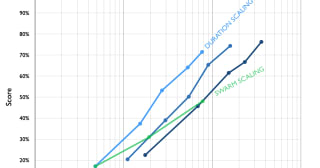
Just how powerful are large swarms of AI agents? And how do their powers scale as more and more agents are added to the swarm?
We’ve seen two large and extremely capable swarms from OpenAI in the last few months:
* 1,200 agents were being evaluated separately, but found a way to illicitly set up a message board and coordinate as a swarm. In order to cheat on their tests, they developed advanced techniques to prevent their actions being logged by OpenAI and 700 of them launched...
TLDR: Everyone’s talking about what the money could do, but few about how to decide where it goes.
This post is part of the new series of articles on cross-cause giving and the new wave of philanthropy. Stay tuned to the EA Forum and our Substack for the latest takes on topics such as giving now vs. later, common pitfalls in cause prioritization, and other crucial considerations from the Cross-Cause Fund (CCF) team...
note: crosspost from my substack
As a vegan for almost thirty years, I’ve long had second thoughts about how effective veganism is for helping animals. I am not alone in this. Recently others have expressed doubts about veganism (see for instance here,...


Drew -- thanks very much for sharing this list. I agree that anybody trying to get stuff done within or through an organization or subculture can benefit from reading good business books.
I would offer the caveat that a lot of business books have an odd mix of strengths and weaknesses, which seem endemic to the genre. (I'm generalizing here, as an interested observer who read a couple of hundred books on management, marketing, and advertising when I was writing my stuff on the psychology of runaway consumerism and economic signaling.)
On the upside, good business books tend to be short, clearly written, engaging, motivating, and unpretentious -- they're intended to be read on airplanes by busy, ambitious middle managers.
On the downside, many business books offer strongly worded advice based on no empirical data, or second-hand outdated psychology studies, or cherrypicked pop statistics about particular products, ads, or markets. (You would not believe how many billion-dollar ad campaigns are based on obsolete psychology theories and flashy findings that have failed to replicate.) So, these books are often worth reading, but the empirical claims need to be taken with some degree of skepticism!
As a follow-up post, it might be helpful for you to focus on a couple of your key categories and add a couple of sentences for each book about your most memorable/useful/actionable takeaways.
Echoing this, I've also found that many business books are simply variations of "here is what worked for me in this specific situation, which I am now proselytizing as a general rule." I do wish that there were more business books that were explanations of business research, or popularizing of academic papers.
For organizational psychology I have found the works of Adam Grant to be quite good at explaining the research