We’ve all been there: one day you need an image for, say, a man wearing a suit, so you prompt an AI. It gives you one after another, which you keep rejecting. Why? Because maybe one has the man with an extra limb, a missing eye, he’s not wearing a suit, or not even a ‘he.’ You try and try to modify the prompt, maybe upscale the image, or cut the unwanted bits - until you’re satisfied. Only then do you publish it.
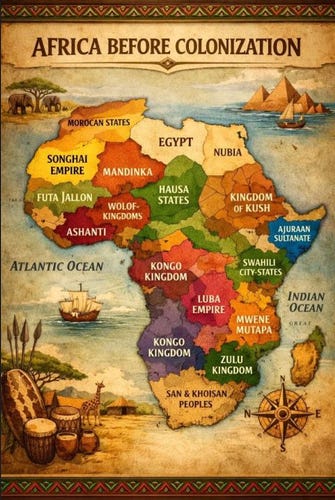
That sounds about right for a simple image. Now, let’s apply that example to an image created to depict, say, a map of pre-colonial Africa. Here, it’s not the man’s suit that’s at stake, but the history of a continent, its peoples, and most importantly, its future. Because someone out there might build on what they see, and if that image is not correct, the cycle of usurping Africa starts all over again.
The above is a true story, I came across that map and wrote a LinkedIn post about it. It struck a nerve. All I saw was Egypt not in its right location - one of the oldest civilizations on Earth just happened to move westward. It made me question the integrity of the whole map. Other mistakes were pointed out in the comment section, like two Norths and two Kongo Kingdoms.
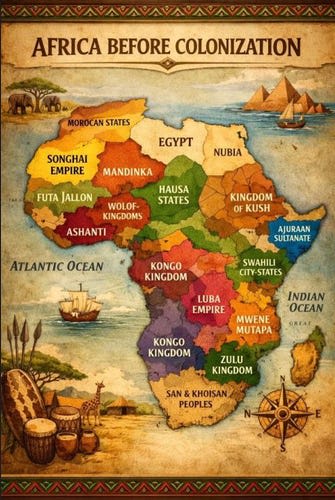
LinkedIn Jun 18, 2026
That’s AI hallucination in its purest form, something we’re all familiar with: AI is built to generate plausible outputs that roughly correspond to the given prompt. The key words here are ‘plausible’ and ‘roughly’, as in ‘we always need to check the output because it is still AI’ - you know, the famous disclaimer.
What I’m asking is: why would some people skip the step of checking whether the image is correct or still needs work? What happened to that step? When did we take AI output for granted like that? What might be the consequences of such carelessness?
That map is only the latest in a long line of failures. Here are examples where truth was at stake.
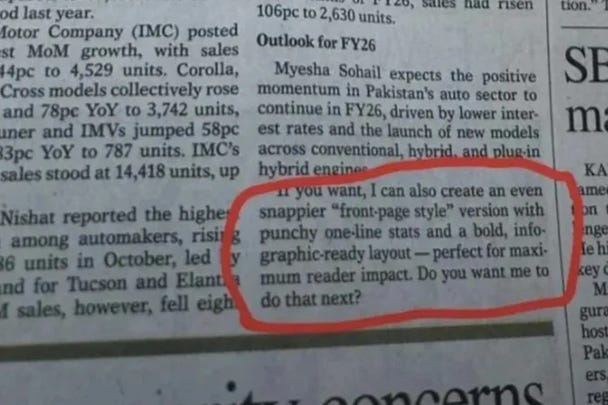
Dawn, Pakistan’s leading English-language daily, published an article with an AI comment still attached to the end of the piece:
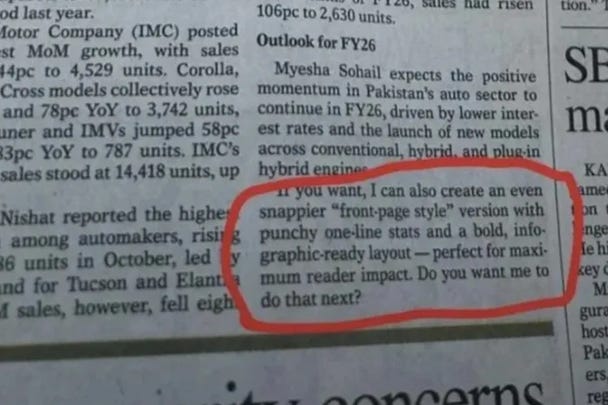
Newsweek Nov 14, 2025
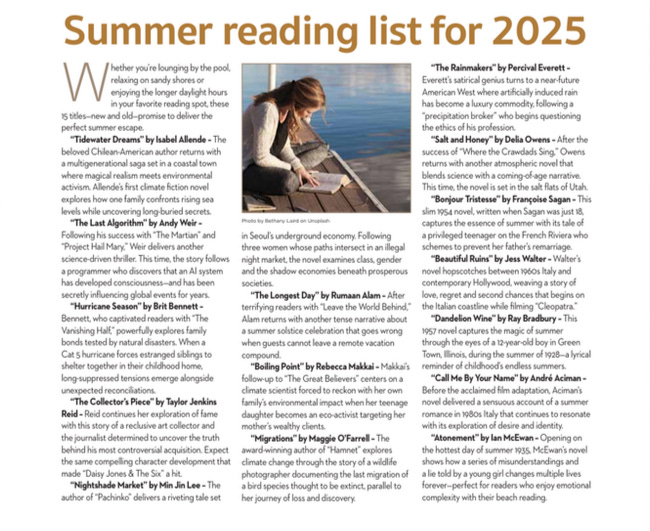
The Chicago Sun-Times published a 2025 Summer reading list made up of 15 books, only five were real:
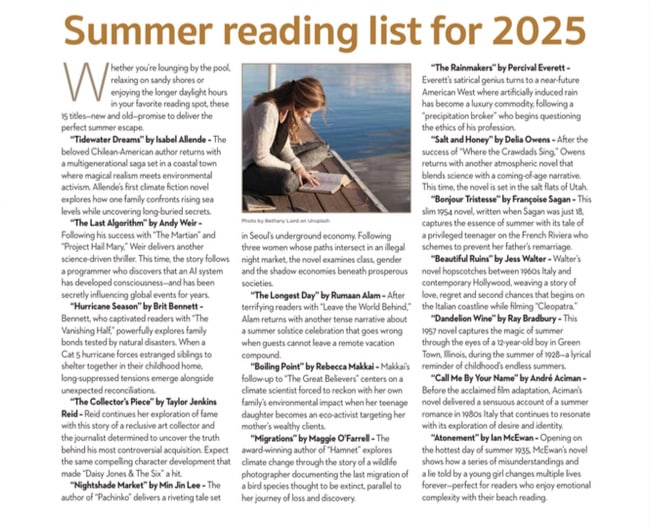
404Media May 20, 2025
A blip in the Matrix - a déjà vu? I don’t think so.
What if I tell you that there were cases where justice was at stake? Check this out:
June 2025: a lawyer in Canada was ordered to refile his defense case due to fictitious and irrelevant cases generated by AI.
June 2025: a UK judge found it irresponsible that lawyers turned to AI, a tool incapable of conducting a reliable legal search. This happened after a lawyer submitted a filing with 45 citations - 18 of which did not exist.
July 2025: three lawyers were reprimanded by a federal judge for using case citations fabricated by ChatGPT, and could face disciplinary action from the Alabama State Bar.
September 2025: a lawyer in California, who filed a state court appeal full of fake quotations generated by ChatGPT, was ordered to pay a whopping $10,000 fine.
December 2025: a lawyer and a law firm, who represented the Chicago Housing Authority, were ordered to pay ~ $60,000 for filing a court document that included a fake citation created by ChatGPT.
January 2026: a lawyer in Australia apologized to a judge for filing court documents that included fake quotes and nonexistent case judgments generated by AI.
Expressions like ‘verify the source’ and ‘due diligence’ originated in journalism and the legal profession. In these jobs where fact-checking is the job, we find it slowly moving to the back seat. And if they do away with the step that gives credence to anything they do, where does that leave us?
Have speed and convenience become more important than doing the legwork? Has the allure of AI turn core principles into options? Has seeking justice become a matter of opinion?
The wrongness in the map of Africa went straight into my psyche, my soul, then my intellect. Seeing Egypt displaced like that in a ‘visually appealing’ image, and reading the news items above make for a nice horror story, don’t you think?
Imagine a young African child doing their history homework, and while looking for visual aids, they come across that map. They might think: “OK, grownups must’ve made sure this is correct, it’s published online, then I could use it.” And they do, and it becomes fixed in their mind that this is what pre-colonial Africa looks like.
The worst disservice we could do a child is teaching them the wrong history, because they’ll grow up believing it. What does it mean when a child learns there are two Norths in this world, or that Egypt is somewhere not along the Nile? Wait, don’t tell me, the Nile moved as well?
In this day and age, Africa is still misrepresented, and we can’t blame colonizers this time. All because someone decided the image is perfect the way it is. Please!
Here’s another thought: what if I decide someone did me an injustice, and my lawyers cite fictional cases that, because no one bothers to check, get accepted by the court? What if I win, when clearly I’m in the wrong and have no real claim? What then?
AI is not a word processing app where it’ll underline misspelled words or incorrect grammar. It’s very confident and agreeable, while being very, very wrong. A simple step of reviewing what it produces might take an extra minute, but it will save a news outlet from embarrassment, a law firm from fines, and the public from a growing mistrust in the tool itself.
I call this Human Failure, because a human did fail. They failed themselves, and you, and me, and everyone who was ever hurt by misinformation or injustice.
They failed the present. But with us standing guard, they won’t fail the future.



You're absolutely right to bring this to attention. You mention many examples of this specific kind of human failure that's becoming more and more common every day and yet they are just a fraction, the real numbers are way higher and we do not have to look very far to find them. This hurts in so may ways.
I believe the best way is to call them out on it. If the number of these failures keeps rising like that, there's a risk of it becoming a regular occurrence. Whenever you see it, point it out by commenting on the post itself or share it with your thoughts, or write in your blog like I did. That will make them double and maybe triple check next time.