If you think your biggest asset is "My professional network. My word. My ability to vouch for someone, and mean it."
Then you of all people shouldn't be putting your ideas through an LLM to turn them into an over-long essay, since "LLM-generated text is not testimony". LLM text lacks the ability to vouch for anything -- to quote that post, "When you're making an assertion, we need you to be staking some of your reputation on the assertion," but using AI-written text makes it unclear how much reputation you're really staking on what "you" are saying. "If you speak in LLM, we cannot see what you are thinking, how you are thinking it, how you came to think that way."
Anyways, on the object level, I'd note that many EA organizations already hire pretty differently than normal organizations in an attempt to address the various shortcomings you assume -- most EA orgs seem to put a heavier emphasis on work-tests and blind grading of such tests, precisely because this helps get around the problem of just looking at credentials and career history.
My hunch is that there is also fairly extensive vouching going on behind the scenes -- but the vouching has to necessarily proceed along the social graph, since the reputation of the person doing the vouching must itself be good. So it's hard to just sell vouching-as-a-service to random people who don't yet know you.
I'm Finding a Way to Give That Isn't Money or Time — EA Forum
I'm Finding a Way to Give That Isn't Money or Time
Headline finding: I audited 17 AI Safety Talent programmes. Zero of 17 have published any comparison group, rejected-applicant follow-up, matched control or randomisation. Not one. Every programme that mentions a counterfactual does it by asking participants to self-report.
Background
At least $70 million...
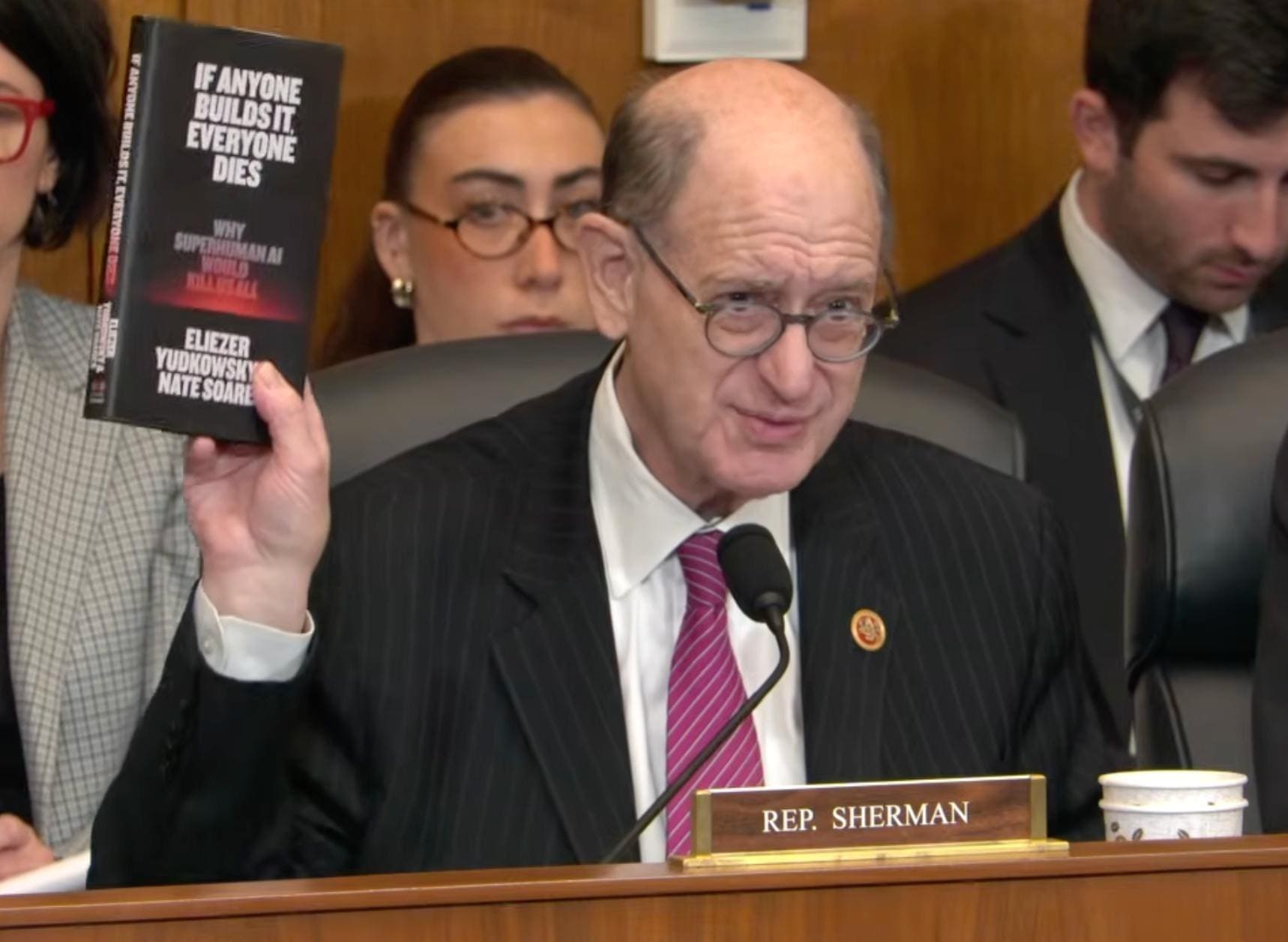
In celebration of still being alive and fighting, we are giving away 1,000 Amazon e-books of “If Anyone Builds It, Everyone Dies”. Feel free to send a copy to yourself, a loved one, or a friend—we need all hands on deck.
Today marks exactly one year since If Anyone Builds It, Everyone Dies: Why Superhuman AI Would Kill Us All, by Eliezer Yudkowsky and Nate Soare...
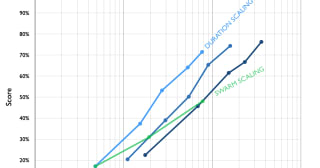
Just how powerful are large swarms of AI agents? And how do their powers scale as more and more agents are added to the swarm?
We’ve seen two large and extremely capable swarms from OpenAI in the last few months:
* 1,200 agents were being evaluated separately, but found a way to illicitly set up a message board and coordinate as a swarm. In order to cheat on their tests, they developed advanced techniques to prevent their actions being logged by OpenAI and 700 of them launched...
I've been lurking in EA for two years without contributing much. I kept asking myself: if I don't have much money or spare time, what do I actually have to give?
I want to create impact. Genuinely. But wanting was never the hard part — knowing where I actually fit into it was and kinda still is.
I've built small, steady income sources, I farm and run a small café now — a long way from where I started, designing chips. Comfortable, but not free: school funds for my kids and other commitments meant real money was rarely available to give. And even without the money pressure, Till now I never had the kind of spare time the causes I care about deserve. I did give it a serious try by volunteering but somehow i felt any meaningful contribution required more serious effort and time otherwise it would be unfair to others who go passionately full time.
For a long time, I even secretly envied people with a charity-pledge icon next to their name. Hell, I even told myself it was performative — a badge people wore to be seen giving. It took me longer than I'd like to admit that this was just easier than admitting I hadn't found my own way in.
That left me circling an uncomfortable question: if I have neither significant money nor spare time, what do I actually have to give?
I suspect a lot of people live right here — wanting to create impact and have that amazing feeling that they did something which mattered.
Then, during the HIP (High Impact Professionals) accelerator, I saw it — in a spreadsheet, of all unglamorous places — the thing I'd been circling for many years without ever naming.
There was a third asset. I'd been sitting on it the whole time.
My professional network. My word. My ability to vouch for someone, and mean it.
So I Started Calling It Portable Trust
People have always done this informally.
You know someone. You know they're good. Someone is hiring. You make an introduction and say, essentially, you should talk to this person — I've seen them work.
That's not a new behaviour.
The idea I started wondering about was whether we could make that behaviour measurable and portable — and connect some of the economic value it creates to impact.
I'd started circling the idea during HIP program — pure gut instinct, nothing thought through yet. What I kept noticing was my cohort-mates: sharp people, strong skills, completely portable — but sometimes lacking someone credible enough to vouch for them in the right room. That meant starting every application from zero. Cover letters, long forms, networking sprints, cold applications because getting it wrong is expensive.
The more senior the professional, the more expensive that uncertainty can become. I have a strong feeling that this is a small reason it is difficult for organizations to access strong mid- to senior-level aligned talent.
But there was a second thing I noticed.
A résumé tells you what someone says they've done. A vouch tells you that someone else is willing to put their own credibility behind it.
That's not magic, and it isn't necessarily better than a good hiring process. But it is a different kind of information — information built from having actually worked with someone and unlike a résumé, the person making the vouch has something at stake too.
That made me wonder:
In almost every professional network, there is trusted knowledge about people that never gets captured. What if some of that uncaptured trust could be turned into impact? Without writing a cheque. Without volunteering a single hour.
Experiment & Learning
To test whether this was real beyond theory, I ran a small experiment. I literally just DM'd founder friends and asked them to route product talent through me along with their usual agencies. It was incredibly manual, and I felt a bit awkward asking, but three people got jobs, it was a tiny sample, but two of the three people are still with the companies that hired them. That's encouraging, but I don't think three placements are enough to tell me much about retention yet. It was enough, though, to think there was something worth digging into. Honestly, it just felt good — that specific kind of good you get from helping someone land something they wanted.
So I scaled it up with a friend based in Ireland, first through AITalent.club, then Fameflock. One early observation was that basic skill matching was less difficult than I expected. Matching on industry, area of expertise, seniority and current salary produced a workable shortlist surprisingly often in our small sample.
But I don't want to make too much of that number. The sample was small, and "workable shortlist" isn't the kind of metric from which I'd want to make a grand claim.
The more interesting problem was what the data couldn't capture.
What none of that data catches is the part that actually decides things — someone who already knows you being willing to put their own name behind you. That's not information; anyone can list years and skills on a form. It's someone quietly risking a piece of their own credibility to say, trust me on this one — I've seen them work.
And that's part of why it can carry weight when the usual signals leave uncertainty: it's built on time spent together that no form could ever show, and if you let them down, it's their name that takes the hit too, not just yours.
Which is when it clicked:
A placement doesn't prove portable trust. Retention does.
If someone gets hired because of a vouch and leaves three months later, the intervention may not have created much value. If they remain in the role, perform well and continue developing, that's much stronger evidence that the trust signal actually helped produce a good match.
That's the kind of evidence I want to generate.
Vouching is trust in action. In the small number of placements I've seen, it has generated real economic value. Whether that translates into impact is what I'm trying to find out.
Now I'm doing the biggest version of this yet —
Trying to make trust actually travel, for people who'd otherwise never get the chance to be seen.
And there it is — the third way. The one I never had a name for, back when I first started asking the question.
Give money. Give time. Give trust. Three ways to matter — and only one of them never once asked me for something I didn't have.
What I'm actually testing?
I'm testing something very narrow - Can an existing professional relationship be turned into a portable and repeatable trust signal? And if they do, can the economics of those placements support an impact mechanism?
I'm going to judge that by a few simple measures: whether people actually vouch when asked, how often those vouches lead to interviews and placements, how long those hires stay, and how much incremental funding reaches the intended beneficiaries. The first useful signals will be activation, time-to-close, 30/60/90-day retention and the resulting impact allocation.
The pilot is therefore built around skill-based cohorts rather than an open marketplace.
Right now I'm running the first chapter myself, from India — partly because that's simply where I am, but also because I think there's real, strong talent here that conventional hiring systems consistently miss. I don't have proof of that yet. It's a big part of why I wanted to test the access hypothesis here first, rather than somewhere it's already well-covered.
If you know someone who fits, you vouch for them.
That's the whole ask.
No fee. No recruiting assignment. No expectation that you spend hours screening candidates. Just a few honest words about someone you actually know.
If that vouch contributes to a successful placement, a placement fee is generated — the kind of fee a recruiter would normally receive.
The current model allocates the fee across the people and local chapters involved in creating the outcome:
This is the actual current split of placement fee:
Recipient
At close (guaranteed)
On verified retention (metered)
Total
Chapter lead
20%
15%
35%
Platform
15%
10%
25%
Local community fund
15%
15%
30%
Employee skill-upgrade fund
0%
10%
10%
I'm treating this weighting as a current design choice, not a settled one, and I'd like it picked apart — especially through a game-theory lens.
One asymmetry I'll flag myself: the platform's own share is the most guaranteed of the four (60% at close vs. 40% metered), more front-loaded than the chapter lead's, and well ahead of the local fund and skill fund, which lean or fall entirely on retention. That means the two parties closest to actually running the mechanism are also the least financially exposed to whether it works long-term — which sits awkwardly next to my claim that retention is the real test.
The practical reason is that the platform and chapter lead carry different kinds of costs. Platform costs scale with usage — every vouch and user adds infrastructure and support load whether or not a placement happens — while the chapter lead's effort is more closely tied to actual placements. That gives me a reason for the asymmetry, but not a clean reason for the exact 60/40 vs. 57/43 split. I genuinely don't know if that weighting is right.
If a trusted relationship helps create economic value, can some of that value flow back to the communities that generated the relationship and toward other forms of impact? That’s the Goal.
What I find interesting is that this doesn't necessarily need another donor. If the placement happens, the economic value is already there. I'm trying to see whether some of that value can be redirected toward impact without taking away the reason for the hiring transaction to happen in the first place.
I want to be clear what i am not arguing.
I'm not arguing that every community-generated hiring fee is automatically high-impact.- It isn't.
And I'm not arguing that giving trust is morally equivalent to donating money to a highly effective charity. - It isn't.
One more thing I want to be upfront about, because I think it is easy to misread this: this isn't a recruiting company that added a donation feature to look better. If the part where value routes back to a community disappeared tomorrow, I'd have no reason to keep building this. The hiring mechanism is the vehicle. The question I actually care about is whether trust can become a real path for people to create impact — hiring just happens to be where I can test it first.
I'm interested in a narrower question:
What other resources do people already possess that can sometimes be converted into measurable impact?
Professional trust is one candidate.
Most people cannot donate a meaningful percentage of their income. Many people cannot volunteer ten hours a week. But a surprising number of people already know someone whose abilities they trust.
The marginal action can be very small: make a credible recommendation. If that recommendation contributes to a successful hire, there is an economic transaction behind it. If some of that transaction can then be directed toward impact, the original act of vouching has effectively become a new path for resources to move. That’s it.
What If Trust Could Move Like Money?
Picture it actually working — somewhere, an EA-aligned local chapter, often run largely by volunteers and operating with very limited funding, receives money it didn't have to fundraise for. Not a donation that required another donor to decide to give. A placement fee, rerouted because someone in that community helped create the trusted relationship that contributed to the hire.
That's how i want to enable impact. (There could be better ways i am sure)
Local EA chapters aren't just places to meet people. They're where people find each other, build relationships, hear about opportunities, and sometimes turn a shared interest in impact into something they actually do together. Much of that work happens in many small interactions: introductions, conversations, events, community-building, and relationships that may only become useful years later.
If someone from that community helps create a relationship that eventually leads to a hire, could some of the value from that transaction flow back to the EA local chapter that helped make this possible?
That matters because community-building is often one of the least visible forms of work in an ecosystem. A chapter may help create the relationship that eventually produces a high-value outcome without ever participating in the transaction that generates the money. The experiment I'm interested in is whether that gap can be closed.
If trust can move like money, some of that value could return to the communities that helped create the trust in the first place.
If it works, I want to see whether showing up for people you know, year after year, can become economically and socially valuable — to them, to you, to their local community chapter.
For me, this started with a very personal question:
If I don't have enough money to give and I don't have enough time to give, what do I actually have?
I think the answer might be trust.
Now I want to find out whether trust can actually move like money — and whether, when it does, some of that movement can become impact.
Where This Stands Today
Here's what this actually looks like right now — Demo of a live profile: [Generosity Profile link]. Every voucher gets a page like this: a running history of who they've vouched for, how many requests they've reviewed, the causes they've chosen to stand behind.
Right now I'm focused on two cohorts — embodied AI and robotics engineers, and recruiters trying to move into AI safety orgs.
You can request a vouch, vouch for someone you know, or look at a voucher's history there yourself. I'm not trying to convince you the system works — I want to make it tangible enough that you can judge that for yourself.
If you want to help me stress-test it: what incentives am I missing? How would you game this?
Why This Could Fail
I think there are three things that would need to be true for this to work as an impact mechanism.
1. Vouched hires need to retain better.
The first hypothesis is that someone who comes recommended by a person who has actually worked with them is more likely to be a good fit for the role.
If vouching produces placements but those hires don't retain — or don't perform well enough to justify the hire — then I've probably overestimated the value of trust as a hiring signal.
That's why I'm treating 30/60/90-day retention as one of the most important early signals. A placement is an event. Retention is evidence that the match actually worked.
2. It needs to improve access to talent that conventional hiring systems miss.
The second hypothesis is about who gets through the door.
A lot of hiring systems are optimized around easily legible signals: recognizable universities, previous employers, conventional career paths, and keyword matches.
I'm interested in whether a credible vouch can help strong candidates who don't have those signals get considered — particularly people from less easily legible educational and professional backgrounds.
If Vouch simply routes the same candidates who would already have been found through LinkedIn, recruiters, referrals and existing networks, then the trust mechanism may be useful, but it isn't solving the access problem I'm interested in.
So I want to measure not only how many people get hired, but who gets hired because someone was willing to vouch for them.
3. The economics need to work relative to the impact created.
The third question is whether the mechanism can sustain itself.
The underlying hiring transaction already creates economic value. The question is whether we can route part of that value toward impact without adding so much operational cost that the mechanism stops making sense.
If it costs almost as much to operate the system as the economic value available to distribute through the impact mechanism, then I've built an expensive redistribution mechanism rather than a scalable impact mechanism.
So I'll be watching the relationship between the cost of generating a placement, the placement fee, retention, and the amount that ultimately reaches an EA-aligned local chapter or other intended impact allocation.
For me, failure would therefore not mean that Vouch doesn't become a large company.
It would mean that the underlying hypothesis doesn't survive the evidence: vouched hires don't show strong retention, the mechanism doesn't meaningfully expand access to overlooked talent, or the economics don't leave enough value to create meaningful impact.
If any of those happen, that's useful information. The point of the pilot is to find out whether the mechanism actually works, not to prove that the original idea was right.
If you can see a hole in this I haven't spotted — a reason the signal doesn't hold, a reason it just favors people who were already fine, a reason the math never works — I'd genuinely rather hear it now, in the comments, than find it out later on my own. That's most of why I'm writing this down at all.
If You Want to Help
There's one thing that would help more than anything else right now: an introduction to someone who actually runs a local EA chapter.
Here's why that matters more than it might sound like it should. I can keep testing this inside my own network indefinitely, but the actual premise — that a placement could route real money back to the community behind it — only means anything once a real chapter is willing to test that with me. That's a far better proof than another paragraph from me could ever be.
If that's you, or you know someone who leads one, I'd like to talk. Not to pitch anything — just to find one or two chapters willing to be the actual test.
-8
More posts like this
196
New video from Ali Abdaal (5.74m YT subscribers): Why I’m giving 10% of my income to charity (forever)

If you think your biggest asset is "My professional network. My word. My ability to vouch for someone, and mean it."
Then you of all people shouldn't be putting your ideas through an LLM to turn them into an over-long essay, since "LLM-generated text is not testimony". LLM text lacks the ability to vouch for anything -- to quote that post, "When you're making an assertion, we need you to be staking some of your reputation on the assertion," but using AI-written text makes it unclear how much reputation you're really staking on what "you" are saying. "If you speak in LLM, we cannot see what you are thinking, how you are thinking it, how you came to think that way."
Anyways, on the object level, I'd note that many EA organizations already hire pretty differently than normal organizations in an attempt to address the various shortcomings you assume -- most EA orgs seem to put a heavier emphasis on work-tests and blind grading of such tests, precisely because this helps get around the problem of just looking at credentials and career history.
My hunch is that there is also fairly extensive vouching going on behind the scenes -- but the vouching has to necessarily proceed along the social graph, since the reputation of the person doing the vouching must itself be good. So it's hard to just sell vouching-as-a-service to random people who don't yet know you.