Comments
Summary
- Cost-effectiveness analyses (CEAs) of interventions accelerating animal welfare reforms usually estimate the increase in the welfare of the target animals (for example, hens in cages) based on the acceleration in years of the full implementation of the reform. This makes sense if each level of implementation of the reform is accelerated as much as its full implementation.
- However, there are many cases where the acceleration of the full implementation of the reform is not enough to determine the number of animals helped, or animal-years improved. I discuss some below.
Context
CEAs of interventions accelerating animal welfare reforms usually estimate the increase in the welfare of the target animals (for example, hens in cages) from one of the following:
- “Increase in welfare per animal helped”*“animals helped” = “increase in welfare per animal helped”*“initial number of animals raised per year in the baseline conditions”*“acceleration in years of the full implementation of the reform”.
- “Increase in welfare per animal-year improved”*“animal-years improved” = “increase in welfare per animal-year improved”*“initial population of animals (alive at any time) in the baseline conditions”*“acceleration in years of the full implementation of the reform”.
Using these formulas makes sense if each level of implementation of the reform is accelerated as much as its full implementation. I illustrate this case below. The full and dashed lines represent the (expected) population of animals in the baseline conditions without and with the intervention. Without the intervention, there would be no animals in the baseline conditions after years. With the intervention, there is an acceleration of not only that, but of the whole trajectory of the population by years. The animal-years improved are given by the area between the lines, which is “acceleration in years of the full implementation of the reform ()”*“initial population of animals in the baseline conditions ()”, as in the 2nd formula above.
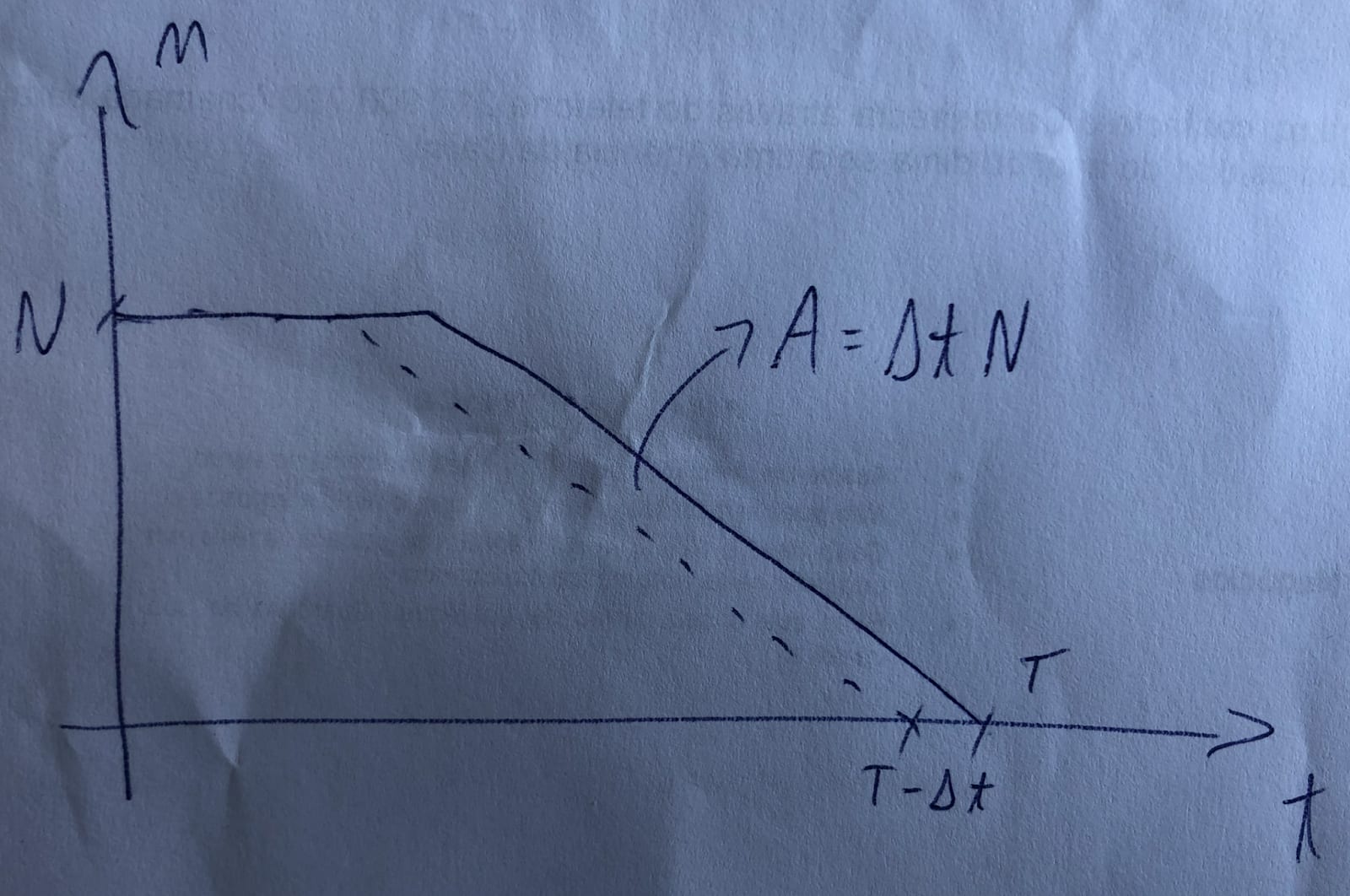
However, there are many cases where the acceleration of the full implementation of the reform is not enough to determine the number of animals helped, or animal-years improved. I discuss some below.
Accelerating animal welfare reforms
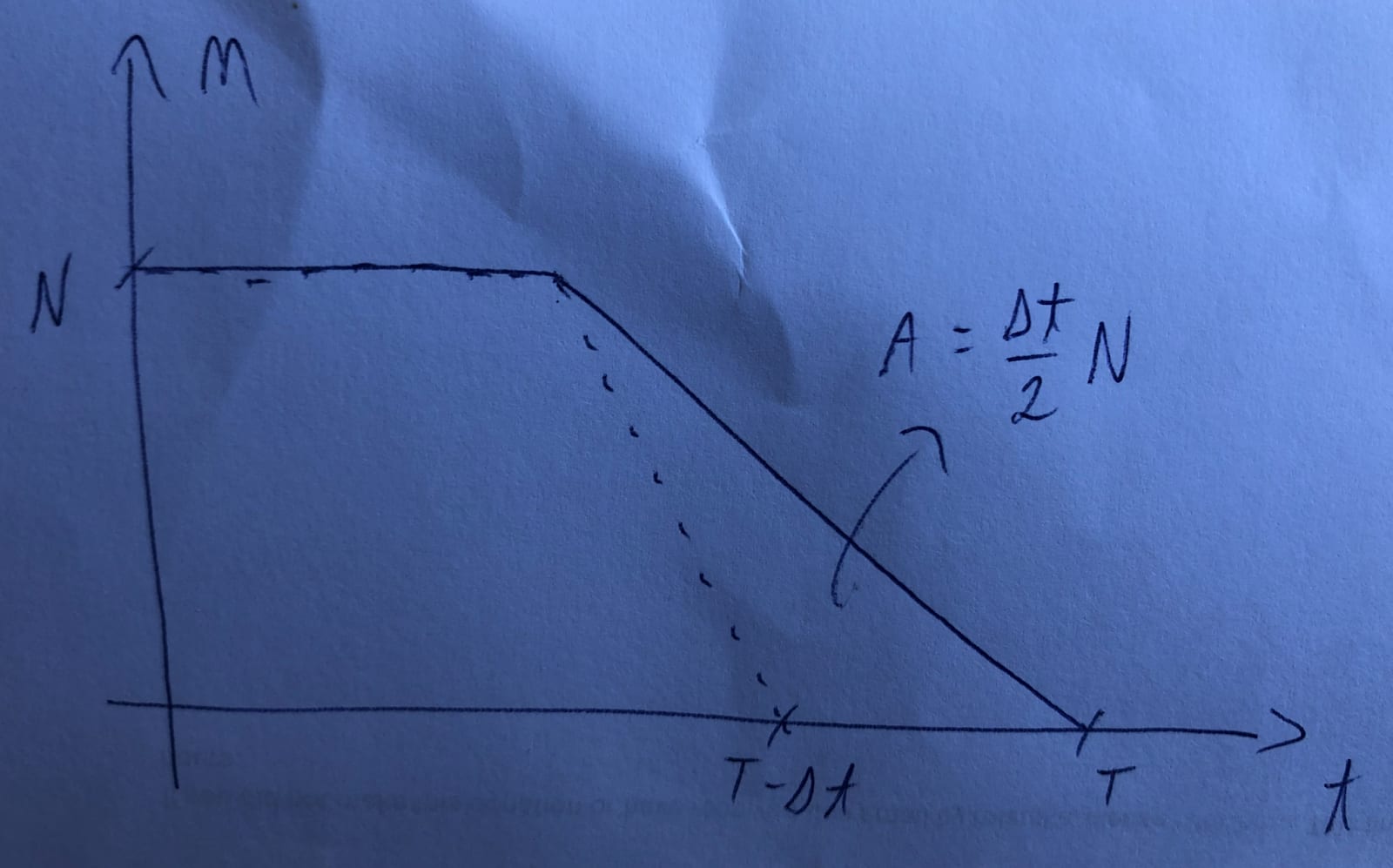
I illustrate below a case where the intervention accelerates the full implementation by years (as above), but does not change when the population of animals in the baseline conditions starts to decrease. The animals-years improved are , half of those improved in the case above.
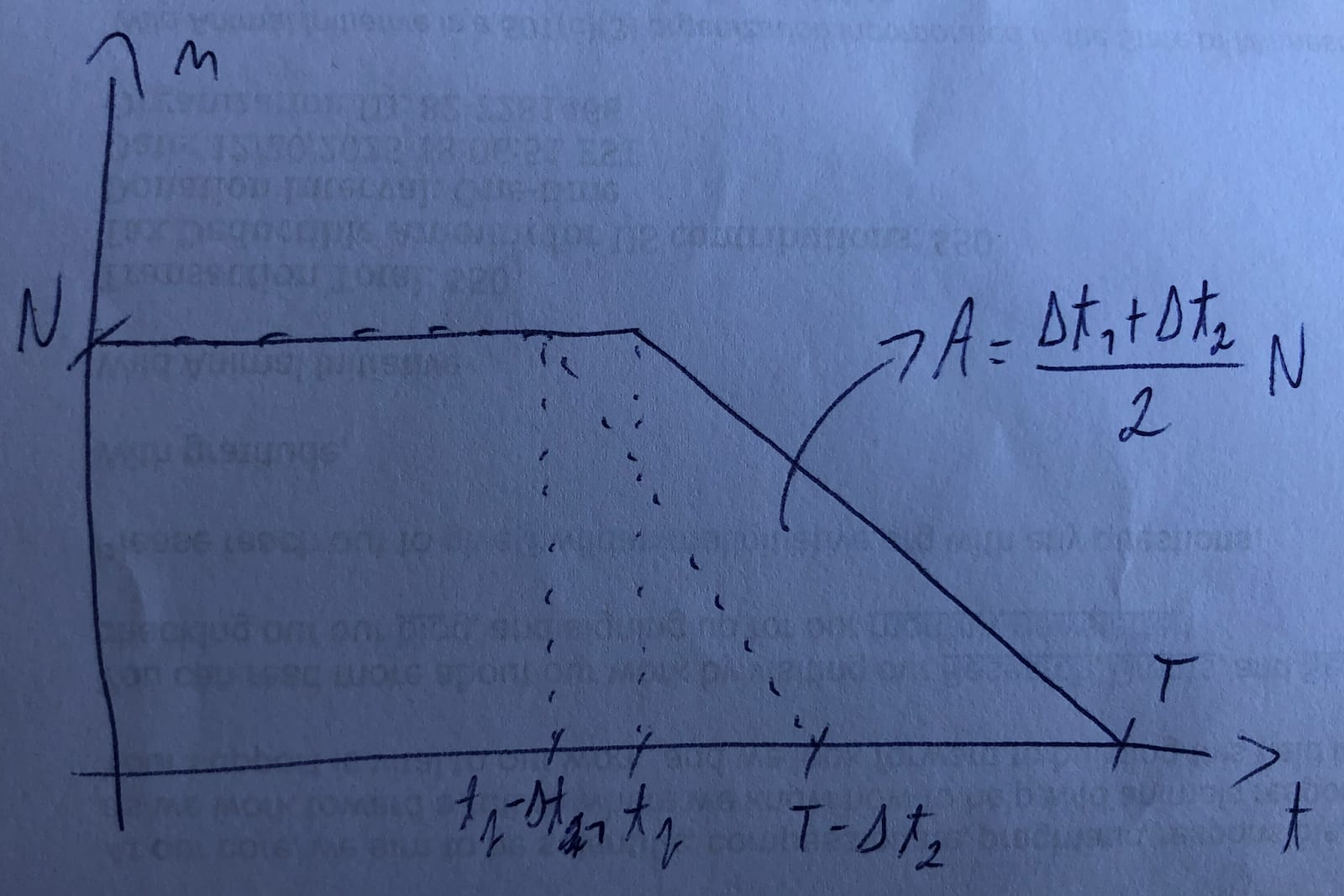
Interventions often accelerate both the start of the implementation and its full achievement. I illustrate this case below. The start is accelerated by , and the full achievement by . The animal-years improved are .
Generalising, for cases like the ones above, the animal-years improved are “mean acceleration over the population of animals in the baseline conditions”*N. Here is an example which I illustrated below. If the start of the implementation is accelerated by , the completion of half of the implementation by , and its full achievement by , the animal-years improved are . is weighted 2 times as heavily as each and because it affects the population both before and after that of half implementation, whereas only affects the population after the start of implementation, and only affects the population before full implementation.
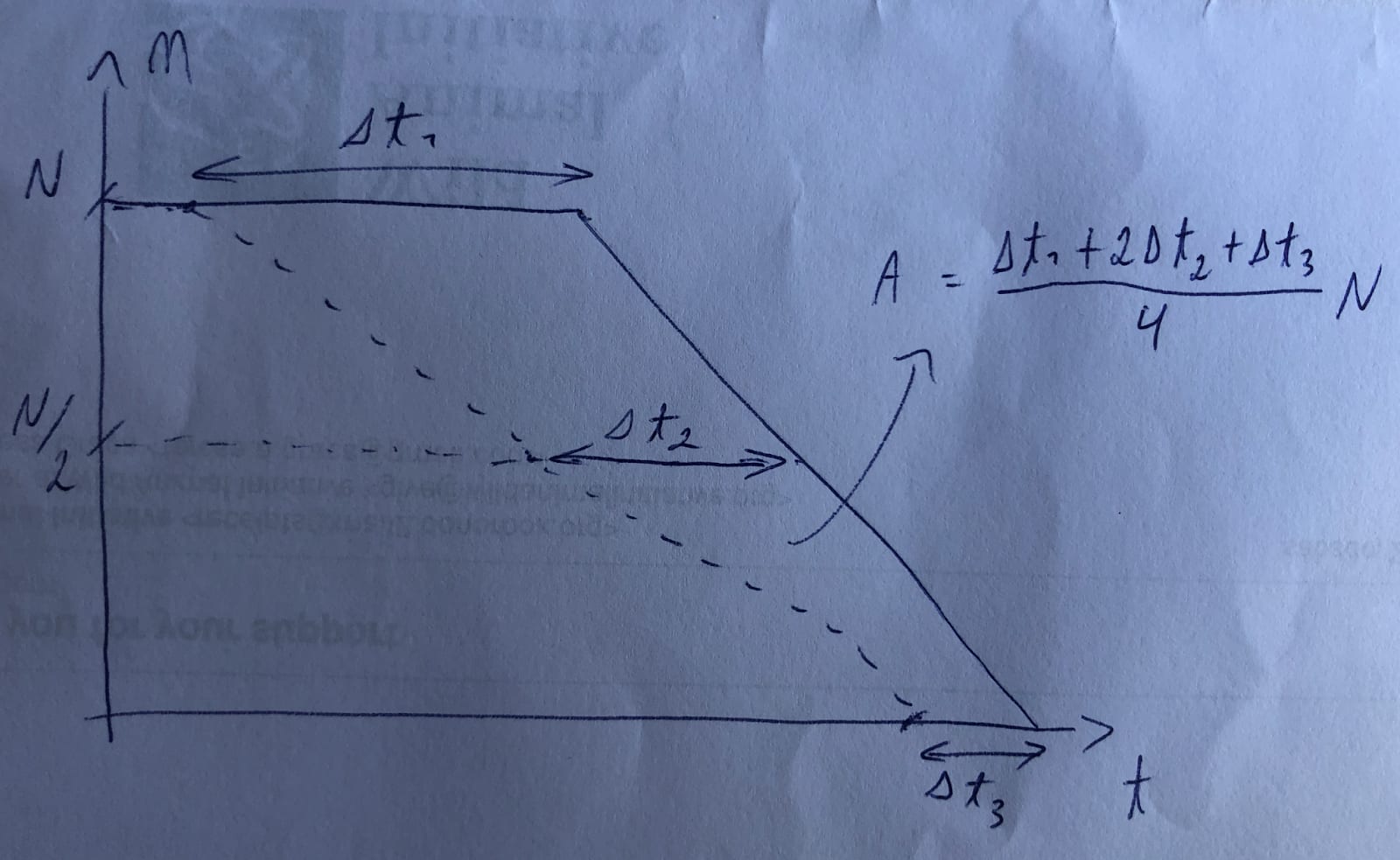
The implementation above has 2 stages. The population of the animals in the baseline conditions with the intervention (dashed line) decreases at a given pace until half of the implementation, and then accelerates. For an implementation with k stages where the start of the 1st stage is accelerated by , and the end of the last stage by , the animal-years improved are . This formula works even if the population of the animals in the baseline conditions without the intervention (full line) decreases at different paces in each stage. In practice, I think considering 1 or 2 stages (2 or 3 reference accelerations) is often the best trade-off between accuracy and complexity.
Flattening the growth of the population of animals in the baseline conditions
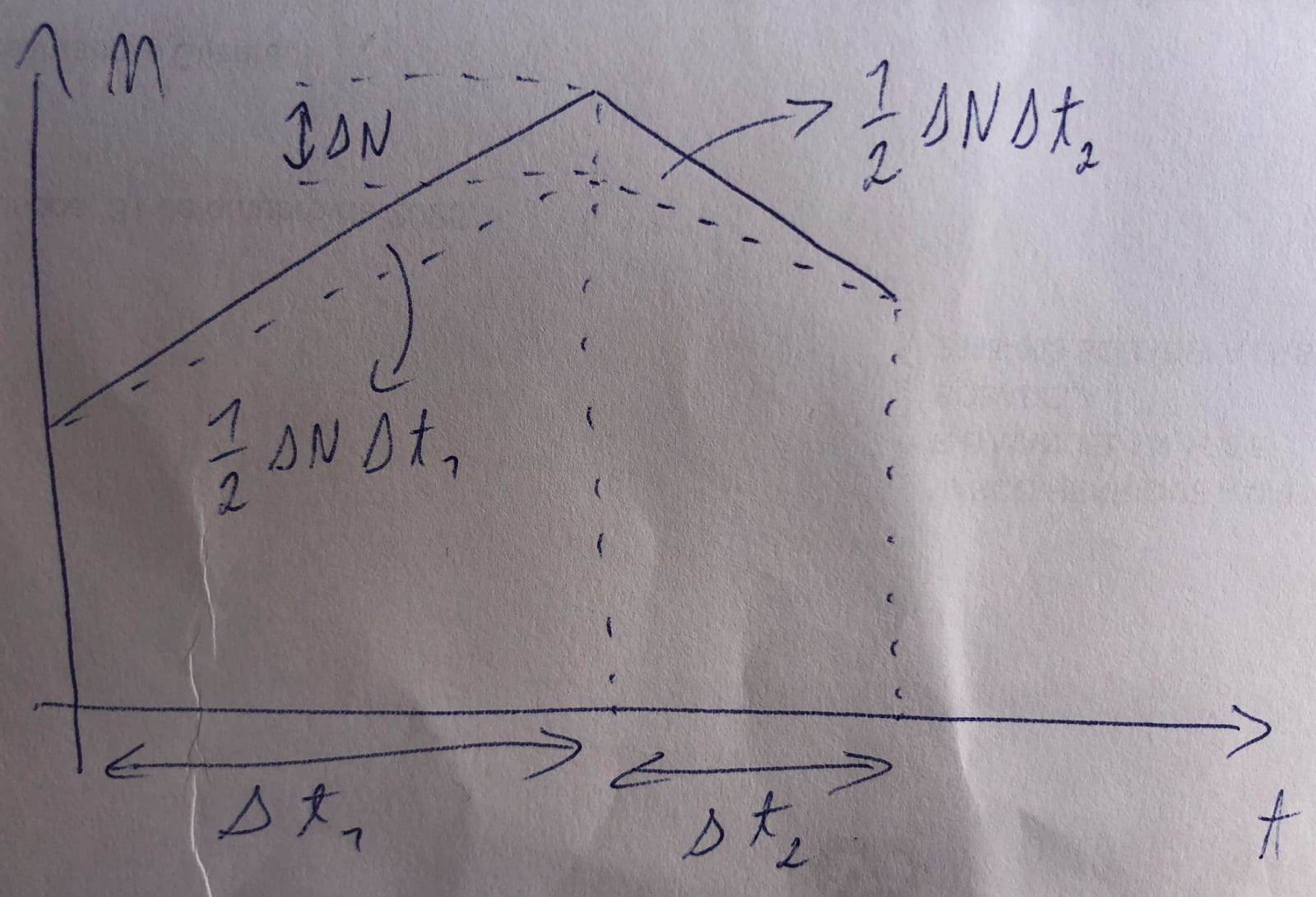
An intervention can be impactful even if the population of animals in the baseline conditions increases over the period affected by the intervention. I illustrate below a case where an intervention flattens the growth of the population of animals in the baseline conditions. It decreases their peak population by , which is reached years after the intervention starts to have an effect, and it stops having an effect years after the peak. The animal-years improved are .
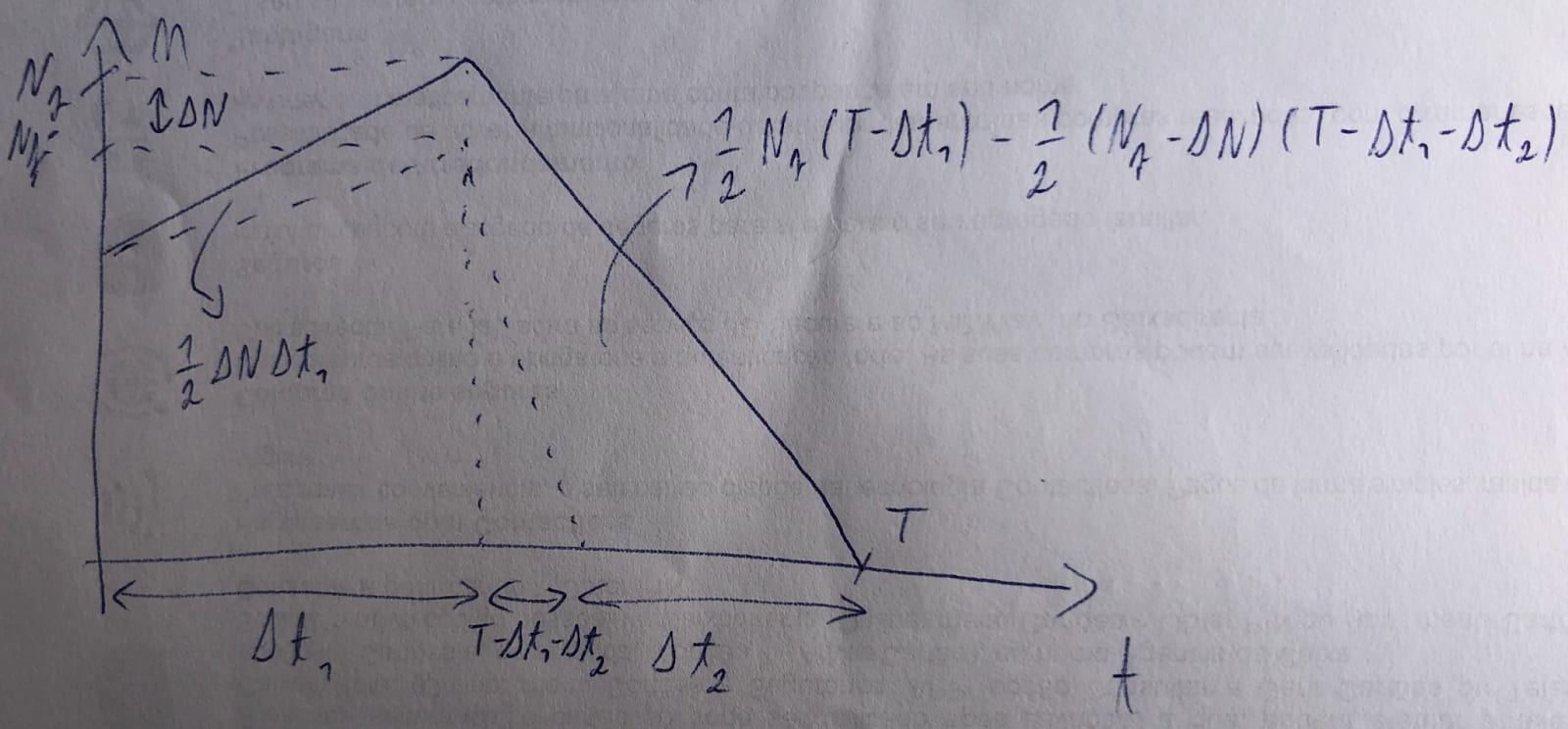
An intervention can also accelerate the full implementation of the welfare reform after flattening the growth of the population of animals in the baseline conditions. I illustrate this case below. As above, the intervention decreases the peak population by , which is reached years after the intervention starts to have an effect. In addition, it accelerates the full implementation of the reform by years, such that it happens years after the intervention starts to have an effect. The peak population would be N_p without the intervention. The animal-years improved are . I obtained this from adding the 2 expressions below, but then realised it can be directly inferred from the drawing. The 1st term is the area of 2 triangles defined by the points (, “initial population”), (, ), (, ), and (, ). The 2nd term is the area of a triangle defined by the points (, ), (, ), and (, ).
13