Comments
Cool! For a brief second, I thought this post was going to be an extremely long list of the trillions of senting beings my actions could influence, but this is much more digestable.
Cool! For a brief second, I thought this post was going to be an extremely long list of the trillions of senting beings my actions could influence, but this is much more digestable.
I'm really happy to see this, and suspect it's a great way to broaden the tent of EA in a way that benefits both camps. I'd expect there to be a great number of Christians who would find themselves on board with these arguments if they thought about them. Not a Christian but I might pick up a copy for a friend!
Looking forward to reading this!
Glad to see this is a thing!
I'm no longer a Christian, but will be buying multiple copies for family members/friends
Great work, guys!
Really looking forward to reading this.
Do you believe effective altruism principles are compatible with religious faith traditions? Vote here: https://www.thealignedapp.com/question/10a539e1-0c5f-4607-b7ea-c156182e5a3a
This app takes the top EA forum post from each day and has an LLM generate a discussion question based on it. Here's more info about the app.
“Effective altruism asks us to extend our empathy beyond our immediate circle to include distant strangers and future generations. All the Lives You Can Change argues powerfully that this ‘radical empathy’ is at the very core of the Christian faith. Inspiring, intellectually rigorous, and deeply practical, this is an essential guide for Christians who want to ensure their compassion translates into the greatest possible impact for the world’s most vulnerable people. It’s a beautiful, moving book.”
— @William_MacAskill, author of What We Owe the Future and Doing Good Better
“I couldn’t put this book down. It manages to be both inspiring and practical. It blends cutting-edge research with careful theological discussion. . . . Essential reading for Christians who are trying to figure out how to steward their resources wisely.”
— Lara Buchak, professor of philosophy, Princeton University
“Jesus tells us that the two most important commandments are to love God and love our neighbor; everything else is commentary. And who is our neighbor? It’s the entire human family. To me, this has always meant that the call of my faith as a Catholic is to do as much as I can to improve the lot of the ‘least of these’ whom Jesus talks about in Matthew 25. All the Lives You Can Change is an engaging road map for how to do precisely that; it should be mandatory reading for Christian clergy and for every Christian who wants to live their faith to the fullest.”
— Bruce Friedrich, founder and president, The Good Food Institute
You can best support this project by pre-ordering a copy here
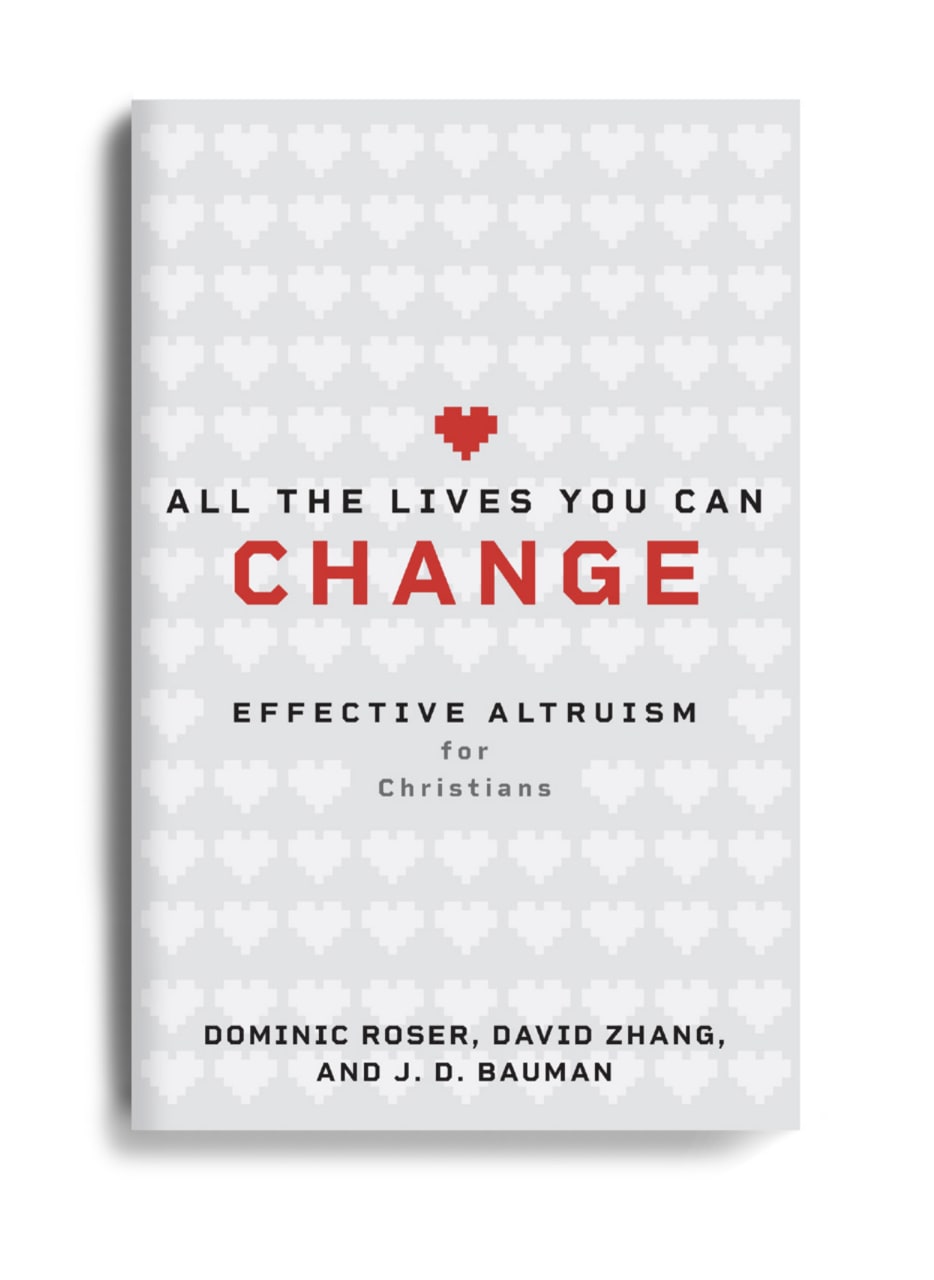
by JD Bauman
All the Lives You Can Change starts from a simple claim: effective altruism—the use of evidence and reasoning to find the best ways to do good—is not cold, callous, or un-Christlike. Rather, it is often a necessary tool for loving one’s neighbor well in a globalized world.
The book’s core contribution is translation. We take familiar EA ideas—impartial moral concern, cause prioritization, cost-effectiveness, attention to scale and trade-offs—and articulate them in a Christian moral and theological vocabulary. Loving one’s neighbor “as oneself” (Mark 12:31) plausibly requires asking what would actually help them most. In practice, this often means grappling seriously with statistics, opportunity costs, and scale (“love thy statistic”), without denying the equal and individual value of each life (Luke 12:6–7).
At the same time, the book does not treat EA ideas as axiomatic. We explicitly test them against core elements of the Christian worldview, including Scripture as a source of moral direction, prayer as a practice for discernment and guidance, and the belief in a loving God who is at work in history and will one day make all things new. The aim is not to dilute EA-style reasoning, but to examine how it sits alongside—and is sometimes challenged by—distinctively Christian commitments.
We think we are unusually well-positioned to attempt this translation and testing of EA, drawing on several years of Christian EA community-building through Effective Altruism for Christians.
We see All the Lives You Can Change as a close cousin to Doing Good Better, but written for a Christians highly motivated to do good, but underexposed to tools that help turn intentions into impact.
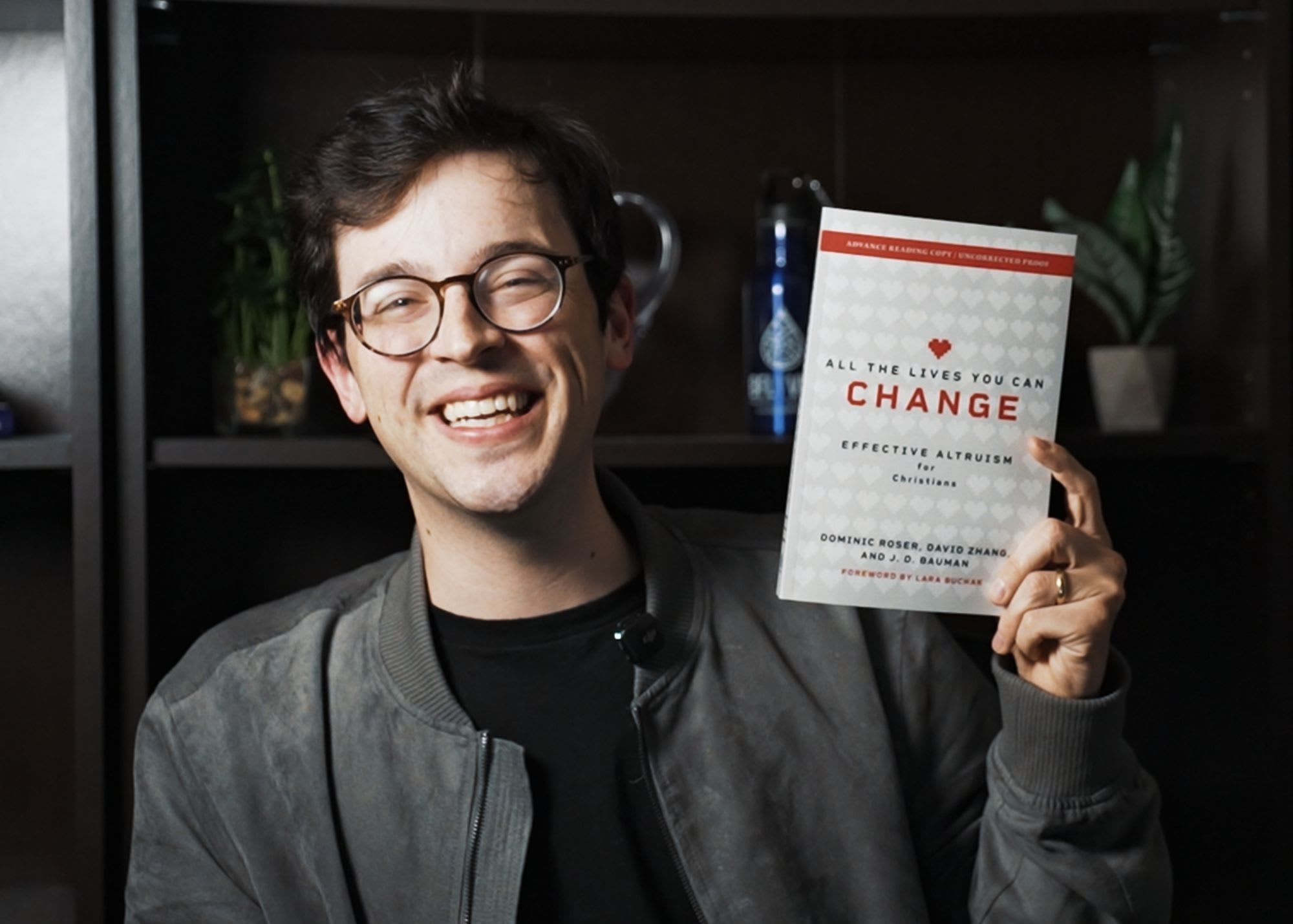
Introduction: The Impact-Driven Life
Why good intentions are not enough, and why outcomes matter (“by their fruits you will recognize them,” Matt. 7:16)
1. Who Is My Neighbor? Practicing Radical Empathy
Expanding moral concern across distance, difference, species, and time (Luke 10:25–37)
2. Giving More Versus Giving Better
Why some ways of helping are far more effective than others
3. People Are Equal, Causes Are Not
Cause prioritization and the ITN (Importance, Tractability, Neglectedness) framework
4. With All Your Mind
Reason, evidence, data, and humility as instruments of love (Mark 12:30)
5. Running the Race
Psychological and moral obstacles to doing the most good (Heb. 12:1)
6. The Literal Talent
The power of financial giving and common questions about consumption and ethics (Matt. 25:14–30)
7. For Such a Time as This
Careers, calling, and long-term impact (Esth. 4:14)
8. Prophets and Kings
Influence, advocacy, politics, and evangelism
Conclusion: The Time That Is Given Us
Next steps toward an impact-driven life
Many EA Forum readers will already be familiar with the core ideas in this book.
The value I hope to add is threefold:
We’d especially welcome EA feedback on where we’ve represented EA ideas well, where we’ve missed important nuances, and where the framing could be improved.
You can best support this project by pre-ordering a copy or free introduction here


Have you considered translating it? It seems to me the typical lectors outside English speaking countries will not necessarily be fluent in that language.
Was going to ask the same about Italian!
I’ve been trying to explain EA to my (often Catholic) Italian family and friends for a long time - I think they’d be very receptive to this book.
https://benefficienza.it/ (spelled with two Fs) has a lot of material on effective giving in Italian, in case it's useful, although nothing on catholicism as far as I'm aware.
Some EA articles were translated here: https://altruismoefficace.it/blog
And the EA handbook a few years ago was translated here: https://forum.effectivealtruism.org/users/ea-italy (I don't know if it changed much since then)
There was also this article in the major Italian Catholic newspaper after the FTX scandals, which was not entirely negative, but still mostly skeptical.
We may translate to German. Need to check with the publisher
What about Spanish? I would be interested because I could give it as a present.
You should check in with Tlön, whose aim is to "translates online content related to effective altruism (EA), existential risk, and global priorities research into multiple languages": https://tlon.team/