‘years later, at sr, i conducted a study and wrote a paper on dimensional analysis, studying what happens if you make things smaller and smaller. when you make things smaller and smaller, it causes everything to function faster and faster. but there is also a different phenomenon at work. as you get smaller, some things will shift with the length, some will shift with the area, some will shift with the volume. there will be new phenomena you can explore. i gave a talk at a conference about that. after i finished, someone in the audience named gordon moore was eager to learn more. he developed a formula, known as moore’s law.’
tldr;
the big idea is that words not language are fundamental and are the biggest shape of cognition and biggest marker of how we evolve
words act as a petri dish for deception; ‘where disorder develops, words are the first steps.’
hundreds if not thousands of individual words are actually artificial general intelligence as defined in the classic sense; that is to say that single words can disorient (or improve) systems of all sizes.
if we look at our system of education and conclude that the word education is hierarchically dominant over the word example, then we are able to see how this simple program, education > examples, is a capable of generating a complete new world via the runaway effects of prioritizing teaching over setting examples. in a world defined by examples > education, not only does the fundamental structure of what it means to learn changes, but how we judge our society at large changes.
words, no different than physics or biology contain laws. those laws are the hidden rules of the world.
words paired with data structures (see my post on q2q as a new data paradigm) are information stabilizing agents that create a potential for a measurement tool that collapses complexity unlocks understanding local optimas across different eras (e.g. what the word focus means today vs the word focus in a past era)
life is a function of requisite variety and words are a large part of the requisite variety of awareness. word creativity (or the variety of phenomena that words can be applied to) is a core function of intelligence. said differently, one’s intelligence can be directly increased by increasing their ability to increase the size and degree of connection of words. to know a word is to be able to see a thing. if i know nothing about basketball, and i attend an nba game, i see a group of men, running up and down attempting to place a round object into a hoop. if i’m a basketball fan, i see lebron james, i see the three-point line, i see a team trying to keep together a winning streak, i see a group of elite athletes in the prime of their careers, i see intense rivalry, i see a cross-fake, i see free throw, i see a possible technical foul.
we have an alchemic understanding of words. we confuse words as intrinsic.
words are in a paradox. word analysis itself is subject to hyperstition. and so it ́s both the problem and the opportunity, subject to its own tyranny.
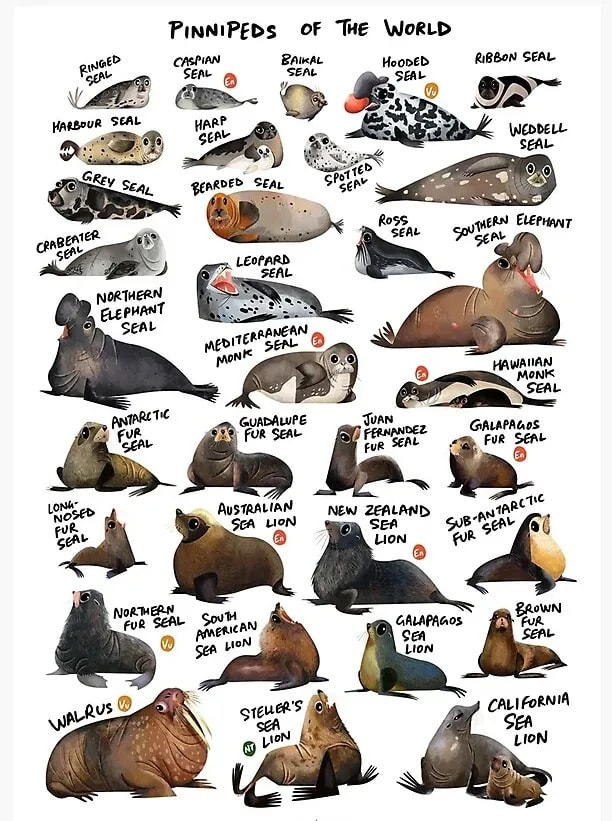
we don’t actually study words formally (we study language, not words) therefore a lot of missing development and lack of awareness of development: for instance, if we compare the word try to the word pinniped.
the word pinniped (which describes all of the sealions) is really really organized. now imagine if the word ‘try’ was organized like the word pinniped
we organized the crap out of words in the natural world; the development of a deep taxonomy and categorization system for the natural world, including plants, animals, and other organisms, began long before the 20th century. key contributions came from carl linnaeus in the 18th century with his binomial nomenclature system, which laid the foundation for modern biological classification. while significant advancements in taxonomy continued into the 19th and 20th centuries. however, a similar in-depth categorization has not been applied to our fundamental words—such as "try," "love," and others—nor have we developed the corresponding architectural or taxonomic systems to manage and structure these core concepts. our most important words, such as "life," "love," or "try," remain vague and poorly defined because they lack a comprehensive definition architecture. unlike specialized terms like "pinniped," which have been meticulously categorized and detailed within their respective fields, these broad concepts have not been systematically disambiguated or organized. to illustrate, "pinniped" refers to a group of marine mammals that includes seals, sea lions, and walruses. there are about 45 distinct types of pinnipeds, each with its own specific characteristics, traits, and behaviors. this detailed classification contrasts sharply with abstract concepts like "life" or "love," which have not been operationalized or rigorously defined in the same way. as a result, terms central to human experience are often used imprecisely, leaving us without a rigorous framework to understand and discuss them with the same clarity. this absence of operationalization and rigorous definition limits our ability to analyze and communicate about these fundamental concepts effectively.
for many words we have good understanding. many books are trying to further the definition of a single word. this is highly arbitrary. for instance we understand the word ‘requirements’ 100x better (thanks to effort from systems engineering) than we understand the word ‘goals.’
our knowledge of words is deeply unorganized. the architecture of definition of words has not moved past ad-hoc content (essays, books), the wikipedia page, or a webster-style dictionary definitions. today we understand words to the degree that we understood genetics before watson and crick’s discovery of dna.
word and language studies has not respected complexity or thought that everyday words could be teased out. this is due to a conspiracy of subjectivity (and many many other factors).
word related tools are feeble when compared to to the highly sophisticated and specialized instruments used in fields like particle physics and astronomy. if we look at something like dna and cells and tissue engineering and we realize how nanoscopic the controllers are, we see how bad our human related language is.
our understanding of words is not grounded in a model of a human yet understanding of humans is very much dependent on words. for instance gaps between societal definition of bold, risky, audacious — relative to past definitions shows change in humans.
the current structure of word definitions suck; they do not capture the rules, inherent personalities, histories, living structure, formalities, realities, functions, degrees of life, maps, pathogens, formulas, risk, timing, metaphors, relationships, intensities, transfer speeds, stabilization, and destabilization properties — and thus create a conspiracy of subjectivity.
there have been indirect attempts at modeling the complexity of individual words. ideas like philosophy as a whole, the ecology of a word, deleuze machines, hyper object, hyper agents, object-oriented ontology (ooo), language as spell, actors actor-network theory (ant) in sociology, actor-based computational models in computer science — all are getting out the power of a word, but it’s all not been close to being enough.
words are autonomous evolving information systems of systems; a form of computable reductions or improvements of spirits. a spirit (e.g., spirit of good or evil) is the broadest context window of a thing. the word spirit activates a context window that is larger than say the word ‘system’, no different than the word god activates a larger context window than the word capital.
words activate context windows whose sizes are a function of what is excluded. what is excluded is a function of what registers for the observer or what the observer finds meaning in, which is a fitness function of registration which is an incentives and interface (translation).
words are universal phenomena; the word god is a universal phenomenon of all systems, no different than the word jeff bezos is a universal phenomena of many systems no different than the word cheesecake is a phenomena of many systems, under that condition we re-configure the size of words to include names or concepts and for words like cheesecake to be abstracted into spirits.
words are abstractions of nature. abstraction is information at a distance. disliking something is often a function of the absence of information. we lack the meta-awareness of the degree to which we have understood words.
much of history can be understood through the increase or decrease in the size of words:
increasing the conceptual variety of words by assigning or life experience; metaphors; for example, cells were once thought of as "blocks" but are now understood as "minds." a person’s career, which could once be considered a "ladder," is now viewed as a "journey" with a larger scope.
creating new words to create the requisite variety to control systems in new ways: introducing new words can create new interfaces for managing more complex systems (e.g., a modern-day surgeon).
decreasing words variety via exclusion, erosion, and information volume increase: some words can lead to the exclusion or replacement of others.
exclusion: for example, the term "science" has historically removed "god" from many context windows. some words become dominant over others in specific contexts. for instance, "education" often overshadows "example," "mind" dominates over "body," and "information" is favored over "sound." the word “diversity” has been territorialized by political dynamics in an excluding no different than “coming out of the closet” is a phrase monopolized by the gay community. words are acts of categorization; etymologically, "categorize" can mean "to attack." for other words, our emotional relationships to words have blocked our capacity to see the requisite nuance too understood how binary views do not reconcile with reality. education is good, but its synonym indoctrination is bad. to configure is fine, but its synonym manipulation is bad. to be organized is to do good, but it's pre-requisite of control is bad. professional athletes are filmed, and review play by play highlights with coach, which is seen as good; tight feedback loops and work on fundamental is seen as good; but translated in a corporate context micromanagement is bad.
the missing understanding of words undermine basic assumptions across fields, (e.g. life as a property).
a lot of history is undermining words; ‘the work of gilles deleuze has much to offer contemporary thinking in psychology. as the papers in this volume show, the restructuring of what are usually taken as ‘topics’ for psychological analysis into genuine ontological and epistemological concerns leads to a profound questioning of how we think about the nature of ‘the psychological’ and the ways it can be studied. as paul stenner and i claimed in psychology without foundations, the encounter with deleuze does not so much provide a new grounding for the discipline, but instead calls into question the very idea of premising psychology on a clearly defined notion of ‘substance’, whether it be mind, body, brain, society, conversation or some judiciously defined amalgam of terms. the psychological is everywhere – in the sense that we cannot extract it from the myriad processes through which it is continuously enacted – and nowhere in particular, because it is not a ‘thing’ that has a simple location in some place or other.’
the frantic pace and frenetic energy of modern tools, fosters an environment where we are set up to to deceive ourselves as we scramble to process word complexity; we’ve developed emotional reactions to words, words are treated as yes/no
words erode — laugh out loud, or lol, has been reduced to in mean an internal ha — and words flip — sick, means cool, ill means awesome, reality tv is not about reality and the worlds best coffee shop means pretty good coffee. democracy means good, monarchy is bad, freedom is good, control is bad, independence is good, power is bad — and complexity is to be ignored.
lies are built on fake understanding of words; — apenwarr on fakeness of decentralization
‘i'm a networking person and a systems person, so please forgive me if i talk about all this through my favourite lens. societies, governments, economies, social networks, and scalable computing all have something in common: they are all distributed systems. and everyone seems to have an increasingly horrifically misguided idea of how distributed systems work. there is of course the most obvious horrifically misguided recently-popular "decentralized" system, whose name shall not be spoken in this essay. instead let's back up to something older and better understood: markets. the fundamental mechanism of the capitalist model. markets are great! they work! centrally planning a whole society clearly does not work (demonstrated, bloodily, several times). centrally planning corporations seems to work, up to a certain size. connecting those corporations together using markets is the most efficient option we've found so far. but there's a catch. people like to use the term free market to describe the optimal market system, but that's pretty lousy terminology. the truth is, functioning markets are not "free" at all. they are regulated. unregulated markets rapidly devolve into monopolies, oligopolies, monopsonies, and, if things get really bad, libertarianism. once you arrive there, every thread ends up with people posting about "a monopoly on the use of force" and "paying taxes at gunpoint" and "i'll run my own fire department" and things that "end at the tip of the other person's nose," and all useful discourse terminates forevermore. the job of market regulation - fundamentally a restriction on your freedom - is to prevent all that bad stuff. markets work well as long as they're in, as we call it in engineering, the "continuous control region," that is, the part far away from any weird outliers. you need no participant in the market to have too much power. you need downside protection (bankruptcy, social safety net, insurance). you need fair enforcement of contracts (which is different from literal enforcement of co prices are set through peer-to-peer negotiation and supply and demand, almost automatically, through what some call an "invisible hand." it's really neat. as long as we're in the continuous control region. as long as the regulators are doing their job. here's what everyone peddling the new trendy systems is so desperately trying to forget, that makes all of them absurdly expensive and destined to fail, even if the things we want from them are beautiful and desirable and well worth working on. here is the very bad news: regulation is a centralized function. the job of regulation is to stop distributed systems from going awry. because distributed systems always go awry. if you design a distributed control system to stop a distributed system from going awry, it might even work. it'll be unnecessarily expensive and complex, but it might work... until the control system itself, inevitably, goes awry. i find myself linking to this article way too much lately, but here it is again: the tyranny of structurelessness by jo freeman. you should read it. the summary is that in any system, if you don't have an explicit hierarchy, then you have an implicit one. despite my ongoing best efforts, i have never seen any exception to this rule. even the fanciest pantsed distributed databases, with all the rafts and paxoses and red/greens and active/passives and byzantine generals and dining philosophers and cap theorems, are subject to this. you can do a bunch of math to absolutely prove beyond a shadow of a doubt that your database is completely distributed and has no single points of failure. there are papers that do this. you can do it too. go ahead. i'll wait. <several phds later> okay, great. now skip paying your aws bill for a few months.’
we increase a word variety via cross-domain expansion: borrowing terms from one domain to gain new perspectives on another. for instance, using biological terminology to understand economic phenomena.
words have a terminological evolution: the evolution of word usage over time. for example, the concept of "inertia" was introduced by newton in 1687, but the term "inertial resistance" did not emerge until 162 years later. similarly, the term "entropy" was established in 1965, yet the adjective form of the word is still not widely used.
we think words are smaller today then they are. we used to model words as having god like or even extreme like powers. historically, words have been imbued with great power and reverence in many cultures, often seen as having a divine or magical influence. this concept has appeared in various forms, from ancient religions to literature and philosophy. for instance, in many traditions, words are seen as the primary tool of creation. in the judeo-christian tradition, the book of genesis begins with "in the beginning was the word," implying that words (or language) are fundamental to the act of creation. similarly, in hinduism, the power of "om" is considered a primordial sound that created the universe. in many ancient cultures, words were believed to have magical properties, with spells, incantations, and chants thought to summon or control forces of nature, spirits, or gods. this belief in the mystical power of language is a form of "sacred language" that transcends mere communication. in philosophy, particularly in the works of thinkers like heraclitus and later existentialists, language and words have been seen as integral to understanding the nature of reality itself. words, in this sense, are not just tools of communication but active agents in shaping our perception and existence. the idea that words hold a divine or god-like power has been a prominent theme throughout history, extending into the belief that certain gods or divine beings are specifically associated with particular aspects of existence or concepts, often symbolized by words. in greek mythology, gods like hermes and apollo were linked with communication, language, prophecy, and music, demonstrating the divine power of verbal expression. in hinduism, vāk is the goddess of speech and words, embodying the creative power of sound and language. thoth, in ancient egyptian religion, was the god of writing, knowledge, and wisdom, with his power tied directly to the written and spoken word. in magical traditions, words themselves were often seen as having inherent power, as seen in kabbalah, where specific hebrew words are believed to hold divine significance. similarly, the "logos" in christian theology connects a single word with divine power, representing a principle of order and knowledge that was instrumental in the creation of the universe. therefore, the idea of a "god of x word" or a divine figure associated with specific words or domains has historical precedence in many traditions, where words are seen as keys to divine power, creation, and influence over the world.
‘in the indo-european tradition, words were not merely seen as tools for communication or conveying information, but they were believed to have a deeper and more profound power. they were viewed as possessing magical abilities or even a dangerous magic. this perspective acknowledged the inherent potency of words and their potential to shape reality, influence events, and affect individuals. the belief in the magical power of words can be traced back to ancient cultures where language was considered a sacred and transformative force. words were believed to have the ability to create, heal, curse, or bring about significant changes in the world. this understanding of language is often associated with rituals, incantations, spells, and invocations that were performed to harness and direct this magical power.’
TL;DR
* GOAL 3 is a social enterprise that created IMPALA, a patient monitoring and digital platform system for low-resource settings. There is also a GOAL 3 foundation that raises funds to ensure underserved communities will be reached.
* A recently completed report from Rethink Priorities calculated IMPALA to have a cost per DALY averted of $7–17 in paediatr...
This month effective altruism has gotten lots of attention, including a cover story in The Economist. It feels pretty surreal to be on the receiving end of it. But I feel grateful these ideas have caught on, and even more grateful for the drive, earnestness, and compassion of so many people who took strange but well-argued ideas seriously and then actually acted on them....
Impressions from the 21st Annual U.S. Cluster Headache Patient Conference, organized by Clusterbusters.
On the morning of the last day of the conference, E. was hanging out with other “clusterheads” outside the conference hotel when he started having a cluster headache attack. Before he could go back to his hotel room, J. offered E. his DMT v...