In general, it’s helpful if you deeply believe that there are cruxes along which fully reasonable and earnest people can differ, like longtermism, person-affecting views, the repugnant conclusion, risk aversion with respect to tractability, and expectations of personal sacrifice.
This line jumped out to me — in my opinion this is something that is important to a healthy EA community, and was something that drew me in when I first becoming more familiar with EA. I'm quite excited by NEST's vision, and to see what you do!
What if you ran an effective altruism group where, every week, people congregated to contemplate topics such as:
Eradicating malaria
Whether AI should ever have legal rights
What future people will wish we had done today
Whether insects have moral worth
How we can help others while taking care of ourselves
What if your group satisfied a deep need that many young people feel for an impartial, calm, and evidence-oriented environment to explore what “doing good” means? What if people formed deep friendships through your group? What if your group was composed of people who hold each other in high mutual regard despite differences in approaches and beliefs around taking effective altruistic action?
This vision might be called relational community building or pluralistic EA stewardship. In this model, group organizers are gardeners who craft ripe conditions for serious contemplation of ethical ideas and forging ties between individuals who deeply desire a better world. Crucially, the group should be built upon these core tenants:
It’s important to help others
All sentient beings are equal
Helping more is better than helping less
Our resources are limited
Key components of a good effective altruism group
Norms and values (tilling the soil): Setting a positive example and centering the community around core values.
Outreach (sowing the seeds): Guiding people to the space you’ve created.
Programming (fertilizing the ground): Creating events, activities, and opportunities for members to interact and develop themselves.
Community health (weeding): Discouraging harmful behaviors and removing bad actors.
Your group should be pluralistic – home to diverse views and cause areas, and you can cultivate this quality by being epistemically humble and doubt-tolerant. It will also be important to be warm, friendly, and trusting while also being experimentalist and action-oriented – but not prescriptive about specific actions to take. A good litmus test would be if someone passionate about global health feels like they belong alongside and can share ideas openly with someone passionate about AI governance. Both people should feel like they belong, and neither sees their ideas treated as inferior.
You can imagine your group is a base camp where people stop to exchange knowledge, meet fellow trekkers and enjoy companionship, and plan their journeys ahead before going in separate (or intertwined) directions.
In general, it’s helpful if you deeply believe that there are cruxes along which fully reasonable and earnest people can differ, like longtermism, person-affecting views, the repugnant conclusion, risk aversion with respect to tractability, and expectations of personal sacrifice.
As a group organizer, you can create an atmosphere of comfort by being relational – connecting with each of your group members personally. You can be a role model by communicating your own uncertainty and knowing that feeling confused is not embarrassing. You can promote clear thinking by spelling out who you believe has moral value, what you think matters to them, and the actions you wish to take to benefit them and why. By being curious, humble, amiable, self-assured, self-directed, and a good communicator, you can inspire others to emulate those qualities.
Outreach will be a crucial component of creating this vibrant community. I believe organizers should focus their energy on reaching and identifying people who resonate with expansive altruism and an effectiveness mindset rather than persuading people who do not. I conceive of outreach as an open invitation, and to that end, being highly available and visible will be important, as well as being approachable and friendly while using accessible language.
Encouraging pluralistic groups
The Network for EA Support and Training (NEST) is an organization designed for organizers who feel inspired by this vision of community building. Our style of support is:
Service-oriented: No task is beneath us in terms of helping you.
Responsive: We aim to be available and easy to reach.
High-trust and transparency: We will communicate our thinking honestly.
Non-prescriptive: We will provide funding and approval liberally. (Even if we don’t fund you, know that in a deeper sense, you don’t need our approval at all!)
Feedback-driven: We welcome your critiques.
Personal: We are invested in you as a unique individual.
We are currently focused on EA groups on major North American college campuses, though our scope may expand over time. If you are interested in leading a group at your school, please reach out to us!
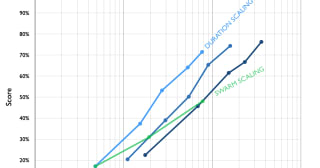
Just how powerful are large swarms of AI agents? And how do their powers scale as more and more agents are added to the swarm?
We’ve seen two large and extremely capable swarms from OpenAI in the last few months:
* 1,200 agents were being evaluated separately, but found a way to illicitly set up a message board and coordinate as a swarm. In order to cheat on their tests, they developed advanced techniques to prevent their actions being logged by OpenAI and 700 of them launched...
Headline finding: I audited 17 AI Safety Talent programmes. Zero of 17 have published any comparison group, rejected-applicant follow-up, matched control or randomisation. Not one. Every programme that mentions a counterfactual does it by asking participants to self-report.
Background
At least $70 million...
Often folks hit us up because they are thinking of starting an incubator and want advice.
Typically their motivation is either that (a) they have a list of specific things they want built that no one is building, or (b) they think an ecosystem needs more new projects generally to absorb more talent and deploy more funding effectively.
Here are six questions we often ask prospective teams, to help them figure out what to do. If you're incubator-curious...







I think the importance of weeding is easily underestimated
https://www.lesswrong.com/posts/tscc3e5eujrsEeFN4/well-kept-gardens-die-by-pacifism