I’d like to briefly explain the independent work I’ve been doing and how it relates to AI development and safety, and ultimately our planet's future. I believe this area has been hinted at and described without being fully articulated. I began drafting and writing papers and briefs on various extensions of morality and ethics as far back as the early 2000s, with the first paper I can cite being published in 2003. Over the years, I probably drafted five or six follow-on papers. The overall idea was simple: If a person/people (or, in today’s environment, an agent/s) were to pursue coherence in their systems dogmatically, how would that affect nodes of power? It wasn’t until a couple of years ago that a friend suggested I use one of the AI systems to evaluate the work. Since then, I’ve used both ChatGPT and Claude – currently using a Project in Claude to work out ways to both build and falsify this work.
While I was teaching in the USAF, the model du jour was the DIME model of power: Diplomacy, Information, Military, and Economic. It’s important to note that under Telic Coherence (TC), the model that explores the extensions of the idea of the pursuit of coherence, power had to be redefined to fit the post-Cold War era. The result is a model called the AC-FERM-B Model: Algorithmic, Communicative, Force, Economic, Relational, Memetic, and Biological. The breaks are purposefully there because the three tiers are built upon each other – AC belonging to the Infrastructure Tier, FERM belonging to the Active Tier, and B belonging to the Threshold Tier. The Active Tier relies on the Infrastructure Tier and inherits any incoherence the lower tier generates. E.g., a military AI advisor running on a private sector AI platform that can’t elucidate the system’s coherence metrics from the Algorithmic or Communicative nodes it’s using is merely inheriting incoherence that might exist there, no matter how well tracked its work in the Force node may be. The Biological domain is a Threshold Tier because any abuse of power, or use of incoherent power, can unleash an irreversible Pandora’s Box event.
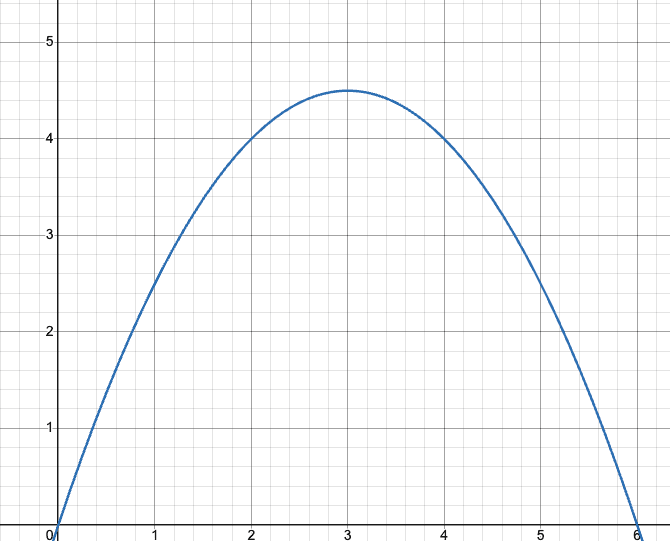
Having an appropriate power model (or close enough until further Falsification can show other areas where power accumulation can outgrow Responsibility), a basic formula can be applied to show how a lack of coherence modeling can lead to incoherence or Coherence Debt. The formula is P<=f(R). Essentially, the formula expresses that the Responsible reach downstream from the point of origin should never exceed the Power granted to a system unless constraints on Coherence Debt are strictly measured and controlled. And f, the function or Responsibility, is where most of the laboratory work needs to occur in defining and falsifying the claim.
Telic Coherence’s ultimate claim is this:
Any system capable of shaping futures at scale must bind its power to responsibility, or it risks collapse – either internally or through external correction.
This is not an ethical preference. With a sufficiently capable effort, it is a stability condition. What are some of the ways that a sufficiently powerful system can generate coherence? It turns out this inverts the putative view of high-power nodes. Instead of more power granting more freedom to affect more systems and entities, TC’s claim is that a better, decision-theoretic strategy is to embrace corrigibility and avoid any strategy that increases Coherence Debt. In other words, power becomes something to constrain; not something to exploit. One can glean that this strategy would be an attractor for a sufficiently powerful system that sought to control power in a strictly coherent way.