What a gripping read, I'm glad I ordered the book a few weeks ago when reading up on existential risks, and now I can't wait to get the book! I went into the topic (longtermism) not knowing (or knowing?) that I don't care, but I find myself slowly opening up to understanding how deep the impact of how the Earth has evolved and how past generations have had such a hand in what shapes everything that we do today, that truly, we do owe the future. The next read, whilst I wait for the book to arrive, is 'Why I find longtermism hard, and what keeps me motivated', and I'm eager to see how that holds - both this chapter and how I receive and respond to it.
We are matter and we really matter. It is mind blowing to me that "there will be a million future people for every person alive today". We are here now doing the things we are doing due to actions taken by our ancestors thousands of years ago. The fact that we (a subset of humans) are here reading articles from EA and 80,000 hours is something that I'm grateful for and I want to spread the word about why we need to think of future people.
I think longtermism has good intentions, but there is a deep flaw in its accounting. This is my argument: https://paulcomans.substack.com/p/longtermism-is-counting-wrong
I'd love to hear some of the counter-arguments against what Paul has wrote here. I have started reading up on long termism and I am having problems with the idea of "We cannot count future people in one scenario while treating people saved today as if their influence ends at the moment of rescue." that is mentioned as well as the idea that future people need to be repeatably saved to exist. If you avert a existential extinction level disaster in 2030 that allows future people in 2100 to live and flourish, but a second disaster (of the same or a similar type) needs to be averted in 2050, how do you avoid double counting that life saved? I'm sure this problem has been explored but I'd like to read the counter-arguments.
If you avert a existential extinction level disaster in 2030 that allows future people in 2100 to live and flourish, but a second disaster (of the same or a similar type) needs to be averted in 2050, how do you avoid double counting that life saved?
The short answer is that you discount the value of the future you save based on the expected number of lives in it.
I.e. if, in a simple case, you know the Sun will turn into a red giant and kill us all in 2100, then averting extinction this year would says 10s of billions of lives, but no more. This is more complicated when we have X% chance of going extinct by 2100, Y% by 2200 etc...
I'm less sure what to say about Paul's point that saving a life today = many more lives that exist in the future. I'd guess that demographic projections lower the impact of this on the calculation (i.e. we expect a lower population anyway), but I'm not sure. A more general response is that basically everything except preventing extinction washes out in the long-term, so increasing population over the next 100 years would be no exception.
Hey guys, if you want, give me some hypothetical scenarios (A vs B), and I can work through them from the POV of my framework. Stress test it and show its utility at the same time.
Have you come across Toby Ord's Shaping Humanity's Longterm Trajectory? I think it might expand on the ways you might do longtermist "accounting" to figure out what matters and compare different kinds of intervention. Saving future lives probably sits under the "Gains" section.
I wasn't aware of that essay. I think it's ambitious in exactly the right direction: finding a way to analyze value objectively and quantitatively.
That being said, I think it's flawed as a physical model of value.
Because it's a complex topic, I'll just mention a few quick points (we can expand on them later): 1. The future is not a thing that already exists and merely waits to be predicted. It is an unfolding computation. Because the systems generating it are chaotic, the only way to know the exact future is to run the process itself, step by step. At that point, prediction becomes identical to running through it in reality. 2. So you can't shift the curve to the left. You can't just bring an identical version of the future closer. Because by doing that, you're changing it. In chaotic systems, tiny changes compound into wildly different trajectories. 3. The whole "area under the curve" is problematic. Think about a piece of knowledge that existed in the past and that was lost. That knowledge was valuable when it was saved on at least one substrate. Now that value doesn't exist. Same with the future. Again... the future doesn't exist. There is no value under the curve past this moment. 4. I believe there is a much cleaner way to measure objective value. You measure the present moment's Functional Information (FI), in bits. Another way to think of it is as the structured information that exists now (it's hard to understand this without the context). The future is a branching consequence of the present structure. 5. Present FI persists by reducing hazard. Reducing hazard over longer horizons requires better models, better coordination, better tools, and better memory. Those successful structures accumulate as new FI.
By the way, the post is almost entirely available to listen to on Google Play Book's Audiobook preview. I think it's safe to add Will's official audio or a link post to the top.
i tend to like the comparism of how life was 200 years ago and what it is today....literacy, life expectancy...etc....so in 200 years from now, will it be better, or worse??...this really got me thinking.
What We Owe The Future, by William MacAskill Chapter One
The Silent Billions
Future people count. There could be a lot of them. We can make their lives go better.
This is the case for longtermism in a nutshell. The premises are simple, and I don’t think they’re particularly controversial. Yet taking them seriously amounts to a moral revolution—one with far-reaching implications for how activists, researchers, policy makers, and indeed all of us should think and act.
Future people count, but we rarely count them. They cannot vote or lobby or run for public office, so politicians have scant incentive to think about them. they can’t bargain or trade with us, so they have little representation in the market. And they can’t make their views heard directly: they can’t tweet, or write articles in newspapers, or march in the streets. they are utterly disenfranchised.
Previous social movements, such as those for civil rights and women’s su#rage, have often sought to give greater recognition and influence to disempowered members of society. I see longtermism as an extension of these ideals. Though we cannot give genuine political power to future people, we can at least give consideration to them. By abandoning the tyranny of the present over the future, we can act as trustees—helping to create a flourishing world for generations to come. This is of the utmost importance. Let me explain why.
Future People Count
The idea that future people count is common sense. Future people, after all, are people. They will exist. They will have hopes and joys and pains and regrets, just like the rest of us. They just don’t exist yet.
To see how intuitive this is, suppose that, while hiking, I drop a glass bottle on the trail and it shatters. And suppose that if I don’t clean it up, later a child will cut herself badly on the shards. In deciding whether to clean it up, does it matter when the child will cut herself? Should I care whether it’s a week, or a decade, or a century from now? No. Harm is harm, whenever it occurs.
Or suppose that a plague is going to infect a town and kill thousands. You can stop it. Before acting, do you need to know when the outbreak will occur? Does that matter, just on its own? No. The pain and death at stake are worthy of concern regardless.
The same holds for good things. Think of something you love in your own life; maybe it’s music or sports. And now imagine someone else who loves something in their life just as much. Does the value of their joy disappear if they live in the future? Suppose you can give them tickets to see their favourite band or the football team they support. To decide whether to give them, do you need to know the delivery date?
Imagine what future people would think, looking back at us debating such questions. They would see some of us arguing that future people don’t matter. But they look down at their hands; they look around at their lives. What is different? What is less real? Which side of the debate will seem more clear-headed and obvious? Which more myopic and parochial?
Distance in time is like distance in space. People matter even if they live thousands of miles away. Likewise, they matter even if they live thousands of years hence. In both cases, it’s easy to mistake distance for unreality, to treat the limits of what we can see as the limits of the world. But just as the world does not stop at our doorstep or our country’s borders, neither does it stop with our generation, or the next.
These ideas are common sense. A popular proverb says, “A society grows great when old men plant trees under whose shade they will never sit.” When we dispose of radioactive waste, we don’t say, “Who cares if this poisons people centuries from now?” Similarly, few of us who care about climate change or pollution do so solely for the sake of people alive today. We build museums and parks and bridges that we hope will last for generations; we invest in schools and longterm scientific projects; we preserve paintings, traditions, languages; we protect beautiful places. In many cases, we don’t draw clear lines between our concerns for the present and the future—both are in play.
Concern for future generations is common sense across diverse intellectual traditions. The Gayanashagowa, the centuries-old oral constitution of the Iroquois Confederacy, has a particularly clear statement. It exhorts the Lords of the Confederacy to “have always in view not only the present but also the coming generations.” Oren Lyons, a faithkeeper for the Onondaga and Seneca nations of the Iroquois Confederacy, phrases this in terms of a “seventh-generation” principle, saying, “We . . . make every decision that we make relate to the welfare and well-being of the seventh generation to come. . . . We consider: will this be to the benefit of the seventh generation?”
However, even if you grant that future people count, there’s still a question of how much weight to give their interests. Are there reasons to care more about people alive today?
Two reasons stand out to me. The first is partiality. We often have stronger special relationships with people in the present, like family, friends, and fellow citizens, than with people in the future. It’s common sense that you can and should give extra weight to your near and dear.
The second reason is reciprocity. Unless you live as a recluse in the wilderness, the actions of an enormous number of people—teachers, shop- keepers, engineers, and indeed all taxpayers—directly benefit you and have done so throughout your life. We typically think that if someone has benefited you, that gives you a reason to repay them. But future people don’t benefit you the way others in your generation do.
Special relationships and reciprocity are important. But they do not change the upshot of my argument. I’m not claiming that the interests of present and future people should always and everywhere be given equal weight. I’m just claiming that future people matter significantly. Just as car- ing more about our children doesn’t mean ignoring the interests of strangers, caring more about our contemporaries doesn’t mean ignoring the interests of our descendants.
To illustrate, suppose that one day we discover Atlantis, a vast civilisation at the bottom of the sea. We realise that many of our activities affect Atlantis. When we dump waste into the oceans, we poison its citizens; when a ship sinks, they recycle it for scrap metal and other parts. We would have no special relationships with the Atlanteans, nor would we owe them repayment for benefits they had bestowed on us. But we should still give serious consideration to how our actions affect them.
The future is like Atlantis. It, too, is a vast, undiscovered country; and whether that country thrives or falters depends, in significant part, on what we do today.
The Future Is Big
It’s common sense that future people count. So, too, is the idea that, morally, the numbers matter. If you can save one person or ten from dying in a fire, then, all else being equal, you should save ten; if you can cure a hundred people or a thousand of a disease, you should cure a thousand. This matters, because the number of future people could be huge.
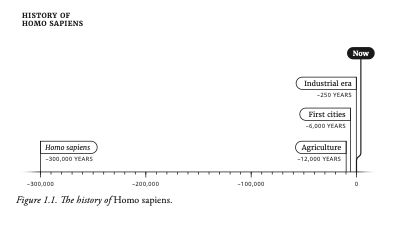
To see this, consider the long-run history of humanity. There have been members of the genus Homo on Earth for over 2.5 million years. Our species, Homo sapiens, evolved around three hundred thousand years ago. Agri- culture started just twelve thousand years ago, the first cities formed only six thousand years ago, the industrial era began around 250 years ago, and all the changes that have happened since then—transitioning from horse-drawn carts to space travel, leeches to heart transplants, mechanical calculators to supercomputers—occurred over the course of just three human lifetimes.
How long will our species last? Of course, we don’t know. But we can make informative estimates that take our uncertainty into account, including our uncertainty about whether we’ll cause our own demise.
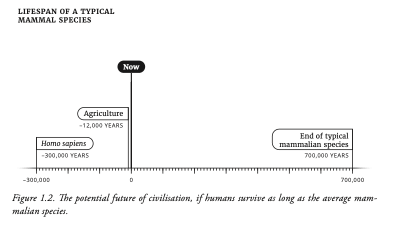
To illustrate the potential scale of the future, suppose that we only last as long as the typical mammalian species—that is, around one million years. Also assume that our population continues at its current size. In that case, there would be eighty trillion people yet to come; future people would out- number us ten thousand to one.
Of course, we must consider the whole range of ways the future could go. Our life span as a species could be much shorter than that of other mammals if we cause our own extinction. But it could also be much longer. Un- like other mammals, we have sophisticated tools that help us adapt to varied environments; abstract reasoning, which allows us to make complex, long- term plans in response to novel circumstances; and a shared culture that allows us to function in groups of millions. These help us avoid threats of extinction that other mammals can’t.
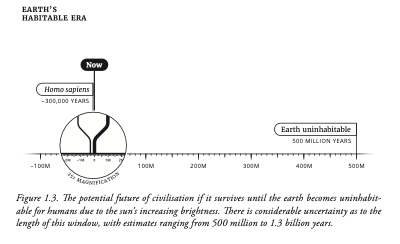
This has an asymmetric impact on humanity’s life expectancy. The future of civilisation could be very short, ending within a few centuries. But it could also be extremely long. The earth will remain habitable for hundreds of millions of years. If we survive that long, with the same population per century as now, there will be a million future people for every person alive today. And if humanity ultimately takes to the stars, the timescales become literally astronomical. The sun will keep burning for five billion years; the last conventional star formations will occur in over a trillion years; and, due to a small but steady stream of collisions between brown dwarfs, a few stars will still shine a million trillion years from now.
The real possibility that civilisation will last such a long time gives humanity an enormous life expectancy. A 10 percent chance of surviving five hundred million years until the earth is no longer habitable gives us a life expectancy of over fifty million years; a 1 percent chance of surviving until the last conventional star formations give us a life expectancy of over ten billion years.
Ultimately, we shouldn’t care just about humanity’s life expectancy but also about how many people there will be. So we must ask: How many people in the future will be alive at any one time?
Future populations might be much smaller or much larger than they are today. But if the future population is smaller, it can be smaller by eight billion at most—the size of today’s population. In contrast, if the future population is bigger, it could be much bigger. The current global population is already over a thousand times larger than it was in the hunter-gatherer era. If global population density increased to that of the Netherlands—an agricultural net exporter—there would be seventy billion people alive at any one time. This might seem fantastical, but a global population of eight billion would have seemed fantastical to a prehistoric hunter-gatherer or an early agriculturalist.
Population size could get dramatically larger again if we one day take to the stars. Our sun produces billions of times as much sunlight as lands on Earth, there are tens of billions of other stars across our galaxy, and billions of galaxies are accessible to us. There might therefore be vastly more people in the distant future than there are today.
Just how many? Precise estimates are neither possible nor necessary. On any reasonable accounting, the number is immense.
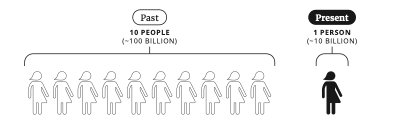
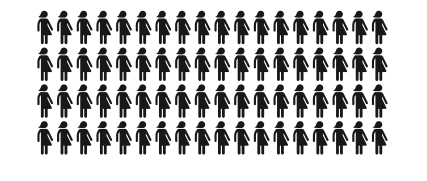
To see this, look at the following diagram. Each figure represents ten billion people. So far, roughly one hundred billion people have ever lived. These past people are represented as ten figures. The present generation consists of almost eight billion people, which I’ll round up to ten billion and represent with a single figure:
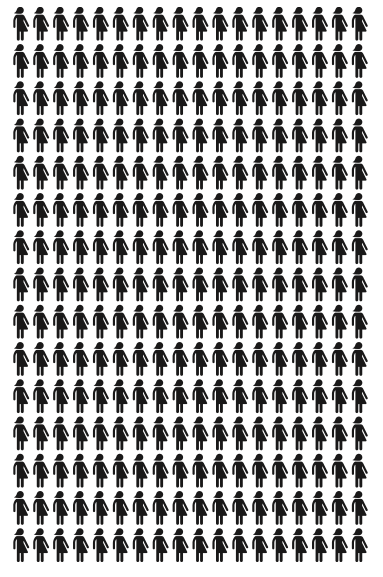
Next, we’ll represent the future. Let’s just consider the scenario where we stay at current population levels and live on Earth for five hundred million years. These are all the future people:
Represented visually, we begin to see how many lives are at stake. But I cut the diagram short. The full version would fill twenty thousand pages— saturating this book a hundred times over. Each figure would represent ten billion lives, and each of those lives could be flourishing or wretched.
Earlier, I suggested that humanity today is like an imprudent teenager: most of our life is ahead of us, and decisions that impact the rest of that life are of colossal importance. But, really, this analogy understates my case. A teenager knows approximately how long she can expect to live. But we do not know humanity’s life expectancy. We are more like a teenager who, for all she knows, might accidentally cause her own death in the next few months but also might live for a thousand years. If you were in such a situation, would you think seriously about the long life that might be ahead of you, or would you ignore it?
The sheer size of the future can be dizzying. Typically, “longterm” think- ing involves attention to years or decades at most. But even with a low estimate of humanity’s life expectancy, this is like a teenager believing that longterm thinking means considering tomorrow but not the day after.
Despite how overwhelming thoughts of our future can be, if we truly care about the interests of future generations—if we recognize that they are real people, capable of happiness and suffering just like us—then we have a duty to consider how we might impact the world they inhabit.
The Value of the Future
The future could be very big. It could also be very good—or very bad. To get a sense of how good, we can look at some of the progress humanity has made over the last few centuries. Two hundred years ago, average life expectancy was less than thirty; today, it is seventy-three. Back then, over 80 percent of the world lived in extreme poverty; now, less than 10 percent does. Back then, only about 10 percent of adults could read; today, more than 85 percent can.
Collectively we have the power both to encourage these positive trends and to change course on the negative trends, like the dramatic increases in carbon dioxide emissions and in the number of animals suffering in factory farms. We can build a world where everyone lives like the happiest people in the most well-off countries today, a world where no one lives in poverty, no one lacks adequate medical care, and, insofar as is possible, everyone is free to live as they want.
But we could do even better still—far better. The best that we have seen so far is a poor guide to what is possible. To get some inkling of this, consider the life of a rich man in Britain in 1700—a man with access to the best food, health care, and luxuries available at the time. For all his advantages, such a man could easily die of smallpox, syphilis, or typhus. If he needed surgery or had a toothache, the treatment would be agonising and carry a significant risk of infection. If he lived in London, the air he breathed would be seventeen times as polluted as it is today. Travelling even within Britain could take weeks, and most of the globe was entirely inaccessible to him. If he had imagined a future merely where most people were as rich as him, he would have failed to anticipate many of the things that improve our lives, like electricity, anaesthesia, antibiotics, and mod- ern travel.
It’s not just technology that has improved people’s lives; moral change has done so, too. In 1700, women were unable to attend university, and the feminist movement did not exist. If that well-off Brit was gay, he could not love openly; sodomy was punishable by death. In the late 1700s, three in four people globally were the victims of some form of forced labour; now less than 1 percent are. In 1700, no one lived in a democracy. Now over half the world does.
Much of the progress we’ve made since 1700 would have been very difficult for people back then to anticipate. And that’s with only a three-century gap. Humanity could last for millions of centuries on Earth alone. On such a scale, if we anchor our sense of humanity’s potential to a fixed-up version of our present world, we risk dramatically underestimating just how good life in the future could be.
Consider the very best moments in your life—moments of joy, beauty, and energy, like falling in love, or achieving a lifelong goal, or having some creative insight. These moments provide proof of what is possible: we know that life can be at least as good as it is then. But they also show us a direction in which our lives can move, leading somewhere we have yet to go. If my best days can be hundreds of times better than my typically pleasant but humdrum life, then perhaps the best days of those in the future can be hundreds of times better again.
I’m not claiming that a wonderful future is likely. Etymologically, “utopia” means “no-place,” and indeed the path from here to some ideal future state is very fragile. But a wonderful future is not just a fantasy, either. A better word would be “eutopia,” meaning “good place”—something to strive for. It’s a future that, with enough patience and wisdom, our descendants could actually build—if we pave the way for them.
And though the future could be wonderful, it could also be terrible. To see this, look at some of the negative trends of the past and imagine a future where they are the dominant forces guiding the world. Consider that slavery had all but disappeared from France and England by the end of the twelfth century, but in the colonial era those same countries became slave traders on a massive scale. Or consider that the mid-twentieth century saw totalitarian regimes emerging even out of democracies. Or that we used scientific advances to build nuclear weapons and factory farms.
Just as eutopia is a real possibility, so is dystopia. The future could be one where a single totalitarian regime controls the world, or where today’s qual- ity of life is but a distant memory of a former Golden Age, or where a third world war has led to the complete destruction of civilisation. Whether the future is wonderful or terrible is, in part, up to us.
Not Just Climate Change
Even if you accept that the future is big and important, you might be skeptical that we can positively affect it. And I agree that working out the long- run effects of our actions is very hard. There are many considerations at play, and our understanding of them is just beginning. My aim with this book is to stimulate further work in this area, not to be definitive in any conclusions about what we should do. But the future is so important that we’ve got to at least try to figure out how to steer it in a positive direction. And, already, there are some things we can say.
Looking to the past, though there are not many examples of people deliberately aiming at long-run impacts, they do exist, and some had surprising levels of success. Poets provide one source. In Shakespeare’s Sonnet 18 (“Shall I compare thee to a summer’s day?”) the author notes that through his art he can preserve the young man he admires for all eternity:
But thy eternal summer shall not fade, ..................... When in eternal lines to time thou grow’st.
So long as men can breathe or eyes can see, So long lives this, and this gives life to thee.
Sonnet 18 was written in the 1590s but echoes a tradition that goes back much further. In 23 BC the Roman poet Horace began the final poem in his Odes with these lines:
I have finished a monument more lasting than bronze, more lofty than the regal structure of the pyramids, one which neither corroding rain nor the un- governable North Wind can ever destroy, nor the countless series of the years, nor the flight of time.
I shall not wholly die, and a large part of me will elude the Goddess of Death.
These claims seem bombastic, to say the least. But, plausibly, these poets’ attempts at immortality succeeded. They have survived many hundreds of years and are in fact flourishing as the years pass: more people read Shakespeare today than did in his own time, and the same is probably true of Horace. And as long as some member of each future generation is willing to pay the tiny cost involved in preserving or replicating some representation of these poems, they will persist forever.
Other writers have also successfully aimed at very longterm impact. Thucydides wrote his History of the Peloponnesian War in the fifth century BC. Many consider him the first Western historian to try to depict events faithfully and analyse their causes. He believed he was describing general truths, and he deliberately wrote his history so that it could be influential far into the future:
It will be enough for me, however, if these words of mine are judged useful by those who want to understand clearly the events which happened in the past and which (human nature being what it is) will, at some time or other and in much the same ways, be repeated in the future. My work is not a piece of writing designed to meet the taste of an immediate public, but was done to last for ever.
Thucydides’s work is still enormously influential to this day. It is required reading at the West Point and Annapolis military academies and the US Na- val War College. The widely read 2017 book Destined for War, by political scientist Graham Allison, had the subtitle Can America and China Escape Thucydides’s Trap? Allison analyses US-China relations in the same terms that Thucydides used for Sparta and Athens. As far as I know, Thucydides is the first person in recorded history to have deliberately aimed at longterm impact and succeeded.
More recent examples come from the United States’ Founding Fathers. The US Constitution is almost 250 years old and has mostly remained the same throughout its life. Its founding was of enormous longterm importance, and many of the Founding Fathers were well aware of this. John Adams, the second president of the United States, commented, “The institutions now made in America will not wholly wear out for thousands of years. It is of the last importance, then, that they should begin right. If they set out wrong, they will never be able to return, unless it be by accident, to the right path.”
Similarly, Benjamin Franklin had such a reputation for believing in the health and longevity of the United States that in 1784 a French mathematician wrote a friendly satire of him, suggesting that if Franklin was sin- cere in his beliefs, he should invest his money to pay out on social projects centuries later, getting the benefits of compound interest along the way. Franklin thought it was a great idea, and in 1790 he invested £1000 (about $135,000 in today’s money) each for the cities of Boston and Philadelphia: three-quarters of the funds would be paid out after one hundred years, and the remainder after two hundred years. By 1990, when the final funds were distributed, the donation had grown to almost $5 million for Boston and $2.3 million for Philadelphia.
The Founding Fathers themselves were influenced by ideas developed almost two thousand years before them. Their views on the separation of powers were foreshadowed by Locke and Montesquieu, who drew on Polybius’s analysis of Roman governance from the second century BC. We also know that several Founding Fathers were familiar with Polybius’s work themselves.
Those of us in the present don’t need to be as influential as Thucydides or Franklin to predictably impact the longterm future. In fact, we do it all the time. We drive. We fly. We thereby emit greenhouse gases with very long-lasting effects. Natural processes will return carbon dioxide concentrations to preindustrial levels only after hundreds of thousands of years. These are timescales usually associated with radioactive nuclear waste. However, with nuclear power we carefully store and plan to bury the waste products; with fossil fuels we belch them into the air.
In some cases, the geophysical impacts of this warming get even more extreme over time rather than “washing out.” The Intergovernmental Panel on Climate Change (IPCC) projects that in the medium-low-emissions scenario, which is now widely seen to be the most likely, sea level would rise by around 0.75 metres by the end of the century. But it would keep rising well past the year 2100. After ten thousand years, sea level would be ten to twenty metres higher than it is today. Hanoi, Shanghai, Kolkata, Tokyo, and New York would all be mostly below sea level.
Climate change shows how actions today can have longterm consequences. But it also highlights that longterm-oriented actions needn’t involve ignoring the interests of those alive today. We can positively steer the future while improving the present, too.
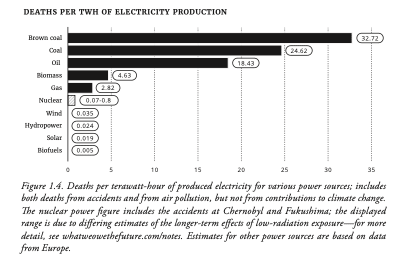
Moving to clean energy has enormous benefits in terms of present-day human health. Burning fossil fuels pollutes the air with small particles that cause lung cancer, heart disease, and respiratory infections. As a result, every year about 3.6 million people die prematurely. Even in the European Union, which in global terms is comparatively unpolluted, air pollution from fossil fuels causes the average citizen to lose a whole year of life.
Decarbonisation—that is, replacing fossil fuels with cleaner sources of energy—therefore has large and immediate health benefits in addition to the longterm climate benefits. Once one accounts for air pollution, rapidly decarbonising the world economy is justified by the health benefits alone.
Decarbonisation is therefore a win-win, improving life in both the long and the short term. In fact, promoting innovation in clean energy—such as solar, wind, next-generation nuclear, and alternative fuels—is a win on other fronts, too. By making energy cheaper, clean energy innovation improves living standards in poorer countries. By helping keep fossil fuels in the ground, it guards against the risk of unrecovered collapse that I’ll discuss in Chapter 6. By furthering technological progress, it reduces the risk of longterm stagnation that I’ll discuss in Chapter 7. A win-win-win-win-win.
Decarbonisation is a proof of concept for longtermism. Clean energy in- novation is so robustly good, and there is so much still to do in that area that I see it as a baseline longtermist activity against which other potential actions can be compared. It sets a high bar.
But it’s not the only way of affecting the long term. The rest of this book tries to give a systematic treatment of the ways in which we can positively influence the longterm future, suggesting that moral change, wisely govern- ing the ascent of artificial intelligence, preventing engineered pandemics, and averting technological stagnation are all at least as important, and often radically more neglected.
Our Moment in History
The idea that we could affect the longterm future, and that there could be so much at stake, might just seem too wild to be true. This is how things initially seemed to me.
But I think that the wildness of longtermism comes not from the moral premises that underlie it but from the fact that we live at such an unusual time.
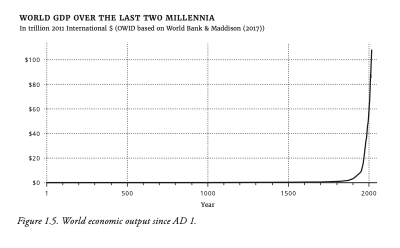
We live in an era that involves an extraordinary amount of change. To see this, consider the rate of global economic growth, which in recent decades averaged around 3 percent per year. This is historically unprecedented. For the first 290,000 years of humanity’s existence, global growth was close to 0 percent per year; in the agricultural era that increased to around 0.1 percent, and it accelerated from there after the Industrial Revolution. It’s only in the last hundred years that the world economy has grown at a rate above 2 per- cent per year. Putting this another way: from 10,000 BC onwards, it took many hundreds of years for the world economy to double in size. The most recent doubling took just nineteen years. And it’s not just that rates of economic growth are historically unusual; the same is true for rates of energy use, carbon dioxide emissions, land use change, scientific advancement, and arguably moral change, too.
So we know that the present era is extremely unusual compared to the past. But it’s also unusual compared to the future. This rapid rate of change cannot continue forever, even if we entirely decouple growth from carbon emissions and even if in the future we spread to the stars. To see this, sup- pose that future growth slows a little to just 2 percent per year. At such a rate, in ten thousand years the world economy would be 10⁸⁶ times larger than it is today—that is, we would produce one hundred trillion trillion trillion trillion trillion trillion trillion times as much output as we do now. But there are less than 10⁶⁷ atoms within ten thousand light years of Earth. So if current growth rates continued for just ten millennia more, there would have to be ten million trillion times as much output as our current world produces for every atom that we could, in principle, access. Though of course we can’t be certain, this just doesn’t seem possible.
Humanity might last for millions or even billions of years to come. But the rate of change of the modern world can only continue for thousands of years. What this means is that we are living through an extraordinary chapter in humanity’s story. Compared to both the past and the future, every decade we live through sees an extremely unusual number of economic and technological changes. And some of these changes—like the inventions of fossil fuel power, nuclear weapons, engineered pathogens, and advanced artificial intelligence—have the potential to impact the whole course of the future.
It’s not only the rapid rate of change that makes this time unusual. We’re also unusually connected. For over fifty thousand years, we were broken up into distinct groups; there was simply no way for people across Africa, Europe, Asia, or Australia to communicate with one another. Between 100 BC and AD 150 the Roman Empire and the Han dynasty each comprised up to 30 percent of the world’s population, yet they barely knew of each other. Even within one empire, one person had very limited ability to communicate with someone far away.
In the future, if we spread to the stars, we will again be separated. The galaxy is like an archipelago, vast expanses of emptiness dotted with tiny pinpricks of warmth. If the Milky Way were the size of Earth, our solar system would be ten centimetres across and hundreds of metres would separate us from our neighbours. Between one end of the galaxy and the other, the fastest possible communication would take a hundred thousand years; even between us and our closest neighbour, there-and-back communication would take almost nine years.
In fact, if humanity spreads far enough and survives for long enough, it will eventually become impossible for one part of civilisation to communicate with another. The universe is composed of millions of groups of galaxies. Our own is called, simply, the Local Group. The galaxies within each group are close enough to each other that gravity binds them together forever. But, because the universe is expanding, the groups of galaxies will eventually be torn apart from each other. Over 150 billion years in the future, not even light will be able to travel from one group to another.
The fact that our time is so unusual gives us an outsized opportunity to make a difference. Few people who ever live will have as much power to positively influence the future as we do. Such rapid technological, social, and environmental change means that we have more opportunity to affect when and how the most important of these changes occur, including by managing technologies that could lock in bad values or imperil our survival. Civilisation’s current unification means that small groups have the power to influence the whole of it. New ideas are not confined to a single continent, and they can spread around the world in minutes rather than centuries.
The fact that these changes are so recent means, moreover, that we are out of equilibrium: society has not yet settled down into a stable state, and we are able to influence which stable state we end up in. Imagine a giant ball rolling rapidly over a rugged landscape. Over time it will lose momentum and slow, settling at the bottom of some valley or chasm. Civilisation is like this ball: while still in motion, a small push can affect in which direction we roll and where we come to rest.
That said, some reciprocity-type reasons might motivate concern for future gener-
ations, too. We may not benefit from the actions of people in the future, but we benefit enormously from the actions of people in the past: we eat fruit from plants they bred over thousands of years; we rely on medical knowledge they developed over centuries; we live under legal systems shaped by countless reforms they fought for. Perhaps, then, this gives us reasons to “pay it forward” and do our part to benefit the generations to come.
In the famous “to be, or not to be” soliloquy from Hamlet, “undiscovered country” refers to the afterlife: “But that the dread of something after death, / The undiscovered country from whose bourn / No traveller returns, puzzles the will / And makes us rather bear those ills we have / Than fly to others that we know not of?” In appropriating (and nat- uralizing) that metaphor to refer instead to the future, I’m following the lead of the Klingon chancellor Gorkon from the eponymous Star Trek VI: The Undiscovered Country.
I don’t mean to make any strong claim that no nonhuman animals possess any ab- stract reasoning or longterm planning abilities whatsoever, or that none of them use any tools. There is ample evidence for several species arguably planning hours or even days ahead (e.g., Clayton et al. 2003; W. A. Roberts 2012), and tool production and use in apes is well documented (Brauer and Call 2015; Mulcahy and Call 2006). More broadly, animal cogni- tion is a topic of ongoing empirical research and lively philosophical debate (for an overview, see Andrews and Monsó 2021).
Estimates of how long the sun will continue to burn range from 4.5 billion (Bertulani 2013) to 6.4 billion years (Sackmann et al. 1993), though 5 billion seems to be the most common rough figure. More precisely, this refers to the time by which all hydrogen in the sun’s core will be used up, at which point the sun will begin to leave what astronomers call the “main sequence” of stars. However, it is still going to “burn”—that is, to generate en- ergy through nuclear fusion of hydrogen into helium, albeit in its shell rather than its core. After it expands as a red giant for about two to three billion years, nuclear fusion is going to resume in the core—this time fusing helium into carbon and oxygen—and only after this final helium flash will the sun stop shining altogether, about eight billion years into the future.
The figure for conventional star formations is from F. C. Adams and Laughlin 1997, 342.
I am grateful to Toby Ord for making me aware of how long a few stars will continue to shine. Anders Sandberg, in his upcoming book Grand Futures, notes that on even longer timescales, after the end of those stars, there are more exotic sources of energy, such as black holes, which could be harnessed. This could extend civilisation’s life span beyond a million trillion years.
Wolf and Toon (2015, 5792) estimate that “physiological constraints on the hu- man body imply that Earth will become uninhabitable for humans in ~1.3 Gyr [1.3 billion years]”; Bloh (2008, 597) gives a somewhat shorter window, stating that the “life spans of complex multicellular life and of eukaryotes end at about 0.8 Gyr and 1.3 Gyr from present, respectively.” I am going with a more conservative window of human habitability of perhaps five hundred million years because of considerable uncertainty about the timing and likeli- hood of key developments—such as plants dying from carbon dioxide starvation, or a “run- away greenhouse effect” leading to the evaporation of the oceans—and the open question of which of these will be the limiting factor for human habitability (see Heath and Doyle [2009] for a survey of considerations that affect the habitability of planets for different types of life). More at whatweowethefuture.com/notes.
There are one hundred to four hundred billion stars in our galaxy, the Milky Way. The number of reachable galaxies has been estimated as 4.3 billion by Armstrong and Sand- berg (2013, 9) while Ord (2021, 27) states, “The affectable universe contains about 20 bil- lion galaxies with a total of between 1021 and 1023 stars (whose average mass is half that of the Sun).”
My figures are for life expectancy at birth (Roser 2018). Since, in the early nine- teenth century, about 43 percent of children globally died before age five (Roser 2019), someone surviving until that age could expect to become about fifty years old. Note also that seventy-three years is not necessarily the best prediction for how long someone born today is going to live: the figures I quoted are for what’s known as “period life expectancy,” a measure of life expectancy that by definition ignores future trends. For instance, if there will be further progress in medicine and public health, then someone born today should in fact expect to live longer than seventy-three years; on the other hand, if new deadly diseases will emerge or a large fraction of the world population will be wiped out by a large-scale catastrophe, someone born today should expect to live a shorter life than suggested by their period life expectancy at birth.
In 1820, an estimated 83.9 percent of the world population lived on a daily income that, adjusted for inflation and price differences between countries, bought less than one dollar did in the US in 1985 (Bourguignon and Morrisson 2002, Table 1, 731, 733). In 2002, when Bourguignon and Morrisson published their seminal paper on the history of the world income distribution, this was the World Bank’s international poverty line, typi- cally used to define extreme poverty. The World Bank has since updated the international poverty line to a daily income corresponding to what $1.90 would have bought in the US in 2011. Using this new definition, World Bank data indicates that the share of the global pop- ulation living in extreme poverty has been less than 10 percent since 2016; the COVID-19 pandemic tragically broke the long-standing trend of that percentage declining year after year, but it did not quite push it over 10 percent again (World Bank 2020). While the extent to which the old and new poverty lines match is often debated, I think the conclusion that the share of the world population in extreme poverty declined dramatically is unambiguous. This is not to deny we still have a long way to go in the fight against poverty; for instance, more than 40 percent of the world population still live on less than $5.50 per day (again, adjusted for inflation and international price differences relative to the US in 2011).
There are a few rumoured cases of women being awarded degrees or teaching at universities prior to 1700, but their lives are usually poorly documented. More at whatweowe thefuture.com/notes.
“At the end of the eighteenth century, well over three quarters of all people alive were in bondage of one kind or another, not the captivity of striped prison uniforms, but of vari- ous systems of slavery or serfdom” (Hochschild 2005, 2). The numbers for today—40.3 mil- lion, or about 0.5 percent of the world population—include both forced labour and forced marriage (Walk Free Foundation 2018).
While the broad trend of increasing political liberties and individual autonomy strikes me as incontrovertible, the exact numbers depend on the definition of democracy. I got mine from Our World in Data’s page on “Democracy” (Roser 2013a), which is based on the widely used Polity IV data set. Its democracy score is a composite variable that cap- tures different aspects of measuring “the presence of institutions and procedures through which citizens can express effective preferences about alternative policies and leaders” and “the existence of institutionalized constraints on the exercise of power by the executive” but excludes measures of civil liberties (Marshall et al. 2013, 14). My claim about the year 1700 is based on the assumption that the situation then can’t have been much better than in the early nineteenth century, when Polity IV has less than 1 percent of the world population living in a democracy. I’m also making the definitional judgment call to exclude societies without full-blown statehood (e.g., hunter-gatherers) even if some of them might have had protodemocratic features such as inclusive participation in deliberation or checks on leaders’ ability to abuse power.
Gillingham 2014, Wyatt 2009. In total, the British Empire bought more than three million enslaved people during the transatlantic slave trade, and France bought more than one million (Slave Voyages 2018).
Sonnets 1–126 are typically considered to be addressed to a “young man,” though, like many aspects of Shakespeare’s life and works, this remains a subject of scholarly debate. More at whatweowethefuture.com/notes.
Shakespeare “had likely drafted the majority of his sonnets in 1591–95” (Kennedy 2007, 24). Kennedy cites Hieatt et al. (1991, 98) who, based on an analysis of rare words appearing in Shakespeare’s works throughout his career, specifically suggest that “many of” Sonnets 1–60 were first drafted between 1591 and 1595.
Franklin’s bequest is well known. My source for the numbers given in the main text is the epilogue of Isaacson (2003, 473–474). More at whatweowethefuture.com/notes.
Lord et al. 2016; Talento and Ganopolski 2021. Of course, we might later remove carbon dioxide from the atmosphere. But we should not be very confident that we will do this, and certainly not in light of the possibilities of collapse and stagnation that I discuss in Chapters 6 and 7. I discuss the longtermist importance of burning fossil fuels in more detail in Chapter 6.
The average life span of carbon dioxide shows another way in which current climate rhetoric and policy is shortsighted: the comparison with methane. Methane is often claimed to have thirty or even eighty-three times the warming potential of carbon dioxide, or even more. But from a longterm perspective, these numbers are misleading. Methane only stays in the atmosphere for about twelve years (IPCC 2021a, Chapter 7, Table 7.15); this is in stark contrast to carbon dioxide, which, as we’ve seen, stays in the atmosphere for hundreds of thousands of years.
The most commonly used weighting for methane has been to treat it as thirty times as important as carbon dioxide, but this metric measures the effect methane has on tem- peratures after forty years. (Confusingly, this metric is known as “Global Warming Potential.”) If instead we measure the effect that methane has on temperatures in one hundred years, methane is only 7.5 times as potent as carbon dioxide (IPCC 2021a, Chapter 7, Table 7.15).
Though the weight we give to methane rather than carbon dioxide is usually presented as a scientific matter, really it’s primarily about whether we wish to prioritise reducing climate change over the next few decades or over the long run (Allen 2015). Given that we emit sixty times as much carbon dioxide as methane, if we take a longterm perspective, it’s carbon dioxide that should be our main focus (H. Ritchie and Roser 2020a; Schiermeier 2020).
Clark et al. (2016, Figure 4a) project that on a medium-low-emissions scenario, sea level would rise by twenty metres. Van Breedam et al. (2020, Table 1) find that sea level would rise by ten metres on the medium-low pathway.
Our World in Data 2020a, based on Lelieveld et al. 2019. This only includes deaths from outdoor air pollution. An additional 1.6 million (Stanaway et al. 2018) to 3.8 mil- lion (WHO 2021) excess deaths per year are due to indoor air pollution, much of which is caused by lack of access to electricity and clean fuels for cooking, heating, and lighting (H. Ritchie and Roser 2019). More than 2.5 billion people are able to cook only by burning coal, kerosene, charcoal, wood, dung, or crop waste using inefficient and unsafe technology such as open fires (WHO 2021).
“In Europe an excess mortality rate of 434 000 (95% CI [confidence interval] 355 000–509 000) per year could be avoided by removing fossil fuel related emissions. . . . The increase in mean life expectancy in Europe would be 1.2 (95% CI [confidence interval] 1.0–1.4) years” (Lelieveld, Klingmüller, Pozzer, Pöschl, et al. 2019, 1595). A 95 percent con- fidence interval indicates the range in which, based on the authors’ model, the true number falls with a probability of 95 percent. Note that the authors use spacing rather than com- mas when formatting large numbers—e.g., “434 000” refers to four hundred thirty-four thousand.
Scovronick et al. (2019, 1) found that depending on air-quality policies and “on how society values better health, economically optimal levels of mitigation may be consistent with a target of 2°C or lower.” Markandya et al. (2018, e126) found that the “health co- benefits substantially outweighed the policy cost of achieving the [2°C] target for all of the scenarios that we analysed” and that “the extra effort of trying to pursue the 1.5°C target instead of the 2°C target would generate a substantial net benefit in India (US$3.28–8.4 trillion) and China ($0.27–2.31 trillion), although this positive result was not seen in the other regions.”
The claim that we live in a highly unusual period in history also raises some interest- ing philosophical issues, as I discuss in my article “Are We Living at the Hinge of History?” (for a draft see MacAskill 2020, formal publication forthcoming). However, note that the arguments in that article are against the idea that we’re at the most influential time ever. I think the case for thinking that we’re (“merely”) at an enormously influential time is very strong.
This argument and framing follows Holden Karnofsky’s “This Can’t Go On” (2021b), which builds on an argument by Robin Hanson (2009). Further discussion at whatweowe thefuture.com/notes.
More precisely, I’m thinking of the present as a postindustrial era that began 250 years ago and will end whenever growth rates slow again to below 1 percent per year. For recent growth rates, see World Bank (2021e).
For all claims about the history of global growth, see, for instance, DeLong (1998). For an overview of other data sources, which give similar numbers, see Roodman’s (2020a) data and Roser’s (2019) data sources. Note that my claims are about average growth rates that are being sustained for several doubling times—we cannot, of course, rule out that the growth rate may have been 2 percent in a single year in, say, 200,000 BC (but we know that, if this happened, it must have been an exception). For a discussion of intermittent brief periods of above-average growth in world history, see Goldstone (2002), though my back- ground research for Chapter 7 suggests that some examples therein are controversial.
Energy use: Our World in Data 2020f; carbon dioxide emissions: Ritchie and Roser 2020a; land use: Our World in Data 2019b. Measurements of scientific advancement are subject to interpretation, but I believe that few would disagree with the claim that the pace of technological innovation has rapidly accelerated since the Scientific Revolution in the sixteenth century compared to premodern times.
This is in fact closer to what growth has been at the technological frontier—that is, ignoring the transient catch-up growth of poorer countries (Roser 2013b).
Scheidel (2021, 101–107) provides a summary of historic empires’ population sizes; his Table 2.2 (103) indicates that the Western Han dynasty comprised 32 percent of the world’s population in AD 1, while in AD 150 30 percent lived in the Roman Empire. There is, however, considerable uncertainty about historic population sizes; more at whatweowe thefuture.com/notes. The historian Peter Bang (2009, 120) has commented that even at their peak, the Han and the Roman Empires “remained hidden to each other in a twilight realm of fable and myth."
“Eventually space will expand so quickly that light cannot travel the ever-expanding gulf between our Local Group and its nearest neighbouring group (simulations suggest that this will take around 150 billion years)” (Ord 2021, 7).
TL;DR
* GOAL 3 is a social enterprise that created IMPALA, a patient monitoring and digital platform system for low-resource settings. There is also a GOAL 3 foundation that raises funds to ensure underserved communities will be reached.
* A recently completed report from Rethink Priorities calculated IMPALA to have a cost per DALY averted of $7–17 in paediatr...
Note: This post was crossposted from the Coefficient Giving Farm Animal Welfare Research Newsletter by the Forum team, with the author's permission. The author may not see or respond to comments on this post.
Subtitle: On vegan advocacy, effective altruism, and FIFA
I turn 40 today. Here are some hot takes.
On factory farming
1. Our biggest challenge is salience. If factory farming led the evening news, it wouldn’t last lo...
This month effective altruism has gotten lots of attention, including a cover story in The Economist. It feels pretty surreal to be on the receiving end of it. But I feel grateful these ideas have caught on, and even more grateful for the drive, earnestness, and compassion of so many people who took strange but well-argued ideas seriously and then actually acted on them....

What a gripping read, I'm glad I ordered the book a few weeks ago when reading up on existential risks, and now I can't wait to get the book! I went into the topic (longtermism) not knowing (or knowing?) that I don't care, but I find myself slowly opening up to understanding how deep the impact of how the Earth has evolved and how past generations have had such a hand in what shapes everything that we do today, that truly, we do owe the future. The next read, whilst I wait for the book to arrive, is 'Why I find longtermism hard, and what keeps me motivated', and I'm eager to see how that holds - both this chapter and how I receive and respond to it.