Comments
I was pretty aggravated by this part of the review, it's my impression that Alexander wasn't even endorsing the person-affecting view, but rather some sort of averagism (which admittedly does outright escape the repugnant conclusion). The issue is I think he's misunderstanding the petition on the repugnant conclusion. The authors were not endorsing the statement "the repugnant conclusion is correct" (though some signatories believe it) but rather "a theory implying the repugnant conclusion is not a reason to reject it outright". One of the main motivators of this is that, not as a matter of speculation, but as a matter of provable necessity, any formal view in this area has some implication people don't like. He sort of alludes to this with the eyeball pecking asides, but I don't think he internalizes the spirit of it properly. You don't reject repugnancy in population ethics by picking a theory that doesn't imply this particular conclusion, you do it by not endorsing your favored theory under its worst edge cases, whatever that theory is.
Given this, there just doesn't seem to be any reason to take the principled step he does towards averagism, and arguably averagism is the theory that is least on the table on its principled merits. I am not aware of anyone in the field who endorses average, and I was recently at an EA NYC talk on population ethics with Timothy Campbell in which he basically said outright that the field has, for philosophy an unusually strong consensus, that average is simply off the table. Average can purchase the non-existence of worthwhile lives at the cost of some happiness of those who exist in both scenarios. The value people contribute to the world is highly extrinsic to any particular person's welfare, to the point where whether a life is good or bad on net can have no relation to whether that life is good or bad for anyone in the world, whether the person themself, or any of the other people who were already there. Its repugnant implications seem to be deeper than just the standard extremes of principled consistency.
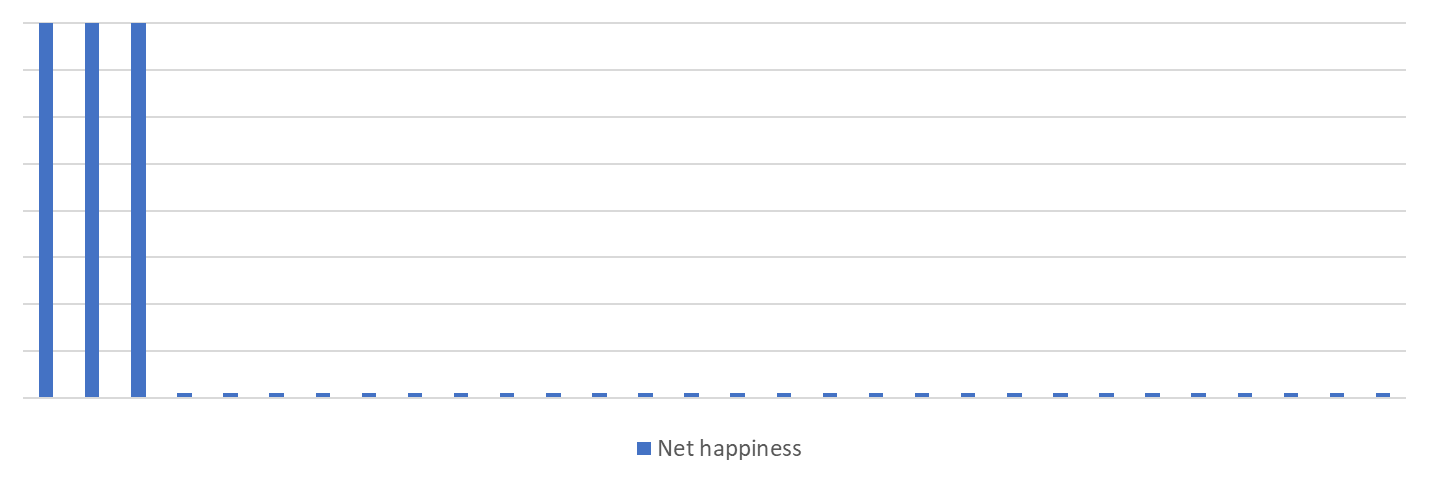
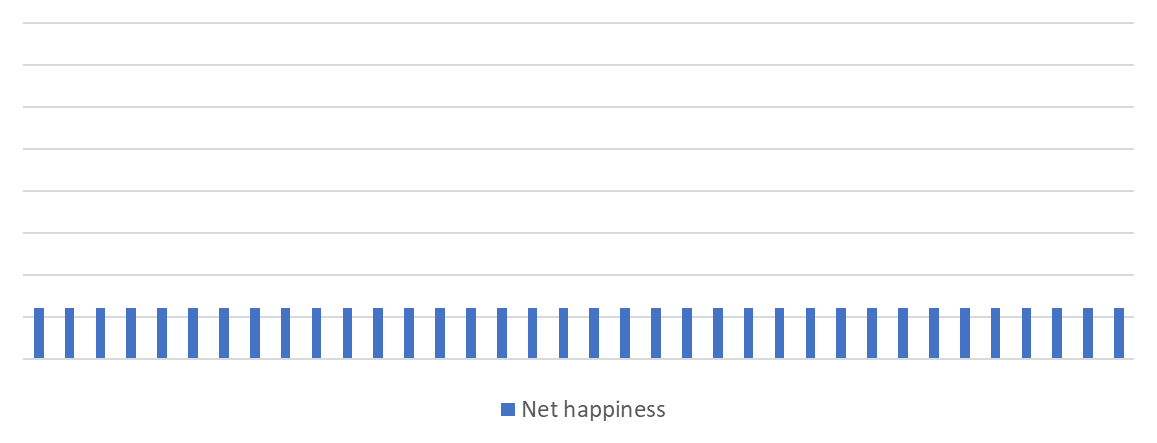


My puzzlement about population ethics is why we should give any serious weight at all to our evolved moral intuitions, when we're thinking about long-term global-scale population issues.
Our moral intuitions about human welfare, reproduction, inequality, redistribution, intergenerational justice, etc. all evolved in Pleistocene tribal conditions, to address various specific adaptive challenges in mate choice, parenting, reciprocity, kinship, group competition, etc. We rarely had to think beyond the scale of 100 to 1,000 people, are rarely beyond two or three generations.
And insofar as those moral intuitions were domain-specific, adapted to solve different kinds of problems that have their own adaptive tradeoffs and game-theoretic challenges, there's no reason whatsoever to expect those moral intuitions to be logically consistent with each other. (Indeed, the inner conflict we often feel about moral issues testifies to this domain-specificity.)
So, I'm just baffled about why moral philosophers who appreciate the small-scale evolutionary origins of our moral intuitions would expect those intuitions to 'feel happy' with any logically consistent population ethics principles that can scale up to billions of people across thousands of generations.