Many people realize that our WORLD is on a path that may lead to extinction. Many people thus do “THEIR PART” in making the change necessary to help. They become vegetarian to decrease greenhouse gases, buy an electric car, recycle, start composting, etc etc. All these minute changes, they say, if added up, will make the difference. Its possible, I mean theres a non-zero chance that these actions will make that change.
But if you think about time spent, versus change made, you have a linear amount of change over time that amounts to a tiny, tiny drop in the bucket.
What you and others are now finding is the knowledge to create greater change than a drop. To make the same time spent, far more effective.
Crossposted to Less Wrong
‘Like most of life’s dangers, the dangers of artificial intelligence are not easily identified from the armchair.’
J Dmitri Gallow
Epistemic status
I’m not an expert in this field, and herein I make some sweeping generalisations educated guesses about the overall...
Note: This post was crossposted from Planned Obsolescence by the Forum team, with the author's permission. The author may not see or respond to comments on this post.
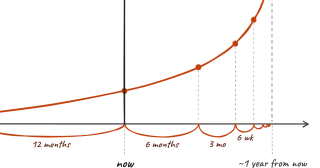
Subtitle: If acceleration compounds, the naive extrapolation implies superintelligence within a year
This post discusses a public METR report on AI R&D acceler...
TL;DR:
* When we started Rethink Priorities (RP) in 2018, our mission was, simply put, to close the knowledge gaps that stopped people from improving the world as much as they could. That hasn’t changed much, but the landscape we’re doing it in is shifting.
* In 2027, we plan to grow our core GHD, Animal Welfare, and Worldview Investigations teams to take on emerging priorities across causes, including those that the forthcoming transformative AI is creating.
...
NOTES FOR A YOUTUBE VIDEO ON EA
Many people realize that our WORLD is on a path that may lead to extinction. Many people thus do “THEIR PART” in making the change necessary to help. They become vegetarian to decrease greenhouse gases, buy an electric car, recycle, start composting, etc etc. All these minute changes, they say, if added up, will make the difference. Its possible, I mean theres a non-zero chance that these actions will make that change.
But if you think about time spent, versus change made, you have a linear amount of change over time that amounts to a tiny, tiny drop in the bucket.
What you and others are now finding is the knowledge to create greater change than a drop. To make the same time spent, far more effective.