TL;DR:
- Rethink Priorities (RP) has launched a new program focused on transformative AI (TAI) and made five hires to the team.
- The AI Strategy Program, led by Kyle Gracey, looks for neglected, high-leverage strategies for navigating TAI. It realizes promising ideas as either new internal projects or external organizations possibly incubated or accelerated through our Special Projects program.
- To inform the launch of our first large internal project, we conducted an initial landscape scan of important, under-resourced strategies.
- The Program’s first big bet is focused on the Economics of Transformative AI, a project led by Kieran Keohane that will provide fast, independent, decision-relevant economic analysis for key stakeholders across regulators, think tanks, and organizations focused on TAI. We’ll share more when its first study comes out in the next month or two.
- We’re looking for $750K for the AI Strategy Program (to fully fund it in 2027 across advisory services, incubation, and acceleration), and up to $1M for the Economics of Transformative AI project.
- You can donate here for the AI Strategy Program and here for the Economics of TAI project.
Why now
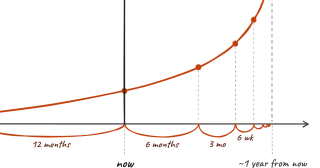
AI capabilities are advancing faster than almost anyone planned for, and we think there is a reasonably high chance transformative AI will arrive soon. At the same time, three things are changing in the field:
We believe that to match this momentum, the field will need many more new projects guided by well-researched and well-thought-out strategies. Our first rapid landscape scan identified many gaps, including a significant need for more concerted effort to deliver economic analysis that feeds into live policy decisions and to build the field of economists working on TAI.
The AI Strategy Program
Our AI Strategy Program runs two parallel efforts to help bridge the strategy-to-fieldbuilding gap:
- Delivering regularly updated, published research on high-impact, under-resourced strategies to help the world successfully navigate transformative AI. This includes strategies to harness powerful AI for good and to mitigate its catastrophic and existential risks. We aspire to produce research that informs not only our own entrepreneurial efforts, but also those undertaken by founders, grantmakers, and peer organizations. In addition to conducting our own research, we can undertake contracted strategy research.
- Starting new projects that fill some of the strategic gaps our research identifies. These new projects could include:
- Building internal efforts that become new projects or spin out into separate organizations
- Recruiting founders to launch new organizations that we support through our Special Projects program
- Fiscally sponsoring or otherwise incubating emerging organizations through Special Projects to help them grow and prove their impact potential
- Accelerating established organizations to substantially expand their impact
Given the growing opportunities and risks that AI brings to biology, we also plan to extend this work to biotech, biosecurity, and AIxBio projects.
To inform our first large internal project (described in the next section), we conducted a preliminary landscape scan of TAI strategies. We mapped around 170 strategies, then scored, prioritized, and filtered them to identify a best fit for RP to launch.
Building on this early work, in 2027 we plan to:
- Publish 6–12 strategies, roughly every 1–2 months, that will build on our preliminary analysis and determine the projects we advise, launch, and accelerate
- Pilot our first big bet in economic analysis of TAI within the first 3 months
- Develop a visual “strategy explorer” to help entrepreneurs in the field make sense of the opportunities and needs
- In partnership with Special Projects, expand the number of organizations that we can simultaneously support with fiscal sponsorship and incubation
- Expand the range of services we offer to our supported organizations, including strategy consulting to help them navigate tough decisions about the best pathways to impact in a rapidly changing field
- Launch an accelerator and founder recruitment to support organizations at additional stages of their growth and development
The program is led by Kyle Gracey. Kyle was Head of AI & Biosecurity at Future Matters and a communications consultant for the Center for AI Safety. Kyle previously had a successful career in climate, holding positions in the US government, think tanks, advocacy organizations, and private consulting. The AI Strategy Program has also hired three analysts, with backgrounds in technical AI safety, US and UK government and military service, and biosecurity. The analysts will start between late November and early January.
Current funding gap: Up to $750K. We will use your support to hire the remaining staff to carry out our complete plans, particularly the founder recruitment, accelerator, and expanded incubator.
Counterfactual value: We’re not aware of anyone else who offers field-wide, continuously updated, openly shared strategy research; no other AI safety fiscal sponsor or incubator offers strategy advising, and none combines fiscal sponsorship, incubation, and acceleration.
Donate to AI Strategy ProgramOne gap stood out from our initial landscape scan: Many of the most important decisions that governments, regulators, and AI companies make about AI, such as whether and how to pace frontier AI development, are driven by economics or have significant economic implications, but good economic analysis is rarely ready when those decisions are made.
We aim to fill that gap with a new initiative. It will start small, with a desk that provides timely, nonpartisan economic analysis to regulators, think tanks, and organizations focused on TAI, to inform live decisions about AI, such as how tightly to control exports of AI chips and whether frontier developers need to insure against catastrophic harm. Its first study looks at the economics of pacing frontier AI development and will be published in the next month or two, when we’ll say more about our plans. We also think it could expand to fill gaps in measurement of AI impacts and deliver deeper economic research and modeling on how to mitigate catastrophic risks from AI. There is also space for wider fieldbuilding.
This project is led by Kieran Keohane. He is an economist with 13 years of experience leading analytical teams across consulting, government, and regulation, including as Head of Emerging Technology Analysis at the UK Government Office for Science and, most recently, leading a large analytical team at the UK Financial Conduct Authority.
Current funding gap: The initial phase of the project has a $1M funding gap:
- $250K funds our first trial projects and core hires through mid-2027.
- An additional $250K would fund a small policy desk for the full year.
- An additional $250K-$500K, depending on funder interest, would also allow us to build up our measurement, deeper research, and/or field-building capability, as well as secure first-class senior advisors to help shape the project’s direction.
Counterfactual value: Your donation lets us run trial projects sooner, so we can test the hypotheses the initiative’s theory of change rests on faster and have greater impact at a critical time in the technology’s trajectory. Institutional funders usually want to see results from trials like these before committing larger sums.
Donate to Economics of Transformative AIWhy RP
We are well placed to do this work for four reasons.
- We have a track record of reaching neglected areas early and doing the research that helps others act, from invertebrate welfare to digital consciousness.
- We can turn ideas into action quickly. Our Special Projects program has helped deploy more than $30M across over 20 projects, including Epoch AI and Apollo Research. Apollo’s COO, Chris Akin, told us we helped them launch faster and saved them significant time and effort.
- We fill gaps others don’t. To the best of our knowledge, no one else offers field-wide, regularly updated strategy research that anyone can use, and no other AI safety fiscal sponsor or incubator also offers strategy advice backed by a dedicated research team. Our Economics project follows the same logic. Several academic centers research the economics of AI, and other nonprofits do good economic analysis and research on specific themes. But as far as we know, none combines economic analysis of AI policy with a deliberate program to bring economists into work on TAI and its risks.
- We are backing these bets ourselves. We put a significant share of our unrestricted funding behind them in 2026.
Get involved
We’d love to hear from you if you’d like to work with us or support either area:
- AI Strategy Program: We welcome input from people interested in supporting our efforts or the work of organizations we support; anyone with informed opinions about neglected, impactful TAI strategies; and entrepreneurs looking for operational and strategic assistance for their initiatives. Contact Kyle Gracey.
- Economics of Transformative AI: If you work on AI policy or economics, or would like to fund, commission, or collaborate on this work, please contact Kieran Keohane.
Acknowledgements
Thank you to Kyle Gracey and Kieran Keohane for writing this post; Janique Behman and Ula Zarosa for feedback; and to Shane Coburn for editing.