Comments
We’re not ready for the e/Acc × Longevity preference cascade

13 min readSep 21
Cross-posted from LessWrong.
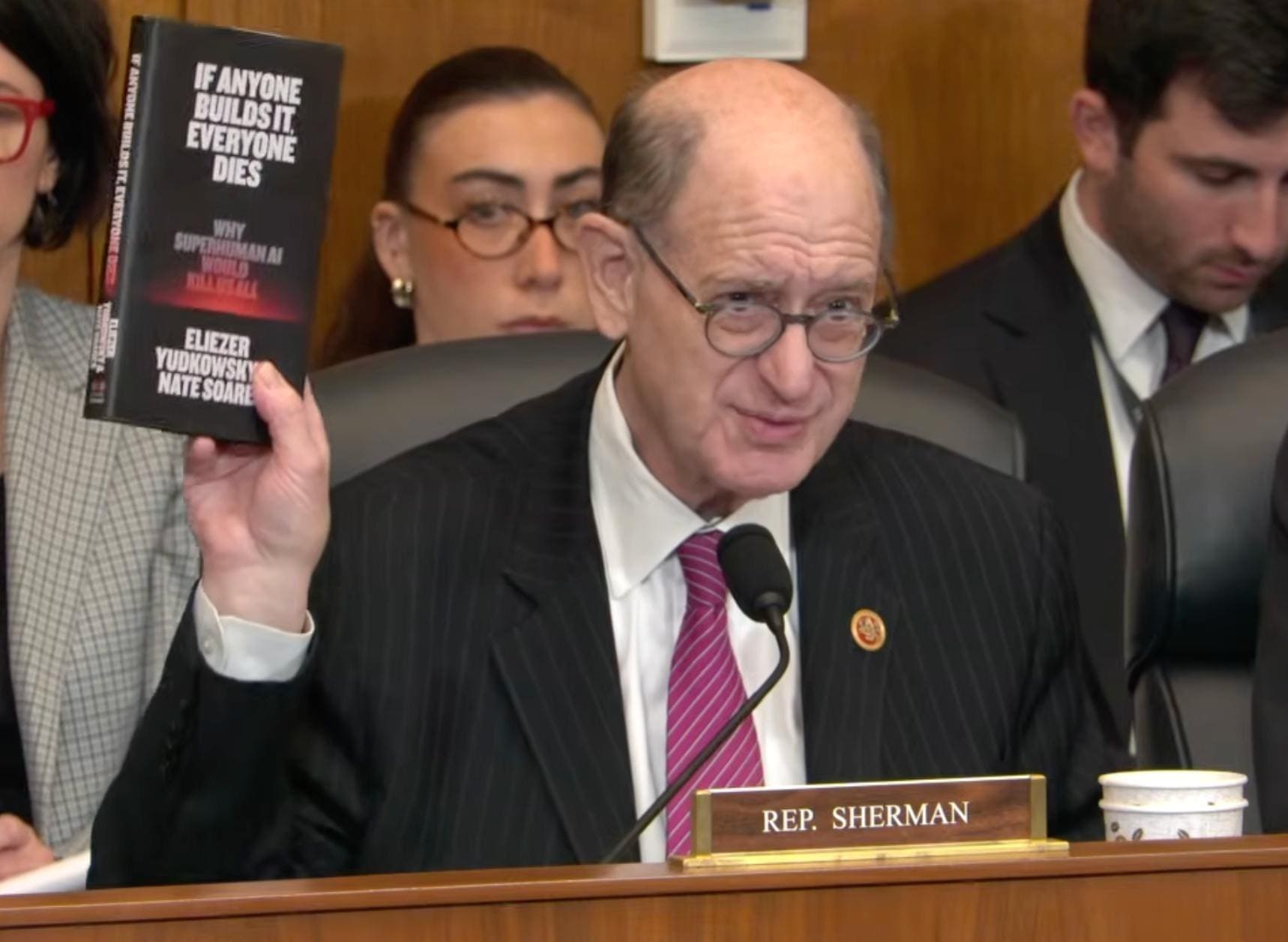
Recently, the AI safety community has been enjoying a massive preference cascade that has rapidly moved AI x-risk concerns into mainstream political discourse
Why did this happen?
But this isn’t the only preference cascade waiting in the wings, as we continue to scale AI capabilities. Consider another throwback rationalist classic:
Just like the idea of AI x-risk, the hope of using AI to unlock medical cures and other transhumanist goods is widespread among both employees and corporate leaders at the frontier AI labs, rationalists, etc.
Insofar as they aren’t devoting 100% of their energy towards steering to RSI + trying to do some critical safety work along the way (these two things seems to be most of what they’re doing), Anthropic also seems to be steering somewhat out of their way to push medical capabilities – consider for instance how centrally medical science features in Dario’s essay “Machines of Loving Grace”, their detailed coverage of the biology capabilities of each new model, their development of a project-glasswing-style “Life Sciences Verification Program” for qualified access to bioweapons-research-capable models, etc. Deepmind also seems to have also devoted a disproportionate amount of effort towards biology research, via efforts like AlphaFold and many others.
Lots of smart people seem to believe that AI-for-longevity is possible, and they’re working hard to happen. Maybe they’ll pull it off!
Maybe anti-aging is just fundamentally too weird to enter the overton window?
Evidence for the tractability of anti-aging medicine might build very gradually and smoothly.
A longevity x e/acc movement might simply take too long to gather steam, thus arriving too late to be relevant.
This cultural earthquake, or avalanche, or dam-breaking, catalyzing massive societal energies for the fight against aging, is something that the longevity community has dreamt about for for years. Unfortunately, the anti-aging preference cascade might, in practice, channel all its energies into AI-accelerationist sentiment.
Before our current AI safety moment, surely there was nevertheless widespread anxiety about humans being replaced by AI. (See eg the dramatic unpopularity of anything AI-themed in various polls.) But since the idea of AI x-risk wasn’t being discussed publicly, it strikes me that those worries were essentially being “sublimated” (in the psychological sense) in favor of somewhat vague and incoherent anger about datacenters, flock cameras, copyright infringement, et cetera. This sublimation process artificially boosted those movements but (until now) greatly weakened public enthusiasm for AI x-risk mitigation.
Right now, humanity’s terror at the prospect of death is similarly sublimated in a variety of ways, since after all there doesn’t seem to be anything practical we can do about it. But it’s also such an intense terror that it arguably drives a huge percentage of human motivation.
Meanwhile, today’s e/acc movement is honestly kind of pathetic. Its main argument within the current overton window is just that AI is going to make a lot of money. (“...though not necessarily for YOU, average american worker – I was more thinking about my silicon-valley investor friends.”) This is enough to convince Trump (at least for now) that opposing AI safety is essential for making sure the stock market keeps going up. There are a few true e/acc believers who understand that the biggest potential prize is longevity (alongside many other transhumanist goods, like intelligence enhancement). This has little traction with the public, and it seems kind of kooky to even imagine that ordinary people (people like my mom! my neighbors!) might suddenly transform into anti-aging transhumanists.[2] But this was exactly the state of AI safety discourse a few months ago, when a few experts cared deeply about x-risk but public discussion was an incoherent swirl of mere datacenter skepticism and it seemed crazy that “notkilleveryoneism” would go mainstream any time soon.
Historically, the strength of “e/acc x longevity” has been limited by the fact that most people smart enough to grasp the allure of this idea (eg AI lab CEOs, rationalists, etc) have also been persuaded by the argument for AI risk, and thus for caution despite the allure of e/acc x longevity. But a future preference cascade among the mass public (cross-pressured by anxieties over superintelligent AI and bioweapons, versus enthusiasm over medical progress) might not play out the same way. So it seems to me that the combination of e/acc ideas, and a mass public that for the first time truly believes in imminent cancer cures, aging treatments and other medical miracles, could end up going in some pretty crazy directions.
IMO the (small, very inside-baseball) controversy over Nick Bostrom’s paper “Optimal Timing for Superintelligence” reflects AI safetyists’ understanding of this dynamic. “Don’t speak too loudly about this very selfish, dangerous idea!” people seem to be saying. “If anyone else hears, it might set off the latent anti-aging preference cascade!” Personally, I don’t think that analytic-philosophy essays (or, for that matter, LessWrong posts like this one) are going to be the match that starts this particular fire. But the kindling is building up.
I’m in a weird position here, I guess. I’m not saying we shouldn’t try to use AI to develop some medical cures. Medical cures are great! (Other things equal, of course. Where “other things” includes x-risk from both reckless AI scaling and from enabling easier bioweapons development.) Even Eliezer Yudkowsky thinks we should try to go for the medical cures, if we can do so in a responsible way: in his Time open letter of 2023, he says “The moratorium on new large training runs needs to be indefinite and worldwide... If I had infinite freedom to write laws, I might carve out a single exception for AIs being trained solely to solve problems in biology and biotechnology, not trained on text from the internet, and not to the level where they start talking or planning; but if that was remotely complicating the issue I would immediately jettison that proposal and say to just shut it all down.” Even as he also says that it would naturally be “incredibly selfish and evil” to roll the dice on misaligned AI as described in Bostrom’s “Optimal Timing” paper.
idk! Here are some thoughts for AI safety groups and funders:
Beyond that, I think AI safety folks might also want to establish some anti-aging bona fides well ahead of time. Some ideas for how to do that:
All the above stuff, taken together, sounds like I’m pitching a maximalist agenda for basically transforming EA/rationality into a longevity-focused movement, which would be absurd. I’m instead just saying that we should consider doing some of this stuff, a little bit more than we already are.
The overarching idea here is that AI safety should be ready to present an alternative vision of radical longevity progress – one that isn’t reliant on breakneck general AI scaling. This plan doesn’t necessarily need to explain how it’ll actually OUTPERFORM a plan of breakneck scaling at achieving medical progress (which might be unrealistic). But during a preference cascade, we’ll need to address the issue in some way. (Just like how it behooves Republicans to have some kind of notional plan even on issues that are unfavorable for them, like healthcare. And similarly behooves Democrats to make some sorts of commitments on immigration, even if they’d mostly rather people not talk about the issue since it’s unfavorable for them.) Lest we end up looking like the e/accs do in the current AI safety moment – losing the argument in the eyes of the public, reduced to weak rebuttals, weird ad hominems, and transparent attempts to change the subject.
The “support for FDA reform and scientific research” stuff earlier is important not just so we have a track record to point to, but also because after a longevity preference cascade, there will be strong public demand for taking action on aging. People will want a roadmap, they’ll want big initiatives being launched and funded, and so on. So, EA / rationalist groups should perhaps fund some of these things in small-scale now, with a view to being able to impressively scale them up later when the demand arises. Cryonics also seems particularly relevant here as a shovel-ready plan that acts as a “Plan B” alternative vision for longevity. Ideally the idea of a crash program to improve the science and scale up the practice of cryonics might be capable of relieving some of the desperate urgency and time pressure that the public might feel about the problem of aging after a preference cascade, and would answer some of the newfound political will to immediately “do something about aging” in a way that doesn’t involve further scaling AI.
What about the labs themselves; what should they do?
Final thought: in all the above discussion I’ve made it seem like it’s important to have all these plans ready (to channel the energy unlocked by a longevity preference cascade) for the purpose of performing PR judo and deftly deflecting a movement that might damage the cause of AI safety. But obviously there’s another good reason to have such plans ready in advance: properly directed, a longevity preference cascade could be really great! It would be amazing to use all that energy for good, using it to fuel more ambitious medical progress in a way that isn’t existentially dangerous. So, for that basic object-level reason, it would clearly be great to have some shovel-ready plans scoped out for rapidly scaling up ambitious medical research.
Longevity fans will complain that progress on aging is actually more tractable than the public thinks. I agree! But look at the history of the field: resveratrol? senescent cells? some mouse trials? None of this stuff has produced a genuine miracle for human life expectancy; and meanwhile there have been lots of weird fads and hype. It is very understandable that a distant general public (who has a harder time sifting fads from more promising science) perceives this all as snake oil, or at best overly-optimistic empty promises in the vein of “commercial fusion power is just 10 years away”.
I’m not sure what exactly how transhumanist a longevity cascade would end up looking like. Would it mostly be focused on enthusiasm for curing normal diseases, like cancer or Alzheimer, without touching the still-taboo idea of anti-aging? Could it possibly get crazier than anti-aging, and into other transhumanist goods, like BCIs or etc? Perhaps most importantly, how much would people connect the dots between medical progress and AI policy? Maybe everyone would get excited about medical breakthroughs but this would just translate happily towards pressure for more research funding, FDA reform, etc, without politically connecting to any AI issues? Or maybe people would go full on "worship the coming machine god" at the first whiff of some new AI-developed antibiotics for treating hospital staph infections, or whatever. Who can say!