Comments
I really like what you're doing, and I find your work truly inspiring.
I really like what you're doing, and I find your work truly inspiring.
Looks like a lovely retreat. I love how incredibly cheap this worked out at as well! (Not that I dislike the semi-lavishness of EAG, but quite refreshing too.)
I'll have to come along next year!
If you ever want to start the EA Quaker schism or whatever, I'm down to join (and know one more person in the overlap of the two)
I ran another "EA in the Lakes" event. This basically entailed renting a community hostel (Pardshaw Quaker Centre) in the Lake District, UK, for 3 nights Friday-Monday. I posted some adverts up to attract some EAs looking for a holiday and did not evaluate applications. Here's my report on how it went.
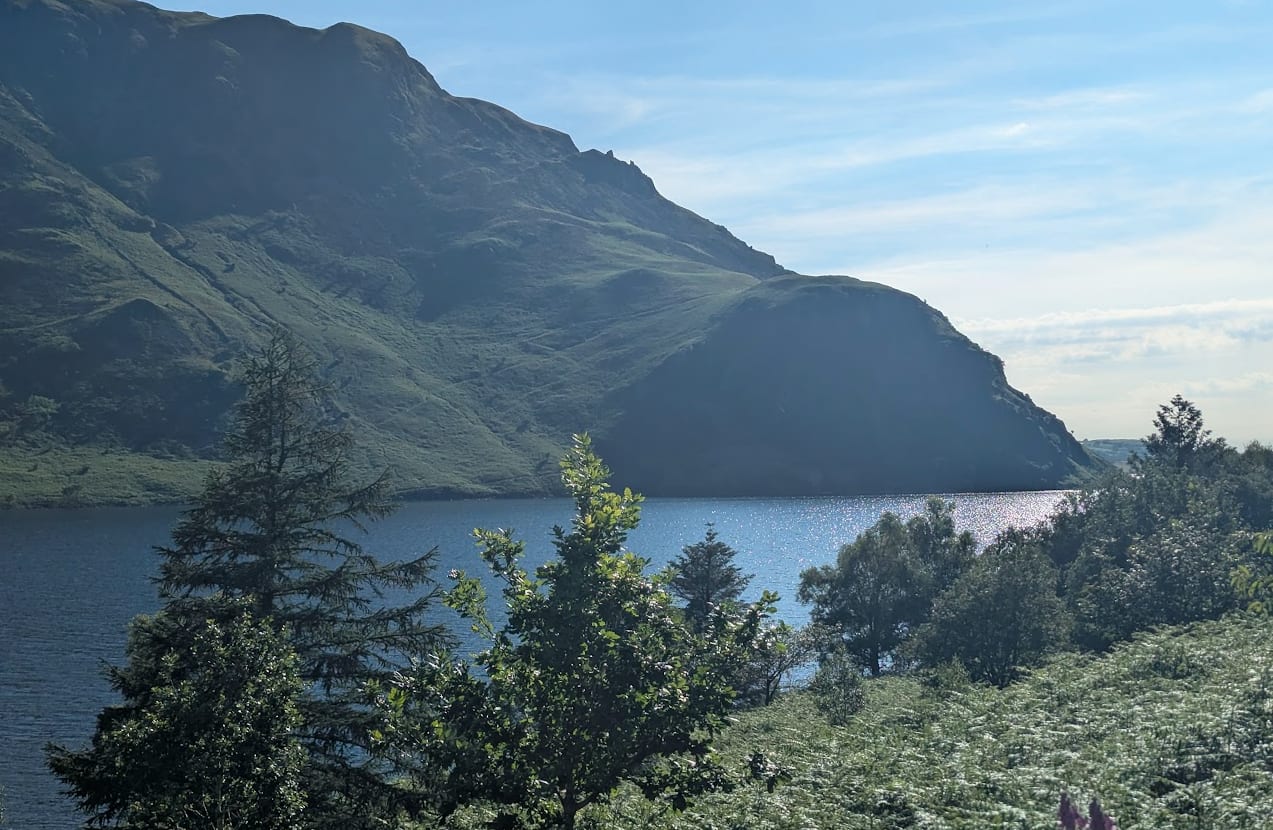
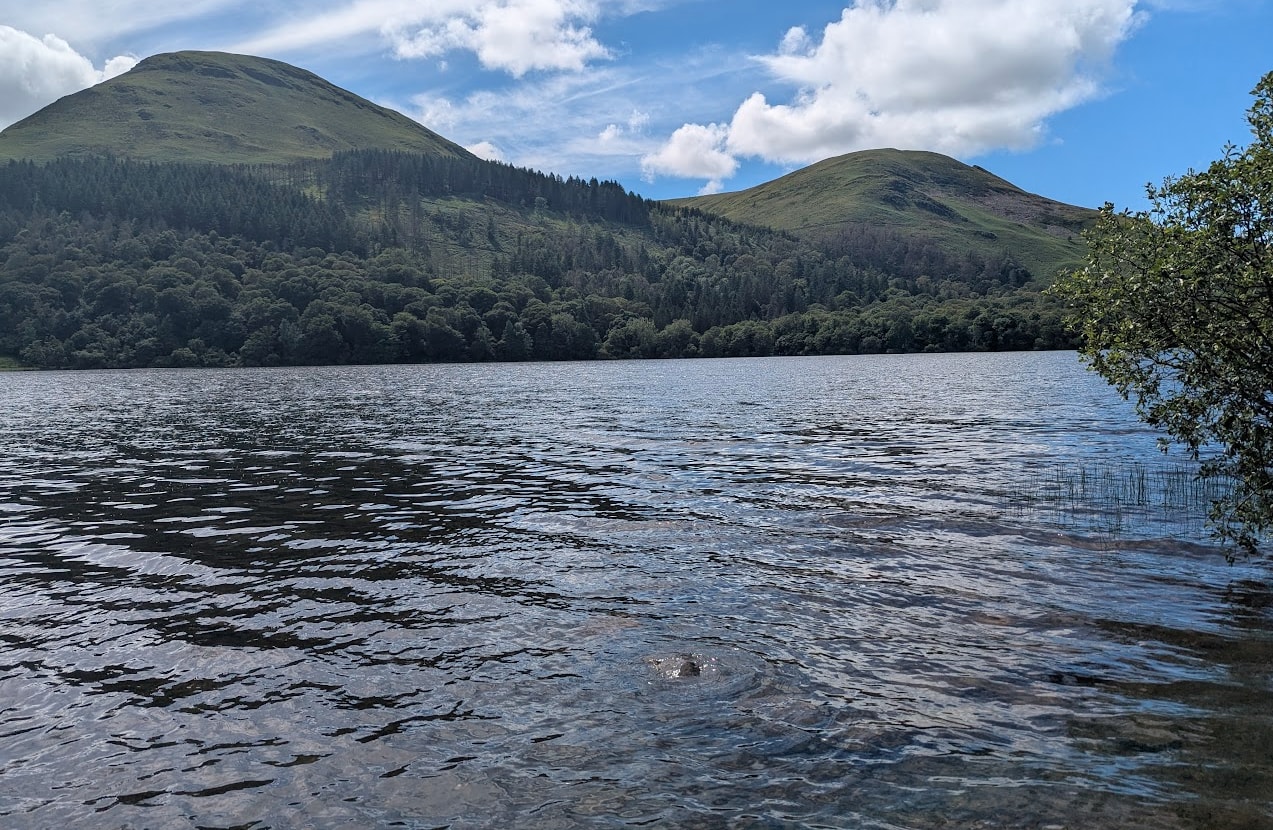
We followed the same format as last time of keeping morning and evenings open for attendee-contributed sessions (one EA and one non-EA topic in each timeslot), while spending afternoons out walking by / swimming in a lake, Loweswater or Ennerdale. We had a couple of repeat attendees but mostly new people - although several of the new people were there by a personal referral of a previous attendee, which is a function both of where I posted the adverts and also a good sign that the last one had been at the very least enjoyable.
Overall I think the event went really well. One of the longer-term EA attendees came up with "depth-first networking" to describe the event format I am trying to cultivate. I basically agree with this trio:
to be hallmarks of what I'd consider depth-first networking. There is a degree of authenticity to it that I consider key to engaging people who have or are developing expertise. However it really does require that the average engagement and reflection capacity of your group is already high, and that your group has a good enough balance between people who prefer to come up with ideas and people who prefer to evaluate them (and enough people who can take either role as required) to generate deep conversations regularly. Most EA stuff I've been to lacks evaluative community capacity, so needs more effective givers in attendance (or grantmakers, but I hear they're very busy). Otherwise you end up feeling like you're in an endless series of overlapping pitch meetings over half-baked misguided ideas.
I recommend pairing depth-first networking with a library of easily accessible "the well-formatted basic concepts" so that you can handle newcomers, because people who are way into it are generally pretty terrible at explaining concepts to newcomers without a structured prompt. In my case I brought a physical library of various EA books to the event.
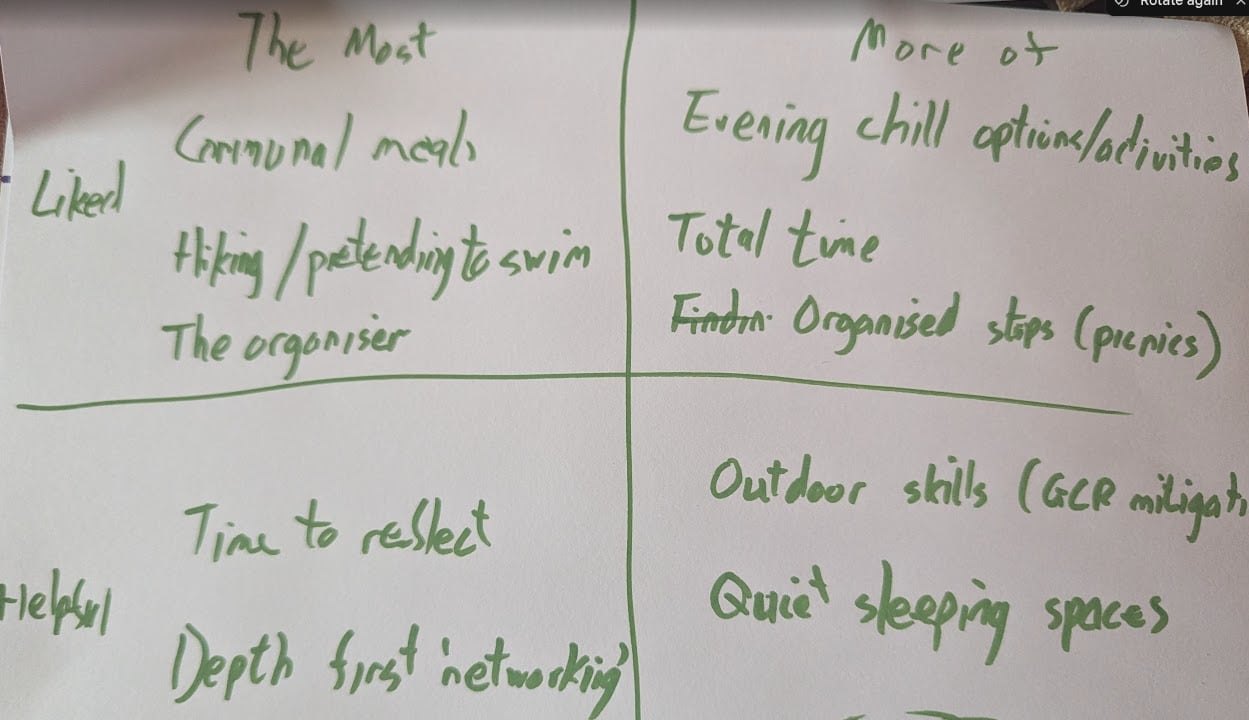
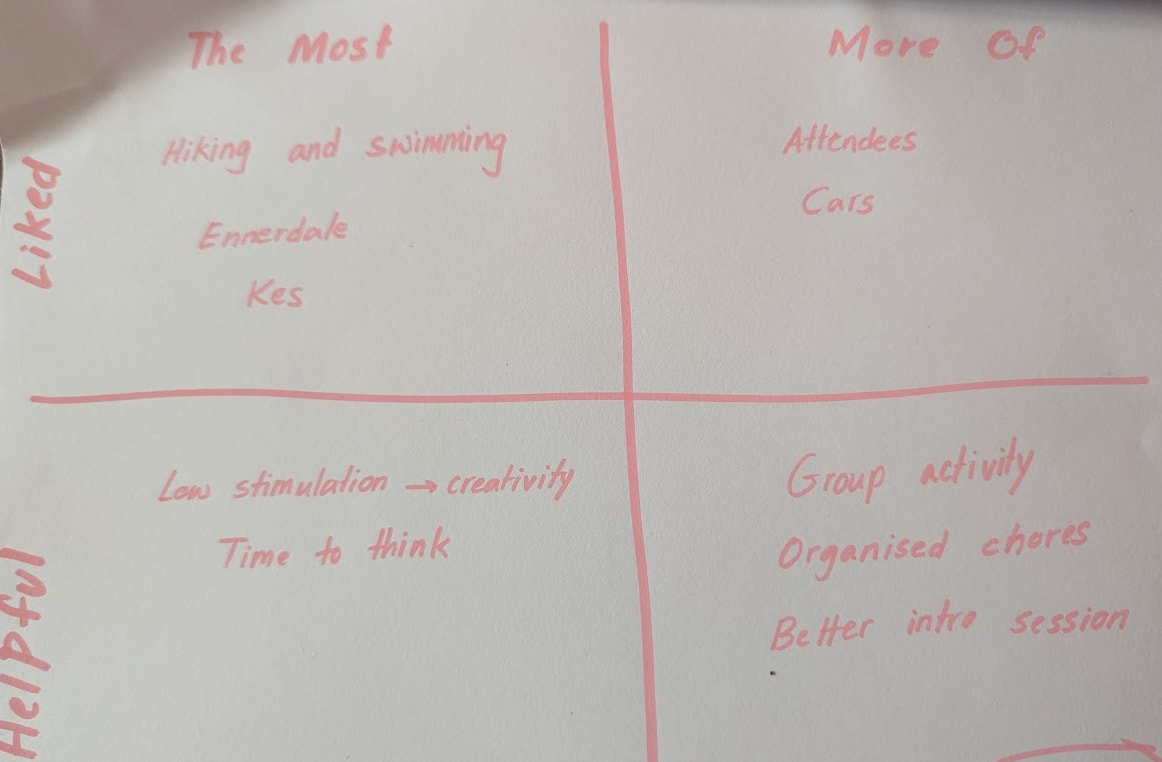
My favoured feedback style these days is the "What did you like the most?", "What would you have liked more of?", "What did you find the most helpful?", "What would it have been helpful to have more of?" format. I feel it is somewhat easy for people to answer and also talk about their answers, and gives a useful summary of impressions. Here's my main impression takeaways:
All in all, this is about what I expected from the event - the balance between structured and unstructured time is a difficult one to strike, and I think people tend to like (good) structure more but find (good) unstructure more helpful. Some individual anonymised feedback sheets are below, if you're interested in more details or about the implied process of collection:
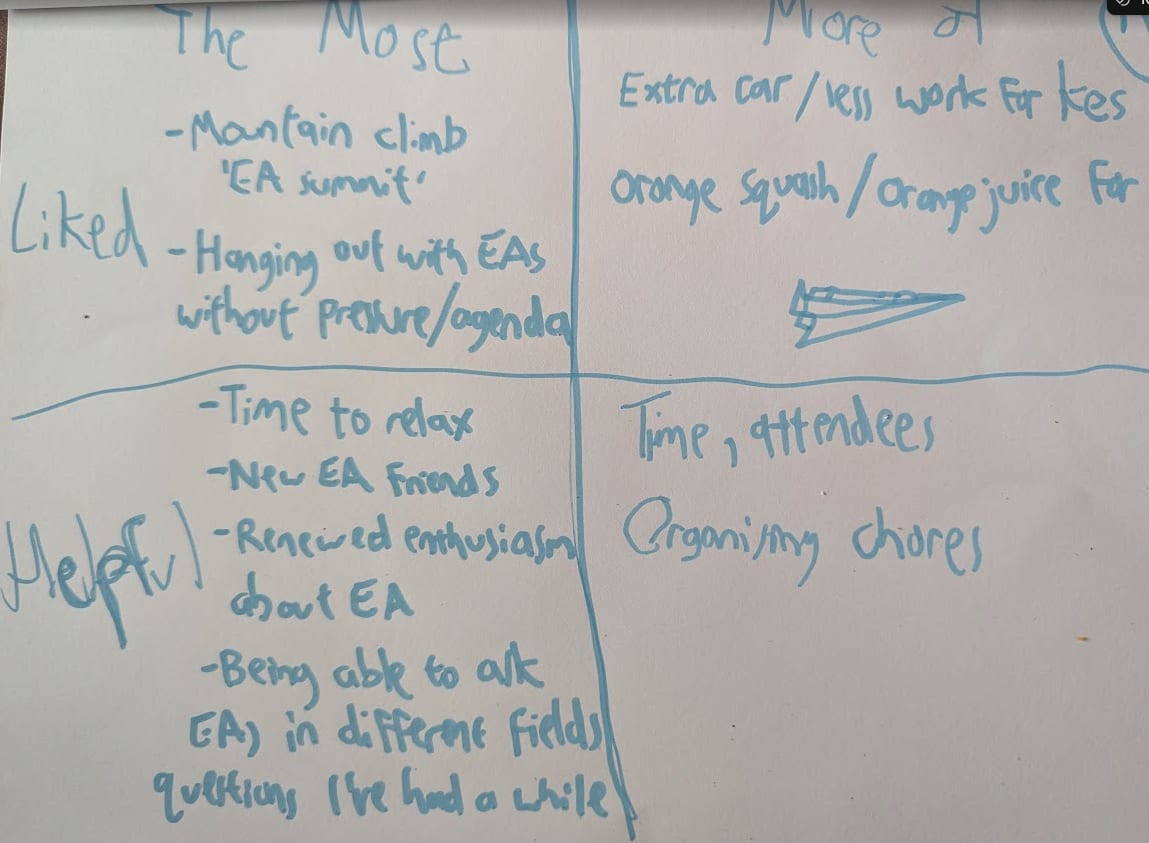
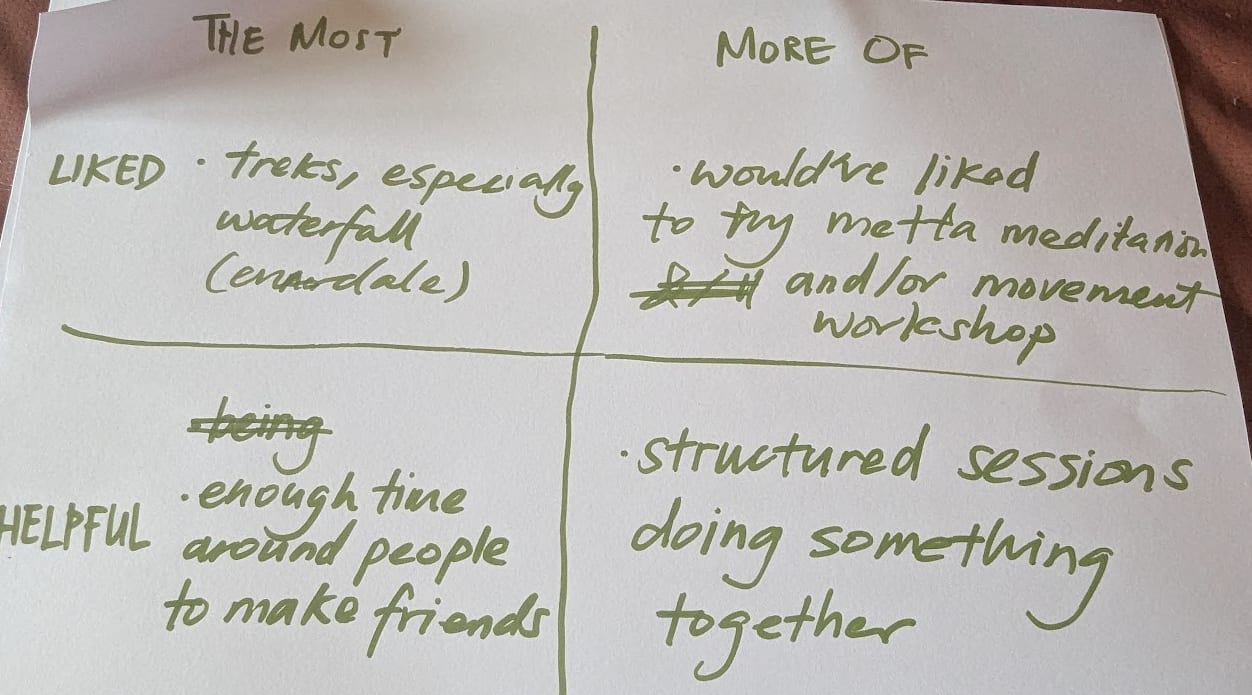
I take a very heavy principles-first stance on EA organising. This is following the line that if you persuade someone on a cause they'll stick with it only until someone else persuades them on the next cause, but if you develop their own capacity to do good better (and get them to understand the immense value this can bring to them) they're basically stuck to this idea and skillset for life - it's like riding a bike - and then over the entirety of the rest of their life they'll go and have a lot of positive impact, within or outside of formal EA spaces.
Some people say (often somewhat disparagingly) that EA is a religion. I would offer a counterpoint - that principles-first EA done right is half a religion, being composed of fairly demanding virtue-based spiritual guidance about acting with ambition and sacrificing things to achieve more good plus a corresponding community that operates on something roughly like these principles, but almost no corresponding guidance on interpersonal life conduct. It therefore operates quite well when plugged into existing religious, spiritual and psychological frameworks (good ones, anyways) that provide the guidance on interpersonal life conduct needed to stick with EA's moral demandingness without getting very depressed or committing fraud. A variety of possible religious spiritual or psychological frameworks could work, meaning EA has expansion potential in lots of places, and this is why EA only being half a religion is a huge strength of EA not a weakness.
For this event I have chosen the fairly neutral spiritual nature-connection framework of "let's all periodically touch grass and go look at a lake and watch the sunset", combined with a grab bag collection of archetypally Quaker religious principles operating in the background ("we don't drink alcohol in social time", "we abolish the appearance of hierarchies in the spaces we share with each other", "we simplify structural complexity down to the absolute minimum required", "we focus on substance over symbol", "we communally meet below our means and disdain unnecessary purchases", "we talk about our personal lives with each other and admit our own messy faults and failings", "we encourage deep reflection on whatever you want to say or have said but permit you to say it") that are, I should emphasise, in no way mandatory parts of EA. But they work for this kind of event, and also many of the non-EA events run up at the Quaker centre, and I'm good at working with them as an organiser.
At some point I will go round up all the effective altruist Quakers I know and we might start a (Friendly) schism.
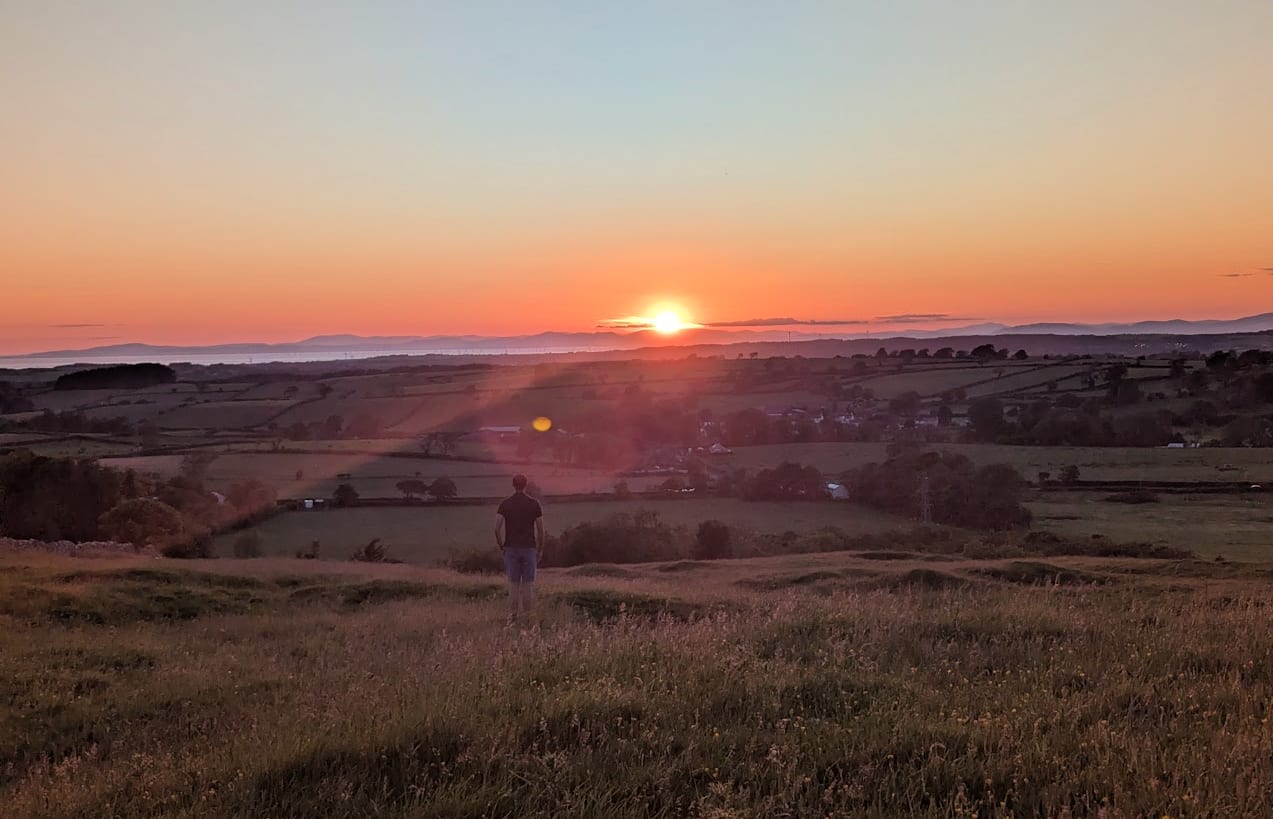
I know there's ongoing discourse about EA retreat costs, so I figure I'd lay down some transparency.
Total cost £450 for site rental + about £250 for food ingredients + estimated £200 for travel and sundry activities expenses + my time and energy. The financial cost was entirely covered by tickets which ran at £100 non-concession /£50 concession (you are a concession if £100 for a 3-night catered holiday sounds off-puttingly expensive).
My time and energy cost was covered by me putting about £900 of my pledge money towards paying for the site's rental by other EA groups - so that's two free weekend rentals (want one? ask me!). I always find it rather difficult to work out how to account for my time and energy as a volunteer EA community organiser, but I am coming around to the idea that I should be accounting for it somehow, even if it's just waiving pledge money from an EA activity I don't connect with much to one that I do. It helps my internal life accounting to budget that I have done something, and I think it was worth about this much.
Cost-effectiveness: idk, infinite? I certainly feel no need to do a formal analysis.
Touching grass can be a high-EV activity.
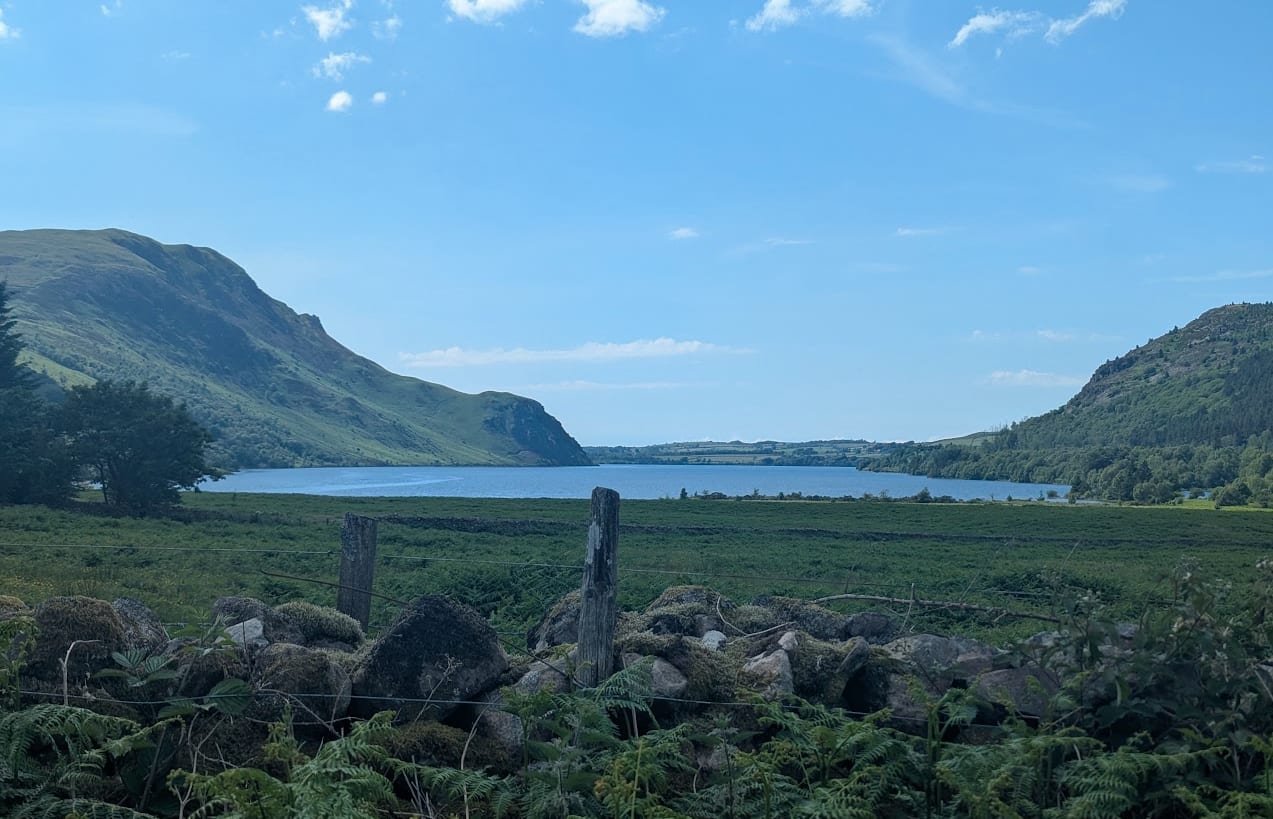

We really should have more opportunities to engage in depth-first networking and also touch more grass. Thanks for making it happen, Kes!