Comments
Thanks for sharing, Jamie and David! How do you assess the impact of the Pulse project so far? How has it changed the decisions of Rethink Priorities (RP), and impact-focussed funders?
Thanks for sharing, Jamie and David! How do you assess the impact of the Pulse project so far? How has it changed the decisions of Rethink Priorities (RP), and impact-focussed funders?
Hi Vasco, it's an interesting though not simple question, as we're currently in the process of looking into how to understand possible impacts of research projects in general (or rather, specific projects/pieces of research, but not currently specifically/just for Pulse).
Each time we've ran Pulse, we've had a handful of specific requests from impact-focused funders or charities for items to include and received positive feedback about the value of the information for them when we've done so. To some degree when we do that, we are trusting their judgment as to the value of what they wanted to know about, not explicitly modelling it.
I've also seen some Pulse findings in wider discussions in some more and some less formal outlets over time, which suggests some interest and traction - this has perhaps been more the case with some of the AI-related findings. I think providing such information so that people are better informed in what they're discussing is valuable.
The general awareness findings were, I believe, something of an update for people/orgs in understanding how much reach EA actually has so far (including at RP), and I believe such information - naturally amongst many other pieces - has been at least discussed when talking about field building for EA or for different particular causes, and possible communication strategies. It could be that the continued polling there is less of an update each time, but for a lot of the information I think that the value can increase as we track opinions and awareness over time, such that some of the knowledge and possibly action relevant information we gain will be realised by understanding trends and how certain events or developments do - or surprisingly do not - affect public perceptions and concerns over different causes.
A less tangible impact that I think could arise over time is a generally better sense amongst decisions makers of what and how people outside of the 'EA community' actually think about the things people closer to the community care about. Whilst EA isn't for everyone, I still think it is important to have a good mental model and ideally an empirically informed understanding of where the general public is on various issues, and contributing to that understanding and awareness is also important.
Thanks for the context, Jamie! That makes sense to me. I would still be curious to know about concrete decisions that were significantly influenced by the Pulse project. Its impact seems less tangible to me than that of RP's research targeting particular cause areas. However, this could easily be because I am less familiar with movement building efforts.
The low EA awareness findings from Pulse prompted us to commission Dutch-specific research to test whether we face a similar situation here. In the meantime, we’ve already shifted some resources toward targeted awareness-raising - the data suggested our funnel may be constrained at the top rather than further down, so we’re testing whether reaching new audiences is higher leverage than deeper engagement with existing ones.
Thanks for sharing, James.
This is the third in a sequence reporting the results of Wave 2 of the Pulse project by Rethink Priorities (RP). Pulse is a large-scale survey of US adults aimed at tracking and understanding public attitudes towards effective giving and multiple impactful cause areas over time. Wave 2 of Pulse was fielded between February and April of 2025 with ~5600 respondents.[1] Results from our first wave of Pulse, fielded from July-September of 2024, can be found here, with the forum sequence version here.
This part of the Wave 2 sequence focuses on US public attitudes towards different philanthropic cause areas.
Survey features:
Importance of causes and support for donations
Little change over time in perceptions of causes despite major US political changes
As in Wave 1 of Pulse, we sought to assess the US public's views on the importance of various cause areas. These cause areas ranged from more traditional philanthropic or charitable areas (e.g., Cancer Research) to those often highlighted by the EA community (e.g., Global Health, Animal Welfare, or Existential Risk).[2]
Respondents were randomly split to see either a question about the importance of 10 cause areas (n = 2773), or to indicate the extent to which they, in principle, supported donors giving to those same 10 cause areas (n = 2835).
Each cause came with a brief description or example.[3] While this explanatory information aimed to be simple, informative, and uncontroversial, it should be noted that different framings of cause areas could lead to substantially different prioritization ratings (as we have seen in previous research).[4]
Respondents who rated the importance of different cause areas saw the following:
“Governments, charities, philanthropists, companies, and individuals all make choices about the most important issues of our time.
We would like to know what you think are the most important issues to be tackled in the world.
On the following pages, we will show you several different issues or 'cause areas'. Please rate how important you think each one is.”
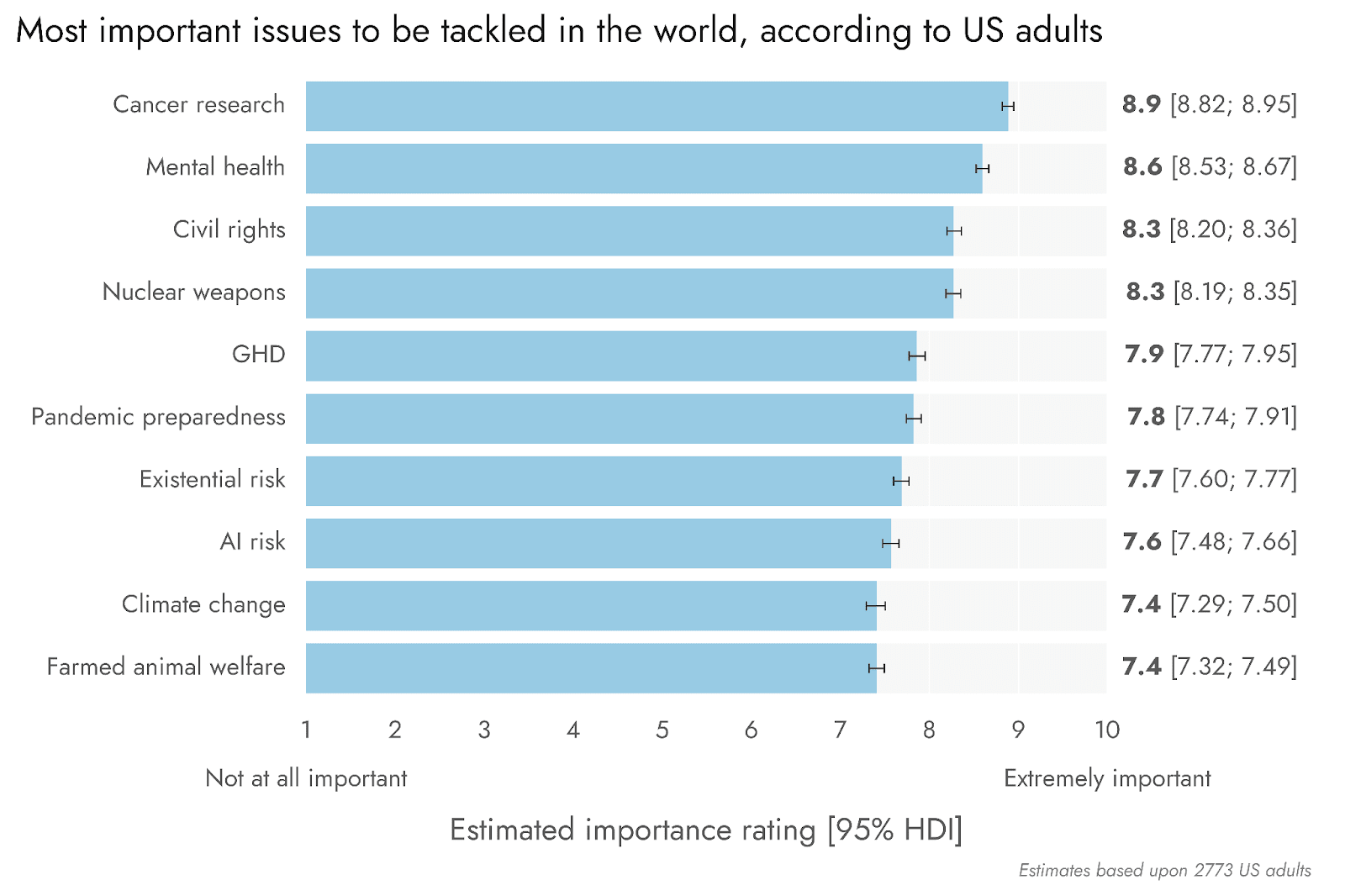
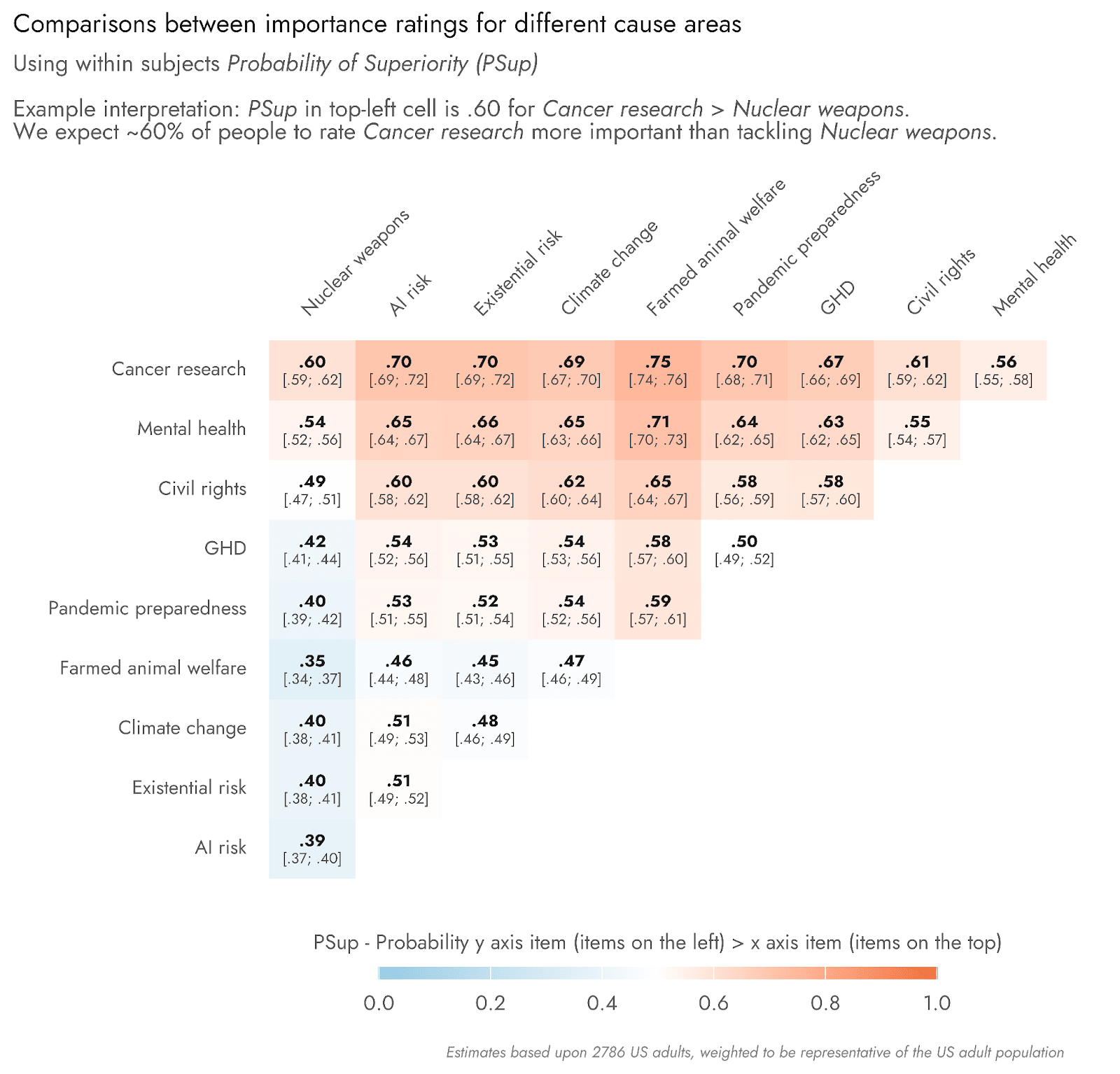
The average importance ratings are shown in Figure 1 (Figures S1 and S2 of the Appendix show how causes were rated as categorical outcomes). It is notable that all cause areas, on average, received ratings reflecting considerable importance attributed by the US public. Nevertheless, some causes got substantially greater endorsement than others, with arguably more traditional causes such as Cancer Research, Mental Health, and Civil Rights receiving more endorsement than Farmed Animal Welfare. Climate Change also ranked low in importance, owing to disagreement about its importance along political lines (higher amongst Democrats, lower amongst Republicans). Specific comparisons amongst the items can be seen in Figure 2.
Figure 1: Most important issues to be tackled in the world, according to US adults
Figure 2: Comparisons between importance ratings for different cause areas
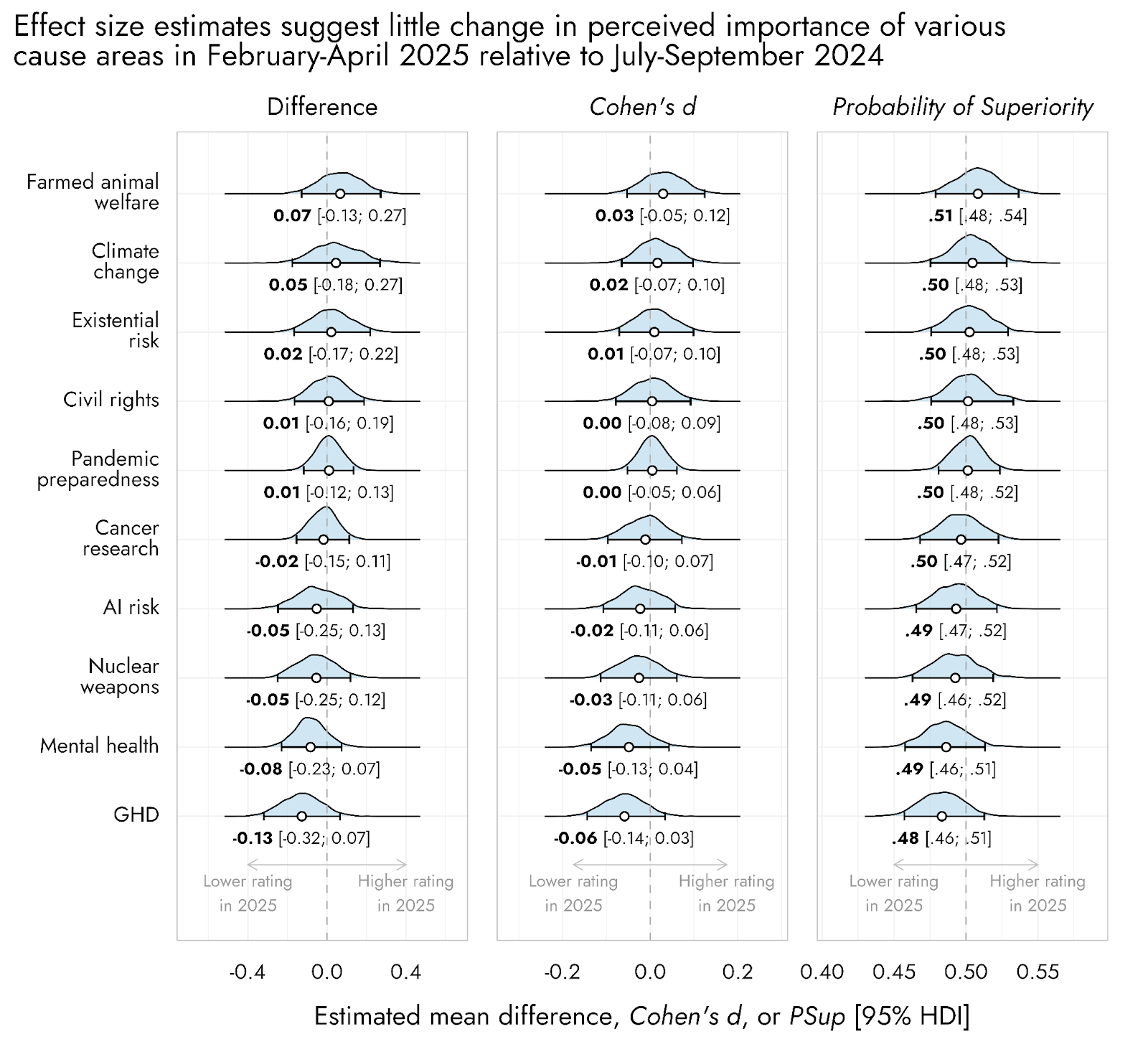
We observed remarkably little change in importance ratings in February-April 2025 relative to July-September 2024: none of the causes showed reliable shifts up or down, on average (see Figure 3). Indeed, the ranking of issues was unchanged from the first wave of Pulse, with the exception of Civil Rights just flipping Nuclear Weapons for the number 3 spot, though both were essentially unchanged at an average of 8.3.
Global Health and Development showed the greatest, though still not statistically significant, shift downwards. This may be understood given the geopolitical context surrounding Waves 1 and 2 of Pulse. Wave 1 was conducted before the 2024 US Presidential election, whereas Wave 2 was conducted after the inauguration of President Trump, and the subsequent announcement of cuts to global aid from the Trump administration. It could be that this signalling from the White House has begun to shift public perceptions. However, as any such shift was so far very modest, even among Republicans, we await the results of Wave 3 of Pulse to determine the longer-term effects of the administration’s activity on public perceptions.
Figure 3: Effect size estimates suggest little change in perceived importance of various cause areas in February-April 2025 relative to July-September 2024
Respondents who were randomized to see the donation support/opposition items were told:
“On the following pages you will see several 'cause areas' or issues.
We would like to know to what extent you support or oppose charitable donors giving money to each of them.”
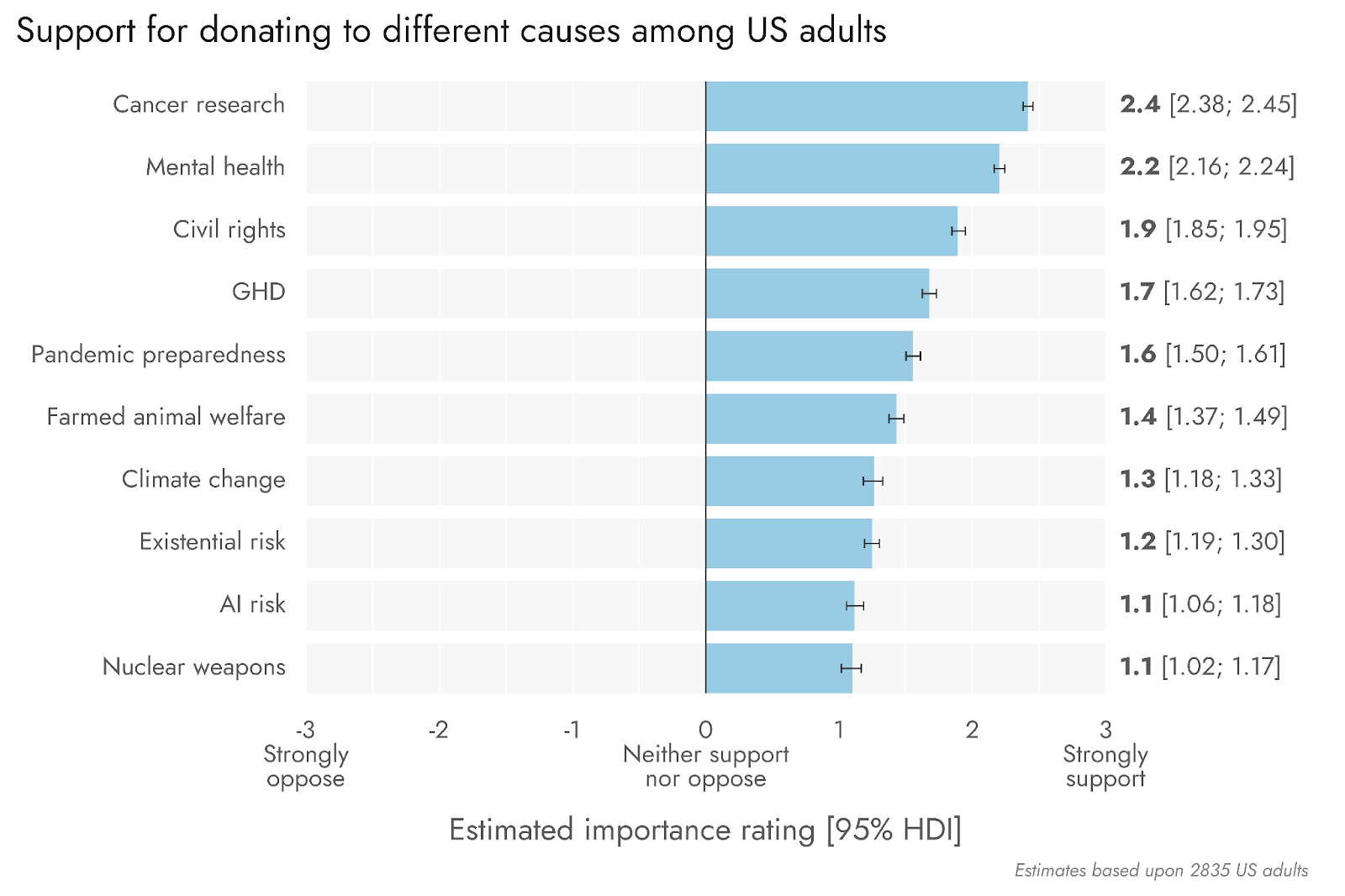
Average ratings are shown in Figure 4.
Figure 4: Support for donating to different causes among US adults
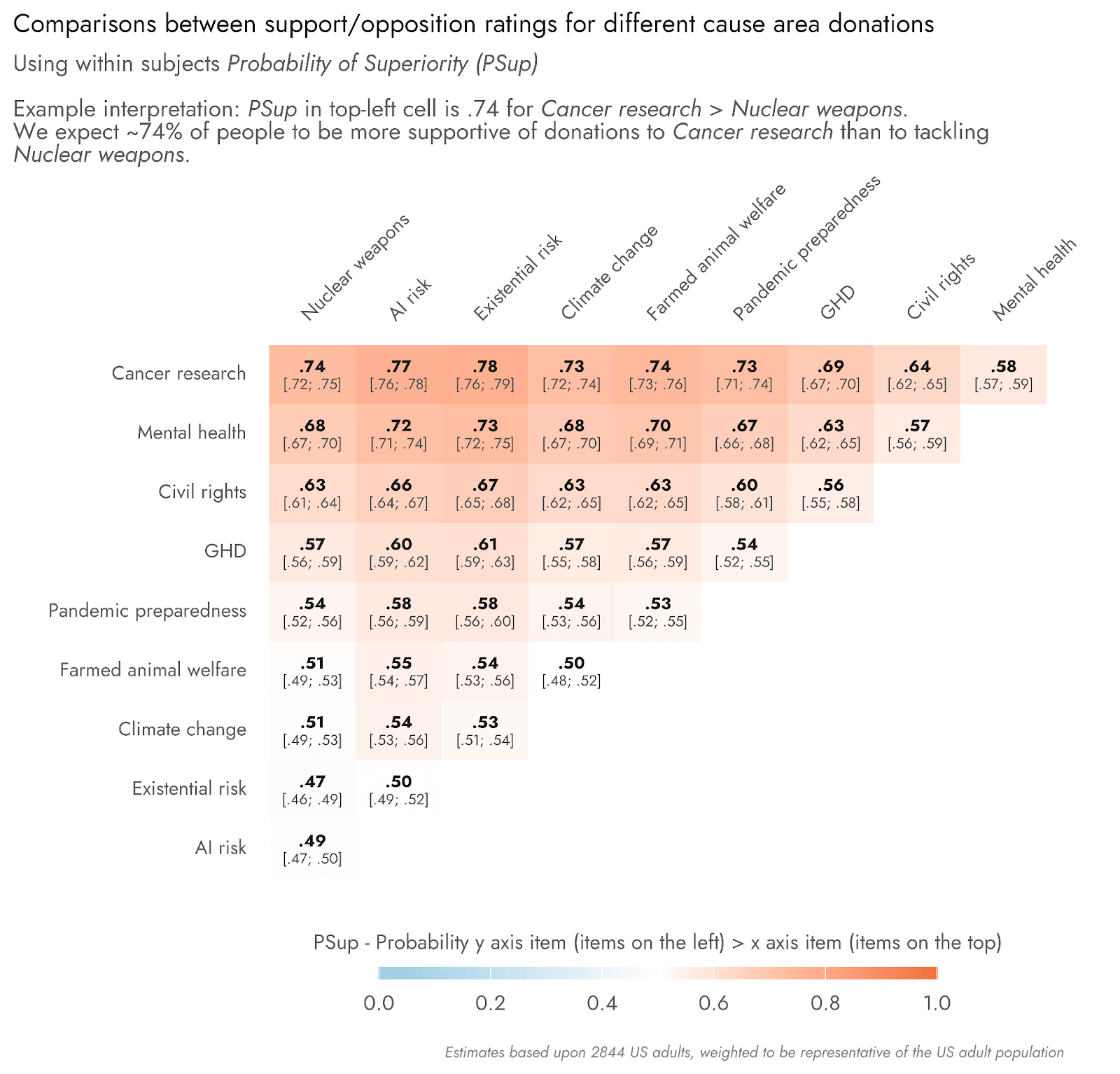
As with importance ratings, Cancer Research and Mental Health came out on top, but Farmed Animal Welfare fared relatively better in terms of its placement among the ratings. Specific comparisons between each of the different causes can be found in Figure 5.
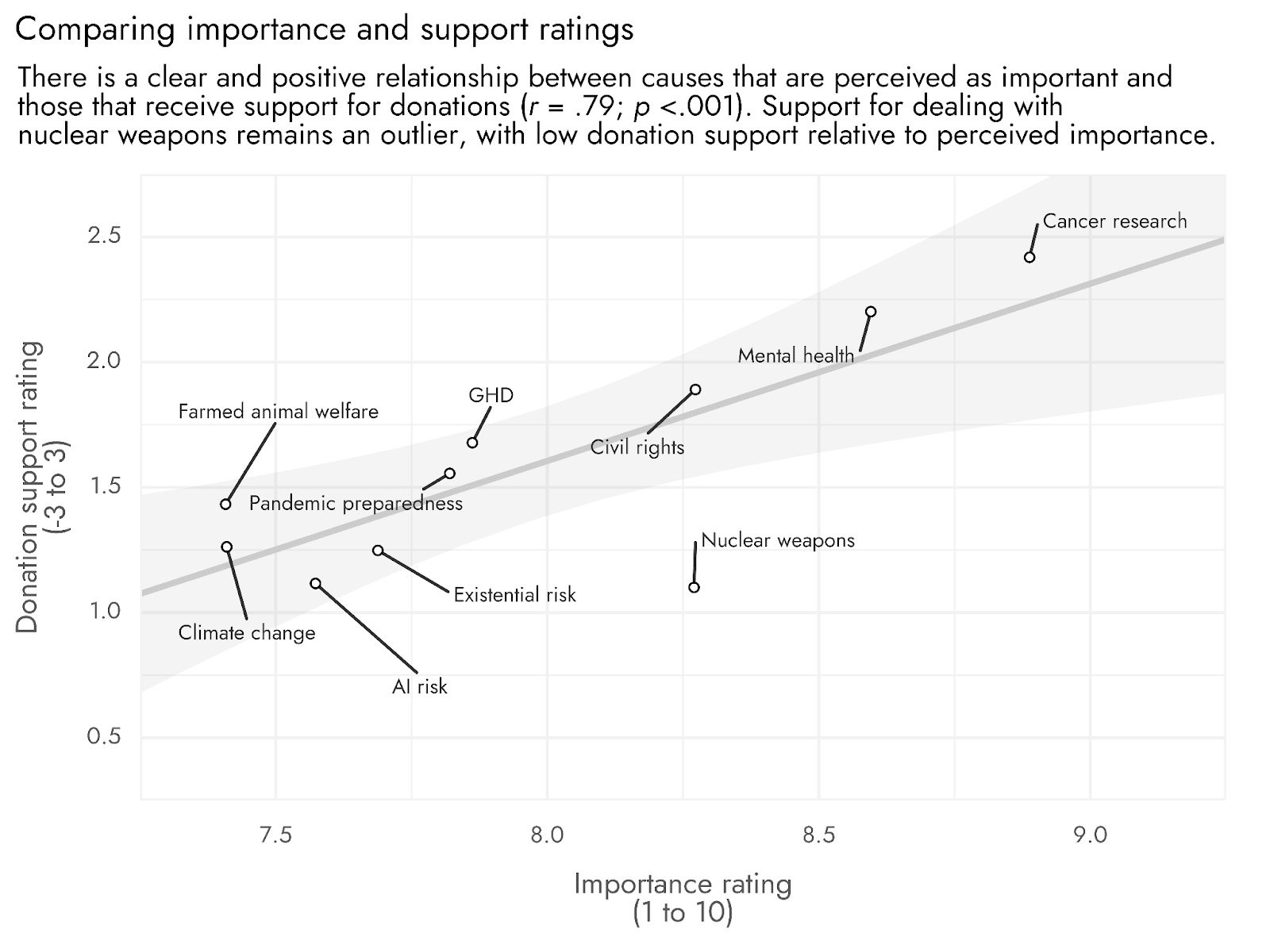
As we saw in Wave 1, in contrast to a top four spot in importance rankings, dealing with Nuclear Weapons was ranked at the bottom among causes to donate to. This places Nuclear Weapons as something of an anomaly amongst the causes, which otherwise show a tight coupling between importance ratings and donation support (Figure 6).
Figure 5: Comparisons between support/opposition ratings for different cause area donations
Figure 6: Comparing importance and support ratings
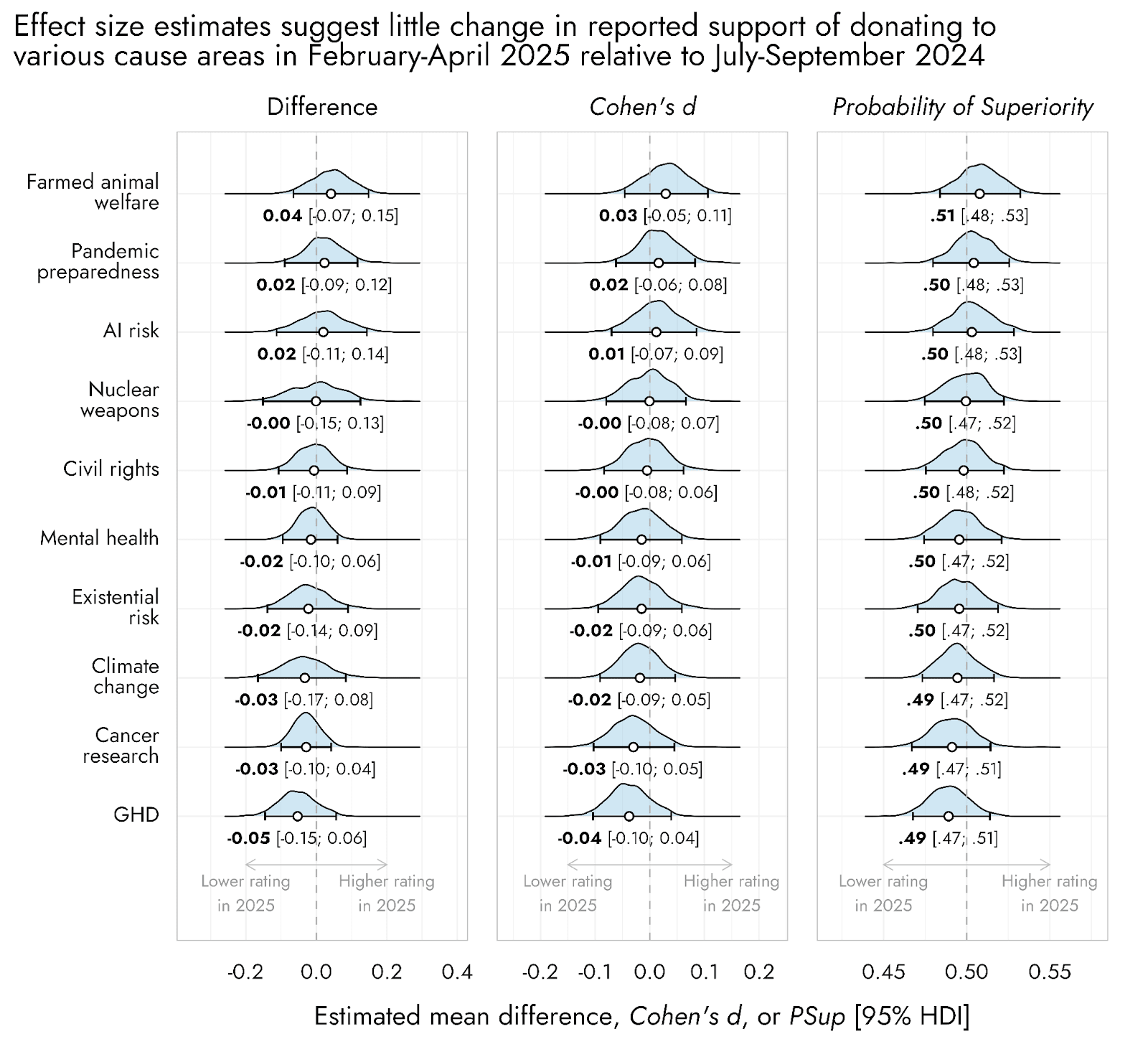
Similarly to the lack of variation over time observed in importance ratings, none of the cause areas had notable shifts up or down in the support they received as targets for charitable donations (Figure 7).
Figure 7: Effect size estimates suggest little change in reported support of donating to various cause areas in February-April 2025 relative to July-September 2024
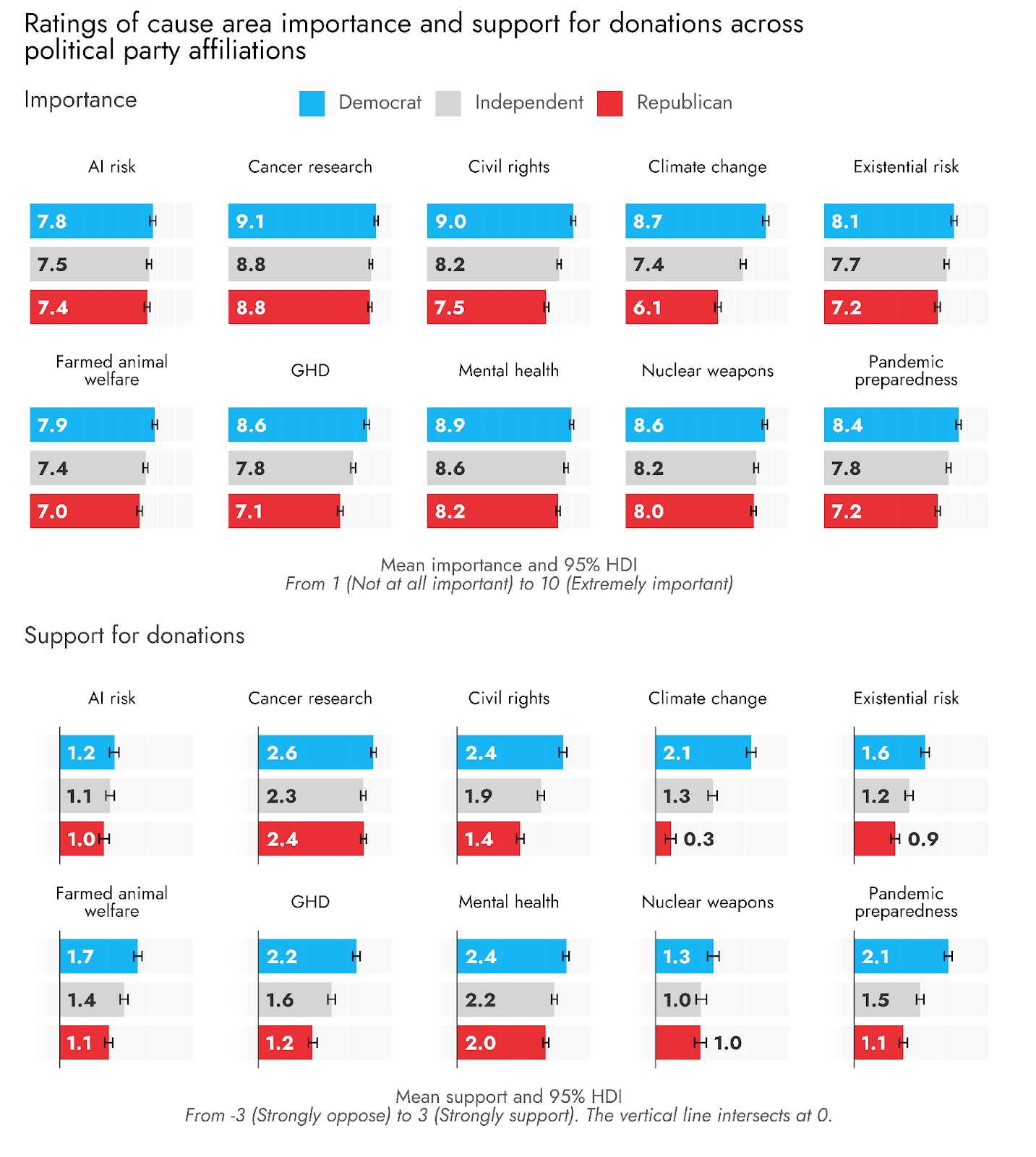
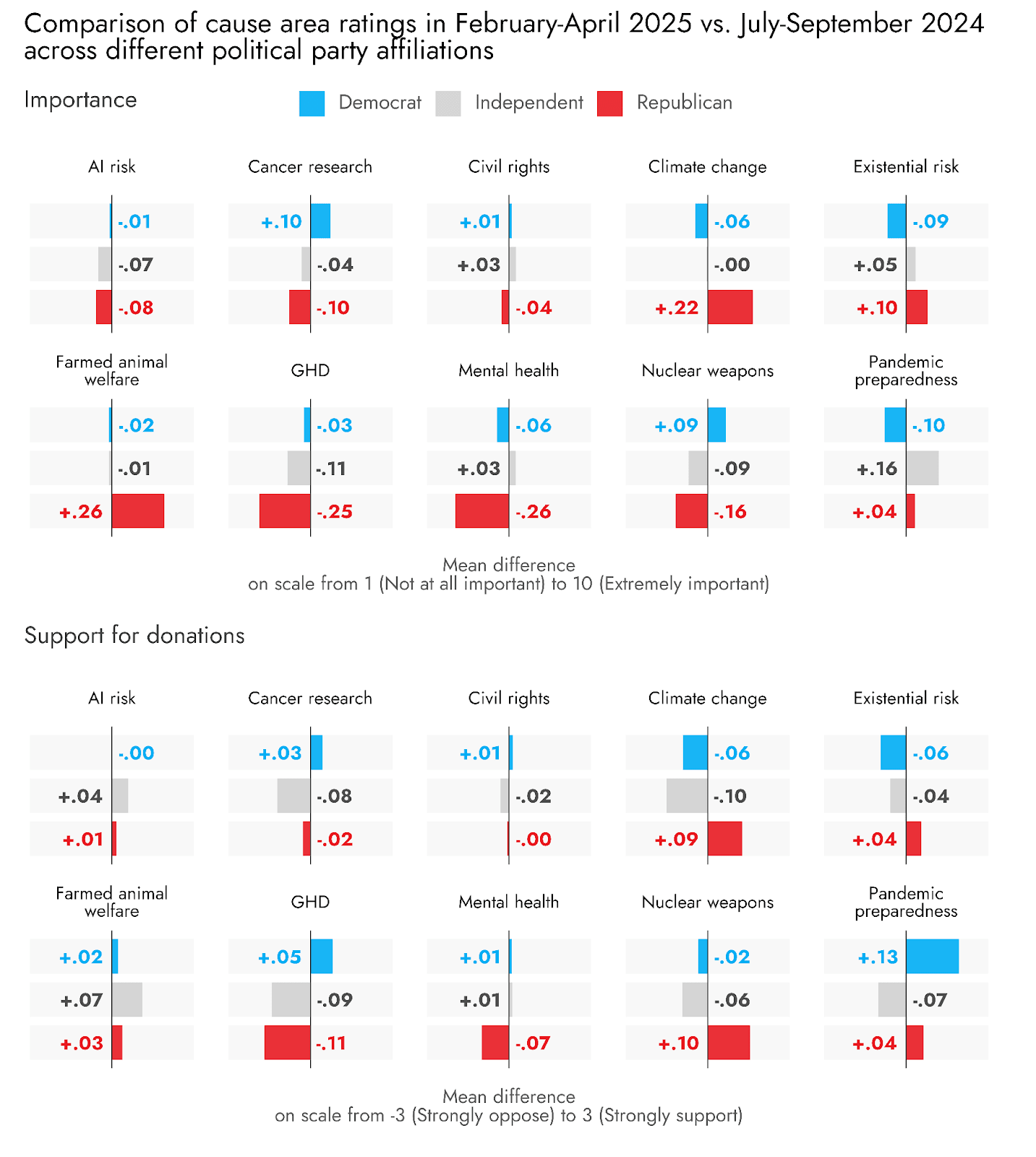
We observed that certain causes were substantially more politically polarized than others, with Climate Change being much less endorsed by Republicans than by Democrats (Figure 8). These political tendencies are very similar to those observed in Wave 1 of Pulse, but some slight shifts can be observed and may be of interest if they persist or increase in Wave 3 of Pulse (Figure 9). For example, and in line with what might be expected given Trump administration signalling, Global Health and Development was .25 points (out of 10) lower amongst Republicans in importance in this most recent wave of Pulse, and .11 points down amongst Independents.
Figure 8: Ratings of cause are importance and support for donations across political party affiliations
Figure 9: Comparison of cause area ratings in February-April 2025 vs. July-September 2024 across different political party affiliations
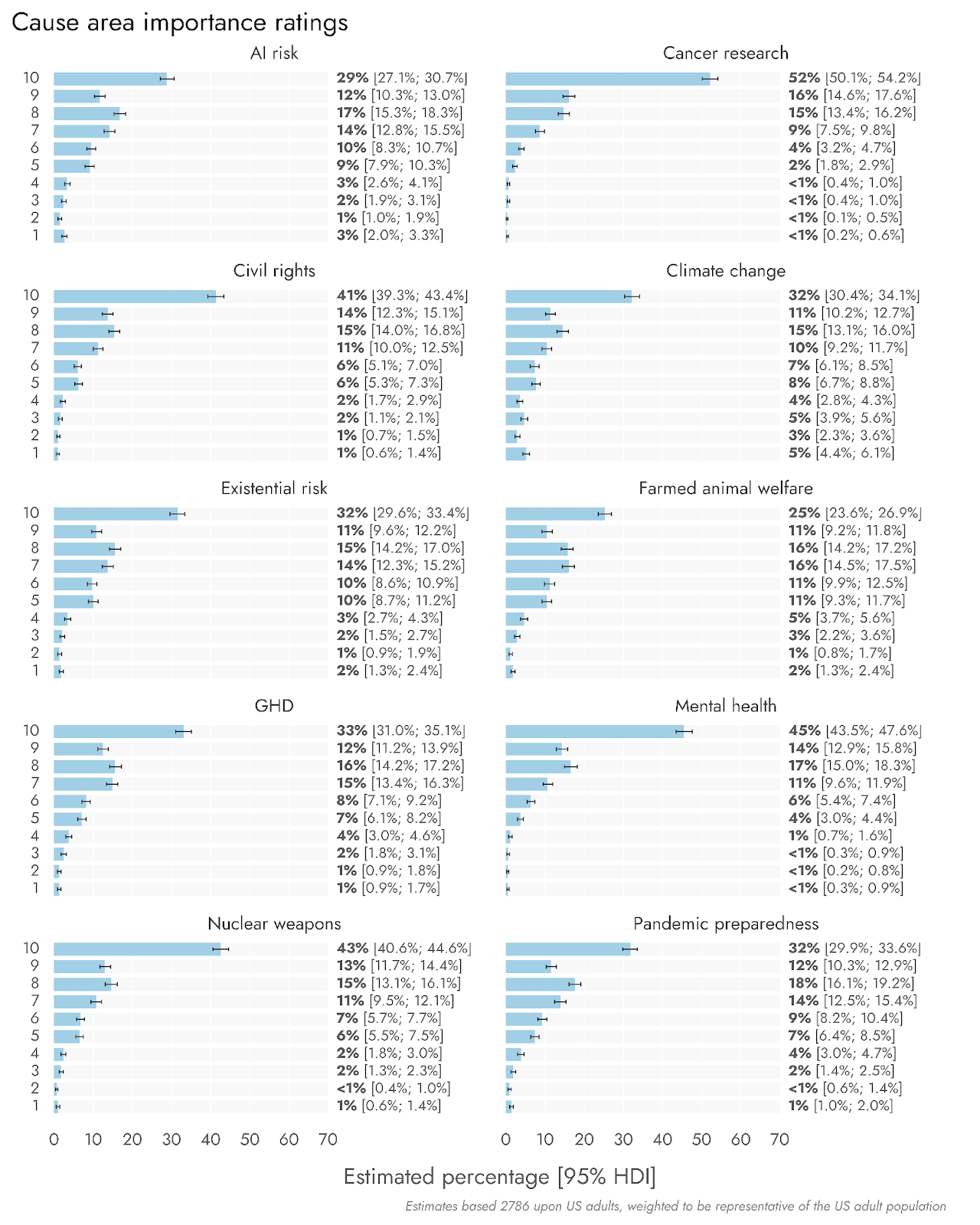
In addition to multilevel regression and poststratification (MRP) to determine mean ratings for cause area importance and support, we conducted weighted regressions on the categorical ratings, which can be used to see more precisely how people rated each cause. Weighted regressions similarly estimate outcomes in a way that is representative of the US population, but for items with many categories are less computationally intensive than MRP. These are presented in Figures S1 and S2 below.
Figure S1: Categorical responses to cause importance
Figure S2: Categorical responses to cause support
Rethink Priorities is a think-and-do tank dedicated to informing decisions made by high-impact organizations and funders across various cause areas. We invite you to explore our research database and stay updated on new work by subscribing to our newsletter.
Jamie Elsey conducted analyses and wrote this report, with editing and review from David Moss.
The exact number of respondents used in each analysis can vary, owing to non-usability or non-response for some questions, or splitting of respondents across different experimental conditions.
Causes such as cancer research are not argued to be unimportant by effective giving advocates or the EA community, but rather as relatively less neglected or with fewer specific opportunities for highly cost-effective donations on the margin.
Exact question wording can be found at: https://tinyurl.com/rp-pulse-survey-2025
Elsey, J.W.B., & Moss, D. (2024). Testing Framings of EA and Longtermism. Effective Altruism Forum. https://forum.effectivealtruism.org/posts/qagZoGrxbD7YQRYNr/testing-framings-of-ea-and-longtermism




Hi Jamie and David,
Really cool work. It's striking how much higher mental health is in importance and support than GHD. Do you have any insight into why this is and what people are imagining when they're referring to mental health?
I interpret this as very weak evidence that there's an audience for global mental health / mental health related EG that is non-overlapping with GHD (that is, there are MH givers that wouldn't otherwise give to GHD). But of course 1. most philanthropy is domestically oriented, and presumably that's what people mostly have in mind here as well. 2. It's in my self interest to read the data this way, so wondering what y'all think.
Do you know how hard it'd be to tease our real answers to these questions if you couldn't answer them with current data? E.g., by adding questions to the next round of the pulse data.
Hi Joel - in this case the positive sentiment towards mental health is indeed probably driven quite a bit by domestic mental health concerns. We actually provide an example or two for each cause and the mental health one notes improving or increasing access to mental health in the U.S.. Given it is the only mental health thing we have done so far in Pulse I think it would be hard to tease out with current data as you suggest.
But yes there could be opportunities to add something in upcoming rounds - feel free to DM or reach out by email to discuss more exactly what you would be looking for insights into. At face value it would probably be quite easy to compare how much people support e.g., mental health access/improvements at home, vs. as something they would support being done in lower income countries.
I can imagine support for government or charitable efforts at improving mental health in lower income settings being similar to support for general efforts to improve welfare/health in lower income settings, but it also seems possible that the current vogue for mental health (with therapy apps, ads all over etc. about its importance) could make people think it is an especially valuable way of helping abroad. That might just be cannibalizing broader GHD support even then though.