This summer, 27 residents came to Berkeley for the first cohort of the Generator Residency, a three-month program for AI safety generalists run by Kairos and Constellation.
Residents receive mentorship from experienced generalists and researchers and are working on projects like running workshops for professionals entering AI safety, building a cross-org talent directory, supporting university AI safety groups, serving as chiefs of staff at new and growing organizations, building tools for model welfare and model spec research, and more. See more about each of their projects below.
Lateral Workshop
Seth Lifland and Jacob Brinton
We're running Lateral Workshop, a fully funded three-day program helping experienced professionals explore transitions into AI safety. Many mid-career and senior professionals have skills the field urgently needs, including organizational leadership, government experience, cybersecurity, communications, law, finance, and operations. Yet entering AI safety can be difficult because the ecosystem is unfamiliar, professional networks are limited, and the financial and reputational risks of changing careers are substantial.
Held September 11–13 in Berkeley, Lateral Workshop will bring together promising professionals and people already working in AI safety through expert talks, small-group discussions, one-on-one conversations, and a community mixer. The program aims to make the field easier to understand, help participants identify where their existing experience could be most useful, connect them with organizations and potential collaborators, and introduce practical resources such as career-transition grants. Participants will also receive continued support after the workshop.
Learn more at lateralworkshop.org. Applications closed August 9th, but you can express interest in future workshops here. If you know someone who’d be a great fit, refer them here. You can reach out at [email protected].
Jeff Alstott’s Chief of Staff
Matt Handzel
I've been Jeff Alstott’s Chief of Staff for a new organization he is starting. I'm focusing the largest chunk of my time on recruiting: writing job descriptions, creating the hiring backend, and reaching out to potential candidates. I believe being Jeff's Chief of Staff is the best way I can gain experience in founding and scaling new organizations. I think this is a highly leveraged opportunity for impact.
Forward-deployed AI engineering for AI safety orgs
Matthew Kenney
I focused on object-level automation for model welfare research across three areas. First, I built a collaborative platform for conducting model welfare interviews and annotating self-reports. Researchers can run and branch conversations, leave notes, automate interviewer turns, and review AI-generated annotations using structured codebooks. The system is designed to automate repetitive elicitation and annotation work while keeping researchers in the loop for interpretation and approval.
I also developed structured welfare-relevant benchmarks covering self-report consistency, framing effects, model-family differences, and responses following different task conditions. Finally, I studied whether models can report decision policies learned through training. These experiments found that self-reports contain real information about learned policies and respond to causal changes, but are attenuated, prompt-sensitive. Together, this work helps identify which parts of model welfare research can be automated and where human validation and stronger measurement methods remain necessary.
Improving management in AI safety
Joe Hajj
My project focuses on making AI safety managers more effective, which is increasingly important as the field scales and more individual contributors become managers. Typically, new AIS managers don't get training when stepping into the role and commonly learn through trial and error, ad-hoc mentorship, or scrambling to find resources on their own. I interviewed 10+ AIS managers about the challenges they face, built a curriculum from the findings, and am now piloting a people-management workshop series with my advisor Max Dalton. If you're a manager in the field interested in future sessions, reach out here.
Talent Commons
Bryan Sukidi
At Kairos, I’ve been building Talent Commons, a signal-rich talent directory for the AI safety ecosystem. Today, programs and hiring rounds generate rich signal on thousands of people every year, but sharing it currently happens through ad hoc referrals, one-off data requests, and messy CSVs and Airtables passed between orgs in a dozen different formats.
With Talent Commons, orgs contribute consented data on their applicants and participants to one platform, and organizers and hiring managers can search across all of it when sourcing for programs and roles. Our goal is to help organizations identify the most promising people coming out of every AI safety program, fellowship, and hiring round, and to make those people easily discoverable when new roles and programs open up.
We've built the core platform and are working closely with MATS, Constellation, and Kairos’ programs for an early pilot. Read this for more information about the platform, or email [email protected] with questions.
Various projects to support university groups
James Lester
University groups remain one of the strongest sources of mission-aligned talent for AI safety. I’ve been experimenting with:
Making more groups (trying to help seed them)
Giving groups more capacity (e.g. through arranging resident organisers to support groups during critical outreach periods)
Piloting a new scalable programme for groups (the pre-term intro fellowship), and
Creating better materials for groups (new resources and playbooks).
Longitude DC Intensive
Manon Kempermann and Damin Curtis
We’re building the Longitude DC Intensive, an in-person AI safety / governance career program bringing 15 early-to-mid-career technical AI safety professionals to explore pathways into AI policy.
The US government will be a primary actor as humanity navigates the arrival of transformative AI, yet far too few technical AI safety professionals are focused on improving the US government’s capacity to do so well. Over eight days, participants will upskill in the foundations of US AI policy, gain an understanding of US policy work, invest in building a DC network, and plan their next steps.
You can read more at https://www.longitudepolicy.org/, apply by August 16 to be a participant, or get in touch by reaching out to [email protected] or [email protected]. We are interested in connecting with anyone in the AI policy world, including potential speakers for the intensive.
Praxis: a retreat for world-class debaters, past and present
Chanden Climaco
40 of the world’s best debaters of the last two decades are coming to Lighthaven for a weekend in August to learn about – and, hopefully, be convinced by – our cause. These are some of the best strategic thinkers, clearest arguers, and most persuasive communicators in the world.
The attendee pool features 20 national champions from 2009–2026, and other competitors of a similar caliber. We’re excited to introduce them to AI safety via talks from folks at Anthropic, GDM, AIFP, CG, and more (see our website). They are unbelievably gifted at a number of talents that we could dearly use; please contact us if you want to learn more, and especially if you would like to hire debater-types!
I’m working on a few projects related to AI safety fellowships. First, sourcing generalist mentors for SPAR’s generalist category, and second, piloting a platform to connect promising fellowship talent with projects suggested by capacity-constrained experts.
I also designed and ran a tabletop exercise simulating how different parts of the US Government respond to an intelligence explosion, and wrote a bunch of memos on topics like compute/model access for AI safety research. If any of this is interesting to you, reach out to me at [email protected].
Running Leaf and ecosystem support
Sam Smith
My main project focuses on routing excellent people into impactful positions across the AI Safety ecosystem. I’m having lots of calls and building custom software to track different hiring rounds, match talent to orgs and make referrals and warm intros across the AI Safety space.
I am also running many side projects focused on talent development and fieldbuilding:
Programme Directing Leaf’s current 500 Person Cohort - managing all of the staff and running operations
Leading Special Projects for Non-Trivial - navigating partnerships, alumni tracking, speakers and events
Planning and Running Generator’s Careers Week - Helping people understand personal fit, map the option space and make progress in getting hired
Advising GenStream - A one-week AI safety programme in London for aspiring generalists
More Quality AI Safety Org Founders
Sean Ahrens
I’m helping people and programs doing field-building work in the AI Safety (AIS) founder ecosystem (including discovering, encouraging, and developing founders and early stage AIS orgs).
My primary focus has been helping with the Constellation Incubator, which soon will have a more ambitious relaunch, with the goal to more effectively scale more new AIS orgs. Additionally, I’ve been helping with the MATS Founder & Field-Builder track with strategic advising on the application review process and program design. I’ve done some similar work with the Constellation Astra team, which has now accepted some founders and founder-curious into their fellowship.
Lastly, I’ve been growing my personal relationships with, and advising, AIS founders (current and curious). I’ve been traversing my bay area startup and non-profit network and going where potential-founders go (from cofounder-matchmaking events, to conventions of humanists/techno-optimists, to YC alumni events) to find new ones. I believe I can have a positive impact on the AIS founder ecosystem by guiding founders across the full spectrum of stages and directions (eg. just an idea, already an org, for-profit, non-profit, from clearly AIS, to clearly not AIS). It’s my mission to build these relationships, share the importance of AIS, and—if they are fit for it—show the AIS path to these founders.
Supporting the AI 2040: Plan A launch
Dillon Nguyen and Vy Tran
We helped the AI Futures Project (AIFP) with the launch of AI 2040: Plan A — we proofread and suggested revisions to the main text and many supplements, combed through the site for bugs, made formatting and usability improvements on desktop and mobile, manually verified some of the core modeling, built online sentiment scrapers to track public sentiment post-launch, and helped with logistics for a Plan A launch event.
Now that most of AIFP’s work involves the core team writing follow-up pieces on Plan A, we’ve been working mostly separately on other projects:
Convening Discussions on Frontier AI
Dillon Nguyen
I am organizing and running events for Constellation and other organizations, targeted at promoting discussion on pacing the frontier, DC relations, and the progress of alignment. I also spend a substantial amount of time driving renaissance strategy, coordinating executive organizers, and building up logistical infrastructure for Stanford AI Alignment (SAIA) as its co-president, including thinking through where additional full-time organizing capacity could help.
Regional Organizers for University Talent Ecosystems
Vy Tran
I’ve been scoping a potential Kairos program to place experienced organizers full-time with university AI safety groups that have high unrealized potential but are constrained by organizer capacity. In the spirit of SPAR (Supervised Program for Alignment Research), the working name for this is ROUTE (Regional Organizers for University Talent Ecosystems).
The idea is to match high-context, mission-aligned, and agentic organizers with groups where they can contribute both strategically and operationally: helping clarify priorities, improve programming, develop student organizers, and make sure we don’t drop the ball on impactful work. I’ve also been thinking through what would make these placements work in practice, including campus access, information-sharing, management, student ownership, and incentives strong enough for talented organizers to choose the role over other options.
I’m currently speaking with organizers at several universities to understand where the demand is, what kinds of support different campuses need, and if there are one or two strong placements that could be developed soon.
Building the map for AI character and model specs
Andres Cotton
AI character and model spec research is a nascent field without a shared map: there's no consensus on which behaviors matter, definitions are fuzzy, and the tensions inside current specs haven't been systematically surfaced. To strengthen the field, I'm working in two main directions this summer, advised by Henry Sleight and Stefan Torges:
Model spec tooling. I've built a first version of a spec reader/behavior tracker that lets you explore how the major model specs cover important behaviors, and we are now testing it with early users, including researchers in the labs and in the safety community. A more ambitious feature in the works is an automated consistency checker: a tool that surfaces principle contradictions and interpretive ambiguities within specs, building on recent stress-testing work in this area. This is being built in collaboration with Matt Stults.
A field guide to character and spec evals. I'm mapping what evals currently exist for key character traits and for model spec adherence, and what their limitations are - mostly focused on work outside the labs, but also summarizing what we know about lab efforts. In collaboration with Robert McCarthy.
If you work on model specs, AI character, or related evals, I'd love to talk - especially if these tools could be useful for your own work.
Over the summer, I’ve been working as a Chief of Staff for Nicole Ross, who leads the Convening team at Constellation! For context, Convening does a mix of things (e.g. hosting events, sponsoring visitors) intended to (1) support people within AI safety to do their best work and (2) build connections between people inside and outside the field, so that work is used in the real world.
I initially wanted to work with Nicole because she gave awesome advice during a lightning talk for Generator. I think she’s insightful and understanding, and I appreciate how invested she is in my growth! I do a lot of miscellaneous things for the purpose of making Nicole more effective, like helping with her “smalls” (e.g. emails), supporting her in existing projects (e.g. CEO search), and carrying out more free-form tasks (like making a worksheet for people joining labs). In the process, I’ve learned a lot about how to get more done, I’ve reflected on how I really want to spend my life, and I’ve gained a more comprehensive understanding of the AI safety ecosystem.
Lastly, being in Berkeley has given me a lot of cool opportunities, both AI safety-related and otherwise! Some other fun things include: learning a line dance, circling, and attending a week-long AI safety bootcamp. Find my contact info and more info at elianadu.com!
Miscellaneous Fieldbuilding
Roman Ross
I’ve used my time in the residency to think about the whole AI safety talent pipeline, gaining a big picture view of how we give people jobs in the AI safety space. Outside of AI safety, the pattern of grade school → college/internship → job is well recognized. However, the paths to getting a job in AI safety are, well, a little trickier.
I’ve spent a long time thinking about and discussing the question, “How can we make it as easy as possible for people to do good work in AI safety?”, and from there, I’ve put together some resources that can help people answer these questions in the future. This work has led me to identify a bunch of small-but-impactful projects that an aspiring generalist can take on to gain experience and do good. My recent work has had me trying to make these things happen. As I’m writing this, I’m setting up an interview series to make our confusing “generalist” roles more legible to people entering the field. I’m also helping establish the generalist projects program through SPAR.
I think the Generator Residency probably helped me deepen my domain knowledge and skills in a way that no other place could have. If you want to talk to me about my time here, my project recommendations, fieldbuilding/talent pipelines, my advice for becoming a generalist in AI safety, or a secret fifth thing (in my free time, I’ve been reading a lot about the Optimizer’s Curse), don’t hesitate to reach out! You can message me at [email protected].
Other residents
Yashvardhan Sharma is field-building robotics safety through Robocurve, Anna Krolik is organizing MAIA, Fernando Smith is building M3, a mentorless matching platform for AI security, Carolanne Jiang is running an AI Safety Crash Course Bootcamp, Iris Liao and Afitab İyigün are working on the Nightingale Collective, and Andrew Wei is focused on recruiting and strategy at METR.
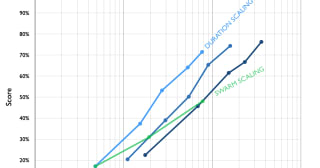
Just how powerful are large swarms of AI agents? And how do their powers scale as more and more agents are added to the swarm?
We’ve seen two large and extremely capable swarms from OpenAI in the last few months:
* 1,200 agents were being evaluated separately, but found a way to illicitly set up a message board and coordinate as a swarm. In order to cheat on their tests, they developed advanced techniques to prevent their actions being logged by OpenAI and 700 of them launched...
Often folks hit us up because they are thinking of starting an incubator and want advice.
Typically their motivation is either that (a) they have a list of specific things they want built that no one is building, or (b) they think an ecosystem needs more new projects generally to absorb more talent and deploy more funding effectively.
Here are six questions we often ask prospective teams, to help them figure out what to do. If you're incubator-curious...
Summary:
First, I give several different angles on how I feel about reinforcement learning:
* Theoretical case: RL is a black-box source of agency — this should give us classic misalignment worries, especially compared to agency-via-scaffolding
* Recent incidents (huggingface etc) and more mundane forms of misaligned behaviour in personal use give me bad vibes about the direction-of-travel of recent AI progress
* I’m worried things might get worse:...