Comments
When describing the target audience of our projects, it is useful to have labels for different parts of the community. Common language can help us communicate better internally, and so make better decisions.
What follows is simply a description of this language - unlike some of our other models, it doesn’t make substantive claims about how the community is, or should be.
There are many ways to partition the EA community. One way is by engagement.
By “engagement” we mean a combination of three highly correlated factors: engagement with our ideas, dedication to act, and engagement with our community.
- Someone is engaged with effective altruism ideas if they are more familiar and favorable towards research from the community, and with the mindset that generated some of that research.
- They are dedicated to act on those ideas if they devote more of their resources to helping in accordance with the ideas.
- They are more engaged with the community if they have spent more time reading online content, commenting on the effective altruism forum, attending effective altruism events or carrying out related projects.
These three factors are likely to be correlated, but imperfectly. (For instance, Bill Gates has read and endorsed some of the community’s research, but hasn’t significantly engaged with the community in person.) In what follows, we have tried to consider all three of these facets. A precise definition would be impossible, and we think that discussing all three factors gives a better sense of what is meant by each group discussed.
We can think of different levels of engagement as a series of concentric circles, where the smaller, inner circles are made up of the people who are most engaged.
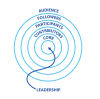
Obviously, in reality these circles aren’t perfectly concentric: there are several different, overlapping communities in effective altruism, focused around different ideas - e.g. there are communities of people who focus on AI safety, biosecurity, and animal welfare respectively. However, the notion of concentric circles is often a useful shorthand.
Also note that the concentric circles model is tracking engagement, not the total impact of an individual. For instance, Bill Gates has done incredibly impactful things: he has probably had a greater impact than nearly everyone in the EA community. However, he is not very highly engaged. Therefore, despite his high impact, he is not in the core of effective altruism. However, using the framework of the three-factor model, dedication appears to be one of the determinants of impact, and engagement with ideas and engagement with the community may be correlated with realization.
Let us define the following levels of engagement:
- Audience
- Have not yet engaged with effective altruism, but might be partial to it
- Followers
- Understand some of the core ideas of effective altruism
- Find the ideas plausible, but don’t act to help
- Have generally spent a couple of hours engaging with effective altruism, perhaps by:
- Joining the EA newsletter
- Engaging with EA content
- Attending one or two local events
- Participants
- Understand the core ideas of effective altruism well
- Are motivated to act on those ideas
- Have generally spent a couple of days engaging with effective altruism, or made another significant commitment to effective altruism, for instance by
- Taking the Try Giving pledge
- Using research from the EA community to inform their giving decisions
- Attending EA Global X conferences
- Contributors
- Have a detailed understanding of core ideas, and an understanding of more in-depth ideas
- Are willing to make significant sacrifices to act on those ideas
- Have spent weeks or months engaging with effective altruism, for instance by doing the above and:
- Taking the Giving What We Can pledge
- Attending EA Global
- Interning at aligned organizations
- Running significant independent projects like a local group or a research project
- Core
- Have an understanding of most ideas in effective altruism, normally with an expert-level understanding in some of the ideas
- Have devoted most of their resources to acting on those ideas
- Have dedicated their career to doing the most good in line with effective altruist principles, for instance by
- Working directly for an aligned organization or project
- Earning to give while continuing to participate in the community’s ideas
- Leadership
- Have an understanding and devotion similar to the core, but they are also leaders of major effective altruist organizations, or are leaders of the intellectual development of the community. (It is likely to remain the case that some organizations and individuals have a much larger impact on the community than others, so there will be gradations within the leadership.)
The terms in the concentric circle model are most useful in helping us to communicate internally about the goals for each of our projects. For instance, when we were discussing what the audience for EA Global should be this year, we were able to use the terms “contributors” and “participants” to set out different possibilities. Similarly, when we are writing a piece, we might have one of the above audiences in mind (this piece, for example, is mostly aimed at contributors).
Of course, these terms remain starting points for discussion. Normally, we will have a more specific or complicated audience in mind for any given project.
4