Comments
Linkpost: AI's water footprint is a rounding error next to animal ag — and what that teaches us about which facts go viral

3 min readAug 7
In this EA Forum post, I will briefly summarize two companion pieces from my Substack, More Than Meats the Eye, a free newsletter about meat reduction strategies.
In the first, I explain the real water usage behind AI datacenters and animal agriculture, and conduct media analysis to see how outlets report on it. In the second, I analyze the literature on fact transmission to understand exactly how myths like these can become so viral. I create an original framework for selecting facts to reach mass audiences, with tailored feedback for animal advocates.
The "one ChatGPT query = one bottle of water" stat has quietly become folk belief. I went looking for where the number came from, and then asked the question almost nobody does: how does AI's water use actually compare to the thing on our plates?
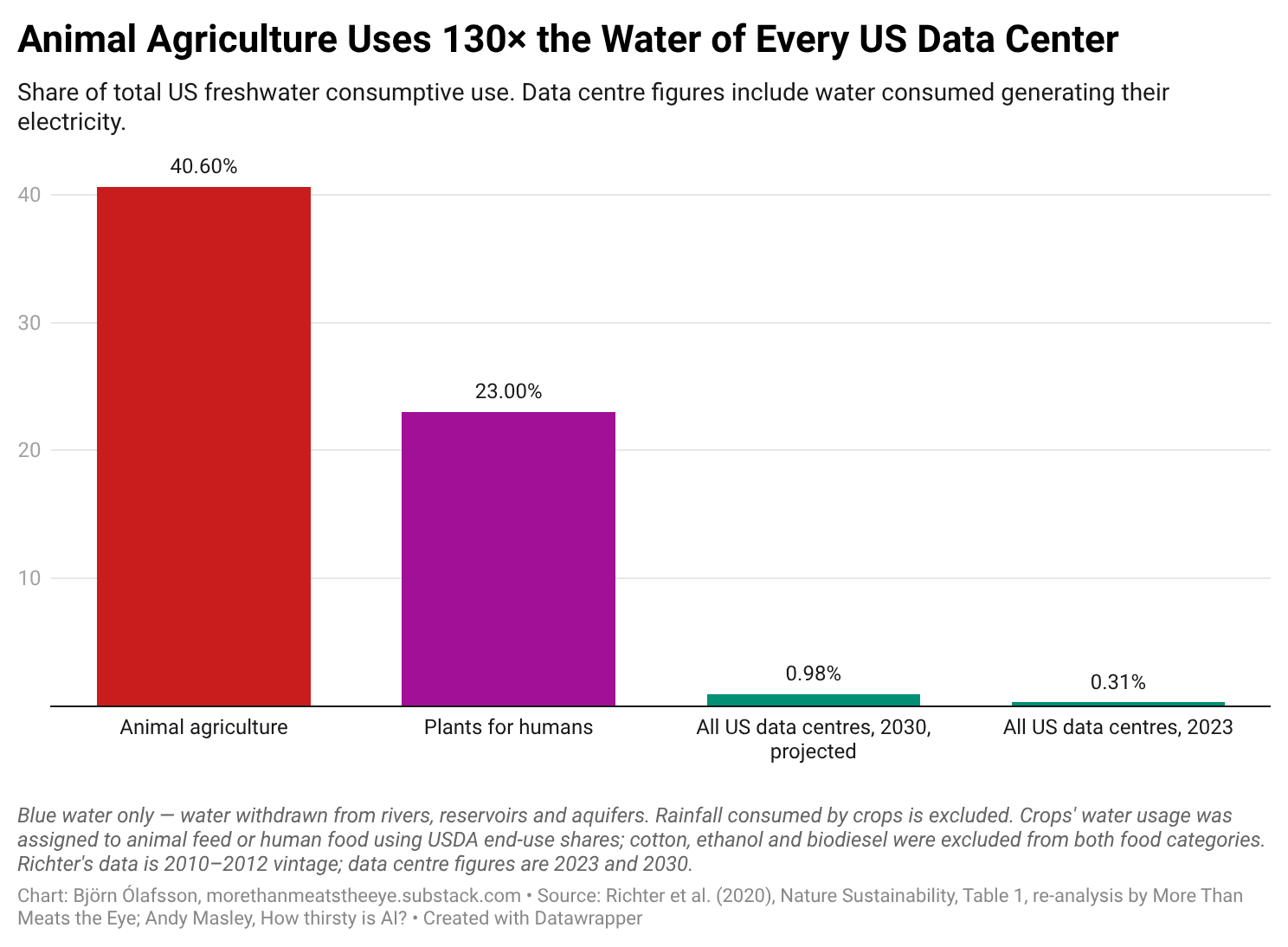
The gap is enormous. A ChatGPT query's full water footprint is pretty low while animal agriculture, meanwhile, accounts for over a quarter of global freshwater use — and in the US it's the single largest draw at 40%+, more than every shower, factory, pool, and sprinkler combined. Even on the assumptions least favorable to AI, US animal ag out-drinks all data centers by something like 130x.
I also hand-coded 400 water-and-industry stories from nine major US and UK papers to see who gets the villain edit. AI is framed as a water threat about a third of the time; animal agriculture, one story in twenty — despite drinking ~130x more water.
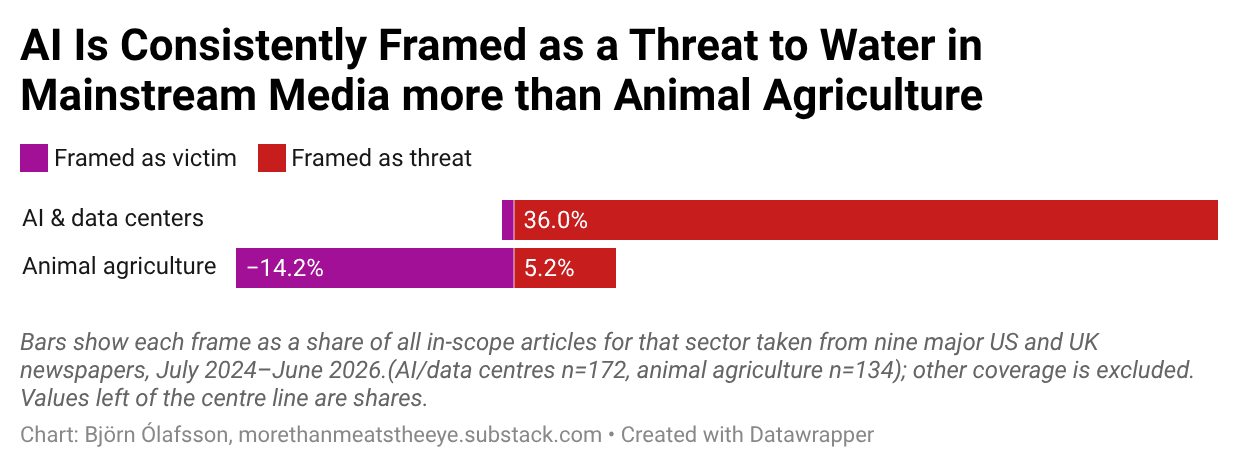
It's clear that the public is being misinformed about the sources of water use, but this is happening at the expense of covering more important uses of water, especially animal agriculture, the thirstiest industry of all.
The full post includes more analysis and break-downs, including more on media coverage and blue-green water analysis.
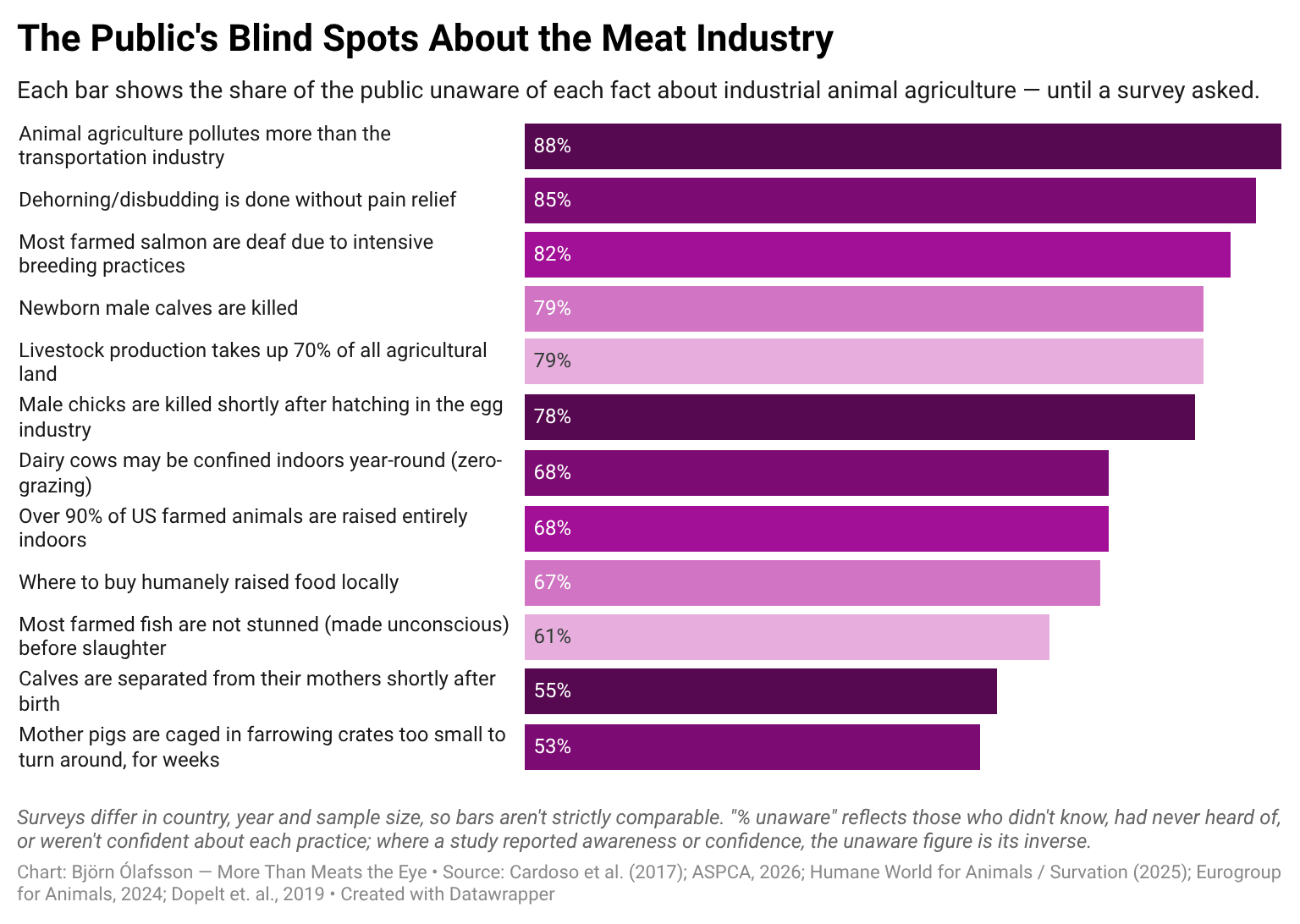
In a companion piece, I examine why a false and misleading stat can travel so far. If a shaky fact can travel that far, what makes a true one do the same — and can animal advocates engineer it on purpose? Firstly, I examined many incorrect or missing beleifs that people have about animal agriculture. What might seem obvious to you or I is completely absent from the zeitgeist:
I then went through the memetics and virality literature — the game-of-telephone retelling studies, Berger & Milkman on emotional arousal, the Vosoughi Twitter-misinformation paper — and pulled out four properties that make a fact travel. I'm calling them the Four Vs:
The AI-water myth hits all four. Most of our best animal-ag facts hit almost none. In particular, I think the movement too often relies on low-arousal emotions (like sadness, grief, empathy, relief) instead of high-arousal ones. We also need to trim down facts to make them simpler, as the research shows that narratives that violate too many expectations were less likely to be believed and shared.
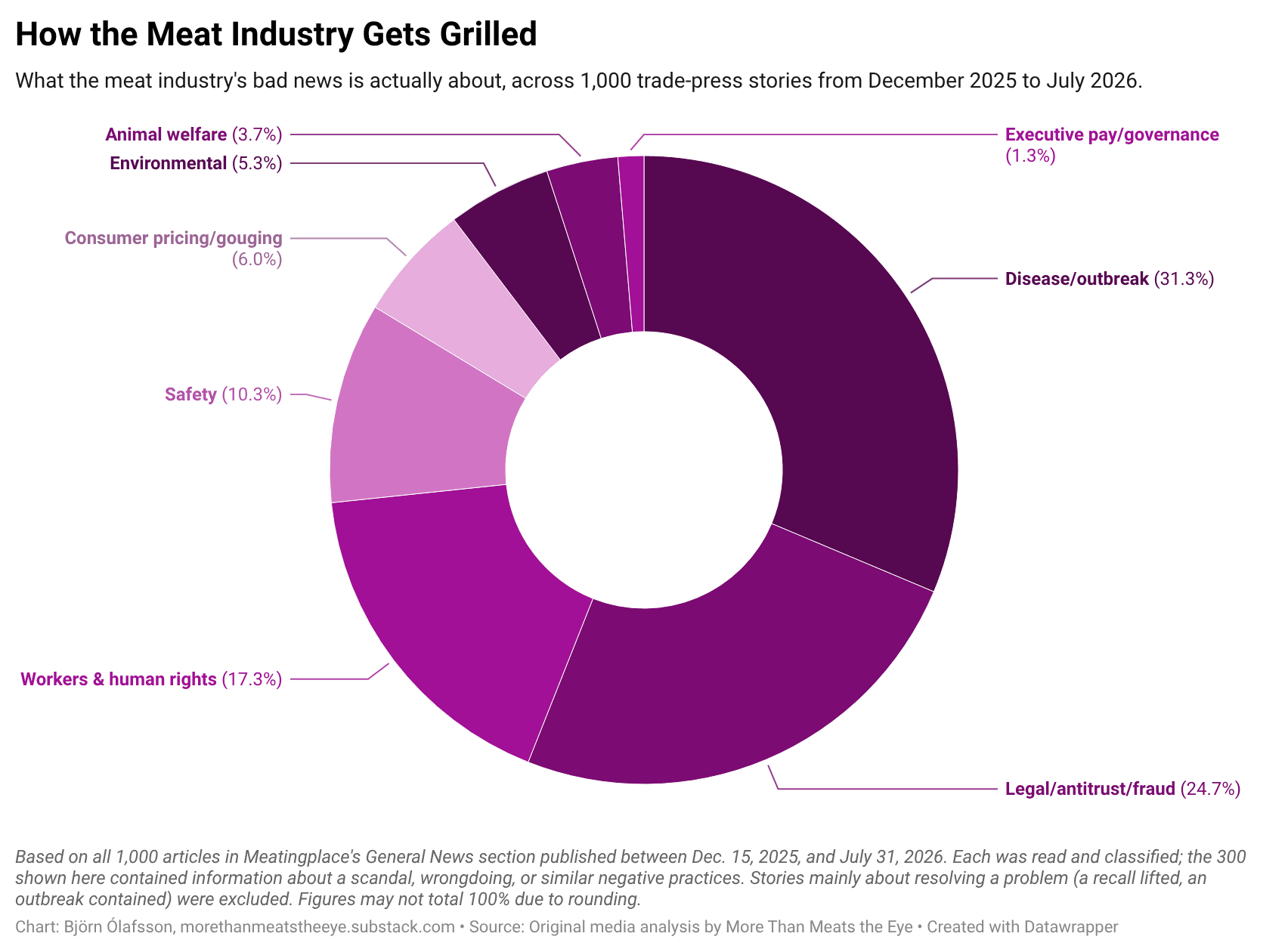
To pressure-test the idea of the "Villain", I read 1,000 General News stories from Meatingplace — the meat industry's own trade press — and coded the 300 that a reporter or campaigner could turn against the industry. The surprise is what sits at the bottom: animal welfare, the beat advocates lead with, is the smallest slice at 4%. The industry's real reputational exposure is disease and recalls (31%), antitrust and fraud (25%), and how it treats workers (17%). Keep in mind, these are the stories that the meat industry itself is reporting on.
The argument for this community: we don't have a shortage of damning facts, we have a packaging problem — and it looks tractable and under-explored. Full framework, examples, and sources here.