Comments
Great stuff! How much of the chickens money went to broilers, and how much to hens? It's mostly cage-free, right?
Great stuff! How much of the chickens money went to broilers, and how much to hens? It's mostly cage-free, right?
Executive summary: This payout report describes the Animal Welfare Fund’s grantmaking from July to December 2025, highlighting $2.48 million approved across 21 grants, a strategic focus on neglected and global south animal welfare, and organizational changes intended to support larger-scale and more systematic future grantmaking.
Key points:
This comment was auto-generated by the EA Forum Team. Feel free to point out issues with this summary by replying to the comment, and contact us if you have feedback.
This payout report covers the Animal Welfare Fund's grantmaking from July 1, 2025 to December 31, 2025 (6 months). It follows the previous April-June 2025 payout report.
We combined Q3 and Q4 payout reports and the annual review into one report because our grantmaking volume was lower in Q3 as a result of EA Funds’ grantmaking pause, which ran from 1 June to 31 July. During the grantmaking pause, AWF focused on improving our grantmaking strategy and plans for the remainder of 2025. Since the pause was lifted in August, AWF started evaluations again as soon as possible and has resumed grantmaking at full volume for the rest of the year.
Overview of Q3 & Q4, 2025 grants
Crustacean Compassion ($137,000): Advancing Legal Protections for Decapod Crustaceans in the UK
Annually, over 420 million decapod crustaceans—including prawns, lobsters, crab, and langoustine—are caught domestically in the UK, with an additional 5 billion imported. Despite their recognition as sentient in the UK's Animal Welfare (Sentience) Act 2022, which was achieved thanks to Crustacean Compassion and others' work, these animals still lack specific legal protections for humane slaughter, transport, and storage. Crustacean Compassion is one of the leading organizations working to translate this legal recognition into concrete welfare improvements. AWF provided $137,000 over two years to support their corporate engagement and policy advocacy work.
The grant supports a comprehensive strategy that covers the full path from policy to implementation. The central goal is securing Defra's publication of WATOK (Welfare at the Time of Killing), which would establish mandatory species-specific humane slaughter standards and ban inhumane methods like live boiling. But achieving policy change is only part of the challenge—the grant also funds continued corporate engagement through Crustacean Compassion's annual Snapshot benchmarking report, which publicly assesses retailers and food service companies on their decapod welfare practices and helps ensure that standards are actually adopted across the industry. Finally, the grant supports building an international coalition for decapod welfare research and advocacy, with the goal of involving at least 10 organizations during the grant period and sharing information through a website, virtual conference, shared research outputs, and advocacy toolkits–creating the infrastructure needed for sustained progress beyond the UK. Crustacean Compassion has demonstrated they can execute this approach: in addition to their instrumentality in achieving decapods' inclusion in the Sentience Act, their Snapshot reporting now covers companies responsible for 90% of all retailed decapods in the UK, with over two-thirds adopting welfare policies where none previously existed. AWF views this as a high-counterfactual opportunity—Crustacean Compassion is the primary actor driving policy progress for decapods in the UK, and success could establish a precedent that influences EU and international standards.
Rethink Priorities ($214,678): Strategic Leadership and Flexible Funding for the Neglected Animals Program
Insects, shrimp, and wild animals represent the most numerous yet most neglected animals affected by human activity—trillions of individuals receiving a fraction of available welfare funding. Rethink Priorities has played a foundational role in establishing these as priority areas, with their research prompting other organizations to take action and informing funders regarding these species. Based on these previous successes, AWF provided Rethink Priorities with $214,678 to fund a Program Lead position and flexible response fund for their Neglected Animals Program.
Despite their strong track record, Rethink Priorities lacks the unrestricted funding necessary to provide cross-program leadership and respond quickly to emerging opportunities without diverting resources from existing program areas. This grant addresses that bottleneck by funding a Program Lead who will provide strategic coordination across the program's three focus areas: developing new shrimp welfare interventions and improving data collection; advancing other invertebrate welfare through corporate partnerships, standards development, and research; and scoping out tractable, cost-effective and low-risk wild animal welfare interventions. The flexible fund complements this leadership capacity by enabling timely responses to policy windows and unforeseen opportunities without diverting resources from planned priorities. Without this capacity, promising opportunities risk being missed and existing restricted funding may not achieve its potential impact.
Star Farm Pakistan ($47,000): Cage-free work in Pakistan
Pakistan has the 13th highest population of layer hens globally, with approximately 108 million birds alive at any one time, yet the scale of cage-free advocacy work in the country remains small. Recognizing this gap, AWF recommended a grant to Star Farm Pakistan to establish the country's first structured cage-free egg supply chain by securing corporate sourcing commitments and linking them with certified cage-free farms. The grant will support engagement with major corporate buyers—including retailers, hotels, and food service chains—and provide technical support to farms seeking cage-free certification.
Star Farm Pakistan brings unique advantages to this work as a subsidiary of METRO Group (a large wholesale cash & carry chain), providing direct market access through METRO stores and establishing relationships with multinational companies operating in Pakistan. The organization previously developed Pakistan's first national cage-free standard, which is currently pending approval by the regulatory authority.
This grant focuses primarily on the formal market segment—large retailers and international food chains that purchase in bulk and can set visible procurement benchmarks. Success in the formal market could create spillover effects, as informal markets in Pakistan have historically adapted to consumer expectations set by modern retailers.
As described previously, AWF has increased collaboration with other funders, either through recommending particular funding opportunities that meet partners' criteria or through co-funding. This quarter, we recommended the following grants:
Below is a full list of all 11 grants, totaling $944,428, that the Animal Welfare Fund disbursed during this period.
| Grantee | Amount | Grant Purpose | Award Date |
| Conservation X Labs (CXL) | $105,750 | 1-year stipend for new position at conservation org leading collaborative, mutually beneficial animal welfare projects | August 2025 |
| Crustacean Compassion | $137,000 | Support for decapod crustacean intervention and support programme in the UK | September 2025 |
| Animal Welfare Competence Center for Africa | $85,000 | Continue government lobby and supporting implementation of policy to mitigate growth of industrial animal agriculture | September 2025 |
| Open Paws | $60,000 | A global AI partnership incubating open-source tools and grantee support squads to supercharge animal advocacy | October 2025 |
| Rethink Priorities | $214,678 | 1-year stipend for a Program Lead to scale neglected animal welfare work + flexible fund for time-sensitive opportunities | October 2025 |
| Scarlet Spark | $137,000 | 1-year stipend for a consultant to increase our org’s impact through client services and implementation support | October 2025 |
| Indonesian Cage-Free Association | $30,000 | Funding to support Indonesian farmers in transitioning to cage-free systems, building skills, markets, and demand for eggs | October 2025 |
| Anonymous | $60,000 | Private grant for work on cage-free commitments | October 2025 |
| Compromiso Verde | $28,000 | Cage-free corporate campaigns in Peru | October 2025 |
| One Health and Development Initiative | $60,000 | 12-month stipend support to retain key staff managing the pan-African scale-up of the Africa Fish and Aquaculture Welfare program in 8 countries | November 2025 |
| Star Farm Pakistan | $27,000 | Cage-free work in Pakistan | November 2025 |
In November 2025, we shared an overview of our grantmaking for the year. Since then, we've recommended additional grants in November and December, so we want to share updated totals for all grants made since our 2024 annual report.
In the last year, AWF significantly expanded its grantmaking to address the most pressing challenges in farmed animal welfare, recommending 54 grants totaling $5.39 million.
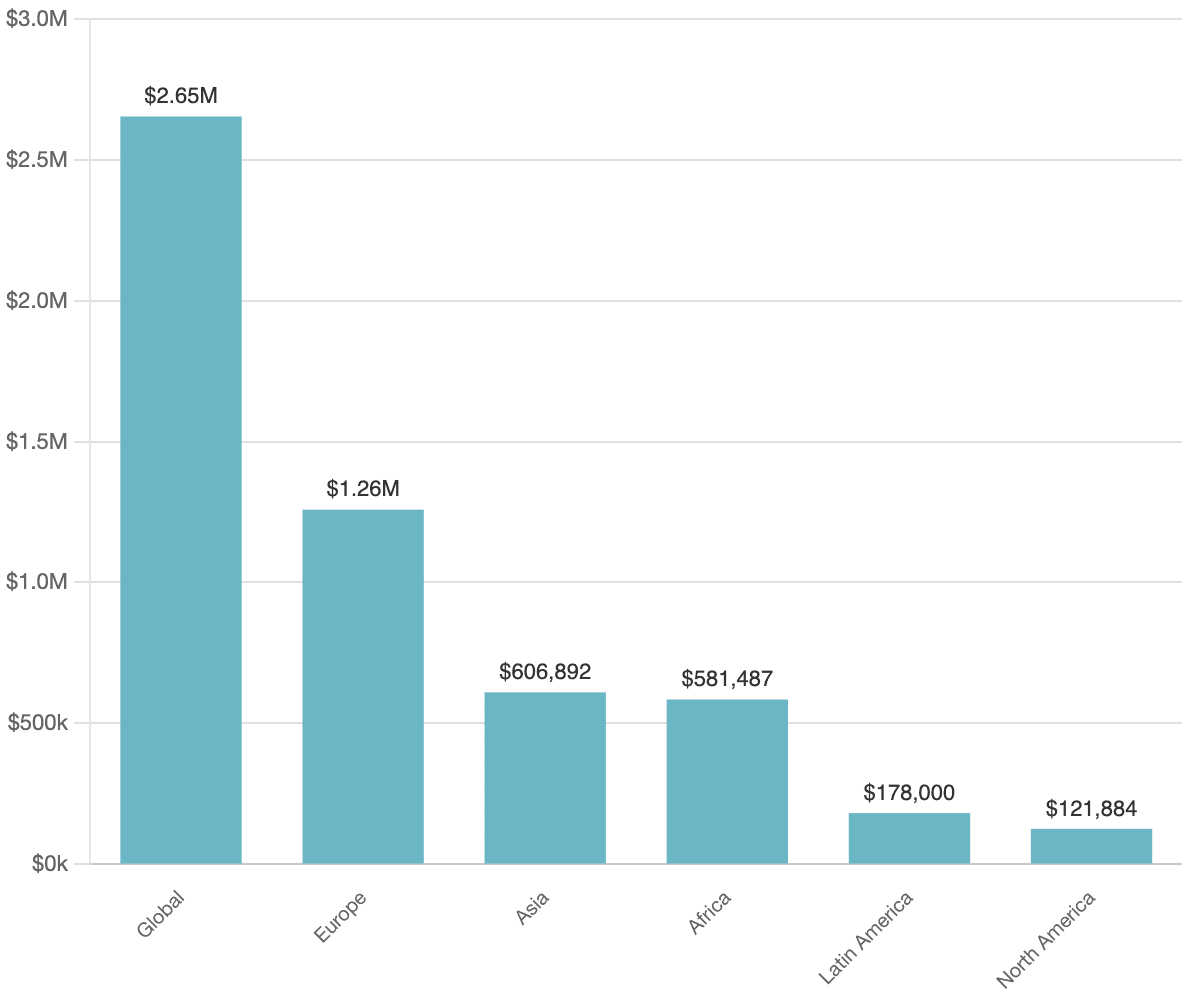
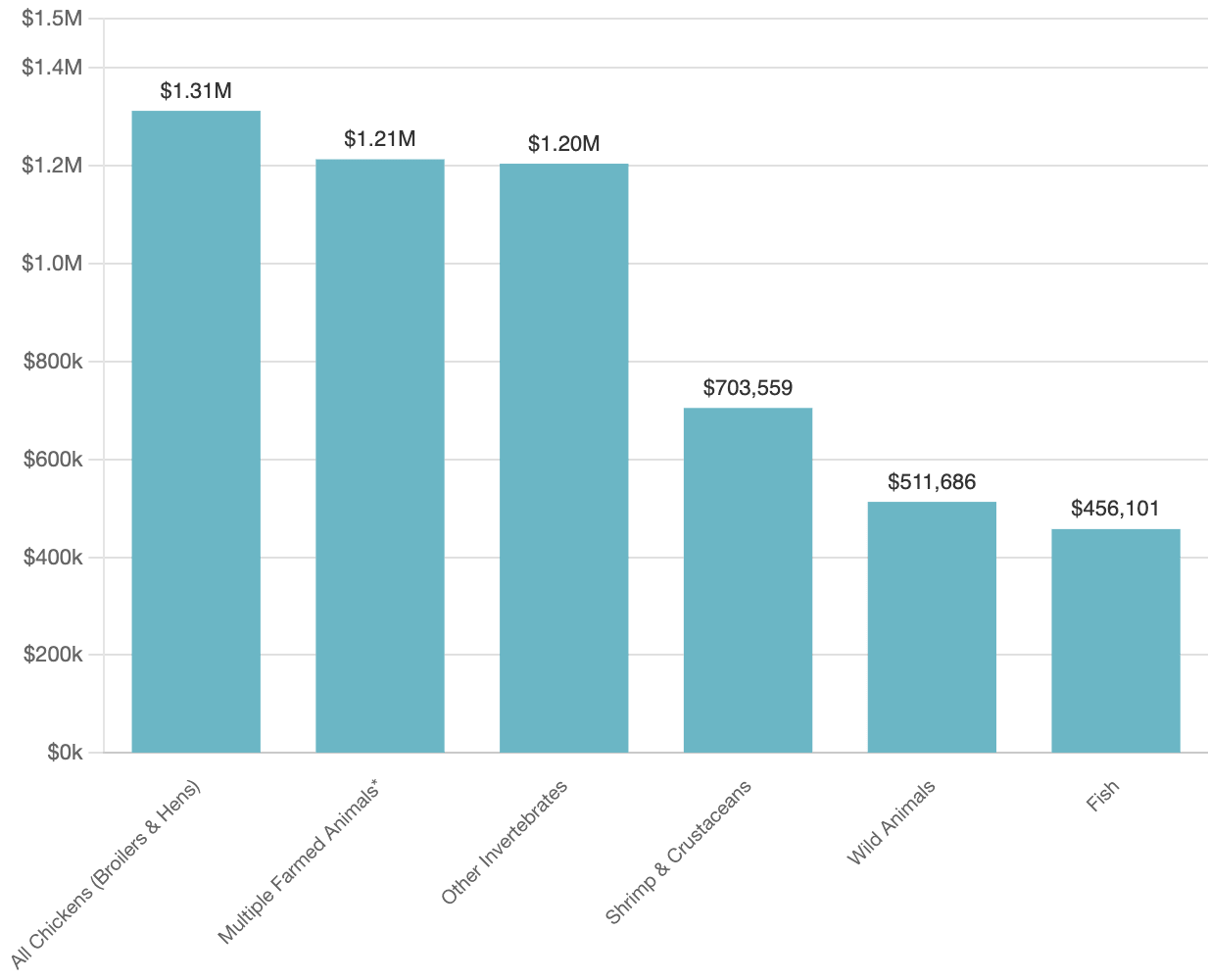
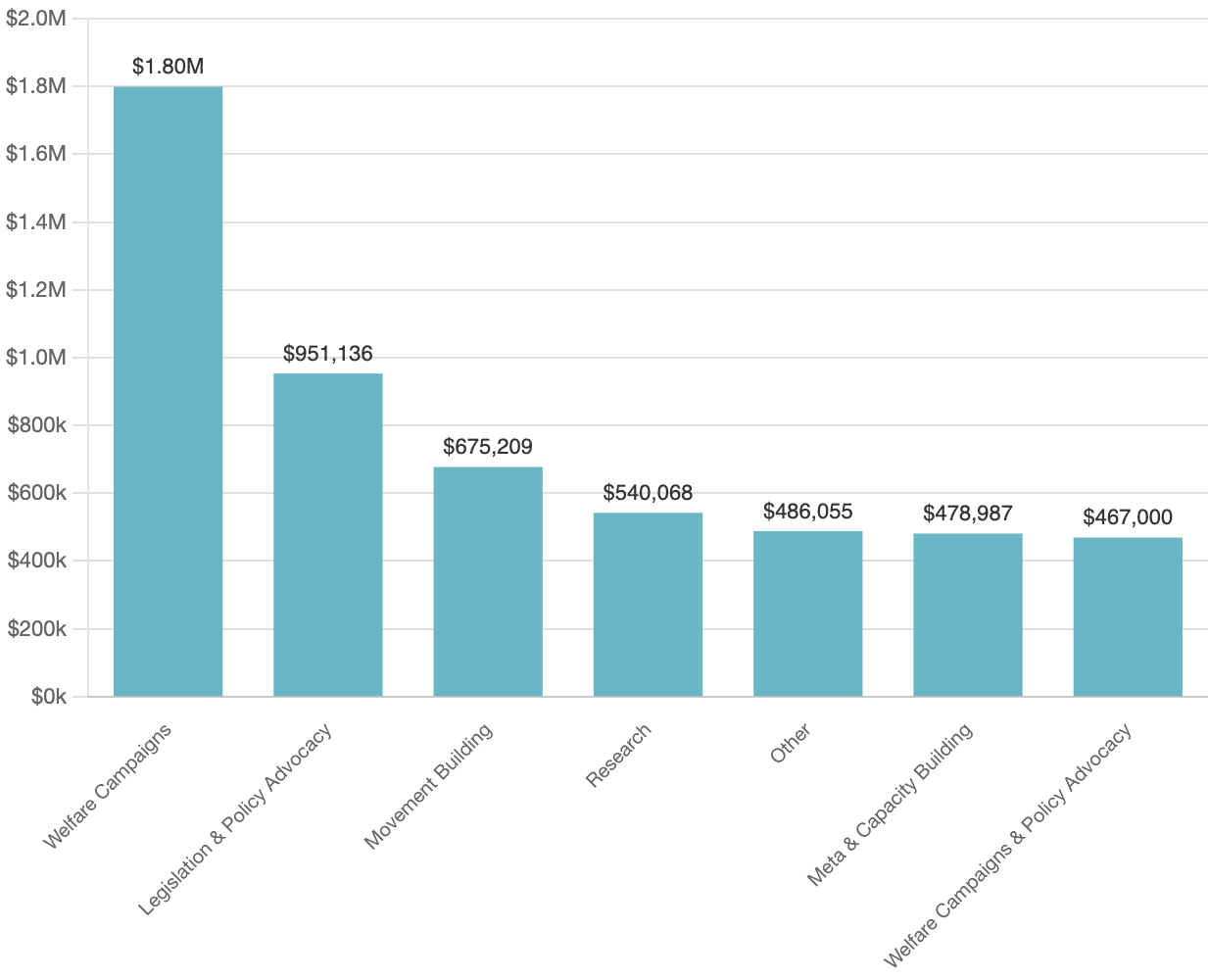
Below is an overview of how grants made since the 2024 report are distributed across regions, species, and intervention types.
By region
* Multiple Farmed Animals also includes meta interventions, which have an overarching impact.
Throughout 2025, AWF has continued to evolve and strengthen our operations, increase our fundraising, and refine our grantmaking strategy:




Thanks for the update. Do you plan to publish any cost-effectiveness analyses of grants you have made?