Farmkind is currently running a Forget Veganuary campaign, directly proposing offsets as an alternative to veganism for members of the public wishing to participate in the farmed animal movement.
This has raised sharp questions about the relationship between animal welfare and veganism, both philosophically and strategically. For a summary of many different reactions to the Farmkind campaign, my post here might be useful.
This poll is meant as a place to discuss the broader strategic questions raised.
First, a few things that are not the primary question:
- Whether a vegan world is the goal: most contributors would love to press a button making the whole world vegan. The question is whether insisting on veganism will result in our desired outcome sooner than an alternative strategy.
- Welfare vs. diet change: the charities funded by Farmkind's campaign include both welfare campaigners and institutional diet change efforts.
- "Forget Veganuary" framing: let's set aside particular questions about the execution/tone of Farmkind's campaign, unless you feel they are inextricably tied up in the larger questions.
I suggest you start by answering the poll, then engage with other views in the comments, and you can easily update your vote at any time.
A soon-to-be-released section of Rethink Priorities' Pulse survey on behalf of Farmkind found (this is just one survey so update modestly):
- Donations to farmed animal charities were seen as a significantly easier ask than diet change.
- A message specifically framing donations as an easier alternative to diet change was not more effective than one just asking for donations.
- Neither message negatively affected sentiments towards diet change.
If the framing of the poll doesn't make sense, this is a second post you might find thought-provoking. Summary of the arguments from the post:
- With meat consumption skyrocketing and rates of veganism stagnant, strategies focused on individual veganism appear to offer only limited potential for animal advocates.
- The small fraction who are vegan act as a symbolic vanguard, living out our vision for a world without animal exploitation. They also serve as the movement’s crucial activist base.
- We must find a way to expand the movement beyond the small vegan population without alienating our most dedicated supporters.
- The solution is to treat vegans as a priestly class, an elite cadre making a deep personal commitment to live out transformational values on behalf of a wider community, and deserving the utmost respect.
- To achieve this, we must let go of the idea that veganism is for everyone. We must offer a low-commitment way for animal lovers to align themselves with the vegan movement.
- Farmkind’s “offset” framing is the most general solution yet proposed, and it matches a rich historical precedent: the relationship between priestly/monastic elites and the lay communities that support them.



I will write a few more posts on this. But my current, still uncertain, thoughts are:
-The main identity we promote in animal advocacy should be "animal advocate".
-"Animal advocate" should be more vaguely defined and primarily refer to a political commitment similarly to "feminist" and "socialist".
-We should abandon veganism as an identity and stop promoting it.
-We should separately push for different norms for animal advocates. Eating plant-based, avoiding animal-tested products etc. should each be advocated as separate norms.
-Priesthood(people working in animal advocacy) and laymen(mere members of the "animal advocate" identity) should be subject to different expectations.
-We should strongly push for norms against eating meat. Individual diet change should still be pursued.
-Consuming animal products shouldn't disqualify someone from identifying as an animal advocate. I'm not sure what the status of meat should be. I suspect a few countries like Germany might get to 10% vegetarian within my lifetime so I believe restricting our base to vegetarians might be viable in some places.
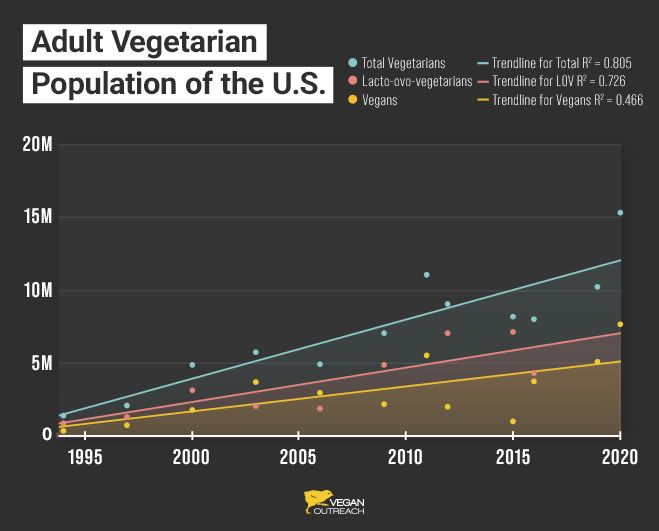
I agree with all your points, except the one about abandoning veganism as an identity. I used to agree with this point, too. What moved me is the fact that veganism as an identity is a massive, organic phenomenon that isn't going away– at 2% of the US, we should expect around 7 million vegans who don't care a spec whether the formal/organized part of the movement decide to jettison veganism.
I argue that this organic spread of veganism is the only part of animal advocacy that deserves to be called a "movement," and that we should think hard about how to make the most of that phenomenon, which is clearly tapping into something about how people work– very few cultural movements come close to 2% of the population, especially those that require as much sacrifice as veganism!
I agree that veganism is the strongest identity in the animal movement at the moment. It's a powerful meme, a very salient identity for many. I don't think any other animal advocacy related identity has more mentions in Twitter bios. Plant-based people or vegetarians don't tend to refer to that in their social media profiles.
I disagree that vegans are 2% in the US. 2% is the figure you get when you lump plant-based and vegan together. When you ask specifically for "vegan", only 1% identify as vegan in 2023 Gallup survey. I think plant-based people are also around 1% in the US. Google searches for veganism have also been globally declining since 2020. And I think the leadership of major animal advocacy organisations are amenable to the idea that we should stop mentioning veganism. So I think there is some possibility for change.
Oh, also, the idea that a 10% threshold for vegetarianism might be enough to shift to stigmatizing meat is super intriguing! I could see that backfiring without much obvious (to me) benefit and I'd love to hear more about your reasoning there.
I agree with all of this. But does this mean your answer is: yes, in most cases we should treat veganism as a moral baseline? Since the norms you say we should push for (plan-based, avoiding animal testing) do seem to entail veganism. I can imagine this varying by context - pushing for these norms might mean treating veganism as a baseline for advocates in Germany, but maybe not in Spain or China*, given that it's just way harder to follow those norms strictly there.
*Countries chosen based on my ignorant perception of them