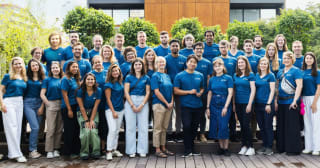
What we do: Phlourish delivers an 8-week guided self-help program using a workbook paired with weekly 15-minute check-ins from trained staff inside government residential centers for vulnerable youth in the Philippines.
Why we think this is high-leverage: Mental health care in the Philippines is severely neglected ($0.70/person government spend; 60 child psychiatrists for 30M youth). Rather than building parallel systems, we task-shift delivery to existing, trusted center staff—lowering program delivery costs and aiming for government adoption across 50% of national youth centers (81 of 161) by 2030.
2027 Funding Ask: Our baseline 2027 operational budget of $86,700 is already fully committed, securing our plan to double our reach. Because we designed that budget around strict funding constraints, we are raising marginal funding to expand in new centers, improve data integrity, maintain implementation fidelity, and secure runway.
The Problem & Neglectedness
Youth mental health in the Philippines represents a large, neglected burden:
Scale:1 in 5 young Filipinos develop a mental health condition, with onset typically occurring by age 14[1]. In the 2024 WHO Global School-based Student Health Survey, 27.3% of Philippine public high school students reported having attempted suicide[2].
Neglectedness: ~60 specialized psychiatrists serve a population of 30 million children and adolescents, and government mental health spending sits at approximately $0.70 per person[3].
Target Population (ages 13 to 18): Roughly 20,000 young Filipinos pass through residential care centers each year[4]. They are generally called Children in Need of Special Protection (children in conflict with the law, children at risk, and survivors of abuse, exploitation, neglect, or abandonment). These youth face acute trauma and family separation while preparing for community reintegration, yet the facilities housing them lack working mental health interventions.
Our Intervention
Guided self-help and task-shifted models show strong promise in low-resource settings. Our model is designed to minimize friction for overburdened government facilities:
8-Week Guided Self-Help Workbook (<1 hour/week): Co-designed with Filipino youth, parents, and center staff, using positive psychology and CBT components, to build protective factors such as self-compassion and healthy habits, emotion regulation, healthy relationships, and help-seeking.
Weekly Mentor Check-Ins (~15 minutes/week): We train adults already working inside the centers whom the youth already know and trust. Mentors follow a 4-step structure (Connect, Discuss, Mini-activity, Close) to reinforce lessons and hold a safe space for participants to share.
Guided self-help is one of the most promising mental health interventions, with 50+ RCTs showing medium to large effect size on depression, anxiety and subjective well-being and meta-analyses outcomes comparable to face-to-face psychotherapy [5][6].
Our Scaling Plan & Ambition
We partner with the Department of Social Welfare and Development (DSWD) and the Juvenile Justice and Welfare Council (JJWC), working directly with their local offices which hold final decision-making authority over local resource allocation and program implementation.
Our goal is to co-develop and integrate a mental health program into 50% (81 of 161) of centers serving children in need of special protection across the Philippines by 2030.
We will execute that through the following phases:
Alignment. We discuss mentor selection and training, schedules, context-specific delivery adaptations, and what we are testing.
Pilot. We run a first cycle in the center. We check feasibility (participant engagement, mentor capacity and willingness) and preliminary effectiveness.
Replication. We run another cycle with improvements identified from the pilot. We review feasibility and results again.
Capacity-Building. We train the centers to fully run the program on its own: train and supervise their mentors, and collect and understand their data. We may also provide transition support for resources.
Technical Assistance. The center runs the program on its own and we provide occasional support to ensure quality.
These phases will run alongside formal government engagement. Our initial touchpoint is typically a Memorandum of Agreement (MOA) covering Alignment, Pilot, and Replication. Once we present results from those phases, we will work with local offices to secure a local policy directive and dedicated budget allocation ahead of Capacity-Building and Technical Assistance.
Track Record, Evidence & Cost-Effectiveness
Since launching in 2023, we have reached 2,178 adolescents, trained 388 mentors, and worked with 54 partner organizations across 25 provinces/cities.
After testing the program across diverse community settings, we narrowed our focus in 2026 to youth in residential centers, where participants showed the strongest mental health gains. Closed, structured centers also streamline coordination and offer the clearest path to government adoption, as every city and municipality in the country is mandated to maintain residential care facilities. Inside these centers, existing staff (social workers, psychometricians, and houseparents) serve as mentors after receiving training in program delivery, adolescent engagement, M&E, and safeguarding.
Effectiveness
In our latest center evaluation (n=33), participants were 2–3x more likely to show improvements in life satisfaction, anxiety, and depression symptoms after the program compared to their pre-program baseline period (using a pre-pre-post pseudo-control design).
Specifically, 61% improved in life satisfaction (+2.15 points on a 0–10 scale), 63% of those screening positive for anxiety improved, and 75% of those screening positive for depression improved (with an average reduction of 1.88 points on the PHQ-4).
Both this cohort and earlier runs demonstrated consistent positive shifts in emotion regulation and help-seeking attitudes.
Costs
We have reduced program delivery costs by 68%, from $32 (pilot phase) down to $10 per participant. These costs include printing, mentor training, and logistics.
Including personnel costs directly related to delivery will add $81.60 to this number and corresponding government partner costs will add another $27.30. This leads to a total of $118.90 per participant.
We are yet to estimate counterfactual adjustments for government figures.
Cost-effectiveness (BOTEC): 2.19 to 9.33 WELLBYs per $1,000, ~0.3 to 1.2 times the cost-effectiveness of GiveDirectly
Our 2026 pivot to residential centers required restarting with smaller cohorts, temporarily raising overhead. As cohort sizes expand and government partners absorb training and supervision, we expect costs and overall cost-effectiveness to improve substantially. Next year, we also plan to onboard an external research partner to strengthen our cost-effectiveness modeling.
Key Uncertainties
Persistence: How long mental health gains last after youth exit residential centers and reintegrate into their communities.
ToT Fidelity: Whether effect sizes hold once government trainers take over mentor training and supervision from Phlourish staff.
Steady-State Costs: True marginal costs at scale once counterfactual government staff time and local budget absorption are accounted for.
Our 2027 Plan & Marginal Funding
In 2026, we operated across 6 centers with 2 government partners. Our baseline 2027 budget is $86,700, allowing us to double our reach to 12 centers, expand into 1 new region, develop our framework for training of trainers and implementers, and strengthen M&E systems.
Because we capped our 2027 plan to fit within committed funds, marginal contributions will directly go to specific high-leverage initiatives that we could not otherwise afford.
Marginal Contribution
Allocation
Concrete Output / Bottleneck Unlocked
$350
Workbook Printing
Prints guided self-help workbooks for 100 participants ($3.50/unit).
$1,100
Data Enumeration & Encoding
Funds 1 field enumerator/encoder across ~3 centers to ease collection bottlenecks and ensure data integrity.
$1,160
Center Launch
Covers materials, setup, logistics, and personnel to onboard 1 new residential center.
$1,600
Training & Quality Assurance
Funds mentor and implementer training workshops to preserve fidelity during expansion.
$10,500
Program Officer Expansion
Funds 1 dedicated Program Officer, unlocking expansion into 2 additional centers (~30 high-risk youth for the pilot) and managing government coordination.
$18,000
Q1 2028 Transition Runway
Secures Q1 2028 operating runway so cycles and government commitments are not disrupted by year-end funding gaps.
Why Funding Matters Here
Government-funded delivery at scale: Because residential centers already employ those who act as mentors, local government budgets cover ongoing delivery once a center adopts the program.
Cost-reduction: We have previously demonstrated cutting delivery costs. The introduction of training for trainers and implementation can still lower costs.
Filling a regional evidence gap: Phlourish is one of the few EA-aligned mental health organizations operating in Southeast Asia where mental health interventions remain largely under-evaluated. This is an opportunity for high learning value alongside direct impact.
Interested in making a major contribution? Email give@phlourish.ph. We are happy to share our budget and discuss how your funding will drive our work forward.
Want to keep up with our work? Follow ourFacebook page.
Know someone who might be interested? Share our story with them by sending this post, ourFacebook page or ourwebsite.
Got questions or feedback? We would love to hear your thoughts, questions, or advice regarding our work. You can also let us know if you are interested in collaboration, volunteering, or providing introductions/connections. You can comment below or reach us at contact@phlourish.ph.
Juvenile Justice and Welfare Council. (2024). 2024 statistical report on children at risk (CAR) and children in conflict with the law (CICL): January–December 2024.
Cuijpers, P., Donker, T., van Straten, A., Li, J., & Andersson, G. (2010). Is guided self-help as effective as face-to-face psychotherapy for depression and anxiety disorders? A systematic review and meta-analysis of comparative outcome studies. Psychological Medicine, 40(12), 1943–1957.
Note: This post was crossposted from Planned Obsolescence by the Forum team, with the author's permission. The author may not see or respond to comments on this post.
Subtitle: If acceleration compounds, the naive extrapolation implies superintelligence within a year
This post discusses a public METR report on AI R&D acceler...
TL;DR
* We recently set out RP’s strategic priorities and the three new bets we’re making in 2027.
* In this post, we outline what we need to make them happen.
* We need more support from individual donors, this year in particular.
* We’ve redirected roughly three-quarters of our 2026 unrestrict...
We’re the co-founders of Better Futures Guide (BFG), a charity evaluator specifically focused on livelihoods. We were founded last year through Ambitious Impact’s Charity Entrepreneurship Incubation Program. We welcome questions, criticism and opportunities for collaboration, in the comments or at info@betterfuturesguide.org.
...