Comments
More from the author
Curated and popular this week
Note: This post was crossposted from the Coefficient Giving Farm Animal Welfare Research Newsletter by the Forum team, with the author's permission. The author may not see or respond to comments on this post.
Subtitle: On vegan advocacy, effective altruism, and FIFA
I turn 40 today. Here are some hot takes.
On factory farming
1. Our biggest challenge is salience. If factory farming led the evening news, it wouldn’t last lo...
Impressions from the 21st Annual U.S. Cluster Headache Patient Conference, organized by Clusterbusters.
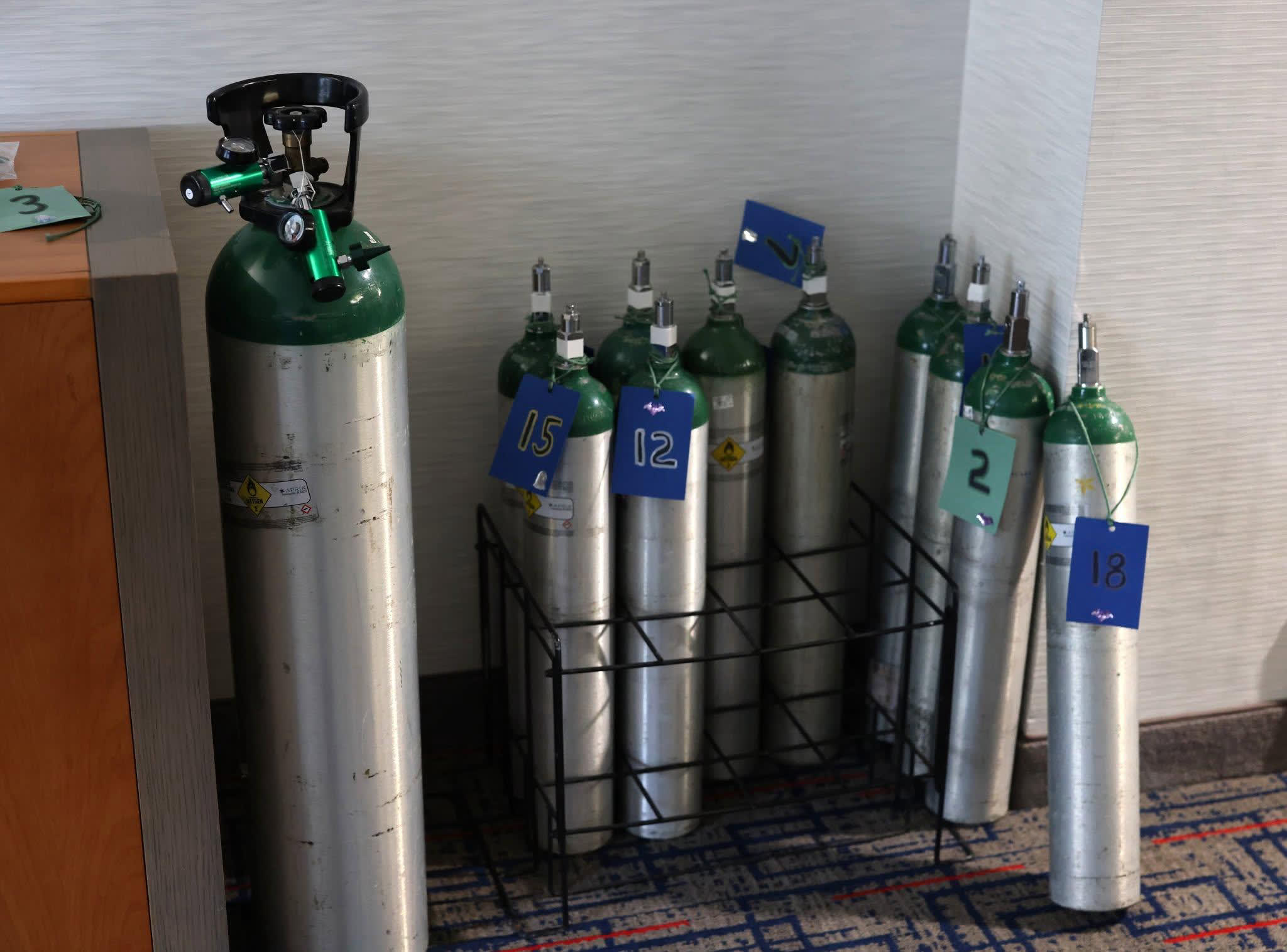
On the morning of the last day of the conference, E. was hanging out with other “clusterheads” outside the conference hotel when he started having a cluster headache attack. Before he could go back to his hotel room, J. offered E. his DMT v...
64
TL;DR:
The movement has an evidence problem. To solve it, for each intervention we need to know:
* What types of evidence that intervention needs
* What types of evidence different sources can give us
In this post, we outline a framework for evidencing an intervention through five stages:
...

Recent opportunities to take action
Millett and Snyder-Beattie's (2017) 'Existential Risk and Cost-Effective Biosecurity' is good for back of the envelope calculations on GCBRs: https://www.ncbi.nlm.nih.gov/pmc/articles/PMC5576214/
I can't be sure this is the paper I'm remembering but it looks pretty good - Bernstein et al. (2022) find that activities to prevent zoonotic pandemics save lives for a cost roughly comparable to top Givewell charities (I get this from their claim of saving lives at less than 1/20th of the low-end of the value of a statistical life, which they say is ~$107,000 - though beware unequal application of rigour). This estimate does not include economic losses due to a pandemic. https://www.science.org/doi/full/10.1126/sciadv.abl4183
And more indirectly, if you wanted to make your own back-of-the-envelopes, Marani et al. (2021) provide a well grounded probability estimate to work with (though the historical record would not be reliable for emerging risks from biotechnology): https://www.pnas.org/doi/10.1073/pnas.2105482118
Thanks for the sources, Ben! I have used them in this post I have just published:
Thanks Ben!
No worries! Although these were just ones I remembered off the cuff - I'm sure there's other good ones you could find