When you sell stock [1] you pay capital gains tax, but there's no tax
if you donate the stock directly. Under a bunch of assumptions,
someone donating $10k could likely increase their donations by ~$1k by
donating stock. This applies to all 501(c) organizations, such as
regular 501(c)3 non-profits, but also 501(c)4s such as advocacy
groups.
In the US, when something becomes more valuable and you sell it you
need to pay tax proportional to the gains. [2] This gets complicated
based on how much other income you have (which determines your tax
bracket for marginal income), how long you've held it (which
determines whether this is long-term vs short-term capital gains), and
where you live (many states and some municipalities add additional
tax). Some example cases:
A single person in Boston with other income of $100k who had
$10k in long-term capital gains would pay $2,000 (20%). This is 15%
in federal tax and 5% in MA tax.
A couple in SF with other income of $200k who had $10k in long-term
capital gains would pay $2,810 (28%). This is 15% in federal
tax, 3.8% for the NIIT surcharge, and 9.3% in CA taxes.
A single person in NYC with other income of $600k who had $10k
in short-term capital gains would pay $4,953 (50%). This is 35% in
federal tax, 3.8% for the NIIT surcharge, 6.9% in NY taxes, and 3.9% in
NYC taxes.
When you donate stock to a 501(c), however, you don't pay this tax.
This lets you potentially donate a lot more!
Some things to pay attention to:
Donations to political campaigns are treated as if you sold the
stock and donated the money.
If you've held the stock over a year and are donating to a
501(c)3 (or a few other less common ones like a 501(c)13 or a
501(c)19) then you can take a tax deduction of the full fair
market value of the stock. This is bizarre to me (why can you deduct
as if you had sold it and donated the money, when if you had gone that
route you'd have needed to pay tax on the gains) but since it exists
it's great to take advantage of.
This only applies if it's a real donation. If you're getting a
benefit (ex: "donating" to a 501(c)3 but getting a ticket to an event)
that's not a real gift and doesn't fully count.
If you're giving to a person, you don't pay capital gains, but
they get your cost basis (with some caveats). When they sell they'll
pay capital gains tax, which might be more or less than you would have
paid depending on your relative financial situations. If they're
likely to want to make a gift to charity, though, it's much more
efficient to give them the stock.
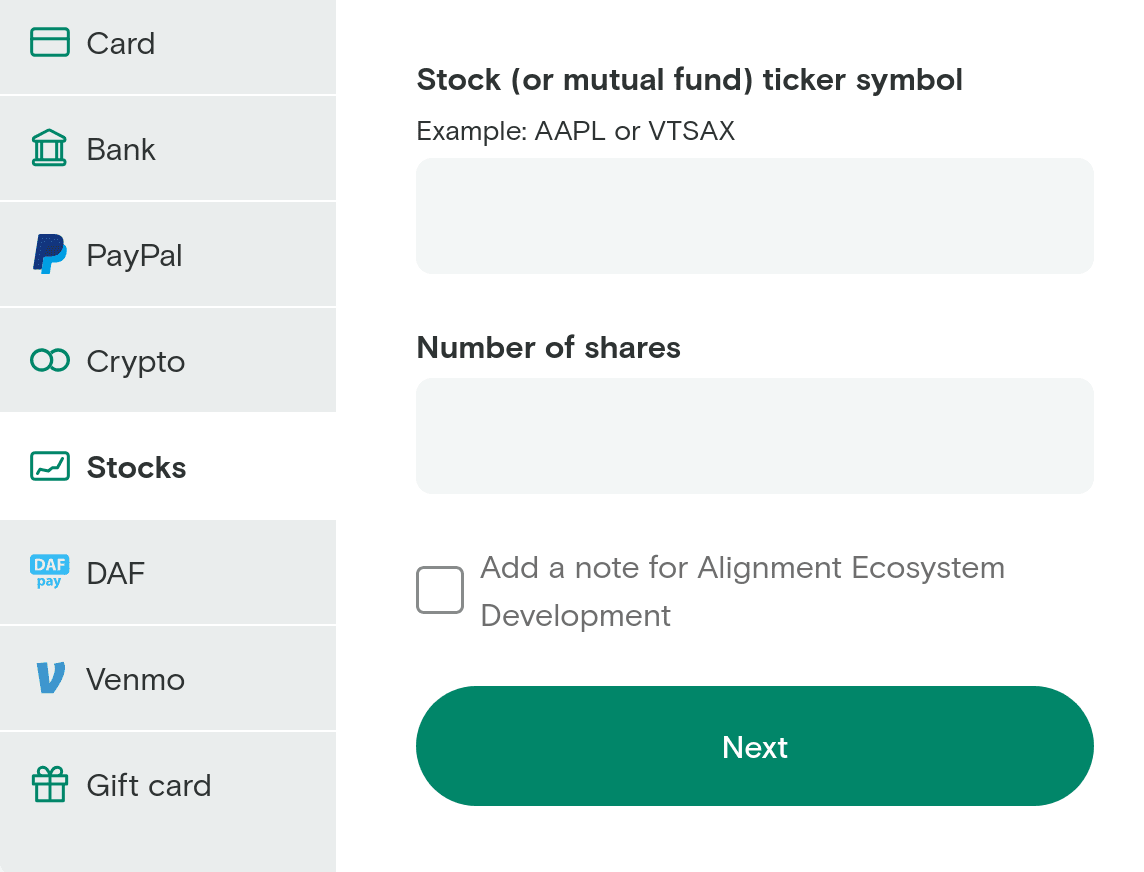
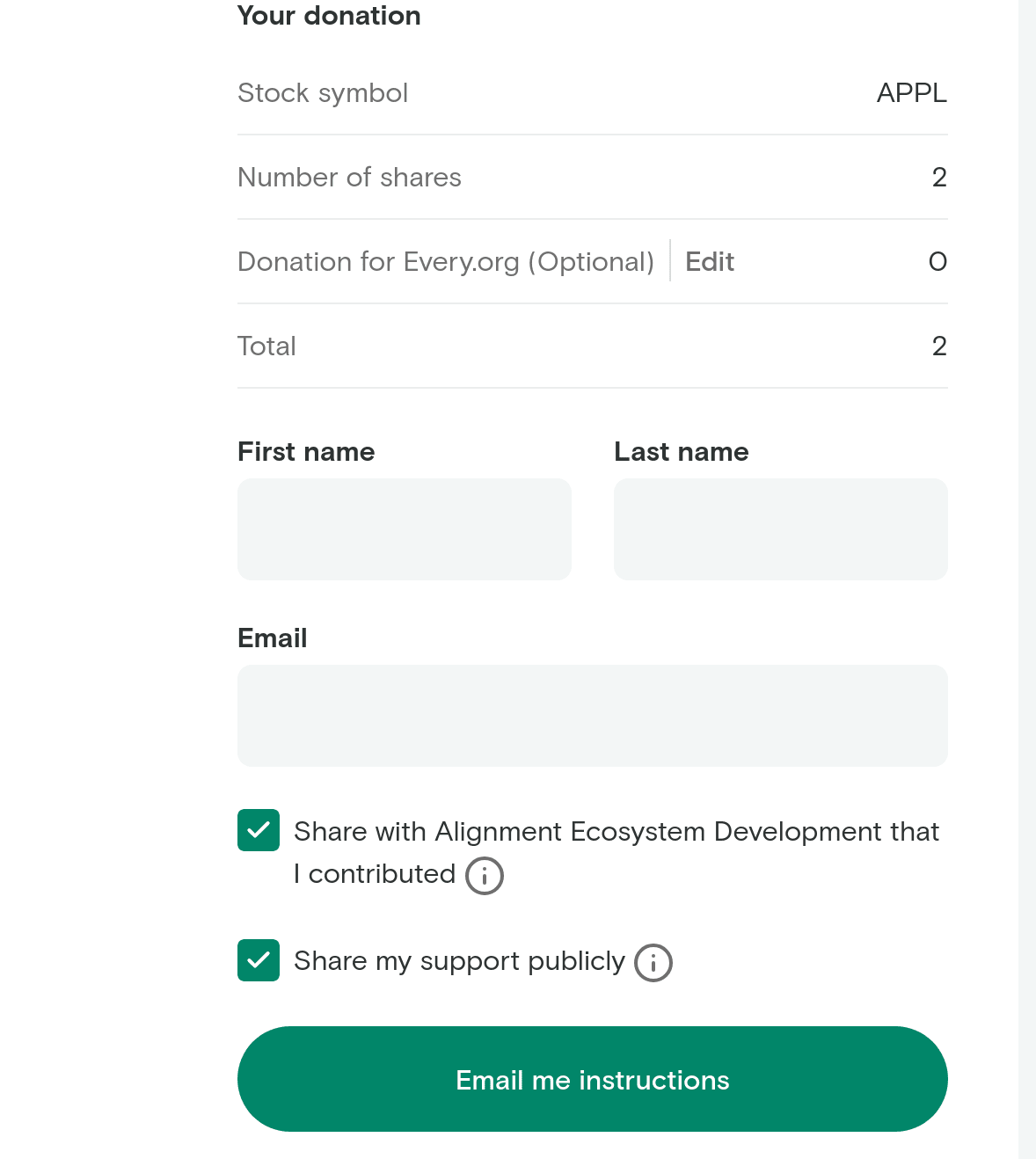
The actual logistics of donating stock are a pain. If you're
giving to a 501(c)3 it's generally going to be logistically easier to
transfer the stock to a donor-advised fund (I use Vanguard Charitable
because it integrates well with Vanguard), which can then make grants
to the charity. This also has a bonus of letting you pick the charity
later if you want to squeeze this in for 2025 but haven't made up your
mind yet.
[1] I say "stock" throughout, but this applies to almost any kind of
asset.
[2] Note that "gains" here aren't just the real gains from your stock
becoming more valuable, but also include inflation. For example, if
you bought $10k in stock five years ago ($12.5k in 2025 dollars) and
sold it today for $12.5k in 2025 dollars, you'd have "gains" of $2,500
even though all that's actually happened is that the 2025 dollars you
received are less valuable than 2020 dollars you spent.

I believe this applies only to stock that has appreciated in value, right? If you have losers, you want to take the capital loss (either to offset your capital gains, or to reduce your other income by up to $3,000 with carryover available).
There's an argument for some people to buy stock to donate. Those of us who bunch their donations to maximize deductibility should probably be buying a variety of somewhat volatile stocks during our off years, donating the winners either directly or through a DAF during our giving years, and selling the losers to harvest the losses whenever appropriate. (Just remember to avoid creating a wash sale!)