We incubate entrepreneurs to start new export industries in the world’s poorest countries. We launched 5 months ago, are already kickstarting one industry in Madagascar, and have up to 3 more in the pipeline for early 2027.
We are raising for 10 pilots to launch between July 2027 to June 2028. Each of these costs ~$190k each, with differences driven by location and capital intensity.
We estimate that we will match GiveWell’s top charities if 1 in 75 of these attempts succeeds at starting a mid-sized export boom, or if 1 in 6,000 starts a large export boom (think Bangladesh garments). We would encourage donors to anchor on the former number, as large-scale export booms are much rarer.
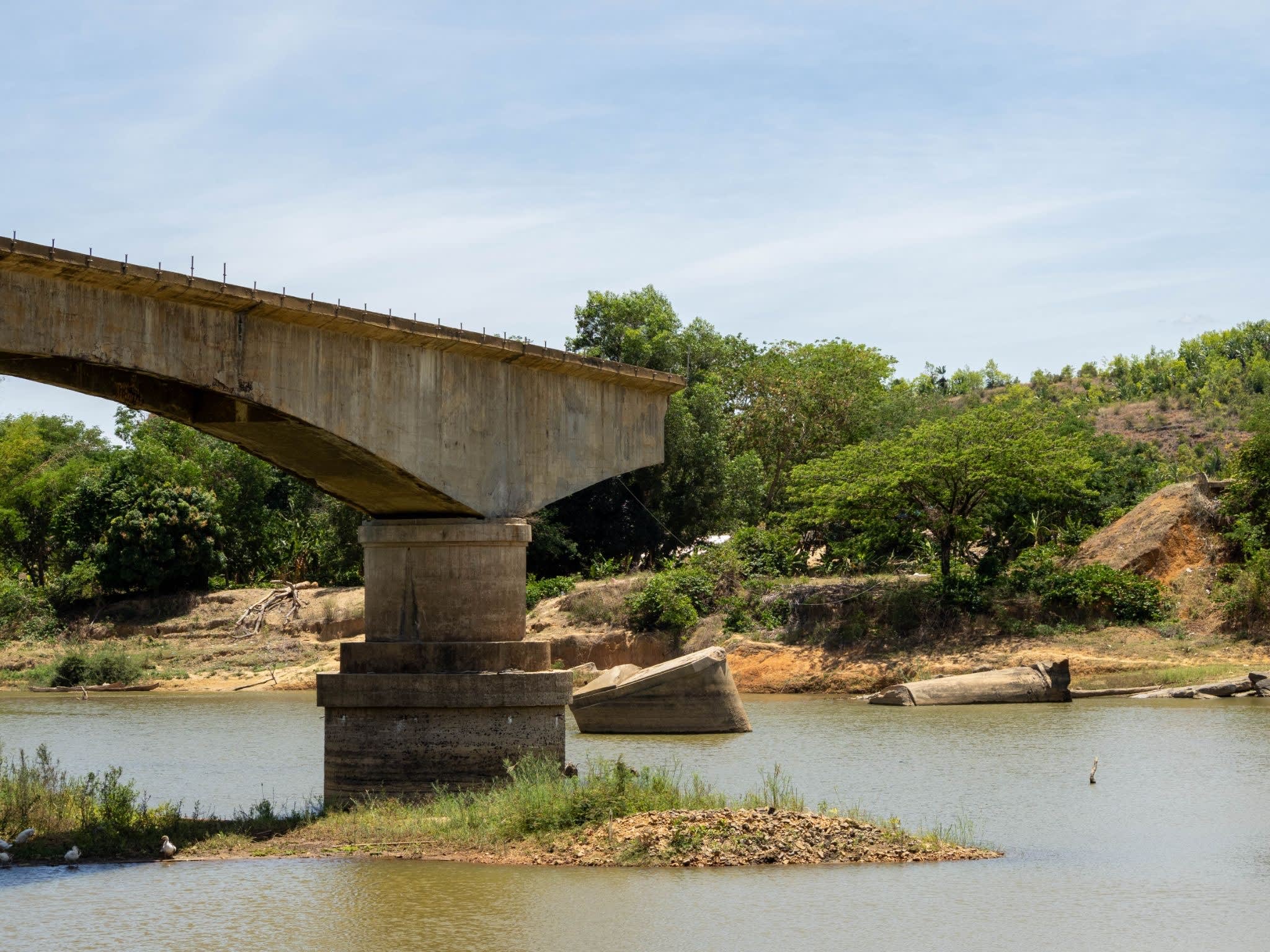
We build new industries in places that are typically hard to operate in. Our partner in Madagascar, for example, has to bring his fruit trucks over a river that no longer has a functional bridge.
Our Theory, Program, and Progress
What we do:Exporters Without Borders incubates entrepreneurs to start new export industries in low-income countries.Export manufacturing is the surest path to economic growth for poor countries, having lifted billions out of poverty in East Asia and led to some of histories’ largest human welfare increases. Much of this growth is driven by new export industries. But plenty such industries never get built, especially in the countries that need them most. This is because the first “pioneer” firm of any industry faces a “first mover disadvantage”- it has to set up new supply chains, train staff, and take on financial risk - but can easily be copied as soon as it demonstrates viability.
We overcome this well-known market failure by offering several types of support:
Marketmaking: We pair proven entrepreneurs with high-potential new industrial sectors, and help them source strong local partners who are familiar with an adjacent industry.
Pilot Support: We fund the pilots of these firms, which are meant to demonstrate end-to-end viability and bring a new export idea to investability.
Scaling support: Many of the best operators in low-income countries are not well-positioned to attract high-income-country capital, or to sell to international buyers, so we support them in making these connections as they scale.
Each pioneer firm goes through the following stages:
Stage
Incubation
▶
Pilot
▶
Light industrial
▶
Full industrial
Estimated length
4 months
1 year
~2 years
Ongoing
Our operating expenses support these ventures throughout this lifecycle, concentrating on the earlier stages where investability has not yet fully materialized. “Light” and “full” industrial are respectively defined as firms with industrial machinery and repeat buyers but without maximum scale economies; and firms that have achieved those scale economies. As our ventures mature, they graduate from philanthropic to more and more market-rate capital.
The success of the pioneer firm crowds in an entire industry around them, boosting incomes and creating jobs for hundreds of thousands.
Why we think this can work: We are optimistic this is possible because individuals or small teams have historically been the biggest driver of export booms. Colombia's $2B flower industry was created by a team of four that started its pioneer firm, one of whom later kickstarted Chile's salmon industry. The two industries now employ over 300k people. Indonesia's plywood export boom was catalyzed by two Korean joint ventures, KORINDO and KODECO, which transferred skills and equipment from Korea's existing industry. Mauritius' garment industry and Kenya's flower sector started in a similar way, with one pioneer enabling crowd-in of others. What we don't yet know is how this can be done deliberately and repeatedly, so we've designed our program to yield those indications as quickly and cost-effectively as possible.
We launched Exporters Without Borders 5 months ago, and we’ve been moving quickly since then:
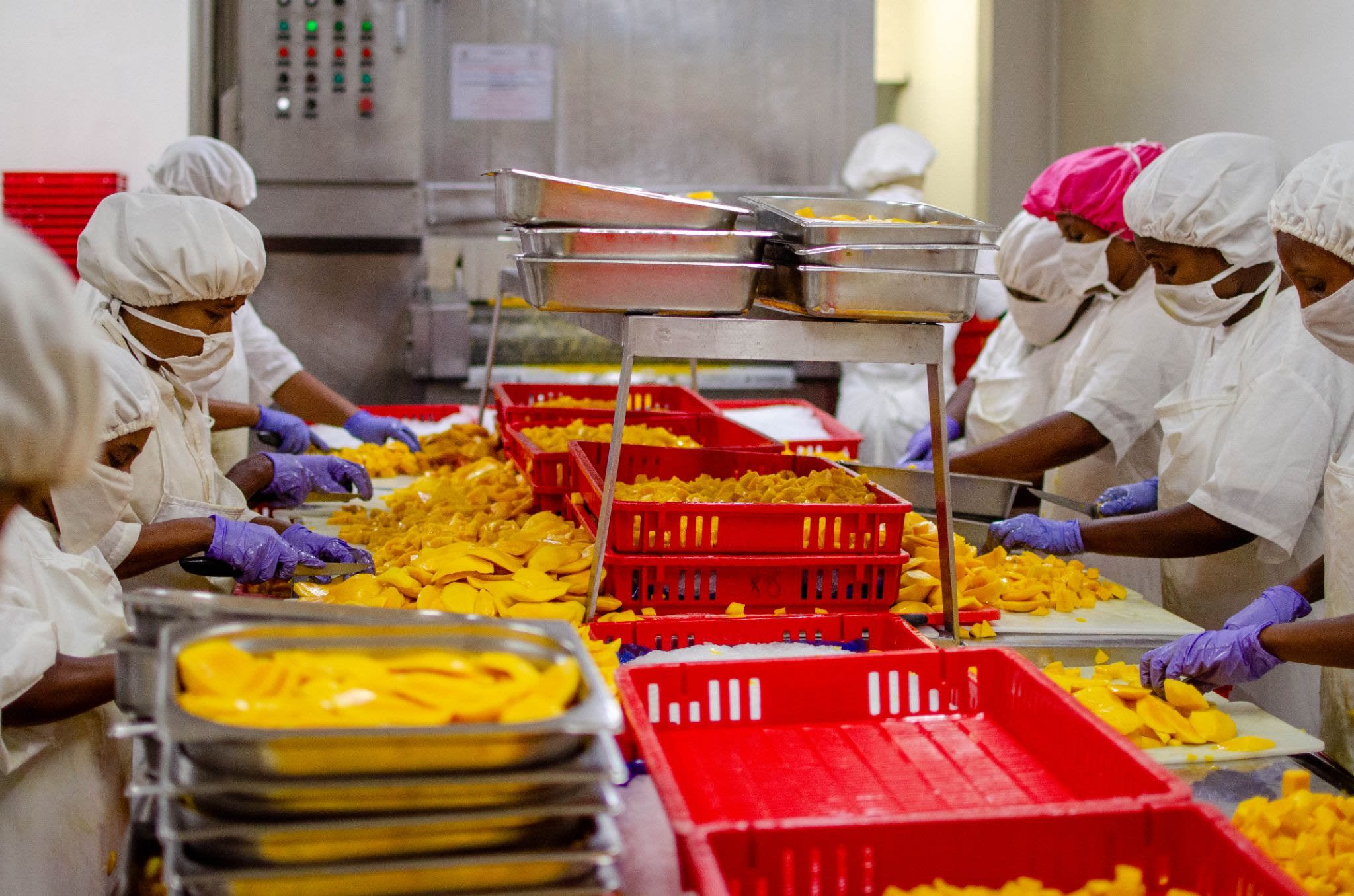
We’ve recently launched our first pioneer firm with a proven serial entrepreneur in Madagascar, kickstarting the country’s freeze-dried fruit industry, working alongside an experienced frozen fruit exporter to Europe. First exports are on track for early 2027.
We are working with three fellows to scope and launch up to three new export industries at the beginning of 2027. The fellows are proven operators who spend 4 months scoping a potential new export industry, building local partnerships, and attracting buyer interest.
We are chiefly funded by Coefficient Giving.
Fruits de Madagascar’s factory in Nosy Be, Madagascar. The factory has organic, fair trade, and advanced food safety certifications under which we are exporting samples for our first pioneer firm.
Cost Effectiveness Analysis
You can see our full cost-effectiveness analysis here. Conscious of the risks of motivated reasoning that pervade self-authored cost-effectiveness analyses, we have set this up conservatively on multiple fronts.
We find that a single mid-tier industry-scale catalyst is worth roughly $20M in equivalent spend on GiveWell top charities (after heavy haircuts), while a larger-tier catalyst is worth $1B+. That means we match the cost-effectiveness of GiveWell top charities if we have a 1-in-75 chance of creating a mid-tier boom or 1-in-6,000 chance of creating a large tier boom. We assume our all-in-costs per shot at a new export industry are $270k, including a $190k pilot and ~40% overhead to fund Exporters Without Borders. The exact figures should not be taken too literally; the magnitudes are what matter.
Arguments Against Donating
We still don’t know our actual success rates. The documented cases are selected on outcome. We haven't found data on serious attempts that includes failures. The closest analogue we do have is Fundación Chile, which did a lot of what we're trying to do as a public-private organization. UNCTAD reports that 30 of ~40 enterprises it created were eventually sold to the private sector, but a private sector sale isn't the same as an export sector taking off. We aim to build an empirical estimate over the coming year and think publishing it would be a valuable public good. By early 2028, we will have taken up to 14 shots at starting new industries, and we will know whether we can deliberately and repeatedly start pioneer firms.
We also don’t know if it is possible to deliberately and repeatedly create pioneer firms in a private sector way. While private sector actors have created these firms before, and while government agencies have previously done so by offering somewhat similar support, we don’t know of any example of a private incubator doing so. We also think this activity may be harder to do now than in the past, given increased automation and China’s broad competitive advantages across many forms of both manufacturing and agroprocessing.
Diligence Mechanisms
New industrial ventures in low-income countries are inherently high risk, so we conduct a mix of internal and external diligence at each stage. We aim to ensure that philanthropic funds are being spent in ways that maximize impact, and that investment funds are being spent on ventures that have good return prospects and are actually investable.
From incubation to pilot: Between idea and launch, we scope new export sectors against criteria that maximize their expected impact. These include how large the sector can become, how cost-competitive it can get, how many jobs it will create, and whether a strong local partner can help us progress quickly. We source the founders and help them scope sectors, but final funding decisions are made by an independent committee.
From pilot to “light industrial”: Each pilot will produce a costing model, a full operating plan with validated specs and costs, and a post-mortem if it fails. Before a scale-up investment, we share these data with investors, as well as the P&L, investor pitch and buyer LOIs. If pilots do not achieve orders from 2+ substantial buyers and a credible full-scale cost plan, we will encourage founders to shut them down instead of seeking investment capital.
The Ask
Each additional $190k funds one more shot at an export industry. In 2027-28, we will run our first two incubation cohorts, starting 10 new industries in total. We are raising for those 10 pilots at about $190k each, with some variation between pilots (due to the capital intensity of the sector, as well as the availability of a suitable partner to share costs). A pilot is funded only when it has a scoped sector with a clear path to crowding in an industry, a costing model indicating it can become globally competitive, a highly capable founder and an established local partner, and identified export buyers whose specs the pilot is designed to meet. Pilots that do not clear this bar are not funded, and if we fail to find enough impactful opportunities we can either return grant funds or reinvest them for future rounds.
How to give? We are a US nonprofit pending 501(c)(3) status, which should be approved by early 2027. In the interim, we can most easily accept donations via a DAF or public charity vehicle, and can discuss donation modalities with you individually. We have highlighted gifts at the $190k level for per-pilot funding, but we would be more than happy to discuss the marginal impacts of smaller gifts or in-kind support with donors directly.
This month effective altruism has gotten lots of attention, including a cover story in The Economist. It feels pretty surreal to be on the receiving end of it. But I feel grateful these ideas have caught on, and even more grateful for the drive, earnestness, and compassion of so many people who took strange but well-argued ideas seriously and then actually acted on them....
TLDR
* We are Scale Welfare, a fish welfare charity incubated by AIM in early 2025, working in the Philippines and Vietnam. This is our first Forum post.
* Farmed fish welfare has no proven, scalable interventions. In our first 1.5 years we went from scoping and 123 intervention ideas to one pilot: on-farm ice slurry slaughter for tilapia in the Philippines, replacing 5 to 15 hours of live transport.
* ...
Cross-posted from my new Substack, Alternative Perspective. Views my own.
Part I of Do Beans Beat Alt Meat?
People know me as a plant-based meat pessimist, mainly for my review “Price-, taste-, and convenience-competitive plant-based meat analogues would not currently replace the majority of meat consumption” (published...


This is something I've been thinking should happen for a while. So I'm really excited to see someone take the challenge and make it happen!
Good Luck!