Note: This post was crossposted from the Coefficient Giving Farm Animal Welfare Research Newsletter by the Forum team, with the author's permission. The author may not see or respond to comments on this post.
Subtitle: On vegan advocacy, effective altruism, and FIFA
I turn 40 today. Here are some hot takes.
On factory farming
1. Our biggest challenge is salience. If factory farming led the evening news, it wouldn’t last lo...
On October 22nd starting at 10:00am Pacific Time, Every.org is matching donations to select animal welfare organizations at a 2:1 rate, up to $2,000 per donor per nonprofit (so if you give up to $2,000, they will contribute up to $4,000 and the nonprofit will get up to $6,000). The first donation a donor makes to each eligible nonprofit will be matched, and donors can get the match for multiple $2,000 donations. So, you can get more than $2,000 matched by donating $2,000 one time to multiple...
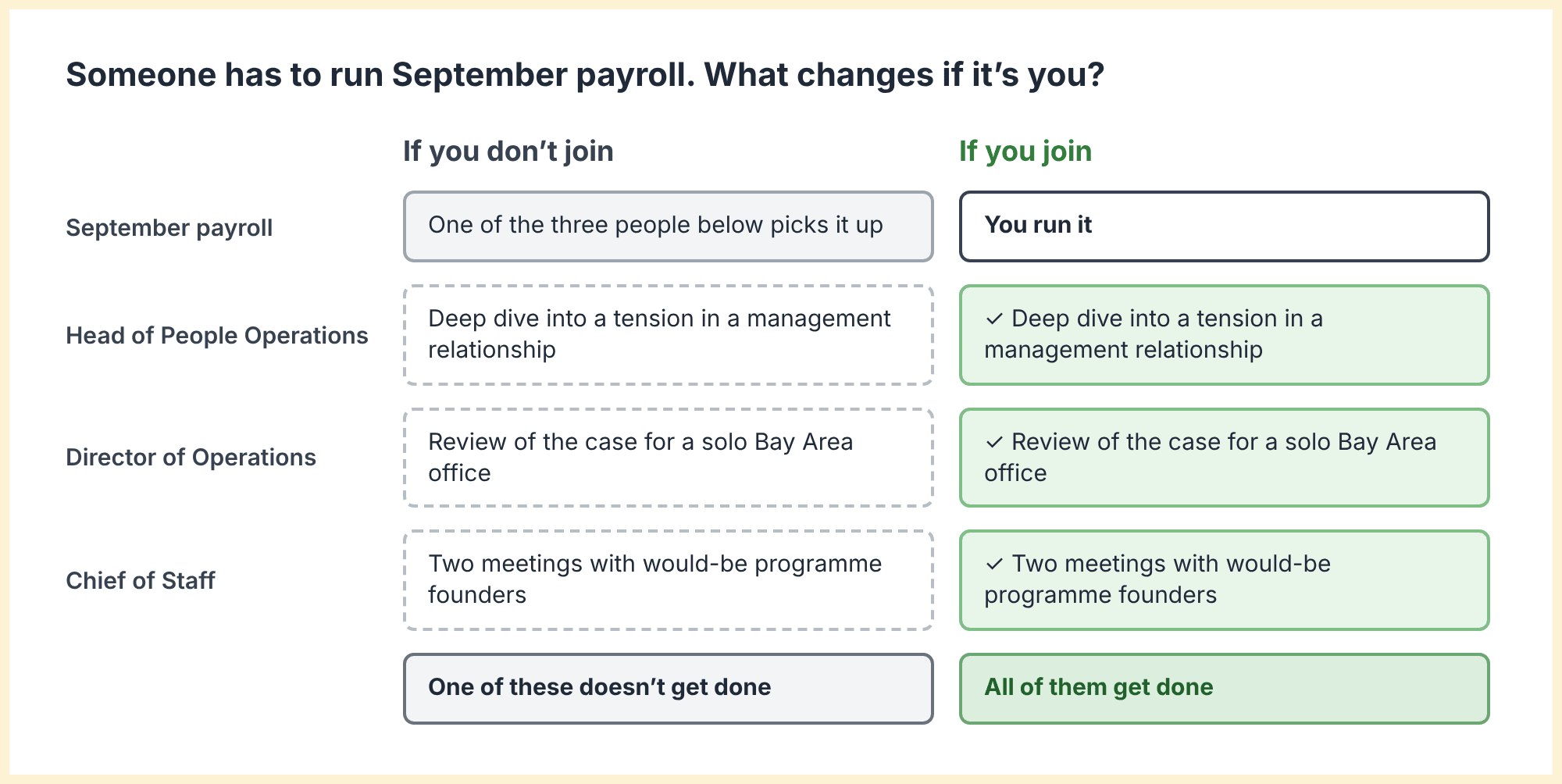
When speaking to candidates who are considering working with us at 80,000 Hours, I often hear people worry about replaceability.
The familiar version of the worry is about whether the organisation will hire someone else in your place. If it will, then the difference you make by taking the job is only the difference between you and them.
There are a couple of well-known answers to that. The person hired in your place probably cares about the world too, and would go on to do somethi...

Consider adopting the term o-risk.
William MacAskill has recently been writing a bunch about how if you’re a Long-Termist, it’s not enough merely to avoid the catastrophic outcomes. Even if we get a decent long-term future, it may still fall far short of the best future we could have achieved. This outcome — of a merely okay future, when we could have had a great future — would still be quite tragic.
Which got me thinking: EAs already have terms like x-risk (for existential risks, or things which could cause human extinction) and s-risk (for suffering risks, or things which could cause the widespread future suffering of conscious beings). But as far as I’m aware, there isn’t any term to describe the specific kind of risk that MacAskill is worried about here. So I propose adding the term o-risk: A risk that would make the long-term future okay, but much worse than it would optimally be.
might want to check out this (only indirectly related but maybe useful).
https://forum.effectivealtruism.org/posts/zuQeTaqrjveSiSMYo/a-proposed-hierarchy-of-longtermist-concepts
Personally don't mind o-risk think it has some utility but s-risk ~somewhat seems like it still works here. An O-risk is just a smaller scale s-risk no?