Comments

My take is that both were fairly wrong.[1] AI is much more generally intelligent and single systems are useful for many more things than Holden and the tool AI camp would have predicted. But they are also extremely non-agentic.
(To me this is actually rather surprising. I would have expected agency to be necessary to get this much general capability.)
I'm tempted to call it a wash. But rereading Holden's writing in the linked post, it seems to be pretty narrowly arguing against AI as necessarily being agentic, which seems to have predicted the current world (though note there's still plenty of time for AIs to get agentic, and I still roughly believe the arguments that they probably will).
- ^
This seems unsurprising, tbh. I think everyone now should be pretty uncertain about how AI will go in the future.
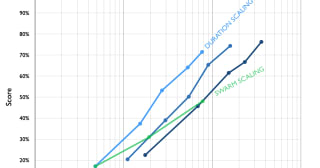


I think it's pretty clear now that the default trajectory of AI development is taking us towards pretty much exactly the sorts of agentic AGI that MIRI et al were worried about 11 years ago. We are not heading towards a world of AI tools by default; coordination is needed to not build agents.
If in 5 more years the state of the art, most-AGI-ish systems are still basically autocomplete, not capable of taking long series of action-input-action-input-etc. with humans out of the loop, not capable of online learning, and this had nothing to do with humans coordinating to slow down progress towards agentic AGI, I'll count myself as having been very wrong and very surprised.