I didn't want to read all of @Vasco Grilo🔸's post on the "meat eating" problem and all 80+ comments, so I expanded all the comments and copy/pasted the entire webpage into Claude with the following prompt: "Please give me a summary of the authors argument (dot points, explained simply) and then give me a summary of the kinds of push back he got (dot points, explained simply, thematised, giving me a sense of the concentration/popularity of themes in the push back)"
Below is the result (the Forum team might want to consider how posts with large numbers of comments can be read quickly):
- The author claims that saving lives in developing countries might cause more harm than good in the short term because:
- When people are saved from death, they consume animal products
- The suffering of farm animals (especially chickens and farmed fish/shrimp) from being raised and killed outweighs the happiness of the human life saved
- Using specific calculations, they estimate that one average person causes 15.5 times more animal suffering than human happiness globally (with higher ratios in some countries)
- The author specifically criticizes two organizations:
- GiveWell (for granting $1.09 billion without considering animal welfare impacts)
- Ambitious Impact (for helping start 8 organizations that save lives without considering animal impacts)
- The author suggests these organizations should:
- Be more transparent about why they ignore animal welfare effects
- Focus on interventions that don't increase mortality (like mental health)
- Offset harm to animals by funding animal welfare projects
Main themes in the pushback (ordered by rough frequency/engagement):
Moral/Philosophical Objections (Most Common):
- Rejecting the premise that saving human lives could be net negative
- Viewing it as morally repugnant to let children die because they might eat meat
- Arguing that we shouldn't hold people responsible for future choices they haven't made yet
Methodological Critiques:
- Questioning assumptions about consumption patterns of aid recipients
- Noting that population growth doesn't necessarily increase meat consumption proportionally
- Pointing out that many aid recipients are too poor to consume significant amounts of animal products
Practical/Strategic Concerns:
- Arguing that organizations like GiveWell don't need to justify their focus on human welfare
- Suggesting that offsetting through animal welfare donations is more practical than avoiding human welfare work
- Noting that this type of reasoning could lead to harmful outcomes if applied broadly
Communication/Framing Concerns:
- Suggesting the argument is unnecessarily divisive
- Recommending changes to terminology (e.g., "meat eating problem" instead of "meat eater problem")
- Expressing concern about how this reflects on the EA community
The strongest pushback seemed to center around the moral implications of letting people die because of potential future actions, with many commenters finding this fundamentally problematic regardless of the utilitarian calculations involved.
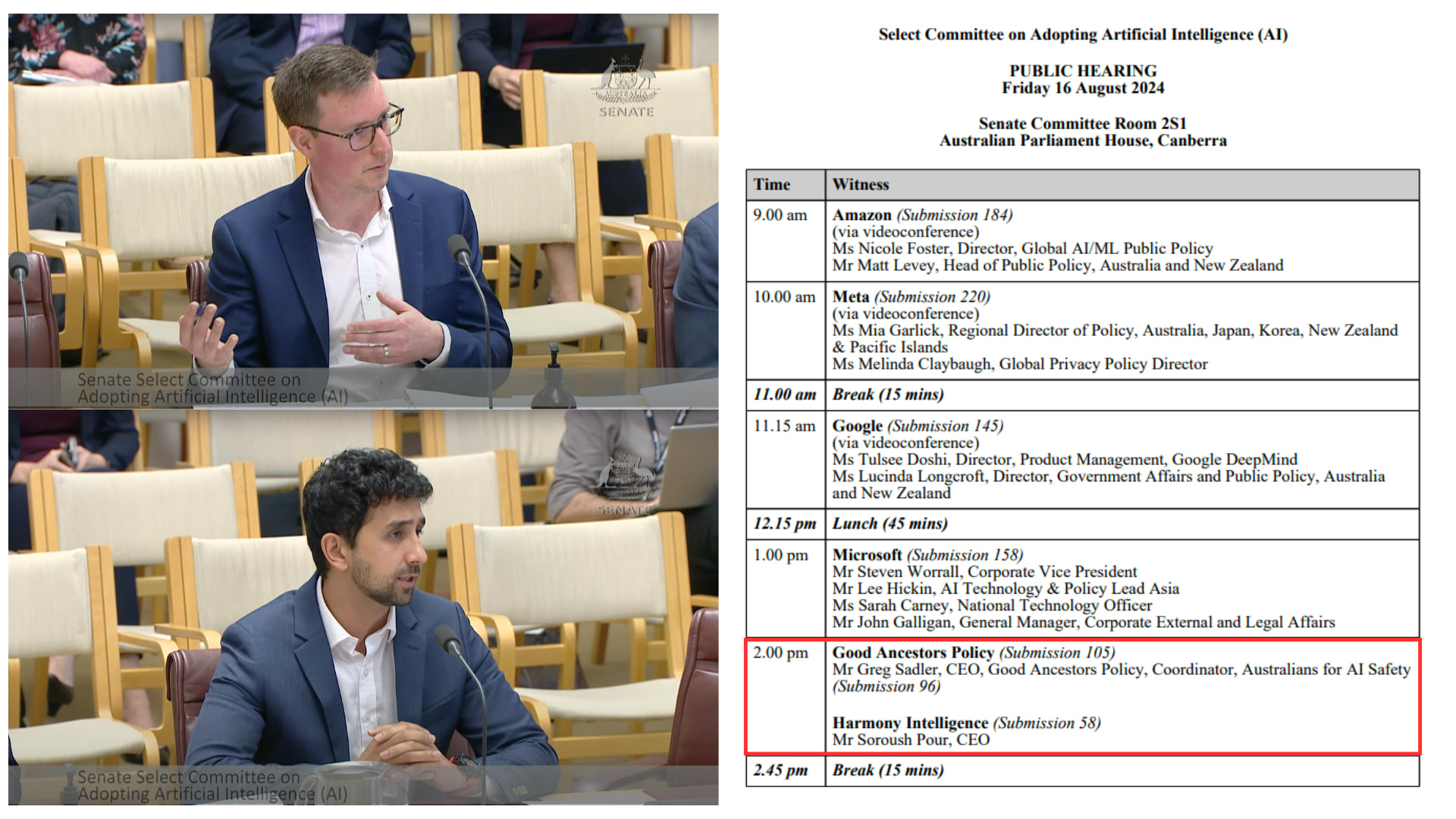
I met Australia's Assistant Minister for Defence last Friday. I asked him to write an email to the Minister in charge of AI, asking him to establish an AI Safety Institute. He said he would. He also seemed on board with not having fully autonomous AI weaponry.
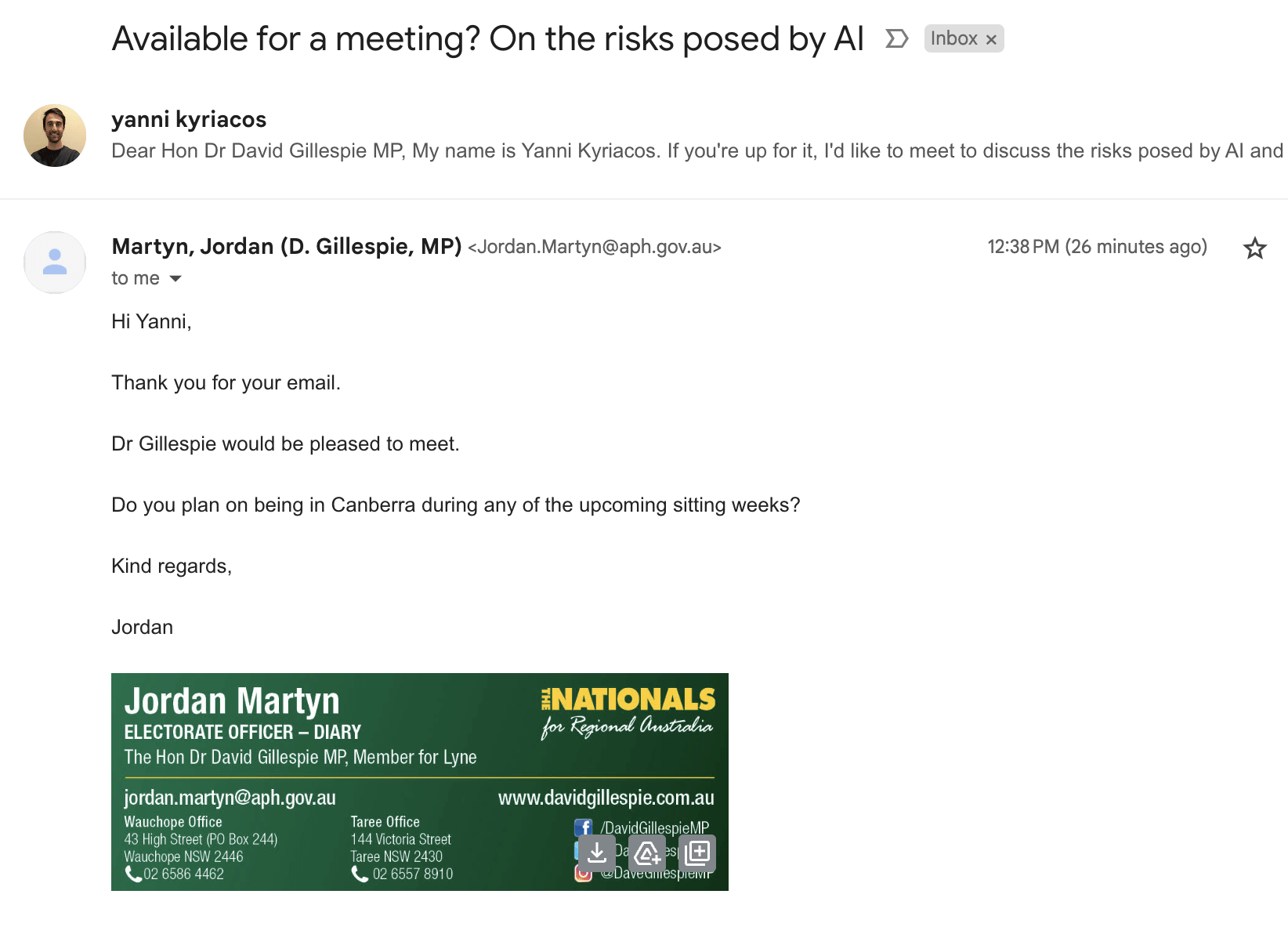
All because I sent one email asking for a meeting + had said meeting.
Advocacy might be the lowest hanging fruit in AI Safety.
Akash's Speaking to Congressional staffers about AI risk seems similar:
Like you, Akash just cold-emailed people:
There's a lot of concrete learnings in that writeup; definitely worth reading I think.