Comments

[3 of 6] “When does WAI expect to produce its first real-world intervention or policy shift e.g. is there anything concrete expected this decade?”
Mandatory annoying disclaimer: For the reasons discussed in my preceding comment, I don’t think “time till first intervention implementation” is a useful proxy for the pace of field growth or the fidelity of its trajectory.
But to answer your question:
First past the post: Backyard bird habitat improvements in 1-2 years
WAI funded Ross MacLeod and colleagues to validate the use of eye temperature (assessed via thermal imaging) as an indicator of the welfare of several common bird species. If they find the metric to be usable as hypothesized, they can draw on over ten years of data they’ve collected from 54 backyard-like sites constructed to manipulate variables like bird feeder location, fencing presence/absence, and hedge species. If they find significant differences, Ross plans to use his longstanding relationships with the RSPCA and other UK bird groups to disseminate the first ever guidance on how bird lovers can set up their gardens to be more subjectively enjoyable for the birds that visit them.
Clearly this isn’t the most pressing issue facing wild animals, but happens to be on track to be the first of many cases where WAI-funded research identifies ways people can improve wild animal welfare by making simple changes to existing activities.
First high-confidence scalable intervention: Rodent fertility control in 4-7 years
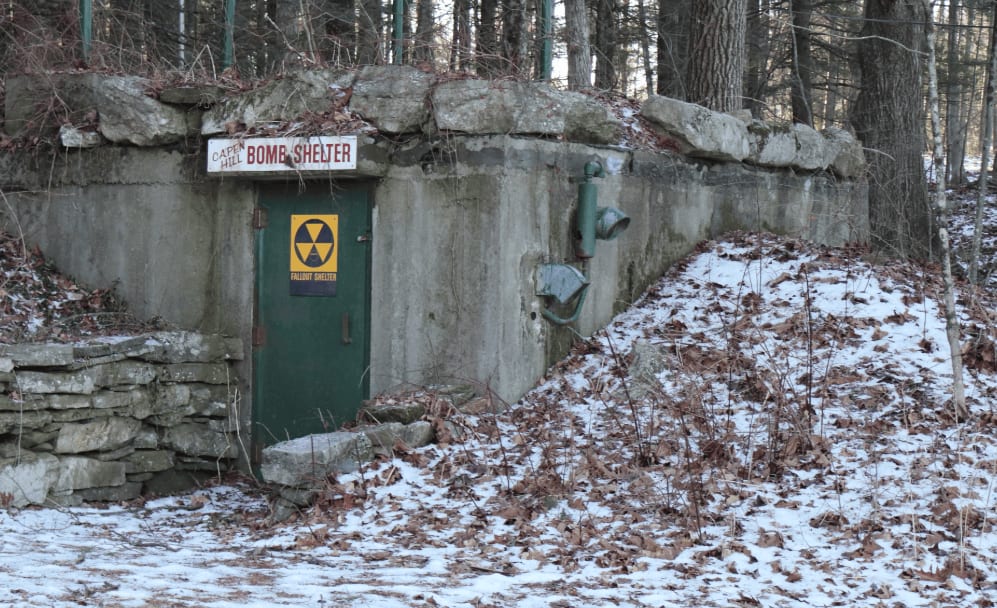
Replacing anticoagulant rodenticides with oral contraceptives would remove a widespread source of intense, prolonged suffering. Because this would be modifying existing population management practices rather than changing an ecosystem in a novel way, fertility control offers an unusually convenient opportunity to reduce the suffering of a target population with minimal likelihood of affecting non-target populations.
Unfortunately, existing products have attracted more hype than the research supports, which has led to repeated failures of pilot projects launched by groups unaware of this track record.But because these compounds work in lab settings, there is strong reason to believe that an effective rodent contraceptive product can be developed (or that existing products could be made effective by following different application methodologies).
WAI has partnered with Conservation X Labs and the Botstiber Institute for Wildlife Fertility Control to outline a process for running a research competition that would incentivize private R&D labs to close crucial knowledge gaps and develop a demonstrably effective product. If funding allows, we’ll launch this process in summer 2026. It will take at least a year or two to run the research competition, and likely several more years to get a new product to market.
Once an effective solution is commercially available, it can be applied at larger and larger scales as it is adopted across more cities, farms, factories, and conservation efforts (invasive rodents are a major threat to rare species on remote islands).

[2 of 6] Why hasn’t WAI implemented interventions yet?
In short: Because that’s not what we’ve been trying to do.
If we had been spending the last six years trying to find interventions that could be implemented as soon as possible, and our progress to date is all we had to show for it, then that would be extremely disappointing. If that’s what we’d been aiming for and this is where we landed, then I think it’d be fair to say we failed — or at the very least, we definitely shouldn’t be an ACE-recommended charity.
What we have been doing instead is pursuing a strategy that is entirely focused on building wild animal welfare science up into a self-sustaining academic field that is positioned to produce the research needed to reduce wild animal suffering as much as possible over the long run.
I’m glad you brought up Rethink Priorities and Happier Lives Institute, because I think the contrast between us is very illustrative. Like most EA research orgs, RP and HLI mostly conduct research with the aim of directly informing policymaking, philanthropy, or movement strategy. Although the particular topics they’re focusing on are highly neglected, those topics are often close enough to longstanding human concerns (e.g., public health, agricultural productivity) that they can build on the deep bodies of literature that have been developed by mature academic fields (e.g., development economics, human psychology, farm animal veterinary medicine).
Wild animal welfare science is at best several decades behind those fields. The problem is not that potential interventions haven’t been evaluated yet; it’s that we lack the basic scientific knowledge of how to evaluate most interventions. The few interventions we can evaluate with confidence are evaluable precisely because they have very limited impacts or only work under a narrow set of conditions.
That’s why we have optimized for field-building over intervention research: not because there are no interventions worth trying now, but because there’s a very low ceiling to how much impact you can have before you know how to measure welfare across different several classes and phyla, how to account for compensatory mortality, how to predict and monitor for effects on non-target species, etc.
Which is not to say we have done no research on interventions. Rather, we have chosen to research interventions insofar as we think it will contribute to field growth, such as by attracting interest and funding, providing opportunities to refine research methodologies, building bridges with relevant research communities, or simply serving as a proof of concept for the field.
I explicitly acknowledged your stated strategy and the need for foundational research. My question is when you expect that strategy to translate into real-world impact.
To move this forward, let’s try to crystallise what you’ve said:
1. What exactly counts as a self-sustaining academic field for wild animal welfare?
Is that defined by number of labs? Funding sources? Course offerings? Publication volume? ‘Self-sustaining’ risks becoming an unending horizon.
2. What does ‘the long run’ mean in practice?
A strategy without a time-bound target is very difficult to evaluate. Is the honest answer simply ‘as long as it takes’? As long as people are willing to fund it?
3. How much funding do you estimate is required to reach this self-sustaining point?
If the answer is ‘we don’t know’, that’s fine - but then we need some proxy indicators or budget ranges that would count as reasonable expectations.
Is the reality that donors are effectively funding an open-ended research project with no agreed stopping rule? Your answers make it hard not to reach that conclusion.
I'm not trying to exhaust you with relentless questions. I'm trying to separate the wheat from the chaff in what you've said. Long replies run the risk of diverting away from the central thrust of discussion.
Hi Siobhan! I’m the Science Director at WAI. I'm stepping in to answer your questions here because Cam is on medical leave.
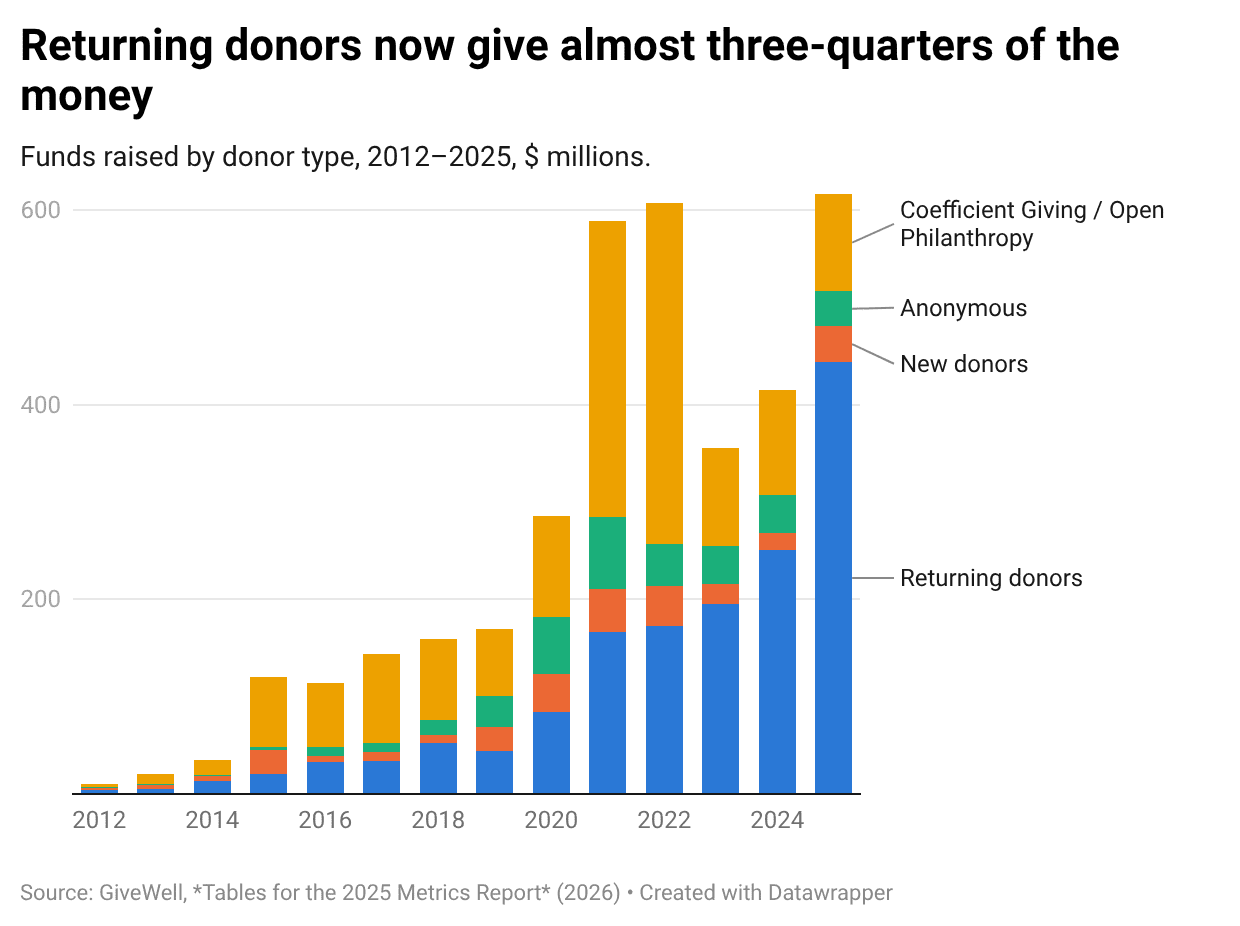
So overall, if you think farmed animal welfare can easily absorb an additional $5M per year and maintain high cost effectiveness, and you prefer immediate gains to long term strategies, WAI and wild animal welfare may not be the ideal giving opportunity for you! But if you are comfortable with funding longer-term theories of change, we think it is as cost effective or more so in expectation than farmed animal welfare — particularly at the margin, as there is some reason to think that the farmed animal welfare movement cannot currently absorb more funding than Coefficient can provide.