Comments

I want an easy/polite/non-offensive way to say "sorry, this reply is way too long, so I'm not going to read it, so I prefer that you know explicitly that I won't reply rather than feeling like I'm maybe ignoring you and maybe will get to it, and also this doesn't mean that you're wrong, or that a long-reply is the wrong choice, it mainly means I'm trying to prioritize my own life tasks and will be dropping some balls and this is one thing that I think would be healthy for me to drop, and I wish this didn't have negative social implications for our relationship or for your feeling about yourself, because I was also raised in a culture where a reply like this would be rude and make me feel bad about myself, and I really wish it wasn't like that [and I have no idea what to do about it, so I thought I'd raise the meta-problem explicitly in a forum-quick-take. [I wonder if anyone will notice me or if this, too, will be too long]]"






I quit trying to have direct impact and took a zero-impact tech job instead.
I expected to have a hard time with this transition, but I found a really good fit position and I'm having a lot of fun.
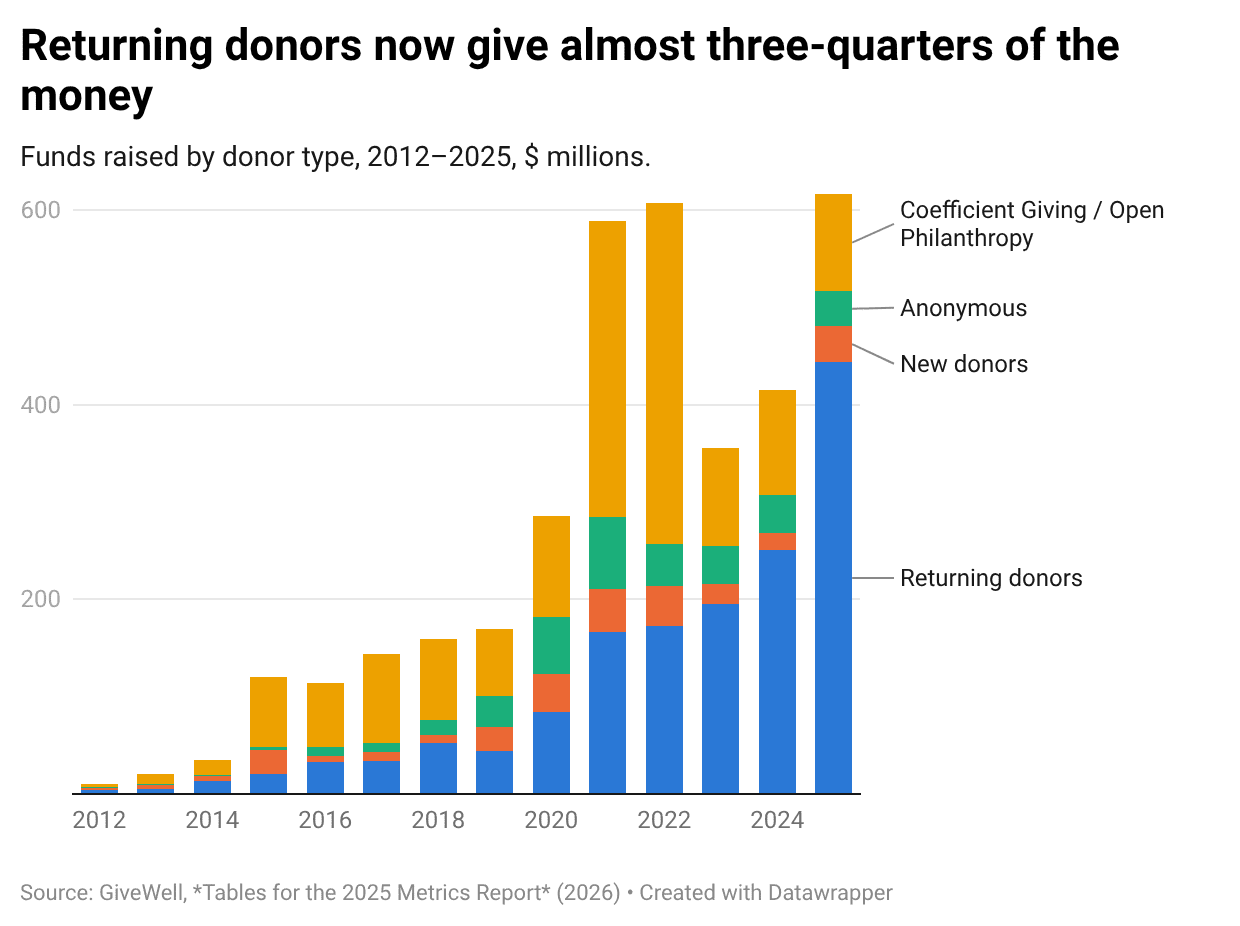
I'm not sure yet where to donate extra money. Probably MIRI/LTFF/OpenPhil/RethinkPriorities.
I also find myself considering using money to try fixing things in Israel. Or maybe to run away first and take care things and people that are close to me. I admit, focusing on taking care of myself for a month was (is) nice, and I do feel like I can make a difference with E2G.
(AMA)
Yeah, ETG seems really strong to me at the moment! What do you think is a good threshold for the average EA in terms of annual USD donations that they can make at which they should seriously consider ETG?
TL;DR: The orgs know best if they'd rather hire you or get the amount you'd donate. You can ask them.
I'd apply sometimes, and ask if they prefer me or the next best candidate plus however much I'd donate. They have skin in the game and an incentive to answer honestly. I don't think it's a good idea to try guessing this alone
I wrote more about this here, some orgs also replied (but note this was some time ago)
(If you're asking for yourself and not theoretically - then I'd ask you if you applied to all (or some?) of the positions that you think are really high impact. because if not - then I think once you know which ones would accept you, and once you can ask the hiring managers things like this, then your dillema will become much easier, almost trivial)
Thanks! Yeah, I've included that in the application form in one or two cases in the hope it'll save time (well, not only time – I find interview processes super stressful, so if I'm going to get rejected or decline, I'd like (emotionally) for that to happen as early as possible) but I suppose that's too early. I'll ask about it later like you do. I haven't gotten so far yet with any impact-focused org.
Seems to me from your questions that your bottle neck is specifically finding the interview process stressful.
I think there's stuff to do about that, and it would potentially help with lots of other tradeoffs (for example, you'd happily interview in more places, get more offers, know what your alternatives are, ..)
wdyt?
That makes a lot of sense! I've been working on that, and maybe my therapist can help me too. It's gotten better over the years, but I used to feel intense shame over mistakes I made or might've made for years after such situations, so that I'm still afraid of my inner critic. Plus I feel rather sick on interview days, which is probably the stress.
I have thoughts on how to deal with this. My priors are this won't work if I communicate it through text (but I have no idea why). Still, seems like the friendly thing would be to write it down
My recommendation on how to read this:
So,
TL;DR:
1.a. and b.: Reframing it like that sounds nice! :-D Seems like you solved your problem by getting shoes that are so cool, you never want to take them off! (I so wouldn't have expected someone to have a problem with that though…) I usually ask for feedback, and often it's something like “Idk, the vibe seemed off somehow. I can't really explain it.” Do you know what that could be?
2. I'm super noncompetitive… When it comes to EA jobs, I find it reassuring that I'm probably not good at making a good first impression because it reduces the risk that I replace someone better than me. But in non-EA jobs I'm also afraid that I might not live up to some expectations in the first several weeks when I'm still new to everything.
3. Haha! Excellent! I should do that more. ^.^
4. You mean as positive reinforcement? I could meet with a friend or go climbing. :-3
5. Aw, yes, spot on. I spent a significant fraction of my time over the course of 3–4 months practicing for Google interviews, and then never dared to apply anyway (well, one recruiter stood me up and I didn't try again with another). Some of the riddles in Cracking the Coding Interview were so hard for me that I could never solve them in 30 minutes, and that scared me even more. Maybe I should practice minimally next time to avoid that.
Thank you so much for all the tips! I think written communication works perfectly for me. I don't actually remember your voice well enough to imagine you speaking the text, but I think you've gotten everything across perfectly? :-D
I'll only pounce on amazing opportunities for now and continue GoodX fulltime, but in the median future I'll double down on the interviewing later in 2024 when our funds run out fully. Then I'll let you know how it went! (Or I hope I'll remember to!) For now I have a bunch more entrepreneurial ideas that I want to have at least tried. :-3
1.a and b.
This sounds like someone who doesn't want to actually give you feedback, my guess is they're scared of insulting you, or being liable to something legal, or something like that.
My focus wouldn't be on trying to interpret the literal words (like "what vibe") but rather making them comfortable to give you actual real feedback. This is a skill in itself which you can practice. Here's a draft to maybe start from: "Hey, I think I have some kind of blind spot in interviews where I'm doing something wrong, but I don't know what it is and a friend told me I probably won't notice it myself and I better get feedback from someone else. Any chance you'd tell me more about what didn't work for you? I promise not to be insulted or complain for not passing or anything like that"
2.
This is super common. Like, I'm not making this up, I had dozens of conversations and this is a common thing to worry about, and it's probably true to many other people interviewing to the same position.
My own approach to this is to tell the interviewer what I'm worried about, and also the reasons that I might not be a good match for whatever this is. For example, "I never worked with some-tech-you-use". If after hearing my worries they still want to hire me, that's great, and I don't need to pretend to know anything. I also think this somewhat filters for hiring managers that appreciate transparency (and not pretending everything is perfect), which is pretty important to me personally.
(also, reasonable managers understand you will need onboarding time, and if they don't understand that - then I prefer they don't hire me)
This all totally might be a Yonatan-thing, idk.
4.
Yeah
I think (?) I'd aim for something short that I could do right-after, so my brain will understand this is a positive reinforcement and not just an unrelated fun evening? This is just my own intuition. I guess it would work if I'd meet a friend and they'd keep saying "good job for interviewing! now let's get you chocolate!" or whatever :)
I don't really know, I recommend you trust your own introspection, I might be unusual here
5.
Eh, you might have (right now) downsides to applying and not having it work well. The downsides might be subjective or "technically wrong" but if you're averse to applying with minimal practice, I would acknowledge that feeling and try to address it (or if you can't - I'm not personally pushing you to apply to Google unprepared, if it seems scary or so).
Examples of things that might worry you:
a. "will google never invite you to interview again if you fail" --> You can check Google's policy. I think they have a 6-12 months cooldown for people who didn't pass, but you can apply again. Is this time too long? Maybe you don't care at all? I don't know, depends on your circumstances
b. maybe you're not interviewing to dozens of places and so it (maybe correctly) feels like Google is your only chance? ( --> I'd recommend interviewing to dozens of places, to be clear :P )
I think a useful answer here would mainly involve listening to you which I can't really do over text. If you want to brainstorm out loud here, I can try to contribute "textbook solutions" if I have them. Or you could do introspection with a friend, or we could talk, or none of the above! just trying to share how I'd approach this
:)
Oh, interesting… I'm autistic and I've heard that autistic people give off subtly weird “uncanny valley”–type vibes even if they mask well. So I mostly just assume it's that. Close friends of mine who surely felt perfectly free to tell me anything were also at a loss to describe it. They said the vibes were less when I made a ponytail rather than had open hair, but they couldn't describe it. (Once I transition more, I hope people will just attribute the vibes to my probably-unfortunately-slightly-imperfect femininity and not worry about it. ^.^ I just need to plant enough weirdness lightning rods. xD)
But he was US-based at the time, and I've heard employers in the US are much more careful with giving feedback than around here, so maybe it was just guardedness in that case.
I like your template! I remember another series of interviews where I easily figured out what the problems were (unless they were pretenses). I think I'm quite attuned (by dint of social anxiety) to subtle indications of disappointment and such. When I first mentioned earning to give in an interview, I noticed a certain hesitancy and found out that it's because the person was looking for someone who has an intrinsic motivation for building hardware for supply chain optimization rather than someone who does it for the money. But in other cases I'm clueless, so the template can come into action!
Oh yes, I love this! I think I've done this in virtually every interview simply because I actually didn't know something. One interviewer even asked me whether I know the so-and-so design pattern. I asked what that is, and then concluded that I had never heard of it. Good call too, because that thing turned out to be ungoogleable. Idk whether he made it up or whether it was an invention of his CS professor, but being transparent about such things has served me well. :-D
I think for me it's mostly about what the other people in the room will think about me, not about consequences for me. I'm also afraid of playing games with friends or strangers for the same reason even though my blunders in such games wouldn't realistically have any consequences for me. :-/
My training with actual interviews will have to wait though because I found a great ETG-oriented EA-run company that is basically my best-case employer. :-D My personal growth will have to continue not down the path of becoming braver but down the path of understanding gas optimization in Uniswap v3. ^.^
Thank you so much for all your ideas! (How is your work going? :-D)
I find your comments fun and authentic. I like your approach to voicing your concern that you don't know something and it helps filter good managers.
"The goal of interviews is not to pass them (that's the wrong goal, I claim). The goals I recommend are:
I get very anxious the closer I am to interview day. I started doing mock interviews to practice.
Shifting to reducing uncertainty/research vs passing seems helpful.
Congrats Yonatan! Good luck deciding where to donate! Seems like there are a lot of good options now.
What were the main reasons for this decision?
Was this motivated by how much you could earn in a typical zero-impact tech job? I mean - would you still "quit trying to have direct impact" if your zero-impact tech job wouldn't leave you with much extra money to donate?
The main reason for this decision is that I failed to have (enough) direct impact.
Also, I was working on vague projects (like attempting AI Safety research), almost alone (I'm very social), with unclear progress, during covid, this was bad for my mental health.
Also, a friend invited me to join working with him, I asked if I could do a two week trial period first, everyone said yes, it was really great, and the rest is (last month's) history
Congrats Yonatan! Good luck with your work and I hope you stay safe out there!
Thanks for sharing! I occasionally worry that I'd struggle emotionally to go back to E2G/most of my impact being via donations, so this is a helpful anecdatum.
Same… Anna Riedl recommended working for something that is at least clearly net positive, a product that solves some important problem like scaling Ethereum or whatever. Emotionally, the exact order of magnitude of the impact probably doesn't make a proportional difference so that the motivation will be there, and the actual impact can flow from the donations. Haven't tried it yet, but I will if I go back to ETG.
I might disagree with this. I know, this is controversial, but hear me out (and only then disagree-vote :P )
So,
I have many many thoughts about this topic and I could go on forever, so I'll arbitrarily stop here but feel free to ask followup questions or tell me I'm wrong
Haha! Where exactly do you disagree with me? My mind autocompleted that you'd proffer this objection:
If you work for a 9x job, chances are that you're in an environment where most employees are there for altruistic reasons but prioritize differently so that they believe that the job is one of the best things you can do. Then you'll be constantly exposed to social pressure to accept a lower salary, less time off, more overtime, etc., which will cut into the donations, risks burnout, and reduces opportunities to learn new skills.
What do you think?
I'm a bit worried about this too and would avoid 9x jobs where I suspect this could happen. But having a bunch of altruistic colleagues sounds great otherwise. :-D
I think I will need to aim for something a bit above background economic growth levels of good to pacify my S1 in the long run. ^.^
Yeah, I think maybe seeing a post like this would have helped me transition earlier too, now that you say so
Hey Yonatan, glad to see you doing this just wanted to drop a quick note saying that we'd really appreciate your support at Rethink Priorities! We wrote a post outlining our funding needs and I'd be happy to answer any questions you have.