Comments
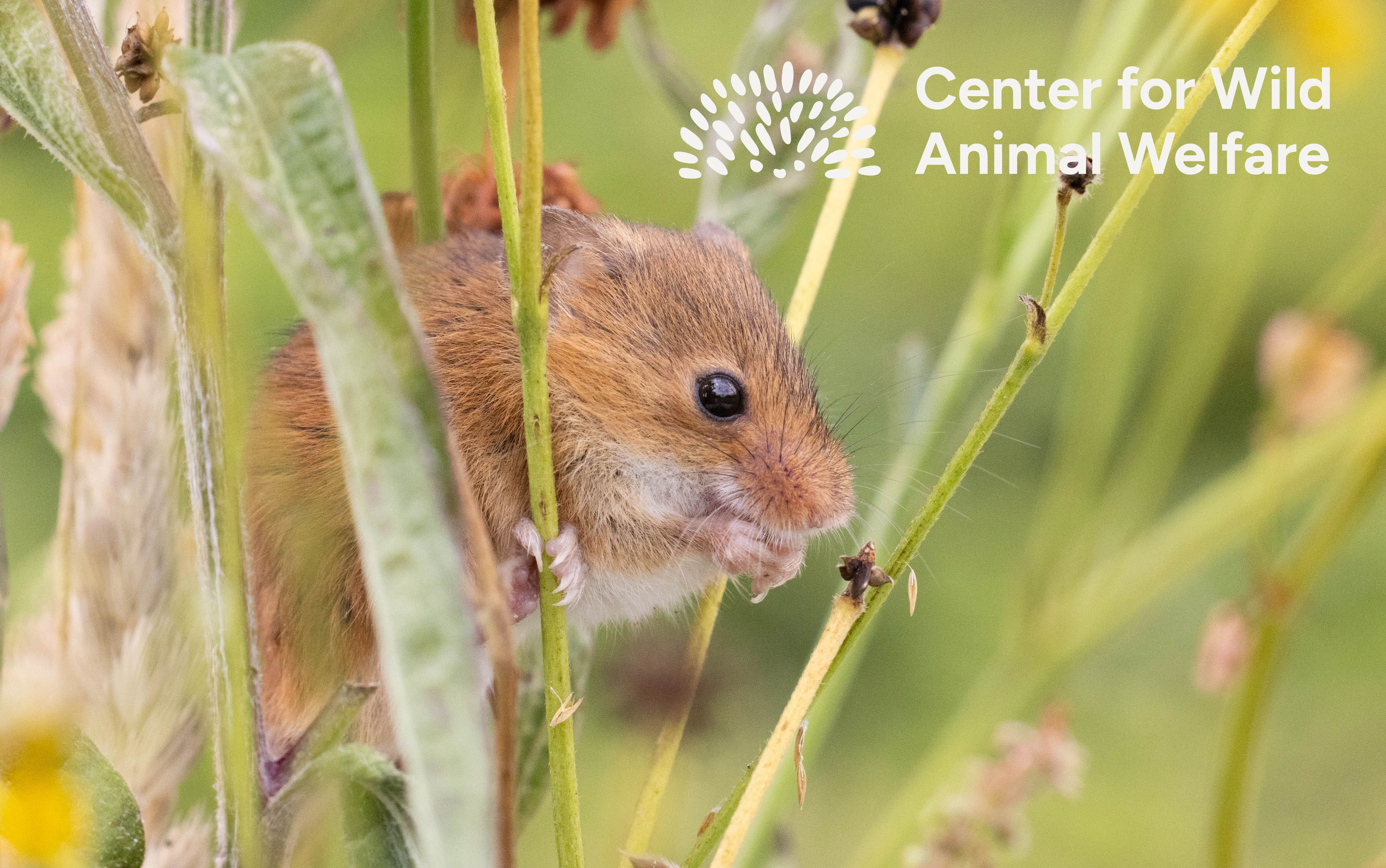
The Center for Wild Animal Welfare (CWAW) works with policymakers in the UK and EU to improve the lives of wild animals.
In 2026, we have focused on helping wild rodents harmed in European pest management:
- We are engaging with regulators to clarify the regulatory pathway for rodent fertility control, which could be a paradigm shift in rodent control methods. The UK Animal Welfare Minister has expressed support for CWAW and our allies to lead a stakeholder group focussed on an appropriate regulatory pathway for wildlife fertility control.
- We are pushing governments to restrict the worst poisons and glue traps. We have met with policymakers to discuss our forthcoming Humane Rodent Management Index, which ranks 30 countries on their rodent welfare policies. And we are acting to influence EU policymakers as they review the regulations covering rat poisons.
Next year, we will continue our work to help rodents and look for more ways to help wild animals. We’re expecting to hire a European Policy Manager to lead our policy advocacy in Brussels and with national governments, and to commission original, policy-relevant research to help us advise policymakers.
We are pleased that CWAW has secured support from a major EA institutional funder for our 2027 budget. We’re still looking to raise $200,000 to fill our budget, so that we can fulfil our plan to expand into continental Europe.
What CWAW achieved in 2026
Standard rodent management techniques cause significant suffering to wild animals. Anticoagulant poisoning takes days to kill a rat through progressive internal bleeding. Rats and mice caught in glue traps gnaw through their limbs in their struggles to escape. With plausibly hundreds of millions of rodents slowly and painfully poisoned each year in Europe alone, rodent management has been called the largest source of anthropogenic wild mammal suffering on Earth.
We believe there are tractable ways to reduce European rodent suffering through public policy. Anticoagulant rodenticides are already on the European policy agenda as an environmental issue, which means there are live and time-sensitive opportunities to advocate for wild animal welfare. And we have also found that, as neglected as this issue is, some European policymakers are already concerned about the stakes for animal welfare.
Please note that due to the nature of our work, which involves direct contact with policymakers, we are sometimes limited in the updates we can provide on a public forum.
Clarifying the regulatory path for rodent fertility control
Fertility control could manage rodent populations by reducing births rather than increasing deaths. Rodent fertility control has been discussed as a wild animal welfare intervention by Rethink Priorities and Wild Animal Initiative, and Mal Graham at Renaissance Philanthropy’s Wildlife Technology Fund is supporting research into new rodent fertility control technologies.
But the regulatory pathway in Europe is unclear and untested, which could discourage investment and bottleneck deployment. CWAW has spent the last year researching the regulatory pathway for rodent fertility control in Great Britain and the EU, including by speaking to scientists, companies, pest controllers, and the relevant regulators from multiple countries.
After we collaborated with leading scientists to write a policy briefing for the UK Animal Welfare Minister, she expressed her support for CWAW and our allies to lead a stakeholder group to share thoughts on how fertility control should be regulated. We are now finalising our policy recommendations and organising the stakeholder group’s meeting, which will be held in early 2027.
Restricting the worst poisons
Rules on rodenticides and glue traps vary widely across European countries, and effectively none were written with target animal welfare in mind. Better restrictions on access and use conditions for the worst poisons, as well as bans on glue traps, could improve wild animal welfare, as long as the substitute control technique is better.
To encourage improvements on rodenticide and glue trap policy, CWAW has built the Humane Rodent Management Index, which ranks 30 European countries on their rodenticide and glue trap rules, as well as their systematic consideration of wild rodent welfare and support for new alternatives like fertility control. A comparative index is a leveraged way to influence policy: it starts a conversation in many countries at once, and encourages a race to the top. This year, we have shared the Index with hundreds of relevant policymakers. Senior officials from multiple countries have engaged substantially, and sympathetic policymakers have told us that this tool will help them push their governments to go further on humane rodent management. We will publish and promote the Index in early 2027.
As well as the Index, CWAW has engaged on EU-level policy opportunities, including developing policy recommendations for the Biocidal Products Regulation (BPR), which sets out how rodenticides are regulated across the EU. DG SANTE, which owns the BPR, has requested our further input as it reviews them. CWAW has also been granted stakeholder observer status at the EU’s Competent Authorities for Biocidal Products expert group, which will help us understand rodenticide policy and access relevant policymakers.
Promoting concern for wild animal welfare
Most of our work is ‘inside game’: we’re establishing relationships with regulators, and presenting technocratic policy recommendations. But we’ve also been engaging with the media to spread concern for wild animal welfare more broadly. We’ve received detailed coverage in The Guardian and Rapporteur (formerly Euractiv; widely read in the Brussels bubble). We’ve also been quoted in outlets like Vet Times and The New York Post. Our takeaway is that, with the right framing, policymakers and journalists are interested in the case for wild animal welfare.
What we’ll do in 2027, and how marginal funding helps

2026 has been about laying the groundwork, and in 2027 we plan to turn that into real policy change. In early 2027, we will:
- Convene the UK stakeholder summit on wildlife fertility control regulations, and present specific policy recommendations directly to the UK government
- Publish and publicise the Humane Rodent Management Index.
Our core 2027 agenda will then include:
- Working with UK policymakers to put our fertility control policy recommendations into practice
- Building the case for rodent fertility control in the EU, and advocating for EU-level wildlife fertility control policy reforms
- Searching for public funding opportunities to speed up research and development in rodent fertility control
- Working with policymakers across Europe to help them adopt our priority recommendations from the Humane Rodent Management Index, and tracking their progress ahead of the next edition
- Continuing to push for welfare-based restrictions as the EU revises the Biocidal Products Regulation
- Building political support for wild animal welfare, including by reporting to elected officials on the wild animal welfare dimension of wildfires
- Scoping the next near-term wild animal welfare interventions, including by exploring opportunities in wild animal diseases.
We want to expand our team with a European Policy Manager to make the most of the policy opportunities available to us in 2027. We’re looking for a hire to lead policy advocacy in Brussels and with national governments. We’re expecting our contact with European governments to increase significantly next year, especially after the publication of the Humane Rodent Management Index.
We also want to commission original, policy-relevant research next year. This will look different from cause prioritisation research or wild animal welfare science in that it will focus on applied questions to directly inform policymaking. Examples might include developing an economic assessment of the costs of regulatory uncertainty in wildlife fertility control, supporting our work to scope out pathways to market for rodent fertility control agents in the EU, and developing a method for weighing target animal welfare in rat poison product assessments.
How does marginal funding help us fulfil our 2027 agenda? We’re pleased that a major EA funder has committed to cover core salaries and support our research budget, and we’re looking for $200,000 to complete our 2027 budget. The next ~$75k that we raise is essential to cover our operating costs (e.g., meeting policymakers in Brussels and national capitals, running events like the stakeholder meeting, attending conferences, software, fiscal sponsorship). We have budgeted a further ~$125k, which would be split between completing an ambitious research agenda and building reserves, providing financial security as we onboard our first hire.
How to help
You can help the Center for Wild Animal Welfare by donating towards our 2027 budget at every.org. CWAW is a fiscally sponsored project of Rethink Priorities, so you can also donate to Rethink Priorities through Giving What We Can, but you must forward the receipt to development@rethinkpriorities.org and team@wildanimalwelfare.org, asking for the donation to be restricted to CWAW.
Supporters in the UK can claim gift aid by donating through Giving What We Can.
Donations through every.org are tax deductible in the US, and donations through Giving What We Can are tax deductible in the Netherlands. We should be able to arrange tax deductible donations for supporters in Canada giving at least $2000, in Germany giving more than €5000, and in Switzerland giving more than CHF 5000. Please get in touch at team@wildanimalwelfare.org to discuss tax deductible donation options, including from countries not mentioned here.
If you would like to discuss our plans and budget in more detail, please do not hesitate to reach out to Richard and Ben at team@wildanimalwelfare.org.
13


Hello Ben and Richard. Thanks for the update.
How did you estimate this? For context, 12.2 billion poultry birds were killed in Europe in 2024.