Comments
Sometimes rationalist-y people and lawyers really like to use/insist on maximally precise/literal language or legalese. I have a word for lawyers who do this in my business interactions with them; shitty lawyers.
I'm somewhat sympathetic to these people since it allows for exact communication and for some, it makes truthful information sharing easier. However, this just isn't how the world works. What you point to simply isn't fraud by the commonplace usage of the word. What you mean is that by your interpretation, they should advertise 285 piglets/dollar and not 354 and that you don't think their reason for stating 354 isn't well supported.
Again, this over-the-top and inflammatory language is hurting rather than helping you and the animal welfare movement.

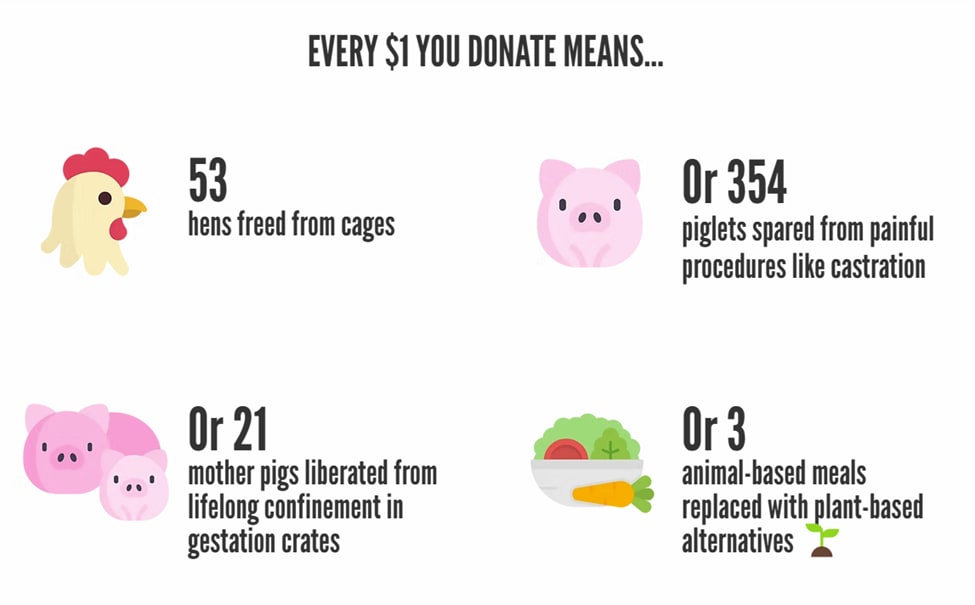
"A fraudulent charity" does not sound to me much like "a charity that knowingly used a mildly overoptimistic figure for the benefits of one of its programs even after admitting under pressure it was wrong'. Rather, I think the rhetorical force of the phrase comes mostly from the fact that to any normal English speaker it conjures up the image of a charity that is a scam in the sense that it is taking money, not doing charitable work with it, and instead just putting it into the CEO's (or whoever's) personal bank account. My feeling on this isn't really effected by whether the first thing meets the legal definition of fraud, probably it does. My guess is that many charities that almost no one would describe as "fraudulent organizations" have done something like this or equivalently bad at some point in their histories, probably including some pretty effective ones.
Not that I think that means Singeria have done nothing wrong. If they agree the figure is clearly overoptimistic they should change it. Not doing so is deceptive, and probably it is illegal. But I find it a bit irritating that you are using what seems to me to be somewhat deceptive rhetoric whilst attacking them for being deceptive.
There’s also a big difference between what’s technically illegal and what a court would realistically punish a person or an organization for doing, since the courts rely on discernment or, more fittingly, judgment. The latter is much more relevant for deciding whether you should use the word "fraud" in the title of a post about a charity.