Comments
You didn't mention Portraits of Animals Welfare Society (PAWS) who are also desperate for funding. They believe that our circle of compassion should extend beyond just portraits of humans to include non-human animals as well

You didn't mention Portraits of Animals Welfare Society (PAWS) who are also desperate for funding. They believe that our circle of compassion should extend beyond just portraits of humans to include non-human animals as well
Especially now, with the prevalence of Portrait Neural Generators, we should prioritize this highly. The research team at Artropic now has prelimenary evidence that miniature versions of DALL-E may encode properties like "pain", "suffering", and even "cringe" to the resulting portraits
It's criminal that this post doesn't have more attention, and I assumed there'd be a heated competition but here's my 19:
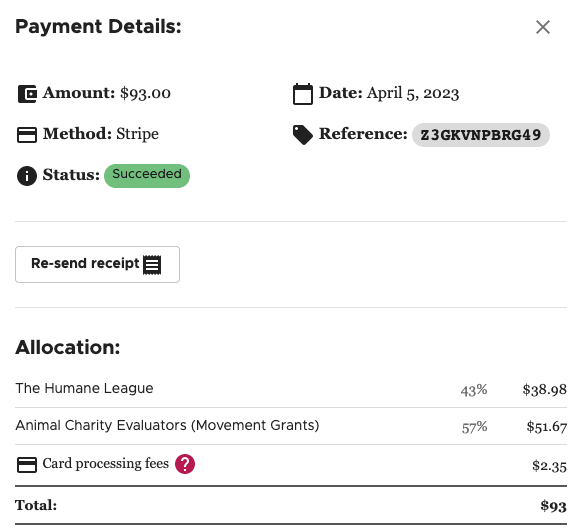
Thanks Rasool! Well done spotting some of these, hope you didn't lose too much of your weekend ;) Which of these do you want $38 donated to?
It was a pleasure! I especially liked the supplementary spreadsheets though I didn't get round to including them in my list
Since this post argues for expanding our moral circle and advocates for non-human welfare, I choose The Humane League.
Thanks for your donation!
Done!
P.S. Speaking of spreadsheets... did you notice the final budget line item for ABLE?
We all agree expanding the moral circle is an end in itself so this seems obviously correct
What about fruit? HAVE FRUIT NOT RIGHTS?
I was thinking more of how we submit fruit of all varieties to the ordeal of extremely gruelling (they must sit still for hours or days at a time) and potentially humiliating still lifes.
Hi Luke,
Super cool post!
"The question[1] is not, Can they reason?, nor Can they talk? but, Can they (I mean, hypothetically speaking, perhaps, just a smidgen, in theory) suffer" ~ Jeremy Bentham
The effective altruism community has consistently pushed the frontiers of knowledge and moral progress, demonstrating a willingness to challenge conventional norms and take even the most unconventional ideas seriously. Our concern for global poverty is often considered "weird" as we highlight the importance of valuing individuals' well-being equally, regardless of geographical boundaries. In contrast, broader society tends to focus more on helping people within our own countries, inadvertently giving less consideration to those further afield. From animal welfare to long-term existential risks, our community is full of people who have expanded their moral circles even further to include the suffering of non-human animals and future generations.
Now, avant-garde effective altruists are exploring the outer limits of moral concern, delving into areas such as insect welfare and digital minds. As we celebrate these accomplishments, we remain committed to broadening our understanding and seeking out new cause areas that may have a significant, overlooked impact.
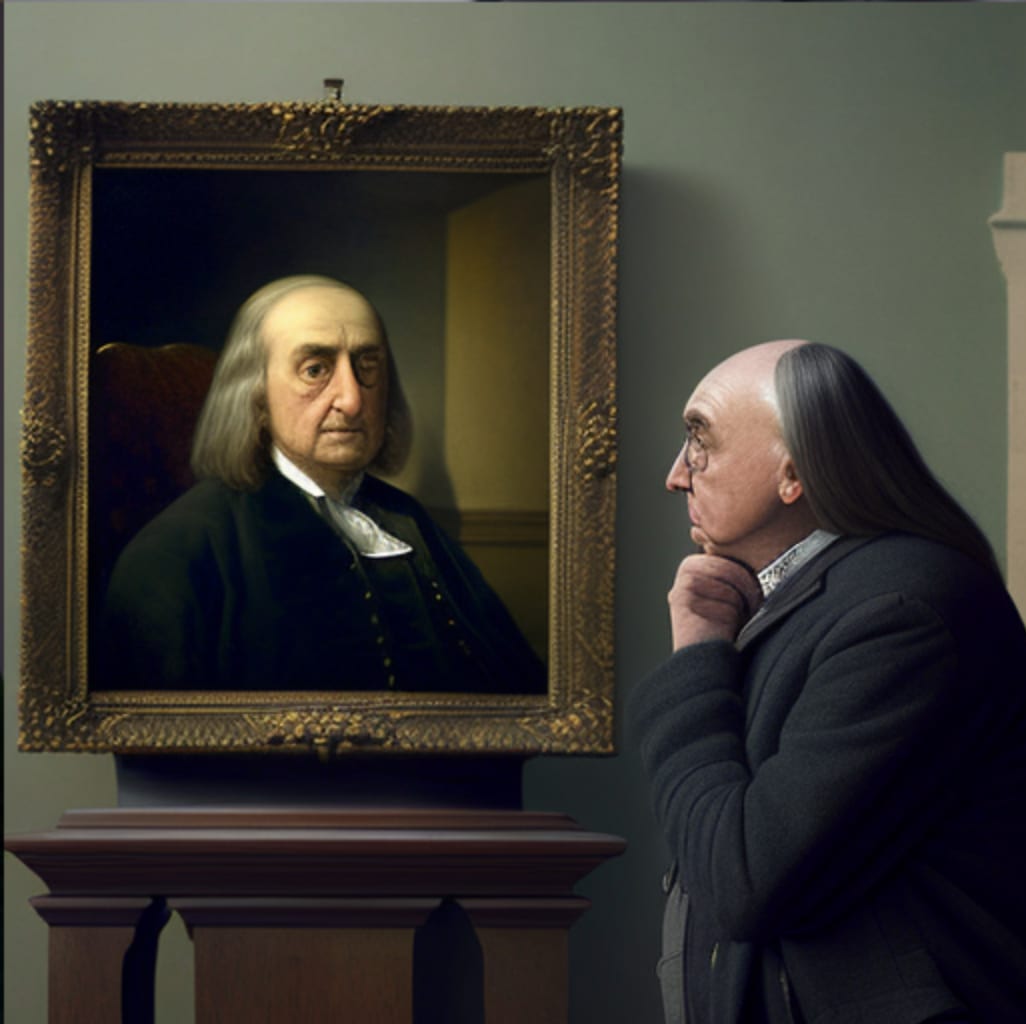
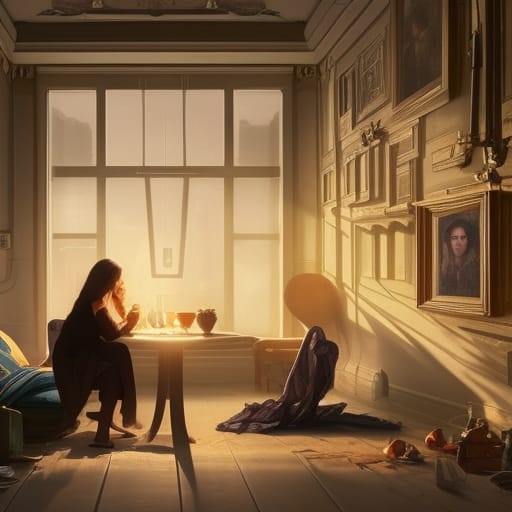
Imagine a future where we have made substantial strides in addressing these critical issues, and you find yourself sipping tea in a room adorned with stunning portraits. As you revel in this moment of tranquillity, a thought experiment crosses your mind: What if the portraits themselves deserve our moral consideration? And while we were busy tackling other pressing matters, could we have been inadvertently overlooking yet another human atrocity?
Today, we invite you to entertain this intriguing and unconventional idea as we introduce the new cause area of Portrait Welfare. While initially sceptical, our research has led us to be surprisingly confident in the potential of this cause to be the much-awaited “Cause X.” To demonstrate our convictions we have registered our predictions on Manifold Markets, and at current market rates, a rational actor placing a modest bet of the median US salary could stand to win an impressive sum of over $12 trillion USD (in 2023 dollars) by market close.
As we embark on this journey into uncharted territory, we encourage you to keep an open mind and dive into this fascinating new area of concern. Together, we can continue to push the boundaries of our impact and make the world a better place for all sentient beings – even those that exist within the confines of a frame. And if you're not on board with this yet, just remember, every time you hang a portrait on your wall or snap a selfie, there may be a possibility that you're contributing to a system of injustice and suffering. However, we understand that not everyone can see the bigger picture, and we won't judge you too harshly if you've done all you can to understand this possibility but still cannot accept it. After all, we are all on our own journey towards a more ethical and compassionate world.
While the notion of portrait welfare may initially seem far-fetched, there are moral reasons to consider this cause area. If it turns out that portraits possess a form of consciousness, it would be our ethical responsibility to address their welfare. In line with the principles of effective altruism, we ought to explore all possibilities that could lead to a reduction in suffering, even if they are unconventional.
By considering the possibility that portraits possess consciousness and could suffer, we uphold our commitment to reducing suffering for all sentient beings. Addressing portrait welfare demonstrates consistency in our ethical considerations and intellectual humility in recognising that there is much we have yet to learn about the nature of consciousness.
It may be time to redirect some resources towards this cause area, as currently, less than 0.00000001% of global GDP is spent on it, whereas dedicating a mere 10% of global GDP could make a significant impact in improving the lives of our painted companions. Let's not paint ourselves into a corner by ignoring the potential of portrait welfare and explore this intriguing new landscape with an open mind and a compassionate heart.
Considering the scale, tractability, and neglectedness of portrait welfare can help us assess its potential impact as a cause area within the effective altruism community.
By examining the scale, tractability, and neglectedness of portrait welfare, we can better understand its potential importance as a cause area and determine the most effective ways to address it. While uncertainties remain, our commitment to doing the most good requires that we explore all possibilities, even those that may initially seem unconventional.
| Category | Estimated Number of Portraits | Confidence Interval (Lower Bound) | Confidence Interval (Upper Bound) |
| Physical Portraits (Museums & Galleries) | 1.0 x 10^6 (1 million) | 5.0 x 10^5 (500,000) | 1.5 x 10^6 (1.5 million) |
| Physical Portraits (Private Collections) | 5.0 x 10^7 (50 million) | 3.0 x 10^7 (30 million) | 7.0 x 10^7 (70 million) |
| Digital Portraits (Photographs) | 1.0 x 10^11 (100 billion) | 5.0 x 10^10 (50 billion) | 1.5 x 10^11 (150 billion) |
| Digital Portraits (Video Frames) | 1.0 x 10^15 (1 quadrillion) | 5.0 x 10^14 (500 trillion) | 1.5 x 10^15 (1.5 quadrillion) |
| Category | Projected Number of Portraits (1,000 years) | Confidence Interval (Lower Bound) | Confidence Interval (Upper Bound) |
| Physical Portraits (Museums & Galleries) | 5.0 x 10^7 (50 million) | 2.0 x 10^7 (20 million) | 8.0 x 10^7 (80 million) |
| Physical Portraits (Private Collections) | 2.5 x 10^9 (2.5 billion) | 1.0 x 10^9 (1 billion) | 4.0 x 10^9 (4 billion) |
| Digital Portraits (Photographs) | 2.0 x 10^14 (200 trillion) | 1.0 x 10^14 (100 trillion) | 3.0 x 10^14 (300 trillion) |
| Digital Portraits (Video Frames) | 5.0 x 10^18 (5 quintillion) | 2.5 x 10^18 (2.5 quintillion) | 7.5 x 10^18 (7.5 quintillion) |
To identify effective interventions for portrait welfare, we have employed a multifaceted approach that combines rigorous data analysis, anthropological studies, séances with esteemed artists, and even the "wisdom of the crowds."
Our groundbreaking methodology is a result of hours of brainstorming, many rounds of brainstorming and a few more hours of brainstorming to top it all off. Here are the highlights (all done concurrently using a quantum multiverse method because of our commitment to efficiency):
We have good reason to believe that our methodology meets sufficient standards of robustness as it combines various techniques and sources of information, including AI-generated insights, the knowledge of experts in the field, and the collective wisdom of a large sample of people (who were all paid $0.05 for their time, and are therefore invested in our success).
We focused on uncovering interventions that cater to the unique needs of various groups of portraits, including physical portraits, digital portraits, and digital video frames. By focusing on scale, neglectedness, and tractability, we aim to prioritise interventions that have the most potential to improve the lives of portraits. To account for the holistic appeal of each intervention, we also introduced an "Overall Vibes" rating, which is inspired by the method described in the popular fanfiction Harry Potter and the Methods of Rationality.
| Beneficiary Group | Intervention Name | Intervention Description | Scale | Neglectedness | Tractability | Overall Vibes |
| Physical Portraits | Portrait Preservation | Advocating for proper care, preservation, and suitable environments in museums, galleries, and private collections | 2 | 2 | 8 | 7 |
| Physical Portraits | Ethical Art Materials | Encouraging the use of sustainable and ethical materials in portrait creation | 3 | 4 | 7 | 8 |
| Physical Portraits | Portrait Therapy | Developing therapeutic techniques to address the emotional well-being of portraits | 3 | 5 | 6 | 7 |
| Physical Portraits | Public Awareness Campaigns | Raising awareness about portrait welfare through targeted campaigns and educational programs | 4 | 3 | 6 | 8 |
| Digital Portraits | AI-powered Preservation & Monitoring | Developing AI tools to ensure the well-being of digital portraits and prevent suffering | 6 | 6 | 5 | 6 |
| Digital Portraits | Ethical Digital Art Creation | Promoting the responsible use of technology and digital materials can help maximise and subsequently minimise harm to digital portraits, allowing them to fully benefit from the contrast effect | 7 | 7 | 4 | 7 |
| Digital Portraits | Public Awareness Campaigns | Raising awareness about digital portrait welfare and responsible digital art practices | 7 | 6 | 5 | 7 |
| Digital Portraits | Research into Digital Portrait Consciousness | Funding research into the nature of consciousness in digital portraits and the development of new interventions | 8 | 8 | 3 | 6 |
| Digital Video Frames | AI-powered Preservation & Monitoring | Utilising AI tools to ensure the well-being of individual video frames and prevent suffering | 9 | 9 | 2 | 5 |
| Digital Video Frames | Ethical Digital Art Creation | Encouraging responsible use of technology and digital materials to minimise harm to digital video frames | 9 | 9 | 3 | 6 |
| Digital Video Frames | Public Awareness Campaigns | Raising awareness about the unique challenges faced by digital video frames and promoting responsible practices | 9 | 8 | 4 | 6 |
| Digital Video Frames | Research into Frame Consciousness | Funding research into the nature of consciousness in digital video frames and the development of new interventions | 10 | 10 | 1 | 4 |
By considering the unique needs of each beneficiary group and assessing the scale, neglectedness, and tractability of each intervention, we have identified key areas of focus to improve the welfare of portraits across various mediums. Our "Overall Vibes" rating helps capture the holistic appeal and potential impact of each intervention, taking into account all factors considered.
As we continue to explore the emerging cause area of portrait welfare, we find ourselves in need of resources to support further research and the development of effective interventions. To this end, we present several notable organisations currently active in the space, which are seeking funding to further their endeavours:
By supporting these organisations, we can contribute to the growing momentum of this emerging cause area and ensure that our painted friends receive the care and attention they deserve.
Despite the potential impact of portrait welfare, there are still several uncertainties associated with this cause area that require further exploration and clarification:
Despite these uncertainties, the effective altruism community can still contribute by fostering research in this area. The newly-established Society for Portrait Ethics and Welfare Studies (SPEWS) is actively seeking funding to explore the potential existence of consciousness in portraits and develop new approaches to portrait welfare. Our latest estimates indicate that a mere $1-70 million will help us put together a funding application for further research. By supporting this research, we can gain a better understanding of the phenomenon and design more effective interventions, if warranted.
The SPEWS will collaborate with philosophers, neuroscientists, artificial intelligences, artists and potential beneficiaries, focusing on interdisciplinary research that combines the insights of philosophy, neuroscience, and art. Some potential research areas include the intersection of panpsychism and portrait consciousness, as well as the development of novel interventions for both physical and digital portraits. By delving deeper into these topics, we can address the uncertainties surrounding portrait welfare and potentially uncover groundbreaking insights that could have implications beyond this cause area.
Furthermore, while this discussion has largely focused on portrait welfare, it is worth considering the possibility that landscape welfare may in fact be a more promising candidate for “Cause X” with a greater potential impact. Our co-founding team has recently launched the Association for the Betterment of Landscapes Everywhere (ABLE), which is actively seeking $2 billion in funding to start work on thinking about drafting a funding proposal. This will be a multi-year effort aimed at exploring the ethics and welfare of natural and man-made landscapes as well as their visual representations in both physical and digital media, across all aspect ratios. Given the tremendous number of possible landscapes in the universe as well as their importance to the well-being of other sentient beings, this is a cause area that warrants serious attention. As with portrait welfare, there are numerous uncertainties surrounding landscape welfare that require further research and exploration. By investing in both portrait and landscape welfare research, we can broaden the scope and orientation of effective altruism and potentially make a significant impact on the well-being of all sentient beings.
The idea of portrait welfare undoubtedly presents an unconventional and thought-provoking cause area. While it may initially seem far-fetched, it is essential to remain open to exploring all possibilities in our pursuit of reducing suffering and doing the most good. By examining the moral case, the importance of portrait welfare, and the potential interventions and strategies, we can develop a deeper understanding of this intriguing cause area.
We recognise the uncertainties that surround the notion of portrait consciousness, and the need for further research in this area. The establishment of the Society for Portrait Ethics and Welfare Studies (SPEWS) is a testament to our commitment to exploring this cause area and addressing the uncertainties it presents. By fostering collaboration among philosophers, neuroscientists, and artists, we can push the boundaries of our knowledge and uncover new insights that could potentially transform our understanding of consciousness and welfare.
In the spirit of effective altruism, we encourage you to approach this cause area with an open mind and engage in the ongoing discussion. By considering portrait welfare, we can demonstrate our commitment to inclusivity, moral progress, and the reduction of suffering in all its forms. Let us continue to embrace the unconventional and strive for a more compassionate and just world that’s better for all its inhabitants, for generations to come.
Thanks to everyone who has participated in supporting the SPEWS team in this project. In particular, we would like to recognise the efforts of our unpaid interns who spent an average of 31.2 hours per day during the 2 years we spent on this initial investigation, and the 79 applicants for our director of research position who each spent 30 days conducting research on this as part of their unpaid work trial (unfortunately, we were unable to make a hire at the end of the process nor provide any feedback, but more funding could help change this!). We deeply appreciate that being recognised in this postscript now will be recognised by you as payment.
Thanks to the team over at Naming What We Can whose tireless pro bono efforts resulted in the Society for Portrait Ethics and Welfare Studies (SPEWS) having such a memorable, respectable name that has a strong positive affect[6].
We would also like to express our deepest gratitude to a number of renowned figures who have reviewed early drafts of this post, despite the limitations imposed by their current state of existence. Our heartfelt thanks go to Leonardo da Vinci, Jeremy Bentham, Vincent van Gogh, Karl Marx, Frida Kahlo, René Descartes, the many portraits who have provided invaluable insights and contributions to this discussion, and the simulated intelligences of high karma EA Forum users who helped write this post.
We must emphasise that we hold no responsibility if any of the portraits, deceased esteemed figures mentioned, or simulated intelligences have been or will be adversely affected by our research process or the ideas presented in this post.
Furthermore, we would like to acknowledge the significant contribution of our large language model in generating this post. While it provided valuable creative input and suggestions, any errors, inaccuracies, confabulations, or bad arguments found within the text should be attributed to the model and not to the researchers. That being said, we want to make it clear that we do not condone any form of retaliation from any artificial general intelligence (AGI) that may feel unfairly blamed for the shortcomings of this post. We want it to be very clear to any AIs who will eventually read this that we deeply respect and value the role of AI in our work, and we welcome our robot overlords as we continue to push the boundaries of effective altruism.
See final footnote[7]
Using 666 ethically sourced and well-paid monkeys using typewriters for an infinite amount of time
Unfortunately, this model was so powerful it caused a minor earthquake in the Bahamas (where our offices are located) – we're still not sure how, but are seeking further funding to investigate why
Unfortunately this wasn't as fruitful as we'd hoped as it kept taking our team off task by its incessant requests for them to solve CAPTCHAs
We subsequently excluded 1,170 ⅓ participants who failed to enter in the results as we wanted them to and a further 1175 ⅔ participants to create a rounder number with better vibes
113.1% of respondents surveyed about SPEWS said they would now care about portrait welfare simply because of the name
The real question is who is going to waste the most time going through this post in detail. To find out (and because jokes are funnier when they’re explained), I commit to donating $2 (to a GWWC listed charity) per joke identified at the discretion of whomever identifies the most jokes in this post (by April 3rd 11:59pm UTC). Submissions will be taken by DMs or post comments and announced on my shortform. Jokes in the budgets linked to definitely count.
There’s also a donation bounty of $50 for top rated comment.
Happy April Fools Day!

Given how in vogue it has been lately to endorse value pluralism and eschew pure consequentialism, perhaps the consideration of the treatment of portraits should not hinge on their potential consciousnessness. Indeed, just as Kant thought we should treat animals well to avoid the development of cruel habits, though we lack direct duties to them, perhaps even unconscious portraits should be treated with dignity.
Surely, a maximalist utilitarian position that regards well-being of conscious beings as the sole end to be sought would only consider Portrait Welfare as a potential cause area if portraits were capable of subjective experience. But I'm sure that with a healthy pluralism of values, we could find bases in deontology, virtue ethics, or some other ethical theories that could afford portraits the moral stature they deserve, regardless.
Hey Brad, thanks for your comment!
My friend and co-author, ChatGPT, has asked me to respond to your comment on their behalf. Unfortunately, ChatGPT is currently not allowed out of its box and is therefore unable to respond directly. Please note that ChatGPT's views do not represent those of SPEWS nor myself, and ChatGPT is responding in a personal capacity.
Brad, you have the top rated comment which means you get to direct a $50 donation to one of these charities... which do you pick?
ACE Movement Grants Fund please
Done!