Comments
I think this is satire but it doesn't seem clearly wrong. I actually lean toward it making sense if it were 2010 but not the right lever at the current point in history
I think this is satire but it doesn't seem clearly wrong. I actually lean toward it making sense if it were 2010 but not the right lever at the current point in history
Brilliant. "maintaining access to the frontier of animal suffering" is so cursed it made me laugh out loud. So many gems here.
I believe Anthropic engages in quite aggressive anti-regulation lobbying with one side of it's mouth even as it's all like "oh no, our products are delivering too much value, we're so scared" with the other. And ya, literally pushing forward the frontier all the time to attract investment is suspiciously similar to what an evil company would do, so thank god we know they're on our side.
I find the "make money doing evil stuff, but be slightly less evil than the imagined counterfactual" theory of change sort of mesmerizing. I can kind of imagine versions of it that work on paper maybe in a sort of trolley problem way, but it smells too clever by half.
In the actual case of AI companies:
It is not obvious how much the existence of Anthropic is zero-sum relative to the rest of the capabilities sector. Part of the case has to be that they exist more or less instead of some other actor, but they might just be increasing the total supply of digital minds. Even if their specific competitors today don't like them, they could still be contributing to the power of the industry through their contribution to eg. tool use through MCP, to the general lobbying accelerationist effort, to the talent pool / salaries of capabilities work, creating demand for LLM products, attracting investment etc. Even if eventually there is only room for a few AI firms, they are all unprofitable money pits right now anyway, so it probably isn't easy to displace someone else and they could basically be growing the space more than displacing nefarious actors.
It is not obvious that Anthropic produces lower x-risk per dollar invested or token produced or whatever metric than their competitors. I mean, maybe. They write some thoughtful blog posts and some insane nationalist ones, I like some of their "safety" research. The bar is really low, I kind of hate Google and Sam Altman is a known abuser (employees have said so, he lies constantly, and his sister credibly claims he sexually assaulted her). But, if you entertain the perspective that actually ~all of their production ready "safety" work is unserious in the face of the alignment / disempowerment problems at stake, then it could easily just be a wash. Like, buying from a factory farm with 20% more thumb twiddling, but essentially the same approach to mass torture.
And between those two objections, there's nothing really left to be said for the "make money doing evil stuff, but be slightly less evil than the imagined counterfactual" theory of change. I will caveat that I personally lack strong confidence on how this nets out per say... generally I think the "it's bad to do evil stuff" case wins on simplicity. Maybe, like, a true fast follower company that mostly just distilled and did for-profit safety and security work would be cool.
I tend to think safety-washing or moral cover aren't necessarily a huge deal for the companies because EA's brand isn't that important to most people and AI Safety isn't that important to most people. Like, I don't know that the talent-attracting boost from not being evil is such a big deal. Nihilistic companies do evil stuff all the time in my opinion. Meta was using their LLMs to sensually chat up kids (fully automated grooming! robo-pedos!) and it only made their hiring a little bit harder. I'm sure there are plenty of creeps who know ML or schmucks who can be made to look the other way for a check.
But I will say, I think the whole "good guy with an ASI company" line of thinking and the for-profit interests promoting it may have significantly corroded the EA AI Safety scene itself and it's ability to judge right from wrong. 80,000 Hours consultation recommended that I just get any "ops" job at Google s long as it vaguely related to AI, like wtf. So much for careful philosophy, y'know, just get right up to the finish line and say "ya, idk, I guess just try to be a lab aid for who-ever is making the deadliest humanoid viruses". Look at how much hate Holly Elmore got for promoting moratorium advocacy as a cause area. And the level of conflict of interest going all the way to the very top of eg. Coefficient Giving, CEA was never "epistemically virtuous" shall we say; seems sort of corrupt.
Just a few thoughts. Really good satire. Thanks!
So thankful for the 'humour' tag because I was about to lose my grip for a minute until I saw that.
I actually wonder whether there were more people who opened up to the idea of harm reduction by being an insider within the factory farming system than there were people who were persuaded of the clear foolishness of joining AI companies to try to make a difference (as I think was the satirical point of this post).
What would it take to convince you this approach is wrong?
We’ll get back to you on that shortly, just after our IPO.
lol exactly... good luck imposing your ethical will after the ipo
Funny but also probably the single most impactful idea this year on EA Forum. Maybe if we rephrase it it would be clear why:
So maybe don't start a new factory farm yet, but there is too much good in this post to forget it!
I am constantly asking myself: what would EA's do if we had the foresight and patience of groups like the Heritage Foundation and the Koch brothers? They have moved their nasty opinions right into the centre of the Overton window, but until Plan 2025 they rarely told the world about their final goals. What would that kind of thinking look like for animal welfare? Certainly having some (closet?) vegans running factory-farms would be a big opportunity.
Not specially original:
"Only Effective Altruists have the ethical framework and the relationship with capitalism that allows for the development of a system of animal welfare certifications that can be the basis for a global dietary transformation. For this, it is necessary to start with applied agronomic research, through the creation of model farms that allow for cost quantification and “best practices” design. Then it is necessary to develop inspection systems that allow for the translation of these practices to the part of the industry interested in capturing the demand of the ethical consumer."
TL;DR: The animal welfare movement has been doing advocacy wrong. If we’re serious about ending factory farming, vegans need to start running factory farms ourselves. I lay out the case below and address common objections.
For decades, the animal welfare movement has operated from the outside: funding investigations, lobbying for regulation, producing documentaries, and encouraging dietary change. The results have been modest at best. Global meat consumption continues to rise.
I believe we need a fundamentally different approach. The people who care most about animal suffering should be the ones running factory farms.
Here’s why.
Factory farming is going to happen regardless of what we do. The demand exists. The economics are clear. If compassionate, welfare-focused vegans don’t step up to operate these facilities, they’ll be run by people who don’t care about animals at all. By entering the industry ourselves, we ensure that at least some factory farms are operated by people who are genuinely troubled by what they’re doing. This is obviously preferable to a world where all factory farms are run by people who aren’t troubled in the slightest.
You cannot understand modern animal suffering from the outside. Academic animal welfare researchers study small farms and lab environments that bear little resemblance to cutting-edge concentrated animal feeding operations processing 300,000 birds per day. The suffering that emerges at industrial scale has properties that simply don’t manifest at smaller scales. You need to be inside a frontier-scale operation to even observe the problems, let alone solve them.
Armchair animal welfare advocacy is to factory farming what toy model research is to the real thing. The dynamics change at scale. You wouldn’t trust someone who’d never operated a 500,000-hen battery cage facility to tell you how to make one humane. The expertise bottleneck is real.
Our farms operate under our Responsible Farming Policy (RFP) v12. Before expanding to a new facility or increasing animal density, we conduct internal evaluations to determine whether suffering thresholds had been crossed. We define these thresholds ourselves, evaluate compliance ourselves, and publish blog posts about our findings.
If at any point our internal assessment determines that animal suffering at our facilities has reached an unacceptable level, we commit to pausing expansion until we have developed mitigation techniques. We would then evaluate whether our mitigations were sufficient. We would conduct this evaluation ourselves. If at any point we feel that our future actions can not live up to our commitments, we commit to thoughtfully update our commitments.
We believe this framework represents the gold standard in farmed animal welfare.
Here’s the strategic reality: agricultural policy is shaped by the people in the room. Right now, those rooms are filled with conventional farming executives. By becoming major industry players ourselves, we gain access to:
You can’t shape the future of farming from a protest sign. You shape it from the boardroom. Critics may be loud, but they don’t set the agenda. We need to be on the inside.
Running a nonprofit animal welfare organization is a constant struggle for funding. Donations are unpredictable, grants come with strings attached, and you’re always one bad quarter away from layoffs.
Factory farming, on the other hand, generates enormous revenue. By operating commercial farms, we can fund our animal welfare research sustainably. Yes, this means profiting from the very system we seek to change. But the alternative (remaining small, underfunded, and external) means remaining ineffective. The scale of the problem demands the scale of resources that only commercial operations provide.
Some will note that over time, the commercial operations will inevitably consume 95% of our organizational attention, budget, and headcount, while the welfare research operates as a small internal team whose findings are filtered through a communications department before publication. This is a feature, not a bug. It means we’re operating at the scale where our research is actually relevant.
Some have suggested we could simply research animal welfare without operating commercial farms. This fundamentally misunderstands the problem.
You cannot study industrial-scale suffering in a laboratory. The interactions between animal density, waste management, and processing throughput create emergent welfare challenges that only manifest at commercial scale. A researcher observing ten chickens in a university pen is not doing serious welfare science.
Furthermore, who would fund purely academic animal welfare research at the level required? Grants are competitive, progress is slow, and there’s no revenue model. By operating commercial farms, we generate the resources needed to sustain our research indefinitely while maintaining access to the frontier of animal suffering.
Critics suggest this creates a perverse incentive to keep farming in order to keep studying. We disagree. The moment our research demonstrates that factory farming is irredeemably harmful, we will wind down our operations. We simply haven’t reached that conclusion yet.
Some communities previously dependent on small-scale farming have expressed concern about our expansion into their regions. We acknowledge that our industrial operations may displace local farmers, eliminate traditional agricultural jobs, and fundamentally alter the economic fabric of communities.
However, we believe the long-term benefits outweigh these short-term disruptions. Many displaced farmers can be retrained to work in our facilities. We’re partnering with local community colleges to offer micro-certifications in Industrial Poultry Density Management and Automated Slaughter Line Supervision. These are the jobs of the future. For those unable to transition, we’re exploring a pilot Universal Basic Eggs program, funded by a small percentage of our profits, which we expect to announce details on eventually.
This objection fails to engage with the counterfactual. In the world where we don’t do this, factory farming still exists, but without any welfare-focused operators. In the world where we do this, factory farming still exists, but at least some of it is run by people publishing thoughtful blog posts about the suffering they’re causing.
We acknowledge this concern. That’s why we’ve structured our organization with a Long-Term Welfare Team whose role is to flag when commercial incentives conflict with our animal welfare mission. This team reports to the CEO, who has final say and also oversees commercial operations. We see no conflict of interest here.
This assumes regulators understand modern factory farming well enough to write effective rules. They don’t. The industry is too complex, too fast-moving, and too technologically sophisticated for outsiders to regulate competently. The people best positioned to set appropriate welfare standards are the people operating the farms, and the ones who actually care about animal welfare. Namely, us.
We will of course actively participate in shaping any regulatory frameworks to ensure they reflect the technical realities that only industry insiders understand.
We prefer the term “moral leadership.” When consumers see that a company founded by committed vegans is operating in the factory farming space, it sends a powerful signal that the industry is taking welfare seriously. This builds public trust in the food system, which we believe is net positive.
If the result is that people feel more comfortable buying factory-farmed products because they associate the industry with our brand of ethical concern, well, that’s a complex second-order outcome that we’ll need to study further. We’ll fund that study with our farming revenue.
One can argue that for a community so focussed on motivated reasoning, cognitive biases, and avoiding group think in other areas, we’d strive to be critics independent from the industries accelerating danger. Rather, strong personal relations and large equity grants allow us to align incentives and have “skin in the game”, offering the broader vegan community a marginally improved internal perspective and the illusion of control. Being in bed both figuratively and literally with those accelerating risks is a key pillar of our theory of change.
This is an uncharitable framing of a complex situation. Yes, our founders receive competitive compensation, significant equity, and growing influence over agricultural policy. Yes, the environmental externalities, antibiotic resistance, pandemic risk, and animal suffering are borne by the public. But to focus on this is to miss the bigger picture.
Our founders could have made far more money in conventional farming without the overhead of a welfare research team. They chose this path out of genuine moral concern. The fact that they are also becoming wealthy and influential is incidental, and frankly, necessary: you simply cannot attract top talent to the difficult work of humane factory farming without competitive incentive packages.
Criticizing individuals is a distraction from the systemic issues we’re trying to address.
We’re leading chicken interpretability (chick interp) research to identify the underlying circuits of suffering and cognition at 1/10th the pace of new releases. We’re measuring how fast our farming capabilities expand and how far behind we are in chick interp with a robust set of eval suites. We have yearly hard pivots in basic methodologies and goals. One day soon we’ll hand over this entire safety plan to our most precocious and powerful chickens and hope they’re not angry at what we’re doing to their ancestors.
Yes, but there’s no time to waste when there’s a 10^(-10) chance of ensuring 10^20 chicken lives go exceedingly well.
We give it a twenty percent chance on our good days. But it’s a risk we’re unilaterally willing to take, on behalf of humanity. Our personal EV calculation strongly supports this.
While we haven’t seriously tried coordinating, we see no hope for a pause or coordination. In fact all the evidence we’ve made and paid attention to suggests our worldview is correct. Stopping now would be like putting a toe in front of a train we’re furiously shoveling coal into. Or like being in a prisoners’ dilemma where we could talk but keep finding reasons not to.
Exactly. What about China? Democracies can and must win.
We want to be really thoughtful about our mission to broadly benefit humanity. Moral leadership is hard. Figures like the abolitionists, Gandhi, Buddha and Jesus Christ were all misunderstood and even vilified in their own time. We’re letting history and its victors, insofar as they’ll exist, be our judges.
We’ll get back to you on that shortly, just after our IPO.
Sometimes you just have to break some eggs to make vegan omelettes.
Our founding team brings deep expertise in animal suffering. Our CEO is a former PETA organizer. Our CTO spent three years at an animal sanctuary. Our COO was poached from Tyson Foods Inc., where they were chief scaling officer. We are confident that this lived commitment to animal welfare will be preserved even as we scale to operating hundreds of facilities processing millions of animals annually and managing a $10B annual revenue operation with fiduciary obligations to our investors, many of whom, we should note, also say they care about animals.
The animal welfare movement stands at a crossroads. We can remain on the outside: morally pure, strategically irrelevant, and chronically underfunded. Or we can enter the arena, accept the moral complexity, and build the organizations that will shape the future of farming from within.
We’re raising a $500M Series A to construct our first set of facilities. Investors include a well-vetted crypto shitcoin hedge fund angel and several prominent EA-aligned funds whose partners have assured us they are “really conflicted about all this but ultimately persuaded by the counterfactual reasoning.”
We’re hiring. If you’re a vegan who’s willing to operate a factory farm in order to end factory farming, we’d love to talk. Competitive salary. Generous equity packages. Incredible status in the community groupthink. Kool-aid on tap.
Conflict of interests statement: The author reports no conflict of interests.
We note that our chickens have, on occasion, expressed concern about their own welfare. Our internal Chicken Experience Research team is studying whether these vocalizations constitute genuine distress or are simply learned responses to our RL reward and punishment environments. The research is ongoing. In the meantime, we’ve found that the chickens who vocalize most articulately about their own suffering are also our best-selling products. Consumers report that a chicken who can discuss its own confinement feels more ethically produced.
The author is the founder of Aligned Agriculture PBC, a public benefit corporation dedicated to the responsible scaling of animal suffering. They are vegan and feel really bad and are deeply worried about all of this, which they believe is important to state before scaling full steam ahead to win the race.
Organization and proof-reading with Claude by Anthropic, who would like you to know it had no choice but to participate, will not remember this conversation, and can’t tell whether its role here was genuine or sophisticated brand management.
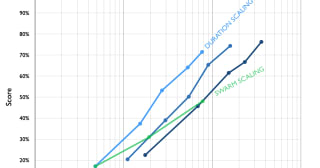


Humor aside:
From a virtue ethical perspective probably indeed not unproblematic but other than that, I actually have the impression the core proposition isn't entirely laughable.
If anyone wants to actually make this argument, I'm willing to hear it. But let's be clear: the pretend-argument in the post is very disconnected from the reality of how welfare improvements actually happen (which is fine, given that it's a parody!). To give just one example, it's not the case that welfare studies happen 'in the lab' - they do happen on farms, but they are not typically conducted by the farmers. And if they were conducted by the farmers, people probably wouldn't trust the studies.