Agricultural households account for up to 2/3 of people living in extreme poverty. Productive assets such as irrigation and livestock can raise these households' incomes for years. But high upfront costs and limited access to suitable credit prevent many smallholders from making these investments: an estimated 99% of demand for long-term agricultural finance in sub-Saharan Africa (US$27bn a year) goes unmet.
We’restarting with water tanks for Kenya’s 1.8 million smallholder dairy farmers. Rather than lending directly, we help Kenyan Savings and Credit Co-operatives (SACCOs) change what they are willing and able to finance through asset-collateralised loans (ACLs). ACLs let farmers use the asset they are buying as security instead of requiring conventional collateral such as guarantors or land titles. This removes a major barrier to finance while reducing the underlying risk borne by lenders.
A Kenyan RCT found that offering water tank ACLs increased tank take-up ~tenfold and co-operative milk sales by ~15–67% per additional borrower[1]. Tanks help maintain milk production in dry seasons, when milk supply has been estimated to fall to around 50–70% of wet-season levels. Preliminary findings from a follow-up study suggest that higher milk sales persisted for a decade, well beyond the 2 year loan term[2].
After the trial, the participating SACCO adopted ACLs and has since financed ~6,000 tanks. Despite this, water tank ACLs remain rare in Kenya. Our aim is to use philanthropic funding to build a self-sustaining market for productive asset finance within the next 5 years, where Kenyan SACCOs continue offering ACLs without our support.
1 year update
In our first year, we set out to test whether the intervention can work under current market conditions. On the supply side: can we convince SACCOs to adopt water tank ACLs and will they invest the staff time & capital needed? On the demand side: do farmers want to invest in tanks, are they able to do so and will they? Our six-month update covers our fieldwork and SACCO outreach in more detail.
We’ve reduced supply-side uncertainty: whether SACCOs are willing to adopt ACLs. 6 SACCOs have signed memoranda of understanding (MoUs) to introduce water tank ACLs, against our minimum target of 2. Together they serve ~23k smallholder dairy farmers, ~100k agricultural members and ~397k total members.
3 SACCOs have launched ACL products recently. 1 has been lending since October and has financed 11 tanks; the other 2 opted for smaller initial launches, and 1 is assessing its first applications. Each launch took ~5 months from MoU with support from us across product design, operations, tank supply and farmer outreach. We expect all 6 partners to be live by March.
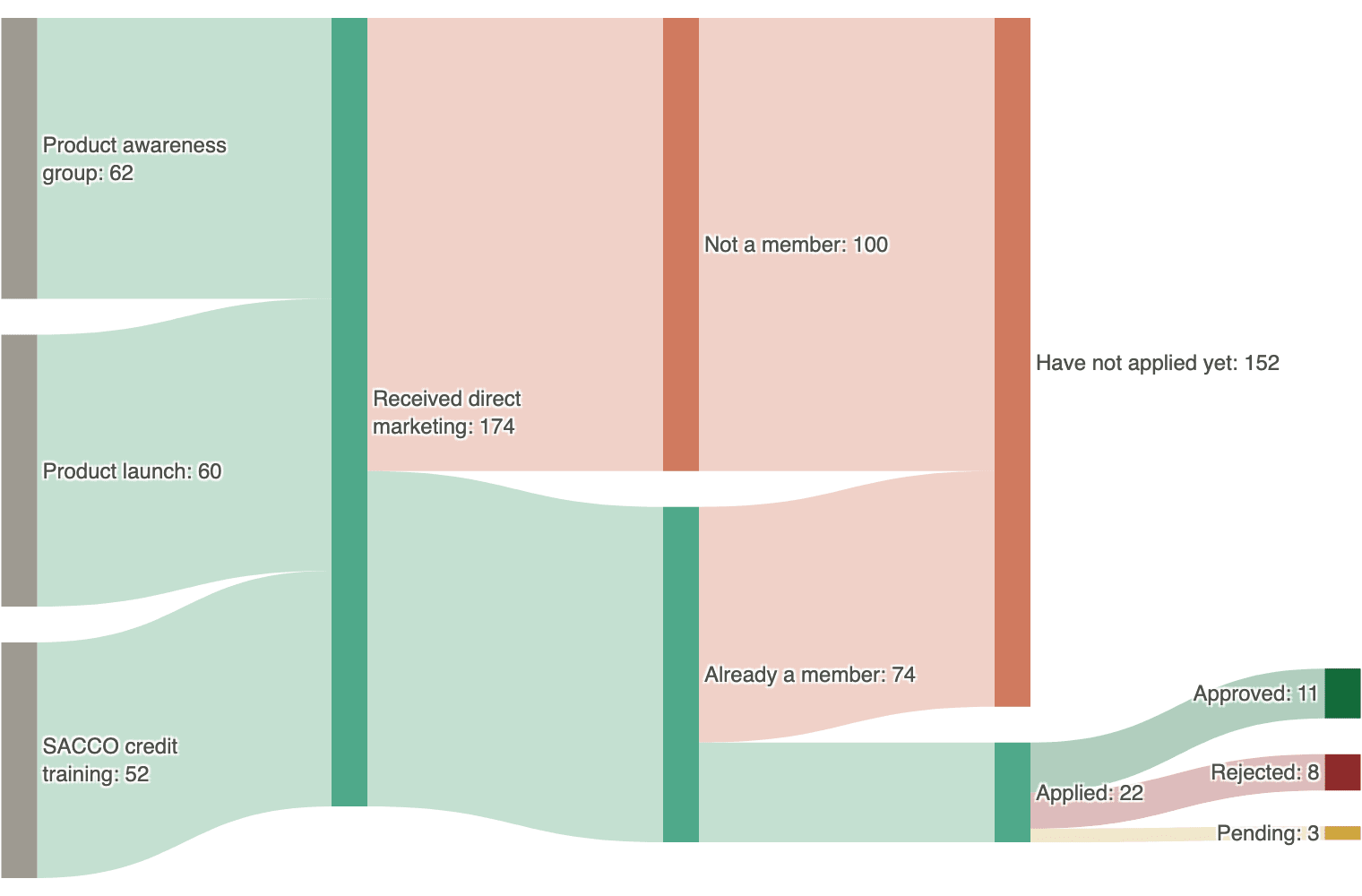
Our next key uncertainty is on the demand side. With our first products live, we can now start testing whether farmers take up ACLs at rates that meet our cost-effectiveness goals. In our survey of 183 dairy farmers, 72% said they needed a water tank and 52% said they plan to apply next year. Of the 74 SACCO members offered an ACL so far, 22 (30%) have applied. But stated intent often overstates uptake, and it's too early to judge take-up more widely.
Whether SACCOs keep offering ACLs once we step back is closely linked to whether ACLs are worth it for them. Financial returns are one source of value, alongside attracting new members, supporting existing ones and potentially accessing impact-aligned capital. To help answer this, we've analysed historical loan portfolios at 3 SACCOs and used the findings to inform ACL terms. As ACL portfolios mature, we'll compare their returns and credit risk with SACCOs' other products, to understand how strong the case for adoption is and what's needed to scale.
We have 2 preliminary cost-effectiveness estimates. AIM's long-run estimate puts the intervention at $12 per income doubling[3], ~25x GiveWell's benchmark[4], reflecting our market-enabling model, which assumes SACCOs keep offering ACLs after our support ends. Our more conservative estimate, which does not assume lending continues, covers only our 6 current partnerships, including what we've spent and assumed continued support, at ~15x GiveWell’s benchmark[5]. Both rely on assumptions we're still testing, a key sensitivity being farmer take-up.
We think the underlying evidence, our first year traction and its potential cost-effectiveness justify another year of validation. Funding for 2027 will let us reduce key market uncertainties and make a better informed decision on whether to commit to a major scale-up across Kenya.
If water tank ACLs succeed, our SACCO partners could use the same model for other productive assets, such as irrigation pumps and biogas digesters. With much of the setup at SACCOs complete, each additional asset could be introduced at a lower incremental cost.
We are seeking contributions towards our 2027 operating budget of US$332k, of which $200k remains unconfirmed.You can donate here.
The opportunity: Financing productive assets in agriculture
Agricultural poverty and productive assets
Agricultural households account for up to 2/3 of people living in extreme poverty. Productive assets can raise these households' incomes for years: in Rwanda, irrigation increased farm profits by 43–62%, and asset transfers are central to poverty graduation programmes, one of the better-evidenced livelihoods approaches. Poor households also choose these investments when they can: 36% of GiveDirectly recipients surveyed spent some of their transfers on livestock.
Financing constraints for productive assets
High upfront costs and limited access to longer-term credit prevent many smallholder farmers from investing in productive assets that could increase their incomes. Banks and Savings and Credit Co-operatives (SACCOs) can offer relatively affordable, longer-term loans, but often require guarantors, large deposits or land titles that many farmers lack. More accessible forms of credit, such as microfinance and mobile loans can be too expensive, too small or too short-term for these investments. An estimated 99% of demand for long-term agricultural finance in sub-Saharan Africa (US $27bn a year) goes unmet.
These constraints reflect how lenders manage the costs and risks of rural lending. Small, geographically dispersed loans have weak unit economics: they are expensive to assess and service, so many lenders either charge more or don't offer them. Farmers often lack formal income records and credit histories lenders use to assess repayment capacity. To manage this uncertainty, lenders impose blunt collateral requirements that exclude farmers who could otherwise repay.
Asset-collateralised loans (ACLs)
Asset-collateralised loans (ACLs) can reduce financial access barriers for farmers and improve the economics for lenders. Using the purchased asset as collateral reduces the need for land titles, third-party guarantors or large deposits, while allowing lenders to recover potential losses by repossessing and reselling the asset if a borrower defaults. Unlike interventions that rely on subsidised lending capital or credit guarantees, ACLs reduce the underlying risk borne by lenders, creating the potential for affordable, commercially sustainable finance for previously excluded farmers.
Traditional microcredit has had limited average effects on household incomes, but as part of its expanded livelihoods work, GiveWell is exploring new approaches to microfinance, noting more promising results from programs earmarked for productive assets, as ACLs are (see “How ACLs differ from traditional microcredit”[6]).
Our first productive asset: Water tanks for Kenyan smallholder dairy farmers
Water shortages can constrain milk production for Kenya’s 1.8 million smallholder dairy farmers, who produce approximately 70% of Kenya's milk. A historical Kenyan Government dairy-sector assessment reported dry-season milk supply fell to roughly 50–70% of wet-season levels, reflecting seasonal constraints including water and feed availability. Controlled dairy studieshave found that restricting cows' water intake by 40-50% reduced milk yields by 16-27%. According to Kenya's 2025–26 national survey, 84% of rural households lack piped water and 41% lack basic drinking water services[7].
Water storage tanks can help farmers sustain milk production throughout the year by improving water access during dry periods. This can be particularly valuable, as rainfall variability increases and farm-gate milk prices are often higher when supply is lower. A 5,000-litre tank costs KES 30,000-33,000 (US$230-255) through our supplier arrangement, before installation, a large upfront cost for many farmers. Tanks are well suited to ACLs because they are durable and retain resale value. While farmers typically repay their loans over 24 months, the tanks can remain useful for decades, potentially generating additional income long after the loan has been repaid.
A Kenyan randomised controlled trial, conducted by Innovations for Poverty Action, found that ACLs markedly increased investment in water tanks and led to higher co-operative milk sales. The study randomly offered smallholder dairy farmers different loan contracts for 5,000-litre water tanks, varying the deposit and guarantor requirements and the proportion secured by the tank itself:
Loan take-up increased from 2.4% under standard SACCO terms to 23.5-44.3% under ACLs, depending on the collateralisation amount. There were only 3 repossessions across the total 429 loans disbursed, all from the least restrictive group.
Co-operative milk sales increased by ~15-67% per additional borrower, depending on the specification[1].
Reported cow illness decreased by 35%.
Preliminary findings suggest that increases in milk sales and water storage have persisted for a decade. A 10 year follow-up working paper of the original randomised cohorts found evidence of sustained increases in co-operative milk sales and improved resilience during dry periods[2]. The original SACCO has also continued offering ACLs independently, financing over 6,000 water tanks.
Water tanks are our starting point. We see potential to expand to financing other productive assets, such as biogas digesters and irrigation pumps.
Our approach: Building a self-sustaining market for productive asset finance
BSP is a market-enabling organisation that works with Kenyan Savings and Credit Co-operatives (SACCOs) to introduce and scale asset-collateralised loans (ACLs) for productive assets.
Why SACCOs?
SACCOs are member-owned financial co-operatives that mobilise member savings and provide credit and other financial services. Kenya’s 357 regulated SACCOs serve 7.87 million members, with 40% belonging to agriculture-based SACCOs.
SACCOs are well placed to finance productive assets for smallholder farmers because of their links with agricultural co-operatives. Dairy co-operatives collect farmers' milk daily and often channel payments through SACCOs. This lets SACCOs assess farmers' ability to repay and deduct loan repayments directly from their milk income, reducing transaction costs. SACCOs can also offer more affordable credit for larger loans over longer repayment periods than typical microfinance institutions or informal lenders[6].
If ACLs are promising, why haven’t lenders adopted them more widely?
Despite the evidence, ACLs remain rare in Kenya. SACCOs have established lending products, and guarantor-based lending is deeply embedded in their practices. We suspect that uncertainty about farmer demand and product profitability, combined with limited capacity for product development and competing priorities, discourages SACCOs from experimenting with unfamiliar lending products.
However, we do not yet know whether limited adoption primarily reflects barriers to introducing a novel lending product with little precedent or insufficient commercial incentives for lenders to offer it. A big part of our work is testing these core assumptions and determining what incentives, if any, may be required to scale ACLs.
So what does BSP do?
BSP helps SACCOs overcome the upfront barriers to adopting ACLs and builds the evidence needed to support continued lending. We introduce SACCOs to the model and help build the case for adoption, then work with their teams to design the loan product, establish supplier relationships and prepare for lending. We also help scale out the product, supporting farmer outreach and building monitoring systems that help SACCOs understand farmer demand and economics of offering ACLs. SACCOs remain responsible for financing and managing the loans.
Our goal is for SACCOs to continue offering water tank ACLs independently after our support ends. A central question we are testing is whether our initial support can establish ACLs as a routine product and demonstrate sufficient value for the SACCO to continue ACL lending. If successful, our upfront investment could enable years of additional lending without ongoing BSP support, creating the potential for a model in which our costs scale primarily with institutions rather than farmers. We also hope to generate a demonstration effect, where successful examples encourage other SACCOs to adopt ACLs without our direct involvement.
Our first year: From research to first tanks financed
The existing research gave us good reasons to pursue the intervention, but there was limited evidence that ACLs could be successfully replicated across SACCOs. We therefore focused on testing whether the model could work in practice and whether its underlying market assumptions held. Our first year had 4 priorities:
Test our core assumptions early and identify potential deal-breakers
Establish whether SACCOs could and would adopt ACLs
Get ACLs operational and make them available to farmers
Begin testing farmer demand
Fail fast: Testing our core assumptions
Do local conditions give us reason to reconsider the intervention?
Result: No deal-breakers, though several findings changed our product design and targeting.
We spent 2 months conducting fieldwork across 9 Kenyan counties, interviewing representatives from 15 dairy co-operatives and ~50 farmers. Of the 10 core assumptions we tested, our confidence rose for 3, held for 2 and fell for 5, but none fell far enough to reconsider the intervention. Our six-month update provides more detail. The findings most relevant to farmers' income:
Water access is a meaningful constraint, particularly in dry seasons. Farmers identified water scarcity as an important problem, and co-operatives reported large seasonal declines in milk supply, which reflect both water and feed shortages. However, feed costs and access to quality artificial insemination services were raised more often as priorities.
Tank suitability varies more than expected. While many farmers could benefit from additional water storage, some also require pumps, guttering or piping to make effective use of a tank. These extra upfront costs can make an otherwise worthwhile investment harder to afford.
We cannot assume dairy farming is profitable. High input costs can absorb much of farmers' milk revenue, and some continue dairy farming despite low returns because they lack attractive alternatives. For a farmer on thin margins, a modest yield gain that doesn’t add ongoing costs could mean a proportionally larger increase in net income. But it also means affordability assessments need extra care: milk-delivery records show farmers' income, not whether their operation is profitable, so meeting a delivery threshold doesn't guarantee a farmer can comfortably repay.
These findings informed our product design and targeting, including which farmers and partners we prioritise and financing installation costs where needed. They also highlighted the importance of surveying farmers' production costs and getting reliable milk-delivery data for checking whether outcomes are consistent with the research.
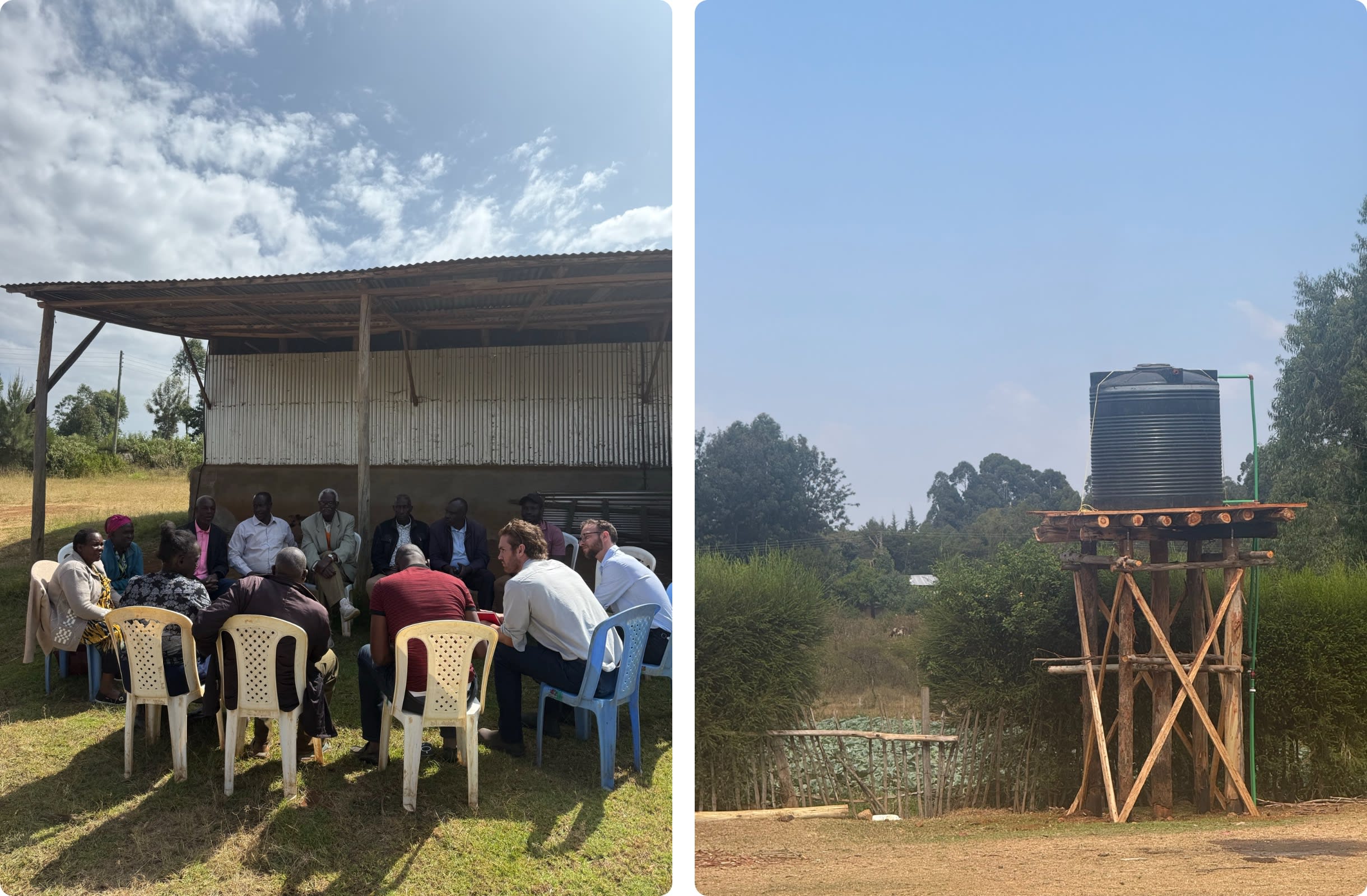
Left: A farmer focus group in Uasin Gishu County. Right: A water tank installed in an area with bore water access, where an additional pump is needed to make the system work
SACCO adoption: Convincing SACCOs to offer ACLs
Will existing financial co-operatives adopt a new lending model?
Result: 6 SACCOs signed MoUs to introduce guarantor-free water tank ACLs, against an initial minimum target of 2.
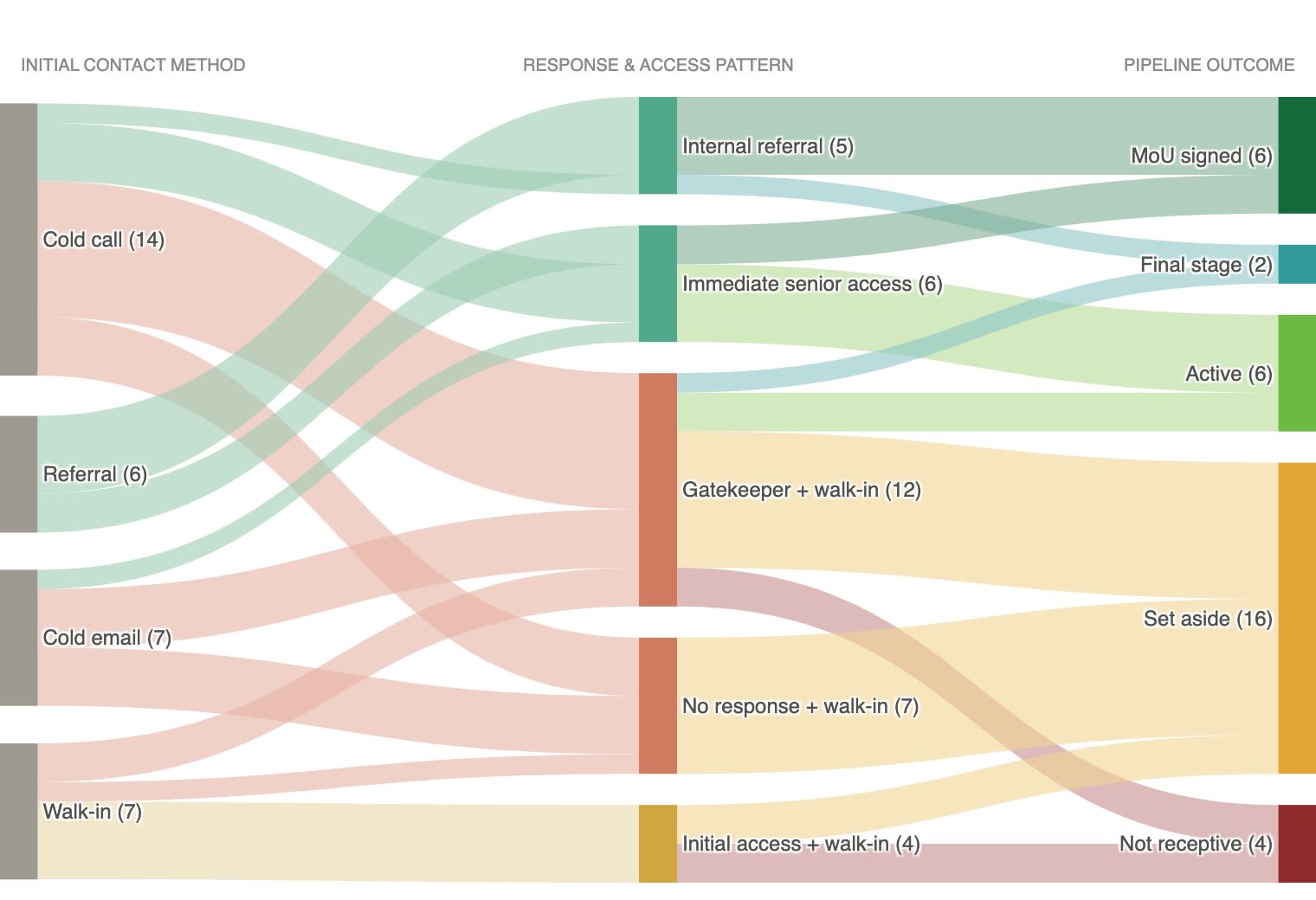
We've reduced one of our biggest initial uncertainties: whether SACCOs would be willing to adopt ACLs. SACCOs are risk-averse institutions, with guarantor-based lending deeply embedded in their practices. Introducing a new loan product typically requires CEO buy-in, management alignment and formal board approval. We engaged 34 SACCOs, of which 18 (53%) progressed to formal presentations and 6 (33% of presentations, 18% overall) signed one-year memoranda of understanding (MoUs), a median of 3.5 months after our first meeting. Under these, SACCOs commit to introduce water tank ACLs and promote them to their members with our support. 3 partnerships were developed in collaboration with Precision Development (PxD). We discuss our outreach and conversion experience in more detail in our six-month update.
All 6 partners are lending from their own capital. 5 agreed to introduce ACLs without credit-risk guarantees or financial incentives. The 6th received risk-sharing support and a small performance incentive from PxD. Our support is limited to technical assistance and help with farmer outreach. This increases our confidence that SACCOs will adopt ACLs without subsidies to their lending capital or credit risk.
SACCO outreach pipeline: access pathways to senior stakeholders and their correlation with end outcomes. 34 SACCOs contacted, January to November 2026.
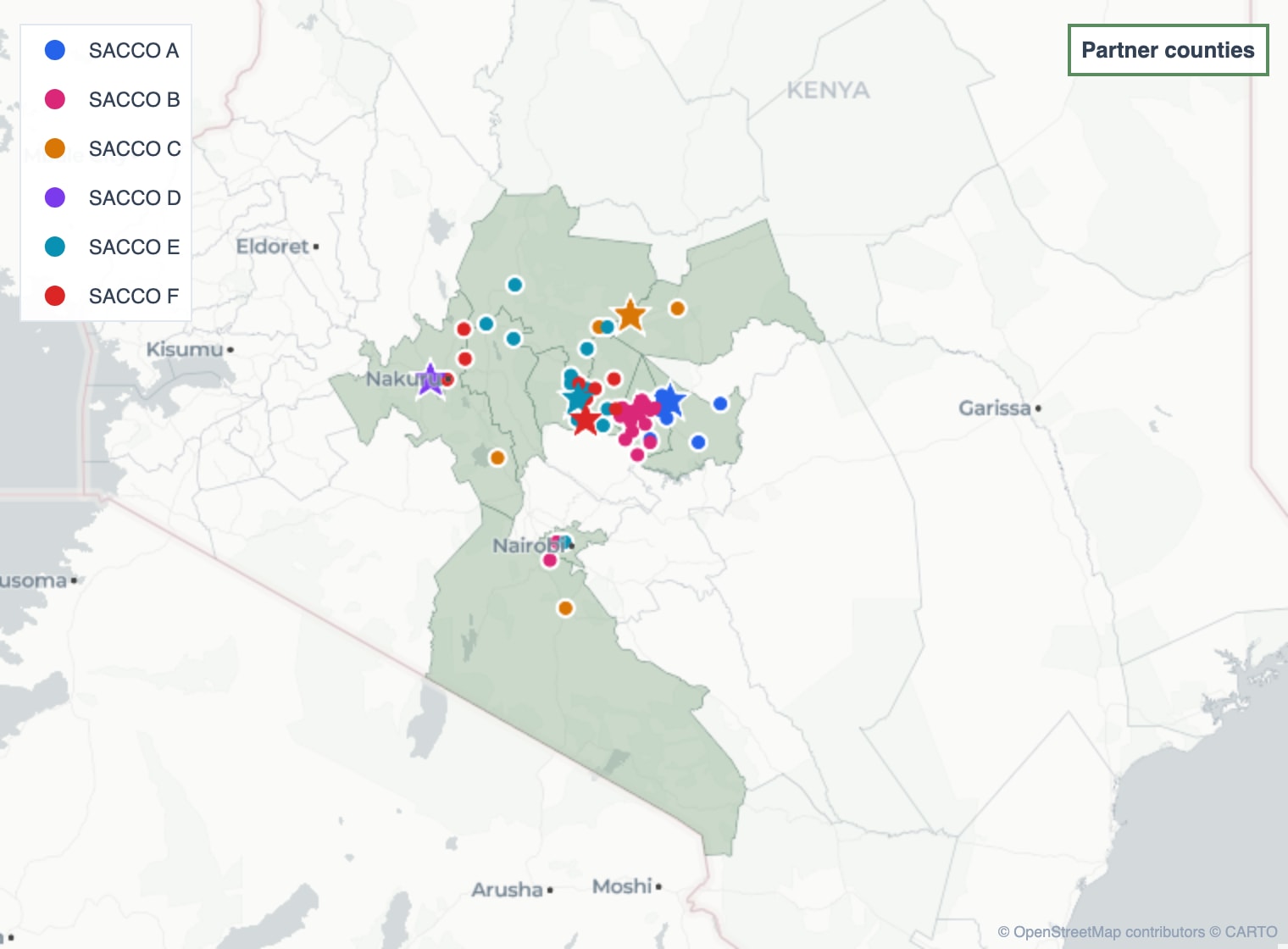
5/6 partners are among Kenya's 176 deposit-taking SACCOs licensed by Kenya’s regulator, SASRA, while the 6th is a smaller SACCO linked to an agricultural co-operative. Together, they serve ~23k dairy farmers, ~100k agricultural members and ~397k total members. These figures describe partners' existing membership, not the number of farmers who could qualify for and afford an ACL.
Our six partner SACCOs' locations (★ head office, ● branch), shown against an overlay of the counties they operate in.
Getting ACLs operational: From product design to first water tank deliveries
Can we demonstrate operational feasibility?
Result: Yes, at a small scale. 3/6 SACCO partners have launched ACL products, and the first financed tanks have been delivered.
1 partner is actively lending and has begun promoting ACLs across its dairy membership. 2 have recently soft-launched with a small number of farmers to test their loan and tank delivery processes before wider outreach; 1 is now assessing its first applications. The remaining 3 are completing product design and operational setup, and we expect them to launch by March.
1. Making ACLs accessible and affordable
Removing guarantors and land titles addresses a major barrier to financing, but other requirements such as deposits and SACCO membership rules can still exclude farmers. 1 partner has agreed to shorten the minimum membership period for an ACL from 3 months to 1 and all 4 partners that have completed product design have agreed to finance essential installation costs as a part of the loan. We’ve also negotiated deposits down to the lowest our live partners' credit policies allow (12-33%), comparable to the RCT’s 25%-deposit arm. Since its 4%-deposit arm had the highest take-up, we're working to reduce deposits further as repayment data builds up.
We've worked to reduce borrowing costs while keeping the product commercially viable for SACCOs. For each partner, we've modelled expected risk-adjusted lending returns and used this analysis to negotiate interest rates and fees. We've made the case that ACLs could attract new SACCO members, and used terms agreed by other partners as leverage in negotiations. At 1 SACCO, our recommendations helped reduce the proposed annual interest rate from 16% to 14% on a declining balance and remove a KES 1,000 (US$7.70) ledger fee, an estimated 22% reduction in borrowing costs[8].
Product pricing remains an ongoing negotiation. We've adopted an interest-rate benchmark of no more than 14% annually on a declining balance or its flat-rate equivalent. 4 partners have confirmed rates: 7.7%, 10% and 14% on declining balances, and 10% flat (~18% declining-balance equivalent). The flat-rate SACCO is above our benchmark and has agreed in principle to switch, but this requires changes to their banking system and, in this case, regulatory approval which is expected to take a few months.
For context, microfinance banks in a Kenyan agricultural-finance programme charged 14–23% flat interest (25–40% declining-balance equivalent) before fees and insurance, according to a 2024 IFAD evaluation. Juhudi Kilimo, a Kenyan agricultural asset-finance provider with ~93,000 farmers, charged 20% annual flat interest (~35% declining-balance equivalent), according to a 2018 World Bank study.
2. Building ACLs into SACCO operations
Our technical assistance covers each step of setting up the product. We've worked with partners to configure ACLs in their core-banking systems, adapt loan appraisal and approval procedures, train credit officers, set up tank supply arrangements and establish monitoring. Much of the necessary infrastructure already exists within SACCOs, including repayments deducted from milk payments through dairy co-operatives. But some processes are new: SACCO loans are usually paid out in cash, whereas ACLs require paying suppliers directly and delivering tanks to farmers. Adapting and building these processes takes time.
Farmers can now buy tanks at wholesale prices. We evaluated 16 Kenyan suppliers and secured a wholesale price of ~KES 30,000-33,000 (US$230-255) for a 5,000-litre tank, varying by location, around 24% below the KES 42,000 (US$323) retail price of a comparable tank from a leading supplier. We've encouraged SACCOs to pass this price directly to farmers without a markup. The 4 SACCOs with confirmed product details have agreed to do so, while the remaining 2 are still to be confirmed. We're continuing to assess alternative suppliers to reduce reliance on a single manufacturer.
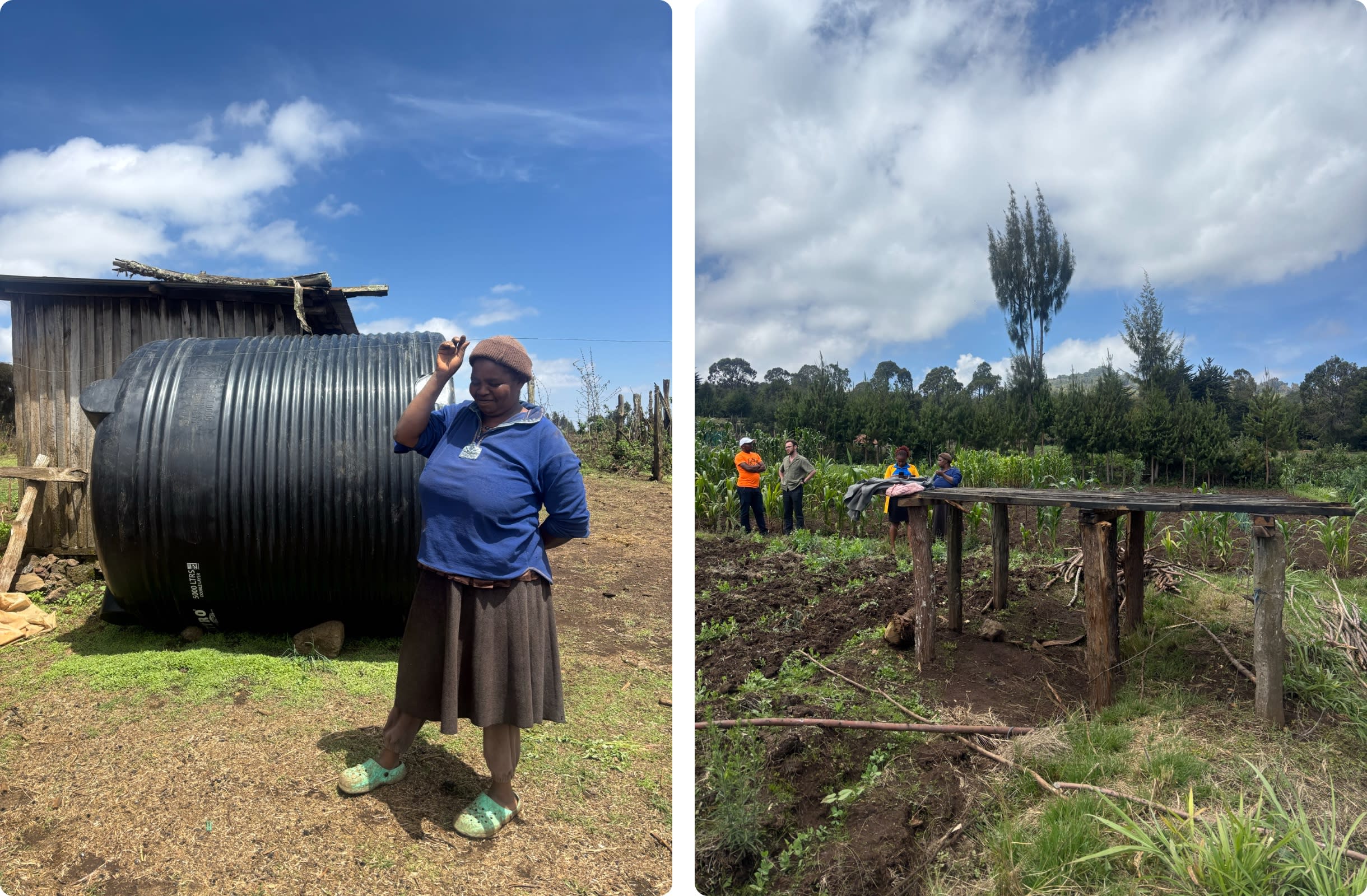
Post-installation surveys help us check that tanks are delivered and set up correctly, and understand their full cost and use. We're exploring whether SACCOs could run these checks routinely. Left: a farmer whose tank installation issue we helped resolve. Right: the stand built for her tank.
Our greatest implementation challenge has been securing SACCO management attention and staff time. Partners have generally been receptive to our recommendations, but competing priorities and internal approvals have made progress slow and unpredictable. The first 3 launches took an average of ~5 months after signing MoUs, or ~8.5 months in total from first engagement. Recognising early that implementation would be slow, we pursued partnerships with multiple SACCOs in parallel, so delays at individual partners didn't hold up overall progress. We're still learning whether these challenges primarily reflect limited staff capacity or insufficient incentives to prioritise ACLs, which will shape if and how we scale.
3. Using portfolio data to improve lending decisions and assess commercial viability
A key assumption in our model is that SACCOs will keep offering ACLs once we step back. This is closely linked to whether the product pays off for them. Financial returns are one source of value, alongside attracting new members, supporting existing members, or helping SACCOs access impact-aligned capital. To test this, we analyse SACCOs' loan portfolios, which can show both the returns and credit risk of ACLs and whether borrowers are new members. The analysis is also useful to SACCOs themselves: they hold extensive banking data, but often have limited visibility into the profitability and credit risk of individual products.
We've begun building the case for ACLs with our partners. We've analysed historical loan portfolios at 3 SACCOs, using the findings to inform ACL terms and challenge existing lending practices with evidence. Accessing this data has required formal data-sharing agreements with SACCOs and registration with Kenya's Office of the Data Protection Commissioner (ODPC). As ACL portfolios mature, we'll compare their actual credit risk and returns against our initial estimates and against SACCOs' other products.
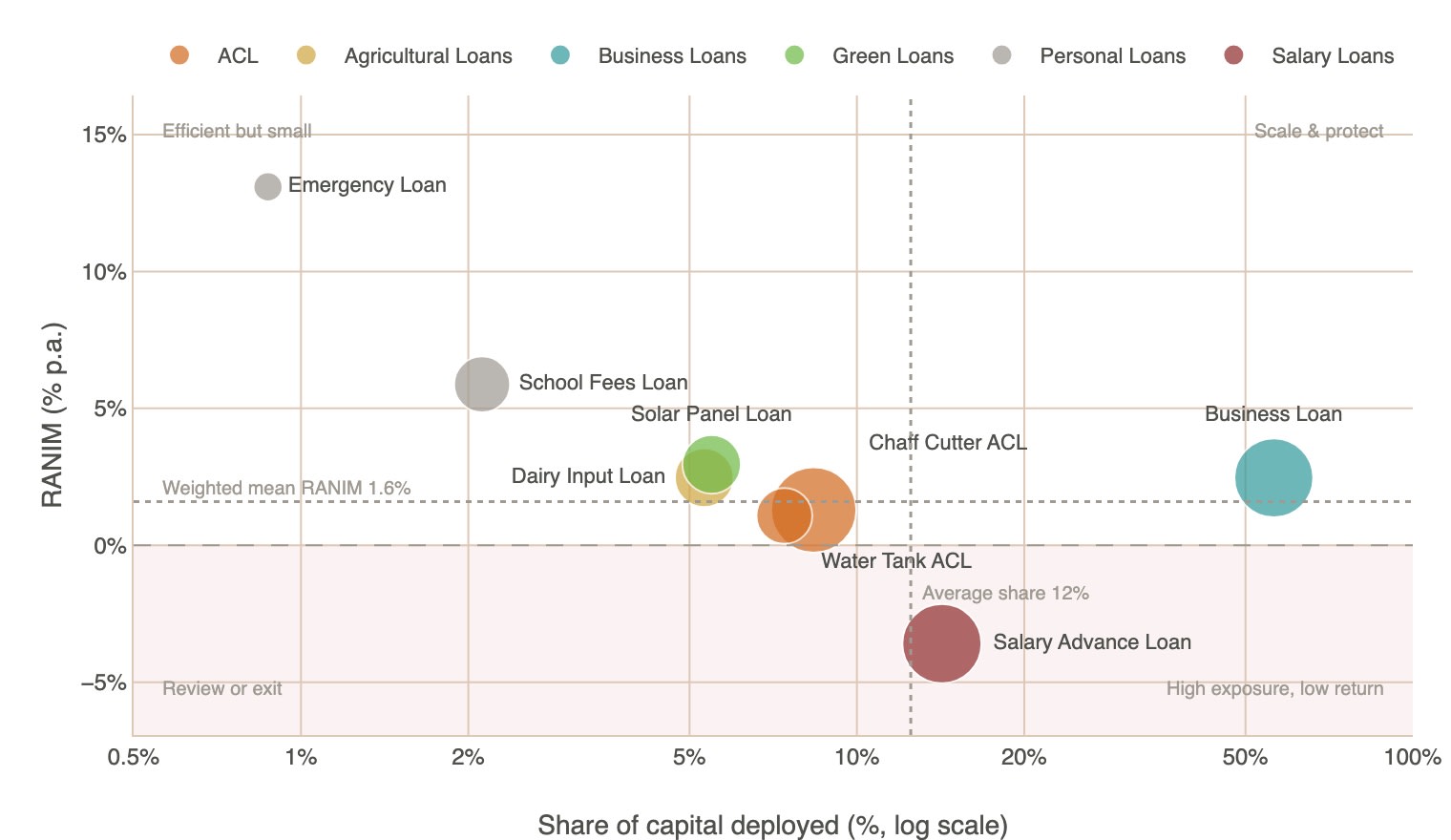
The results will shape our scaling model and help assess the potential for wider adoption. If ACLs perform as well as SACCOs' other products and demand is strong, SACCOs should have reason to keep offering them unaided. If they only break even, that may still be enough if they attract new members; if not, impact capital earmarked for ACLs may be needed for SACCOs to keep lending. If they lose money, we'd consider a different instrument such as risk-sharing, a different route to financing tanks, or whether to discontinue the intervention.
Example using simulated data. Risk-adjusted net interest margin (RANIM) by loan product, against share of capital allocated; bubble size shows each product’s non-performing loan (NPL) rate.
Farmer adoption: Testing demand
Will farmers take up ACLs once they become available?
Result: Our first SACCO has financed 11 tanks since October, but farmer demand at the point of purchase remains largely untested. Products have only recently launched, and broader outreach is underway at just 1 partner.
There are early signs of interest, but converting it into tank purchases will take time. Of 183 smallholder dairy farmers recently surveyed, 72% (132) said they needed a water tank and 52% (96) said they plan to apply in the next year. Stated need and intent typically overstate actual uptake, but applications are a stronger signal: of the 74 SACCO members offered a loan so far, 30% (22) have applied. Some non-members have also joined a partner SACCO and will become eligible once they complete the minimum membership period, though we don't yet have complete data on new members. Farmers often see a tank as an investment to plan for over the coming year rather than an immediate purchase. Timing also matters. 1 partner plans to expand outreach during the March-May 2027 rainy season, when farmers are better able to afford deposits and can use tanks straight away. Whether this interest turns into purchases at scale is a key uncertainty, and a focus for 2027 (see Our priorities for 2027).
Farmer adoption funnel from direct outreach. The 100 non-members cannot apply until they've completed the minimum membership period, so none are eligible yet; we're still collating data on how many have since joined a SACCO.
SACCOs promote ACLs through product sessions and their existing outreach channels. Working with SACCO staff and dairy co-operatives, we run product awareness sessions and add ACLs to SACCOs' existing credit training. These sessions help farmers understand the full borrowing costs and eligibility requirements, ask questions and provide feedback. Outreach also runs through SMS, phone calls and at dairy co-operative Annual General Meetings (AGMs). SACCO staff lead most of the farmer engagement, and we run some sessions ourselves. We train staff, design and co-ordinate outreach, gather feedback through surveys and focus groups, and cover some costs, such as farmers' travel to sessions.
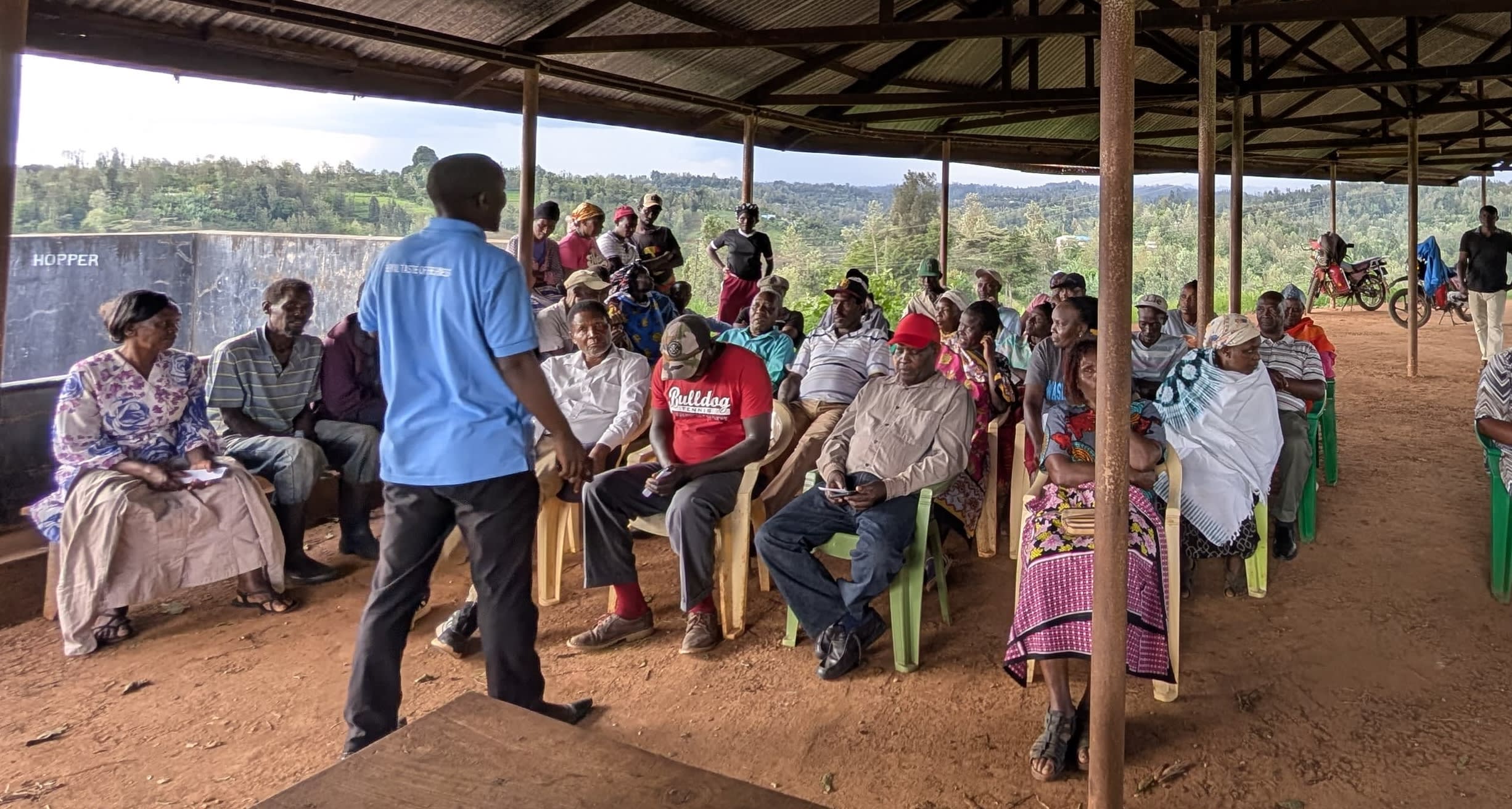
Product Awareness Group in Nyeri County
We're improving visibility into the farmer adoption funnel. We've updated loan application forms and are working to link outreach activities, membership registrations and applications. This will let us measure conversion rates, assess the effectiveness of different outreach channels and identify new SACCO members attracted by ACLs. One important gap is that credit officers often assess eligibility before a formal application is submitted, leaving little record of farmers who don't meet the initial requirements or why. We're introducing branch-level reporting of these decisions and why applications don't progress. We’ll use these findings to improve product terms, eligibility assessments and outreach, so more farmers who can afford to repay can access water tank finance.
Estimating our cost-effectiveness
AIM's cost-effectiveness analysis (CEA) of the intervention estimates $12 per income doubling[3], or $30 per DALY-equivalent, around 25x GiveWell's benchmark[4]. This long-run estimate reflects our market-enabling model: it assumes SACCOs keep offering ACLs after our support ends. As a more conservative estimate, we projected the impact of our 6 SACCO partnerships over a fixed 5 year window, assuming continued support, including what we’ve already spent. This preliminary estimate is around 15x GiveWell's benchmark[5], and is our best guess at what our current partnerships will deliver, without assuming our support stops, lending continues beyond 5 years or that we expand to new partners (which we plan to do).
Several assumptions will need revisiting. Some could reduce cost-effectiveness. Installation costs, such as pumps and guttering, may affect affordability more than modelled. Our 30-year benefit period is based on suppliers' expected tank lifespan; warranties typically cover 10 years and tanks financed through a study 15 years ago are still in use. But many Kenyan dairy farmers are older, and some may stop farming before a tank wears out. Others could increase it. We model the tank price above the wholesale price we've secured, and assume farm-gate prices do not rise during dry spells, which they often do[9]. Our model uses a 15% milk sale increase, the lower end of the study's estimated 15–67% range, reduced to 9% after validity discounts[1]. Our estimates are highly sensitive to this figure, so we will compare milk sales trends at dairy co-operatives with the study's results, though these comparisons cannot establish causality. As we scale, we'll look for opportunities to generate more evidence on income effects. Farmer take-up remains the other key sensitivity and uncertainty, and we expect to understand it better over the next year.
In our first year, we spent $128k: 75% on personnel (3 full time staff), 18% on fieldwork and farmer engagement, and 7% on other costs. Our costs are heavily weighted towards setting up SACCO partnerships and getting ACL products operational, rather than scaling with the number of farmers financed.
Our CEA excludes several potential benefits beyond increased milk sales. These include suggestive evidence of reduced cow illness, increased girls' school enrolment and potential time savings. A working paper also finds preliminary evidence of reduced diarrhoea[10]. We also exclude potential benefits from enabling farmers to join SACCOs, such as interest on savings and share-capital dividends[11].
What is next
Our first year has shown that we can get SACCOs to commit to and launch water tank ACLs, reducing supply-side uncertainty. We think the potential for impact and cost-effectiveness is high, but this depends on how the market responds.
We think the underlying evidence, our first year traction and the potential upside justify another year of validation before committing to a major scale-up. With the first products operational, we are now in a position to test our key demand-side uncertainty: whether farmers take up ACLs at cost-effective rates. If demand is weak or SACCOs don’t commit sufficient resources after we address barriers within our control, we would reassess whether the intervention warrants continued investment. Strong take-up would strengthen the case for scaling across Kenya, with the opportunity to expand to other productive assets and value chains through our existing partners at lower cost, since much of the cost of setting up each partnership has already been paid.
Our priorities for 2027
1. Increase water tank ownership and farmer incomes. Our immediate priority is to get all 6 SACCO partners live and help them reach farmers, so more farmers can choose to finance tanks. Across these partners we project a take-up of 15% of dairy members over 5 years, equivalent to 3450 tanks and 15x GiveWell’s benchmark[5].
2. Build evidence for a scale-up decision. We need to validate whether the intended intermediate outcomes in our theory of change materialise: sufficient farmer take-up and sustained SACCO lending. To support building this evidence, we plan to hire an M&E lead in 2027.
Farmer demand: What proportion of eligible sensitised farmers take up ACLs at our partner SACCOs?
SACCO sustainability: Are our partners willing and able to keep originating ACLs? Are ACL economics sustainable, and will SACCOs commit enough staff time and capital?
Our provisional minimum benchmarks include ~3% annual take-up among eligible sensitised farmers and a portfolio at risk over 30 days (PAR30) below 5%[12]. We can directly observe tank purchases and SACCO lending activity. To judge whether lending will continue, we'll look at ACL economics for SACCOs and at committed staff time and capital. These findings will help us both improve the products and assess how much and what type of ongoing support SACCOs may need. We expect to have enough data to make a scale-up decision in Q4 2027. Full repayment outcomes on 2 year terms, and whether SACCOs keep lending without our support, will take longer to establish.
3. Test a more scalable ACL adoption model. Because SACCO launches have long implementation timelines, we want to maintain a pipeline of new SACCO partnerships while we validate farmer demand, so we're ready to scale if the results support it. Our first ACL launches needed a lot of founder time. In 2027, we'll build a technical assistance team and standardise our partnership and implementation processes, testing whether we can launch ACLs at more SACCOs in parallel. Our stretch target is 14 operational SACCO partners by the end of 2027, the most we think our planned team, including 2 new technical assistance hires, could support.
Marginal funding
We are seeking contributions towards our 2027 operating budget of US$332k, of which $200k remains unconfirmed. We currently have 3 full-time staff: 2 co-founders and an operations officer. Our budget covers continued support for our current partner SACCOs. It also adds 2 technical assistance (TA) staff to help us bring water tank ACLs to 4-8 more SACCOs, and a monitoring and evaluation (M&E) lead to improve data collection and analysis, both for us and at our partner SACCOs.
To illustrate what additional funding could support:
$1,000 could fund ~20 product-awareness and financial literacy sessions, reaching around 400 farmers. These sessions are currently our main way of reaching farmers, giving them a chance to ask questions, give feedback, and apply for an ACL or join the SACCO.
$20,000 would fund 1 TA officer for a year. We plan to hire 2, at a total cost of $40,000. We expect each to support 4 additional SACCOs, taking us to 14 partners if we make both hires. Without them, we would stay with our existing 6 partners. These hires are our highest funding priority.
$56,000 would fund an M&E lead for a year, improving our ability to track farmer take-up, monitor milk yields and assess ACL economics. This role will be central to making an informed scale-up decision. We have a strong candidate ready to start once the role is funded.
$160,000 would fund all 3 planned hires, plus fieldwork, SACCO support and additional farmer outreach activities planned for 2027.
$200,000 would close our 2027 funding gap, covering the 3 hires, programme costs and the rest of our core team’s costs.
With 6 SACCOs committed, together serving ~23k smallholder dairy farmers, and the first tanks financed, 2027 is when we find out whether farmers take up ACLs at the scale needed for the impact we expect. Your support would help us answer that question and, if the answer is yes, scale ACLs to raise incomes for many more smallholder farmers.
We would be extremely grateful for contributions of any size towards closing our funding gap. If you'd like to support our work, you can donate here. Our fiscal sponsor, Anti Entropy, is a US 501(c)(3) nonprofit and donations are tax-deductible for US donors. If you're donating from outside the US please get in touch.
We'd also welcome feedback on our approach and plans, in the comments or elsewhere. We're always happy to chat with anyone interested in our work.
Better Season Project enables smallholder farmers to access affordable finance for evidence-backed productive assets that increase their incomes and build long-term resilience.
Jack et al. (2023), Table 6, analyse over 109,000 monthly co-operative milk sales records from 1700 farmers across 65 months (2009-2014). Being offered an ACL led to statistically significant increases in monthly milk sales by 8-10% using trimmed data and 25-29% using log-based measures (intention-to-treat). The untrimmed estimate was not statistically significant. In our analysis of the study's replication data, the largest 1% of monthly sales accounted for over 75% of the variation and included volumes no smallholder herd could produce (potentially milk aggregators or larger commercial operations), so we think excluding them is reasonable. The authors' 15-67% range appears to convert these estimates to an effect per additional borrower, by dividing by the difference in take-up between the least restrictive ACL and standard loans (a local average treatment effect, or LATE). The study also measured self-reported milk production, but farmers recalled production over periods of 3–12 months, and the estimates are too imprecise to draw conclusions.
This study follows up with a subset of farmers from the original RCT 10 years later. The findings are preliminary and the paper has not yet been published. The authors have kindly shared the working paper with us but we do not have permission to circulate it.
An income doubling is the value of doubling one person's income for one year. It's measured on a logarithmic scale, so a 10% income increase lasting around 8-9 years is roughly one doubling, after discounting future gains at 4% a year. To compare with health interventions, one year of doubled income is valued at 0.4 DALYs based on GiveWell’s moral weights.
Our estimates are expressed as multiples of GiveWell's cost-effectiveness benchmark, previously described as multiples of "cash." In 2024, GiveWell revised its estimate of GiveDirectly's cash transfers upward by 3-4x, but did not incorporate this increase into its benchmark.
Both estimates are preliminary. Our long-run model was last updated at the end of 2025 and will be revisited as we validate farmer take-up. We use a 5-year window for the finite estimate because most of our costs come early, in setting up each partnership & getting ACLs operational, while tanks are financed gradually as farmers take up loans; 5 years is the period over which we expect take-up to build to around 15% of our partners' ~23,000 dairy members. For comparison, take-up was ~28% in the study’s 25%-deposit arm (124 of 450 farmers offered), and in the years after the study, cumulative take-up at the study SACCO reached 33% (around 6000 tanks). The estimate therefore assumes ~3,450 tank purchases; our spending to date, extended to March, when we expect all 6 partners to be live; and ongoing support costs equal to a further 80% of our spending to date.
How ACLs differ from traditional microcredit Traditional microfinance has had mixed results on household incomes. Results vary depending on loan purpose and how loans are structured. ACLs address some traditional microfinance concerns in the following ways;
Productive investment: ACLs finance durable, longer-term income-generating assets rather than more flexible use loans and in some cases short term consumption
Member-owned lenders: SACCOs are owned by their members, i.e. the farmers. Farmers hold share capital and receive a share of profits.
Lower cost: SACCOs can offer lower interest rates due to lower transaction costs through agricultural co-operative payments, access to member savings and in some cases access to impact capital. Our partners' rates are well below those charged by Kenyan agricultural microfinance lenders (see Making ACLs accessible and affordable)
Reduced borrower risk: reducing over-indebtedness risk as if a farmer cannot repay, they risk losing the purchased asset rather than other property or guarantors' savings. Repossession and resale settle the outstanding debt, and any surplus is returned to the farmer.
However, ACLs don’t remove borrowing risk. Farmers who default could face debt stress and lose the tank. Our partners offer repayment holidays and treat repossession as a last resort. In the study, repossessions were rare (0.7% in the 4%-deposit arm and none in the 25%-deposit arm).
Basic drinking water services mean water from an improved source (such as a borehole, protected well, protected spring, piped supply or rainwater collection) with a round trip collection time of no more than 30 minutes, including queuing. Thisdefinition doesn't guarantee that the water is safe to drink, available year-round or consistently reliable.
This assumes a loan of KES 30,000 (~US $231), the wholesale price of a 5,000-litre tank at this SACCO, repaid over 24 months on a declining balance, with fees of 4.5% of the loan. Reducing the interest rate from 16% to 14% and removing the KES 1,000 ledger fee lowers total borrowing costs from KES 7,603 (~US$58) to KES 5,919 (~US$46).
For example, Murang'a County Creameries Union raised its farm-gate price from KSh 42 per litre in June 2026 to KSh 49 in September, its fourth increase in three months, as dry weather reduced milk supply.
This is a separate study to both the original RCT and the 10 year follow up. The study has also taken place in Kenya. The findings are preliminary and the paper has not yet been published. The authors have kindly shared the working paper with us but we do not have permission to circulate it.
PAR30 is the share of outstanding loan balances more than 30 days overdue. In the study, 99.7% of loans were fully repaid, with no repossessions in 25%-deposit arm and a 0.7% repossession rate in 4%-deposit arm.Kenyan deposit-taking SACCOs averaged a non-performing loan ratio (a measure of longer arrears) of 5.4% in December 2025, so PAR30 below 5% would put ACLs in line with, or better than, typical SACCO lending.
This month effective altruism has gotten lots of attention, including a cover story in The Economist. It feels pretty surreal to be on the receiving end of it. But I feel grateful these ideas have caught on, and even more grateful for the drive, earnestness, and compassion of so many people who took strange but well-argued ideas seriously and then actually acted on them....
* The EA Animal Welfare Fund saw several breakthroughs for animals in 2026 and for our fund itself. We set out to deploy $20M and we passed it, making more than 80 grants that align with our...
TLDR
* We are Scale Welfare, a fish welfare charity incubated by AIM in early 2025, working in the Philippines and Vietnam. This is our first Forum post.
* Farmed fish welfare has no proven, scalable interventions. In our first 1.5 years we went from scoping and 123 intervention ideas to one pilot: on-farm ice slurry slaughter for tilapia in the Philippines, replacing 5 to 15 hours of live transport.
* ...