This is a crosspost of an old blogpost of mine. The exact numbers are now out of date, but the general point still stands.
When you scroll through the Effective Altruism Forum you’ll find lots of economic analyses.
There is a tag for Economics with 161 posts, as well as one for Economic growth (130 posts), Economic inequality (10 posts), Economics of artificial intelligence (28 posts), Welfare economics (17 posts), Tax Policy (21 posts), Markets for altruism (33 posts) and many other subcategories.
Now I really like economics and I love economic analyses, but I think it’s very surprising how little presence the other social sciences have. The Social science tag only has 27 posts and there is no tag for sociology, anthropology, gender studies, geography, political science, or many other social sciences.
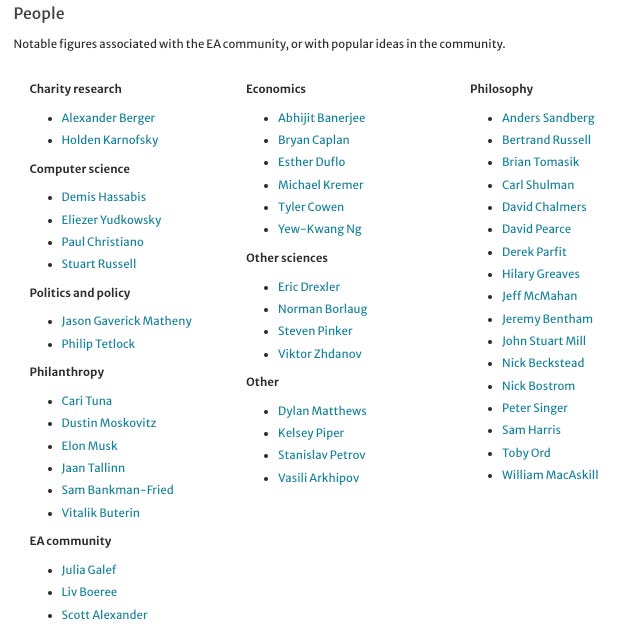
When you look at the People page of the EA forum, you’ll find lots of economists (and entrepreneurs) but almost no other social scientists. You will also notice that the vast majority of the people on this page are white men. This has been this way for a long time; this is what the page looked like a year ago:
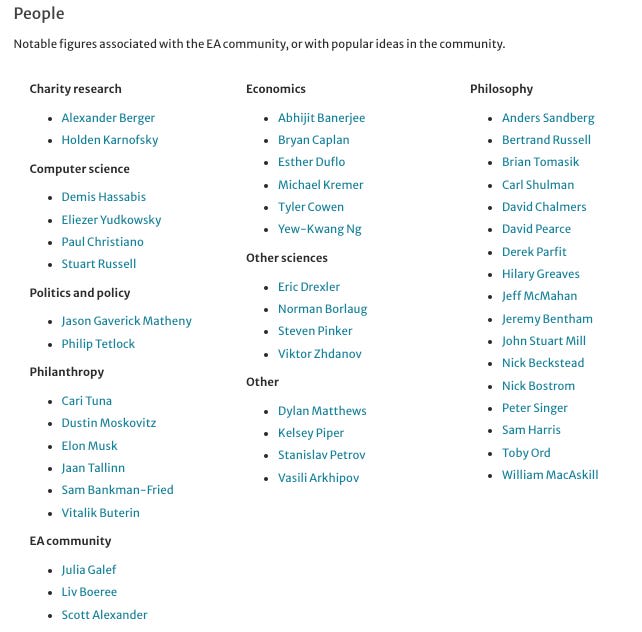
I myself removed Elon Musk and SBF from this page, but don’t worry, this post will focus on the dangers of overrelying on economics, not on overrelying on capitalists (although they are related).
So what might those dangers be, and why is EA so stringent in its use of other disciplines? Well, those things are related too; economics is extremely insular. Other social studies make a lot of attempts to integrate themselves with all the other social sciences. This makes it so that learning about one discipline also teaches you about the other disciplines. Economists, meanwhile, have a tendency to see their discipline as better than the others, starting papers with things like:
Economics is not only a social science, it is a genuine science. Like the physical sciences, economics uses a methodology that produces refutable implications and tests these implications using solid statistical techniques.
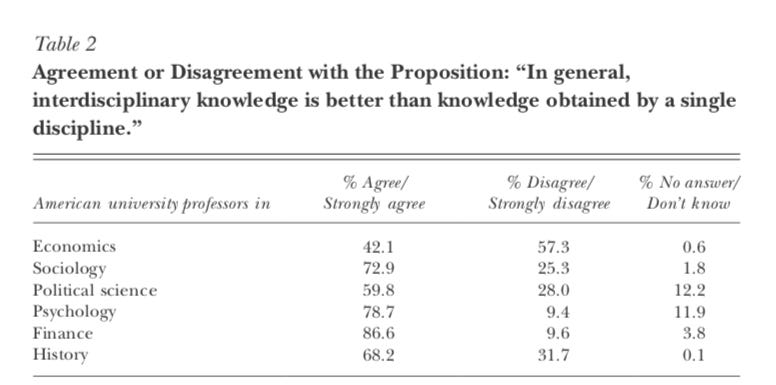
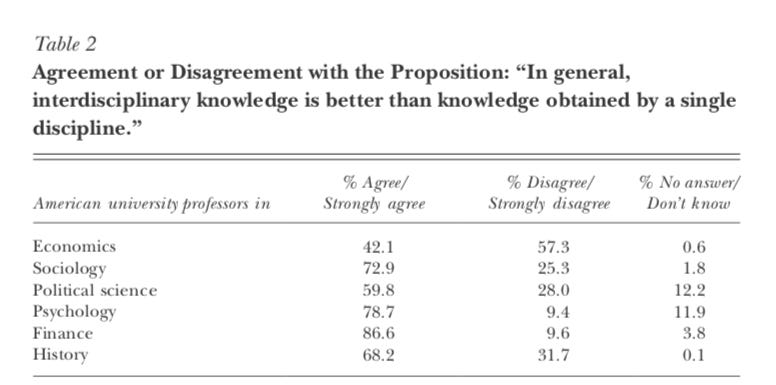
In the paper "The Superiority of Economists" by Fourcade et al, economists were found to be the only group that thought interdisciplinary research was worse than research from a singular field:
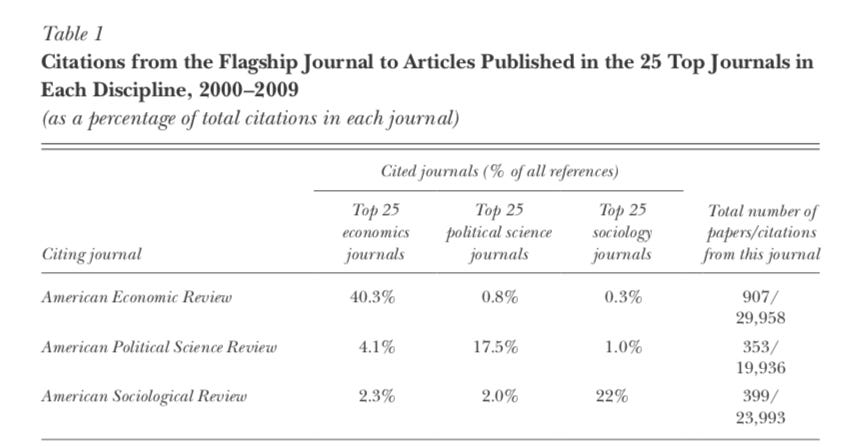
Furthermore, they looked at top papers from political science, economics and sociology. They found that political science and sociology cited economics papers many times more than the other way around:
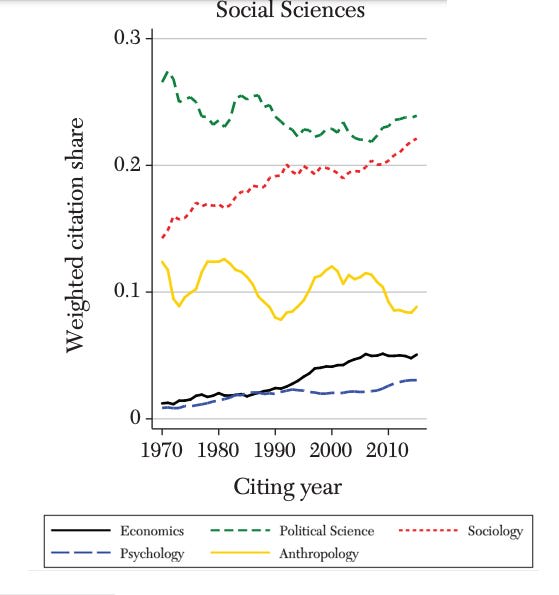
This lack of citing other social sciences was later confirmed by Angrist et al:
Given the complex interdisciplinary nature of societal issues, studying the basics of economics might make you overconfident that you can solve societal problems.
Take, for example, supply and demand. The standard supply and demand model will tell you that having/increasing the minimum wage will automatically increase unemployment. But if we look at actual empirical evidence it shows us that it doesn't. Overrelying on simple economic models might mislead us about which policies will actually help people, while a more holistic look at the social sciences as a whole may counter that.
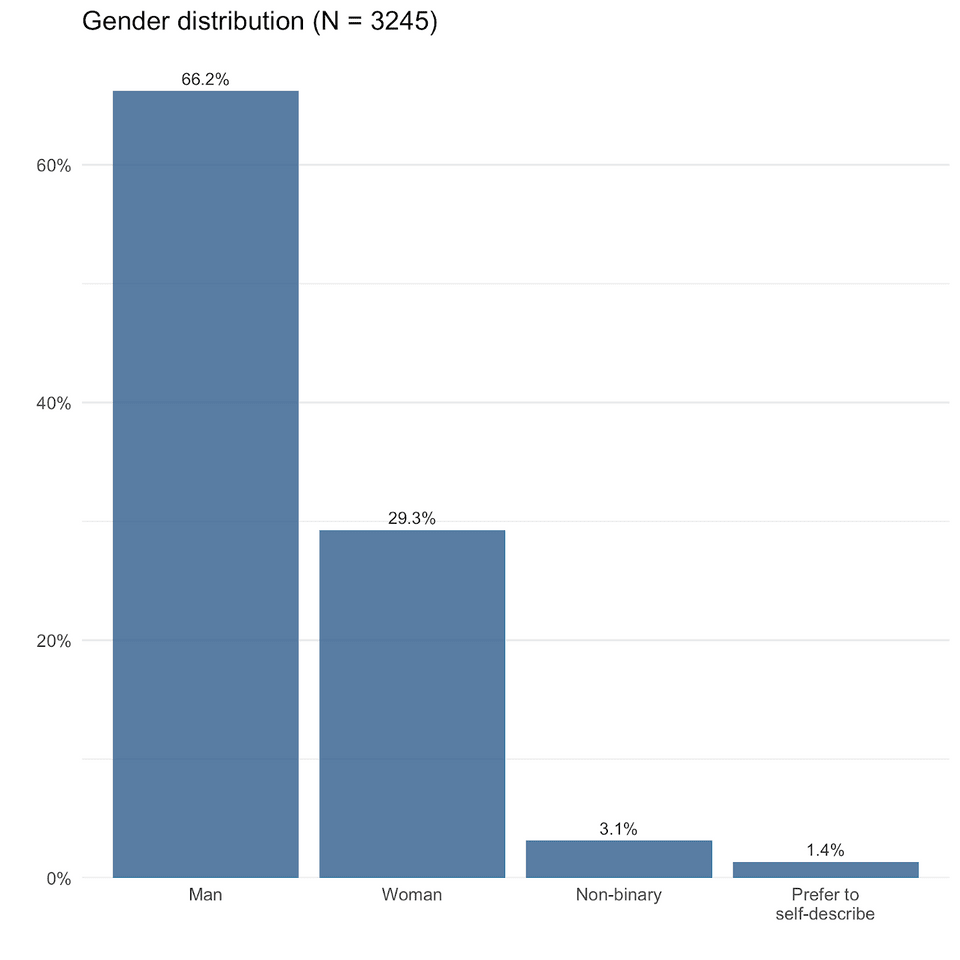
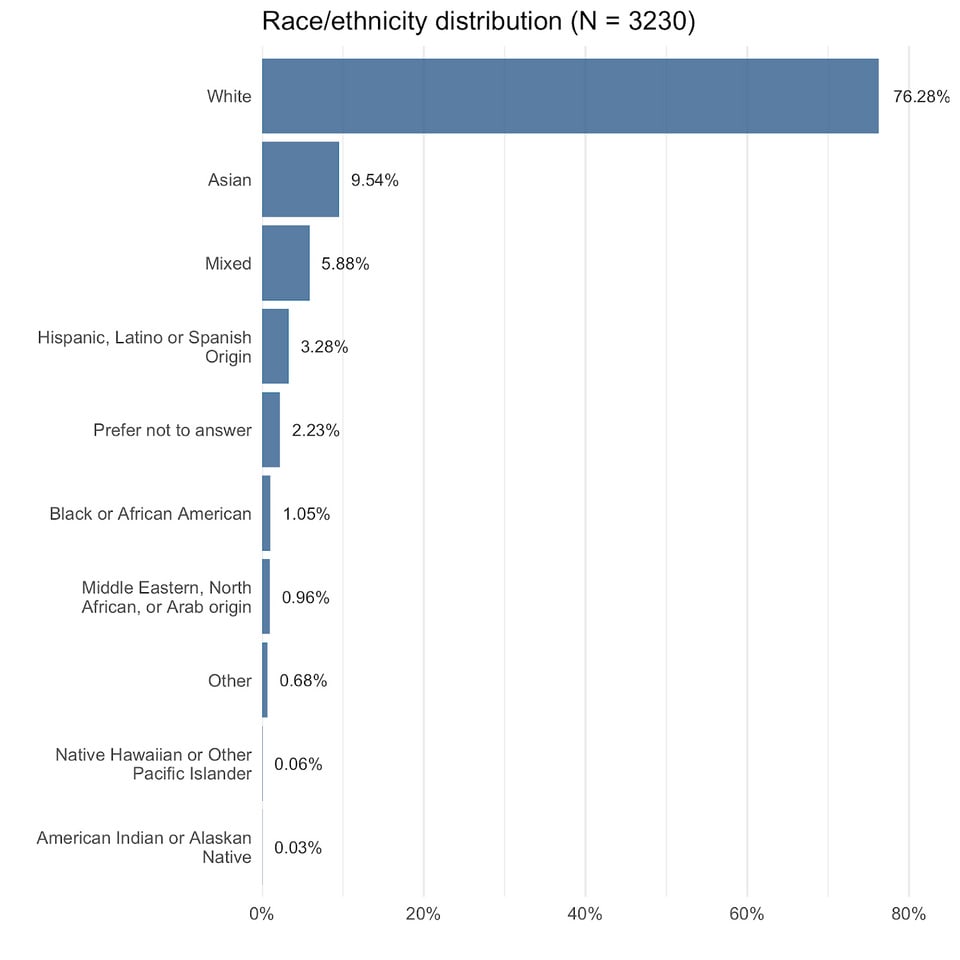
Furthermore, by focusing our recruitment on only a couple disciplines, we inherit the demographic problems of those disciplines. It is no wonder then that, just like the EA community, economics is also very homogeneous. Only 29% of the EA community are women:
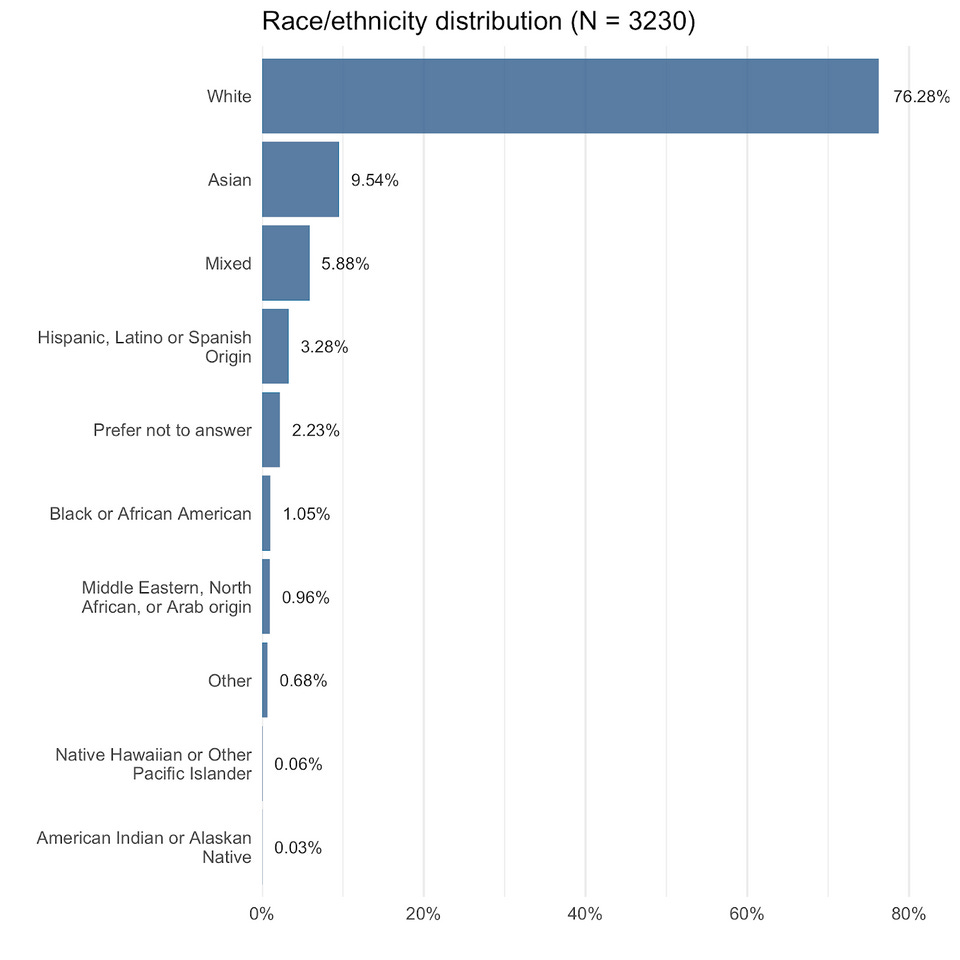
While 76% are white:
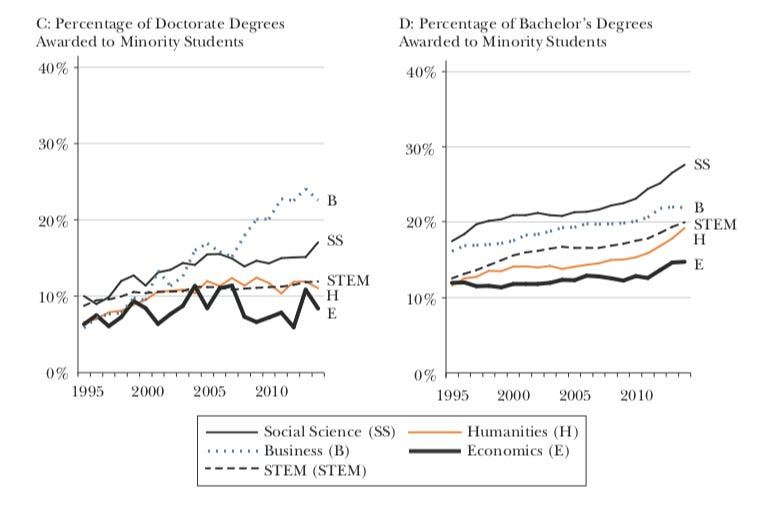
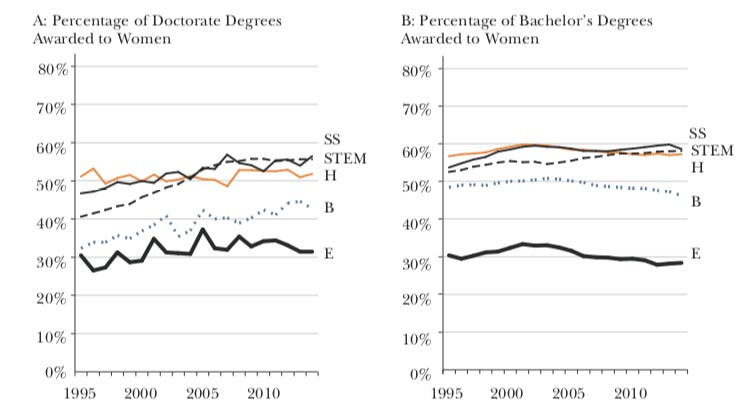
Bayer and Rouse show us that minorities are given fewer degrees in economics than other disciplines:
As are women:
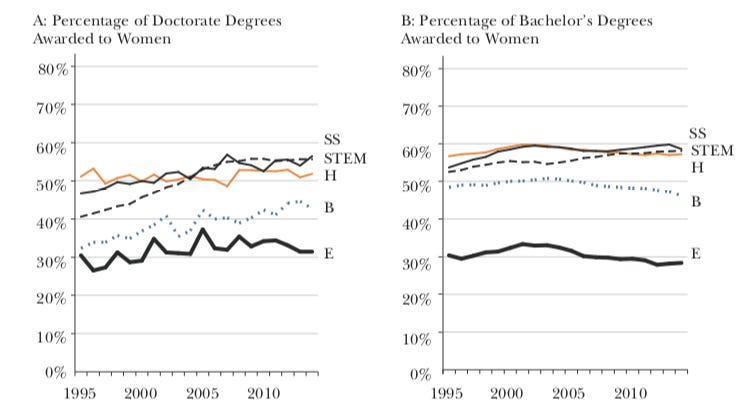
They also get only 13.7% of the authorship of economics papers, are less likely to get tenure in their first academic job compared to men, and face a lot of discrimination in general. An AEA survey found that half of women say they were treated unfairly because of their sex and almost half say they've avoided conferences/seminars out of fear of harassment.
If we look at the other two popular disciplines in EA, philosophy and computer science, we’ll see that they have similar issues with underrepresentation and discrimination.
If we want to avoid these issues, I suggest we start reading and recruiting more from other disciplines too.
![Bob Jacobs [inactive]](https://res.cloudinary.com/cea/image/upload/c_crop,g_custom/c_fill,dpr_2,q_100,f_auto,g_auto:faces,w_36,h_36,b_white/Profile/w5vjftvndjb0tsxvugwg)




Apologies if this is already covered in the citations you linked somewhere, but I don't think the chart/graph you posted is direct evidence that economics is more insular than other fields. There are more economists (and psychologists!) than anthropologists and political scientists[1], so if you assume citations are a random graph[2] with a penalty across disciplines that decreases with time, you might get something similar to the current observed data, without any meaningful differences in field in propensity to cite .
Now I haven't done the analysis myself so maybe you still see bias after controlling for that, but I think this is such an obvious thing you should control for that I'm skeptical of any analysis without such controls.
I also think "minorities are given fewer degrees in economics than other disciplines" is a weird gloss for the Bayer and Rouse data, since their definition of "minority" inexplicably do not include Asians!
For example, a quick Google search suggests ~6200 political scientists and ~35,000 economists in the US, which is a very similar to eyeballing the ratios you posted.
In the extreme, imagine if there's 10,000 economists and 10 philologists. Obviously the philologists are individually much more likely to cite economists than vice versa! So that alone can drive the ratio differences, even if the philologists actually have lower cross-disciplinary willingness to cite than the economists!
The first (by Fourcade et al) is about percentage not absolute numbers, so this is direct evidence of economists preferring to stay insular. Same for the one about citations in flagship journals. We can see that both the number of papers and the number of citations in economics is indeed higher, however it's so minor (still within the same order of magnitude), while the differences are so large (more than an order of magnitude) that the trend still remains. Similar for the Angris et al one (also, I don't know where you got these numbers from... the bureau of labor statistics indeed says 6,200 political scientists, but only 17,500 economists, so that ratio is not enough to explain the gap).
I'm more worried about black and other minorities within EA, since, again looking at the EA demographics data, Asians do comparatively better (comparatively being a load-bearing term there), while black and brown people do not (maybe also inherited from economics?). When we look at the race scandals in EA (Bostrom scandal, Manifest scandal, FLI scandal...) it's always about black and brown people being called less-intelligent, not Asians. So I think that's where our focus should be.
The source was DataUSA; I didn't look too carefully and I'm happy to agree that BLS is a better source.
Suppose there are 1000 economists in the world and only 2 political scientists. Would you agree that if a higher percentage of political scientists' citations were of economists than economists citing political scientists, it's not evidence of economists being more insular?
If it was literally 2 we couldn't do statistics, but say it was the same ratio but one we could do statistics on, e.g. 1000.000 vs 2000, I would say this research is valid. If it was just about citations it would be a problem, but what's being polled there is opinions on interdisciplinary research, so it's about attitude towards working with other disciplines in general.
If a higher percentage of (a quantitatively smaller number of) political scientists think working with other disciplines is better, whereas a lower percentage of (a quantitatively higher number of) economists think so, then even though there is (in absolute numbers) a higher quantity of economists who think that interdisciplinary research is better, we can still (comparatively) say that economists are more in favor of being insular than political scientists.
I agree about attitudes, I was referring to citations.
I ended up doing some of my own empirics here. See my comment below in response to David.
I am beginning to see what Linch is saying. The actual hard question here is - What is the appropriate counterfactual to EA? EA is more insular compared to what exactly? Bob says compare the state of Econ against the state of EA but is that fair? I wrote some more initial thoughts down in my Github repo along with some R/Python code.
I can't believe my first instinct was to think about the comparison group. But I got there and better late than never!
Haha thanks! Honestly I think you contributed much more to the discussion than I did! No need to say "I am beginning to see what Linch is saying." I think you were answering a different question!