Comments
The National Risk Register is a morbidly fascinating document I've stumbled across recently. It aims to provide the UK Government's public-facing opinion on what the most serious risks facing the UK are. It's unclear how much this document is used in justifying internal decisions made across UK Government. However, one document its cited in is the Pandemic Preparedness Strategy.
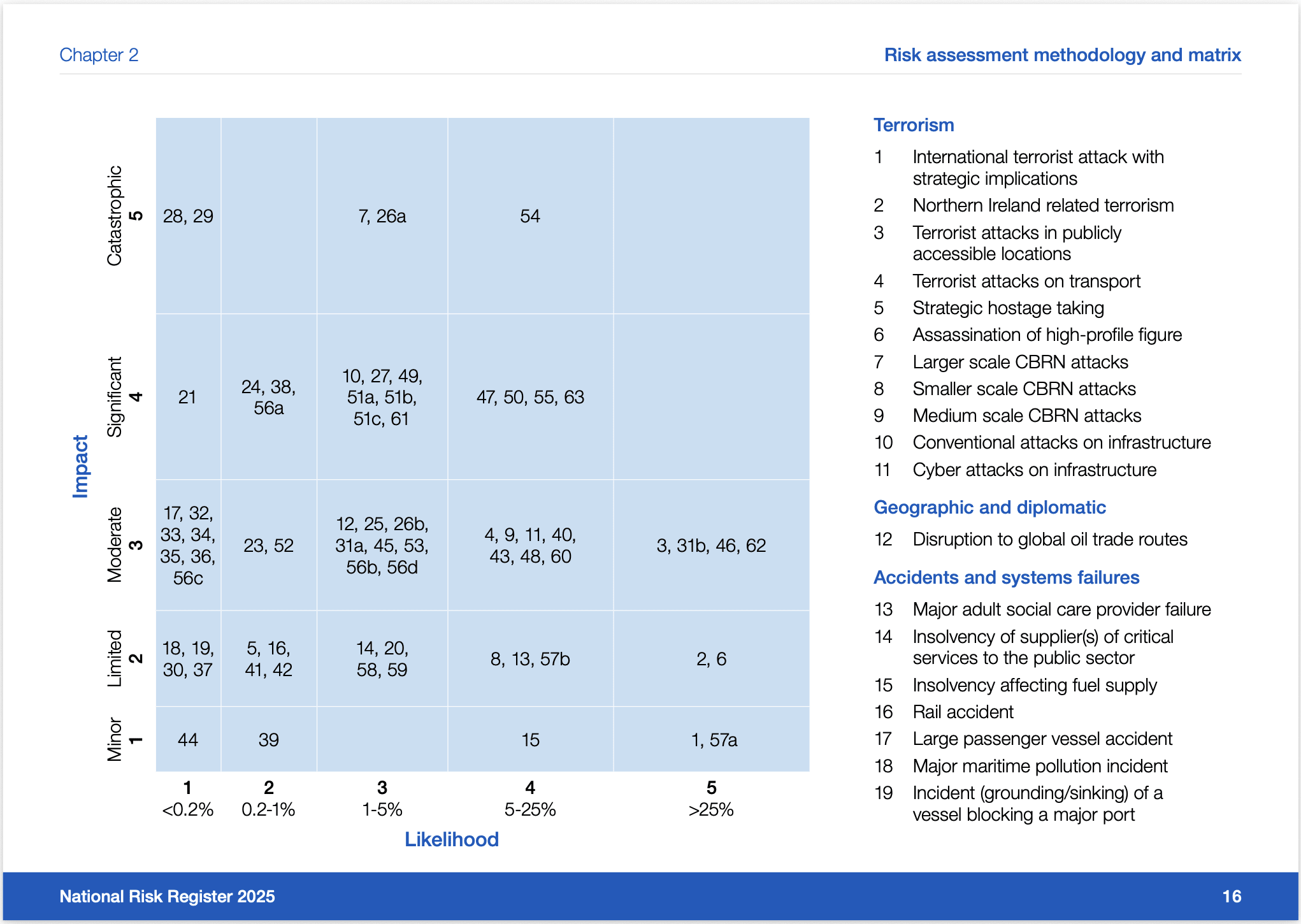
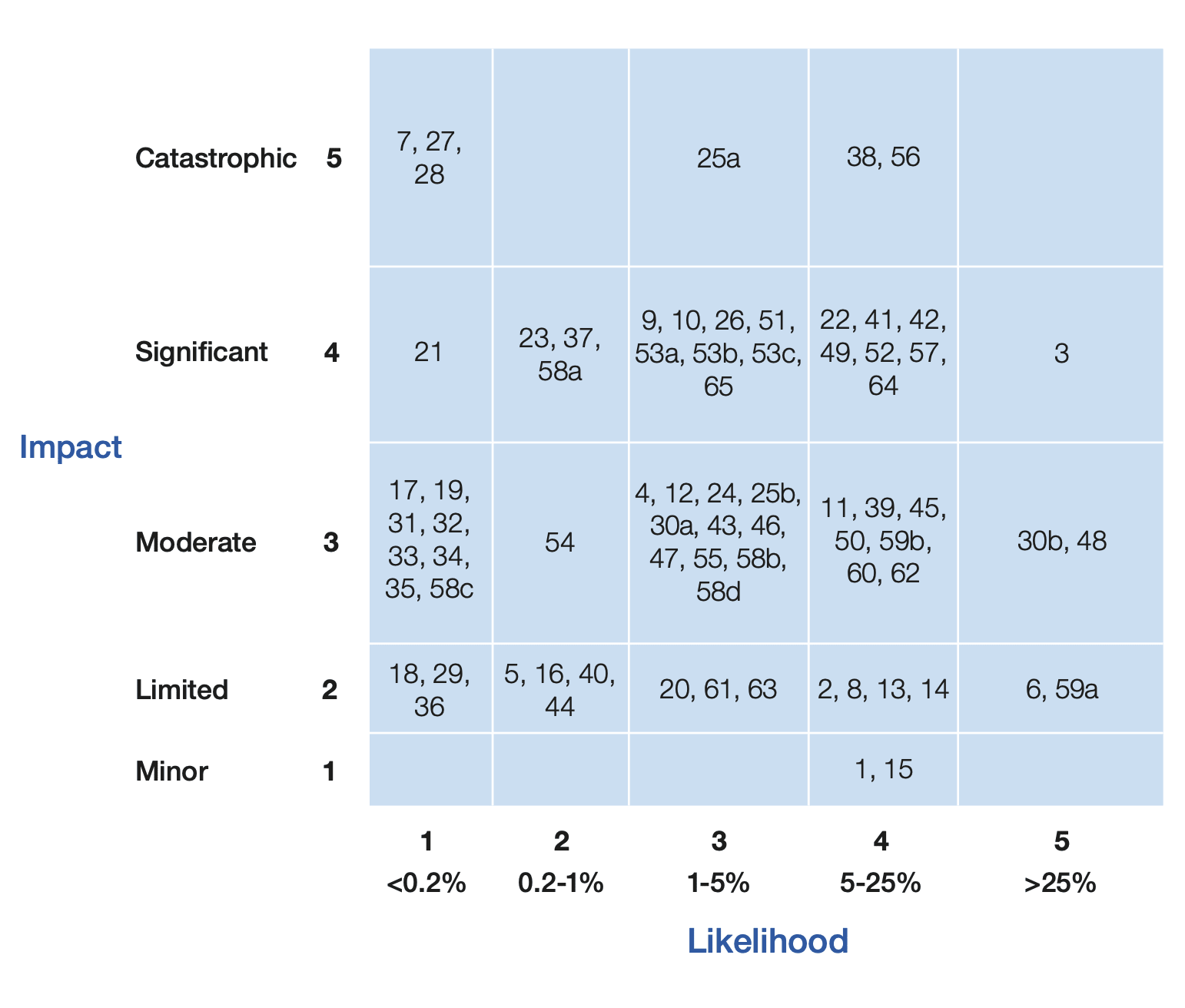
One of the headline figures of this register is the Impact-Likelihood matrix across all risks. The important numbers to pay attention to for this are:
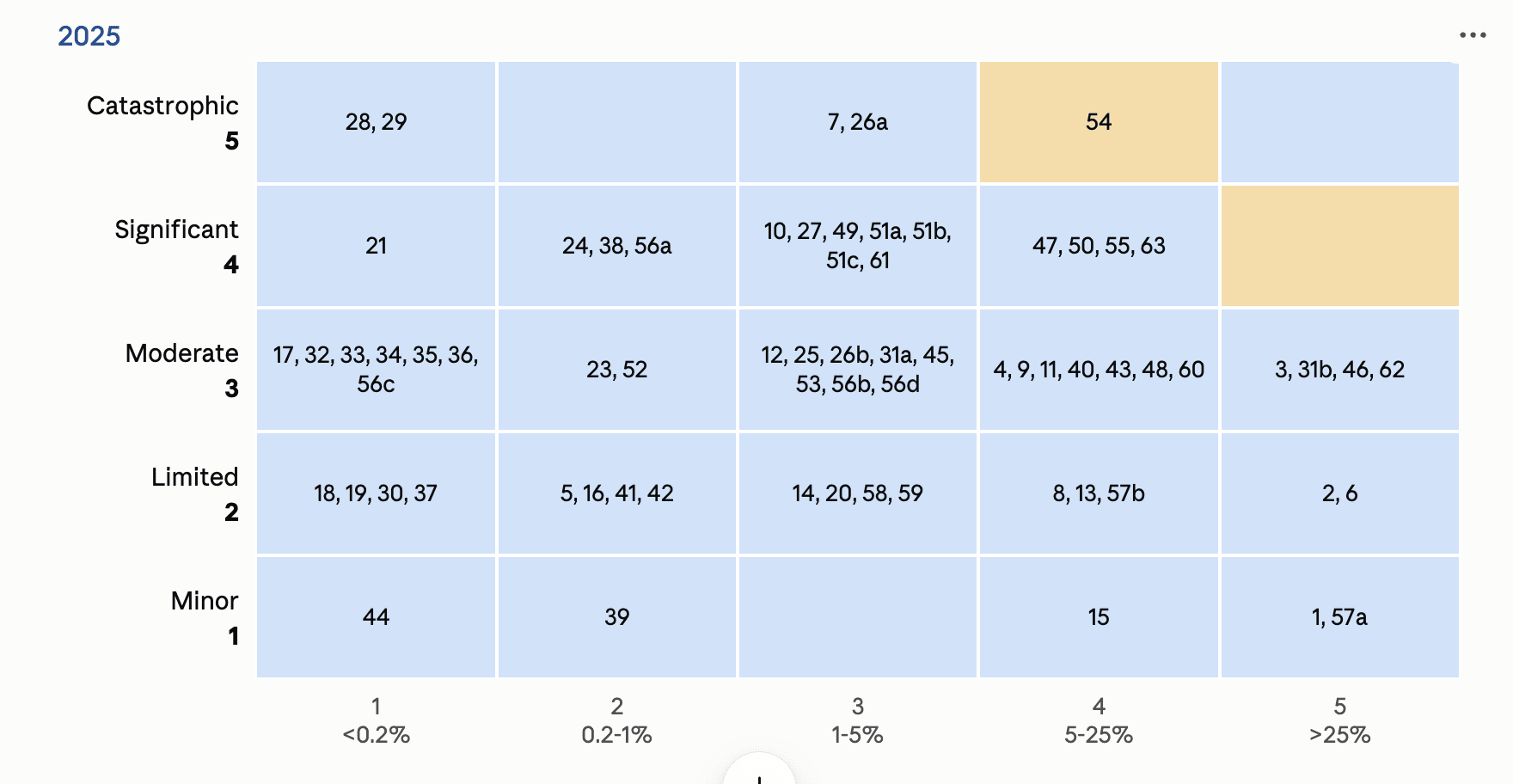
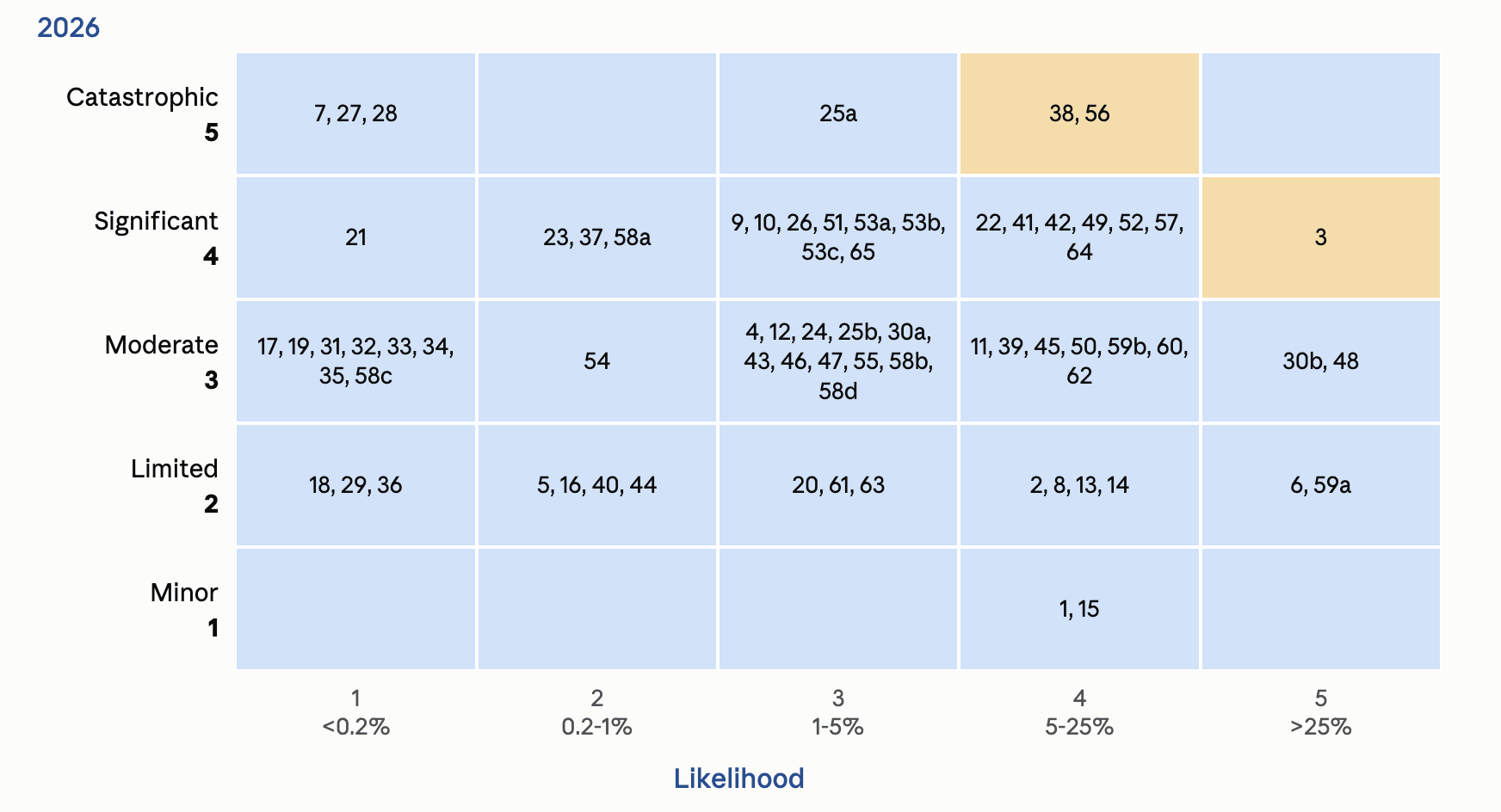
Larger scale CBRN attacks (Chemical, Biological, Radiological or Nuclear) - 7
Pandemics - 54 (2025), 56 (2026)
A couple of other things to note:
- Likelihood represents the believed chance of this event occurring over the next 5 years.
- A catastrophic impact is defined as one that causes >£10 billion in damage or causes >1000 deaths. On a side note, the classification of this upper bound is clearly too low. As an obvious example, COVID killed 200,000 people in the UK, so it should be at least two orders of magnitude above the upper limit.
Here is the National Risk Register's risk matrix from 2025:
Here is the National Risk Register's risk matrix from 2026:
Notice the change?
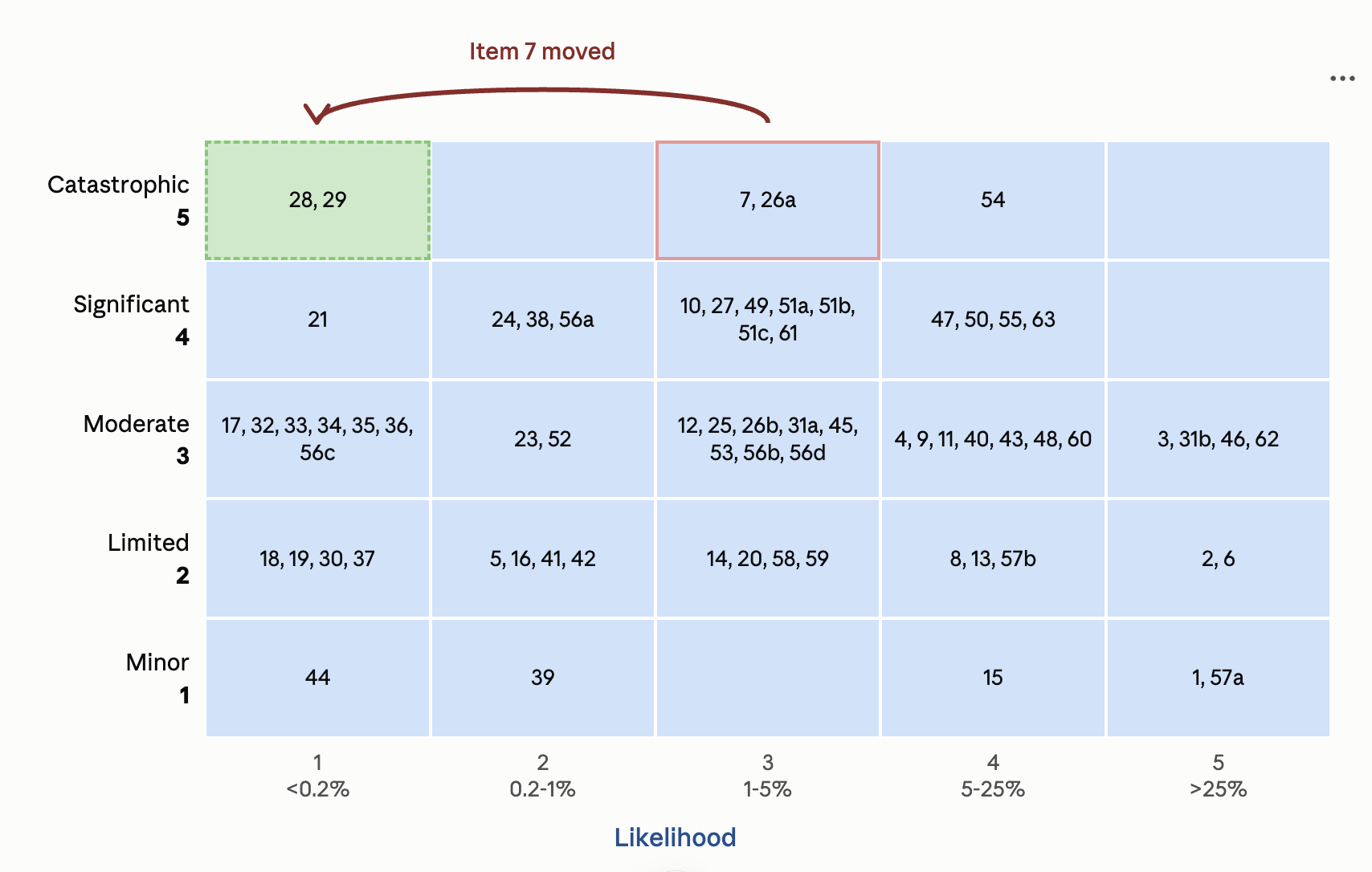
Large-Scale CBRN attacks have moved from 1-5% to <0.2% likelihood over the next five years, a drop of at minimum 5x. Realistically it's more like a 25x reduction (given that the jump at each point is ~5x).
The priority score works on the diagonal, taking the average of the impact and the likelihood score. So this event has moved from the 4 to the 3.
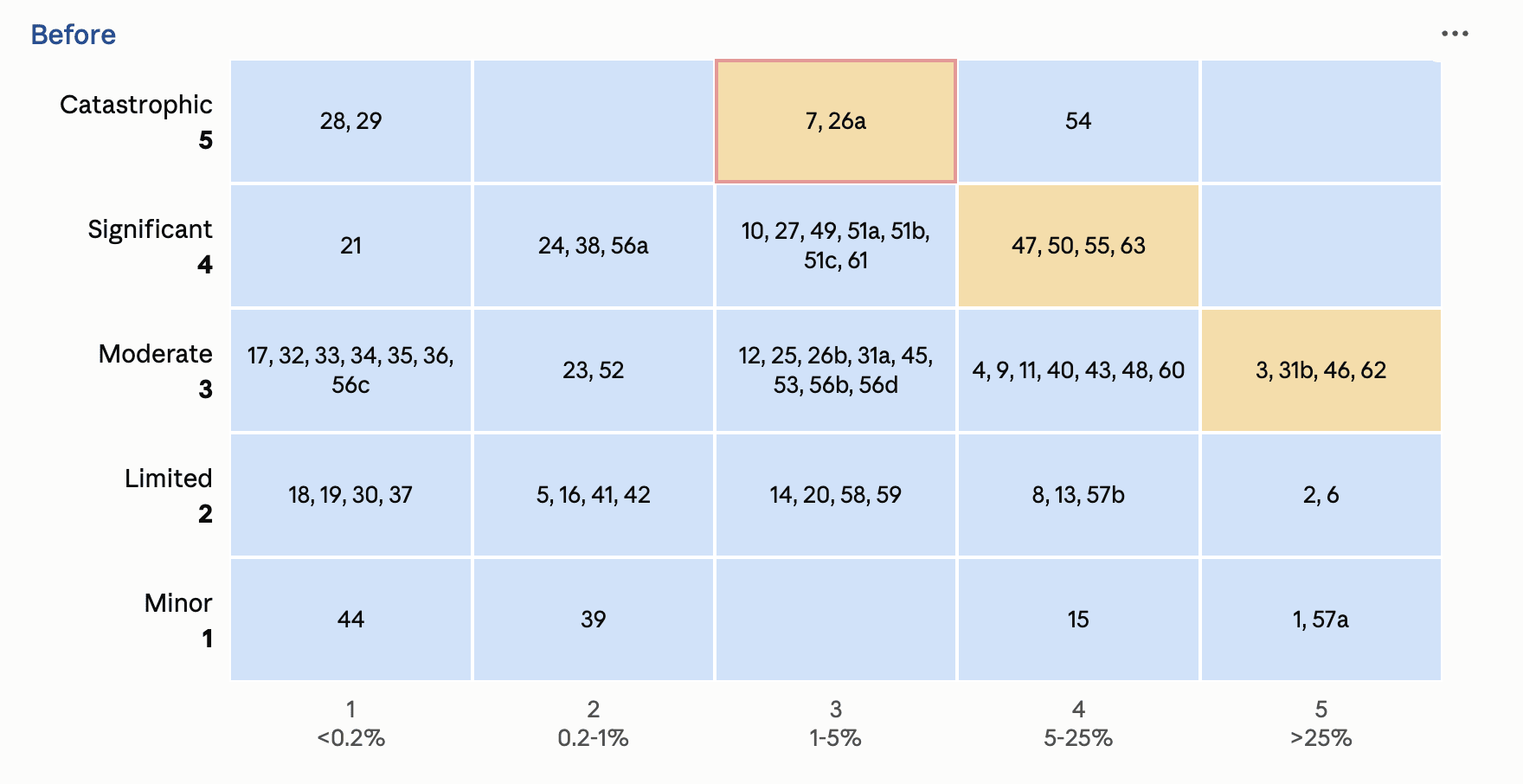
Last year CBRN attacks were considered in the top 10 risks facing the UK. Now it is in the same cell as domestic and foreign nuclear power plant accidents, and more than half of other risks are considered equal or more pressing.
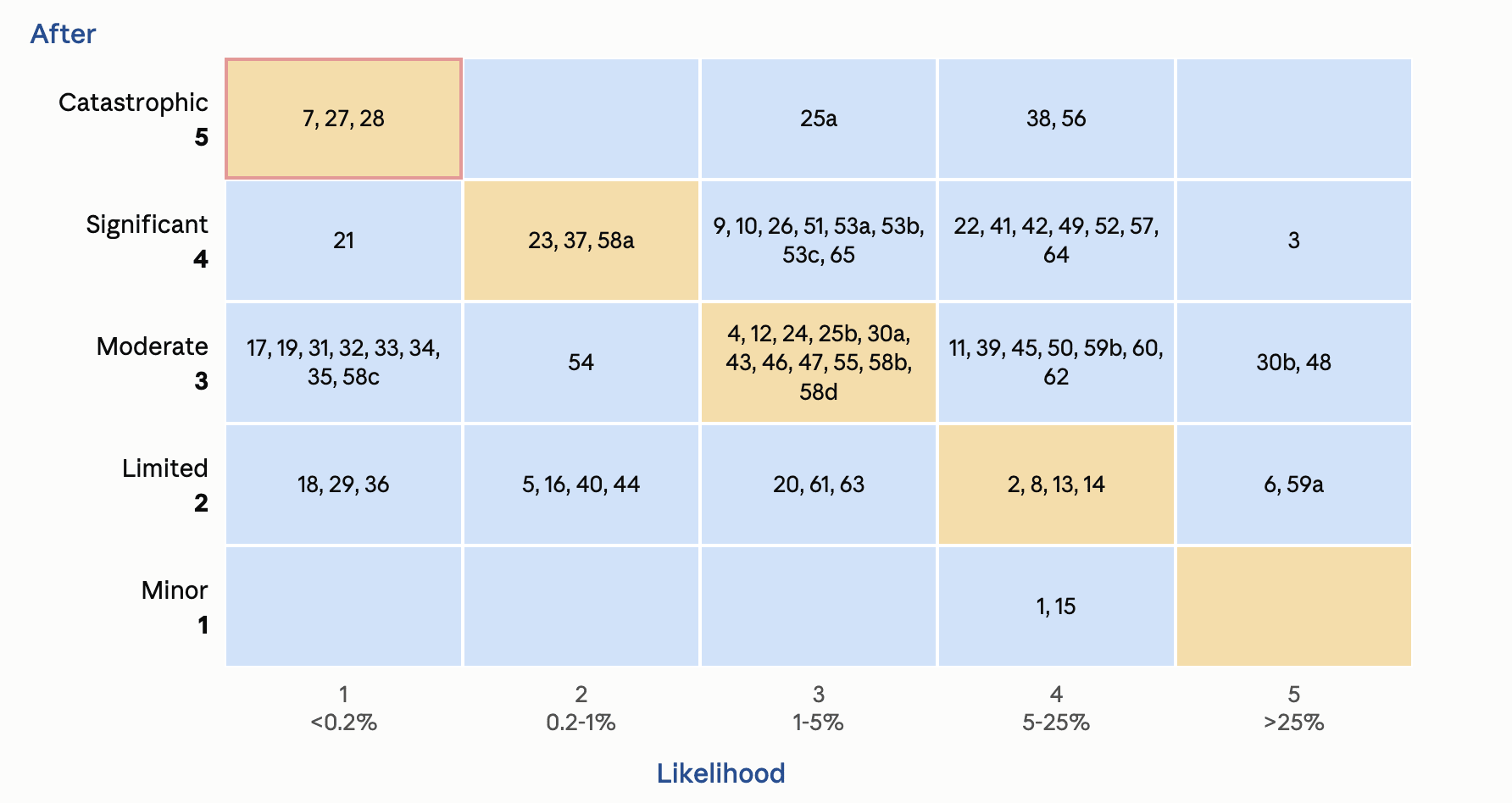
There may be reasons for this change in classification - potentially there was a high risk of Russia attempting a CBRN attack last year. Or it could be a signalling of change in political priorities. Or, on a more positive note, it could signal the success in exercises like Project Pegasus at effectively controlling spread of CBRN materials, though I'm less confident in this.
The document signals nothing about the reasoning for this change in the document; the texts on large-scale CBRN attacks make near-identical points last year and this year.
The second change worth pointing out from this matrix is that (natural origin) pandemics held the 4.5 pareto exclusivelylast year - the highest risk on the government's agenda; Not any more. Now pandemics have been joined by Water Infrastructure Failure (38) and Terrorist Attacks in Publicly Accessible Locations (3). Further resources will likely be diverted to these areas at the expense of pandemic preparedness. Note, rather confusingly, Pandemic has changed number from 54 to 56 from 2025 - 2026.
What to do with this
If both of these subtle public signals are anything to go by, the Cabinet Office is quite significantly deprioritising biosecurity and nuclear risk. Times of rapid change are often be most tractable. The final COVID reports are due to be released over the next few months, as is the report on Exercise Pegasus. The Burnham Government also seems particularly receptive to acts of moderate public spending, which could include pandemic robustness. So overall, public and political advocacy in the UK could be particularly fruitful at this time.
11


