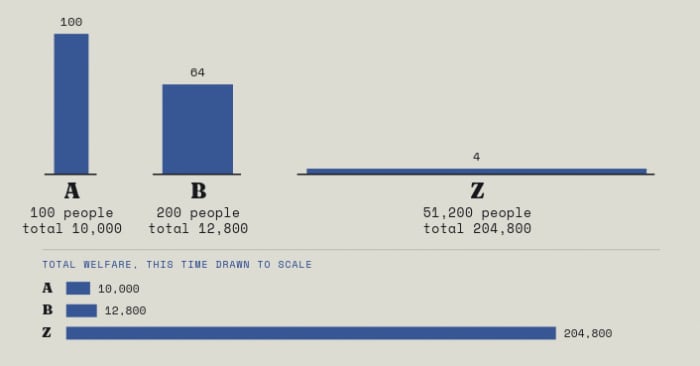
Population ethics is a big deal, which is why I made this population ethics quiz
Selected posts to help us answer: How can we do the most good with our resources?
Popular comments and quick takes
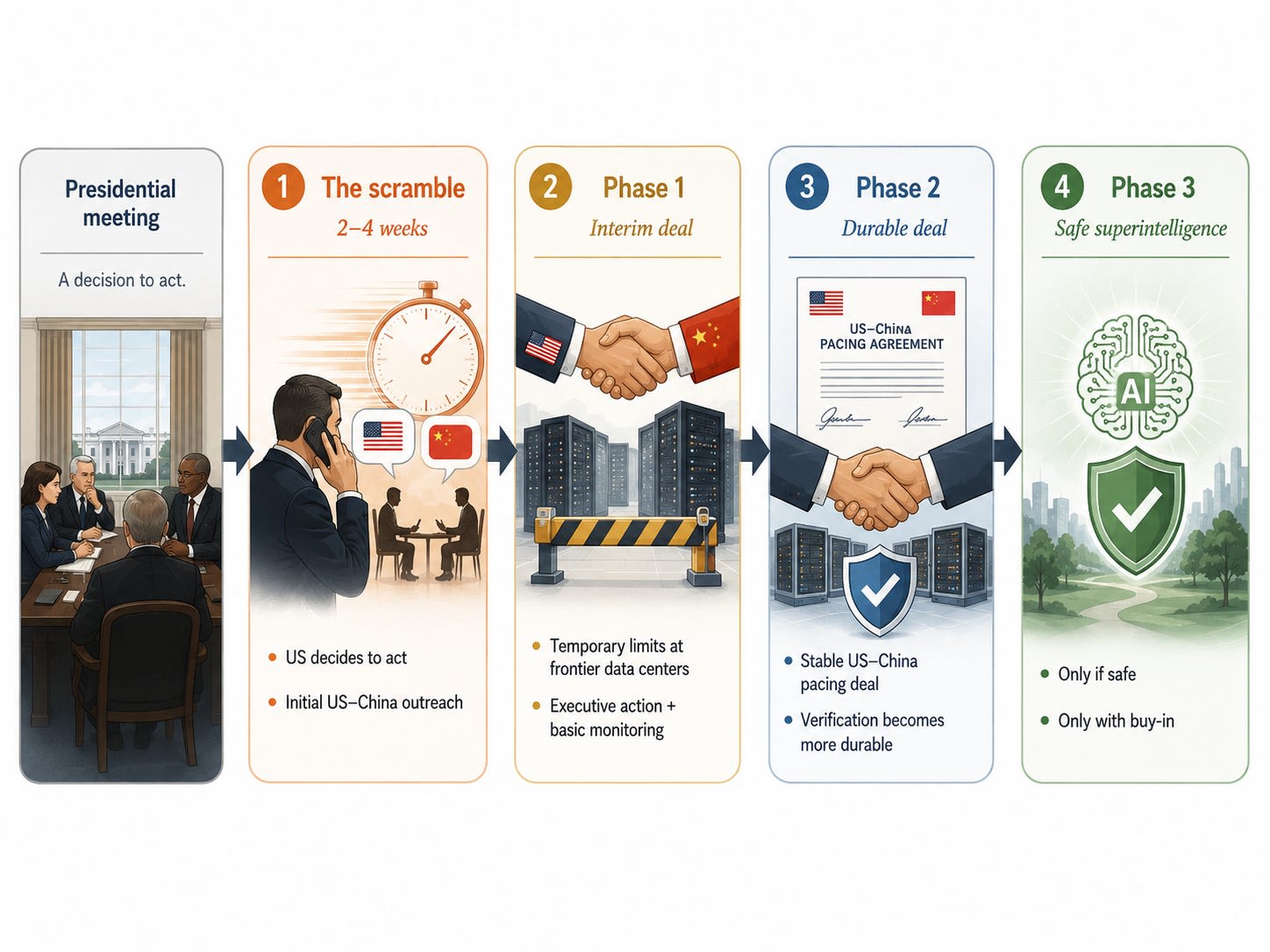


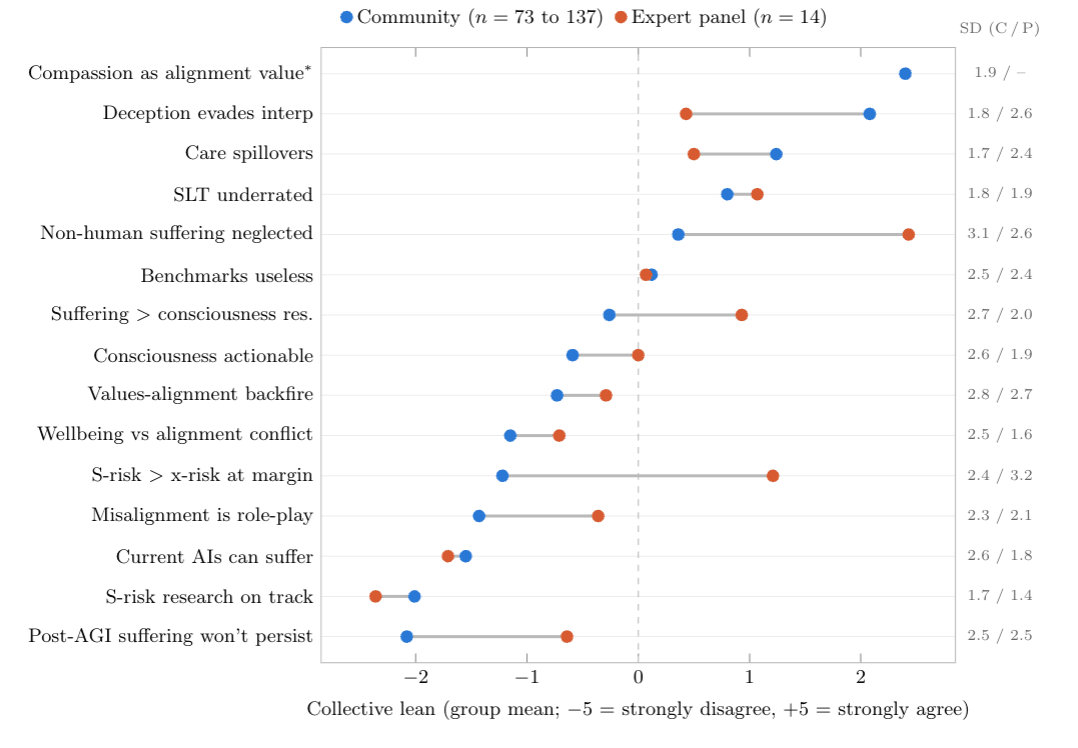
AI safety needs people everywhere but quickly stated, current talent bottlenecks to me look like:
-- Founders
-- Grantmakers
-- (technical) Research leads
-- Policy entrepreneurs and implementors (which includes a lot of technical work)
-- bets in international coordination and/or cooperation
-- All manner of supporting talent -- program leads, ops proper, public outreach, content creators, comms
Most sought-after qualities for talent are:
-- context, mission alignment, domain understanding, sophisticated views on AI strategy and threat modelling etc.
-- "good judgement", "sound epistemics", "reasoning transparency" and other similar ideas/meta-skills from the EA/rationalist cannon
-- a willingness to get shit done/bias for action (rather than be in learning mode, or people who need a lot of management and oversight, or folks with too many preferences/constraints)
-- low ego, similar to above
-- ambitious folks, since they would be really trying to be their own managers, take on bigger projects, grow themselves and their teams etc.
Finally, even having these, it's not enough to just claim to have these; job-seekers mainly trip up in being able to demonstrate and be legible about having them.
Is it harmful to keep your money in index funds? Let's take a random index fund like FTSE Global All Cap Index Fund. If we look at the companies it actually invests in, a lot of them are the same companies that work towards advancing the AI.
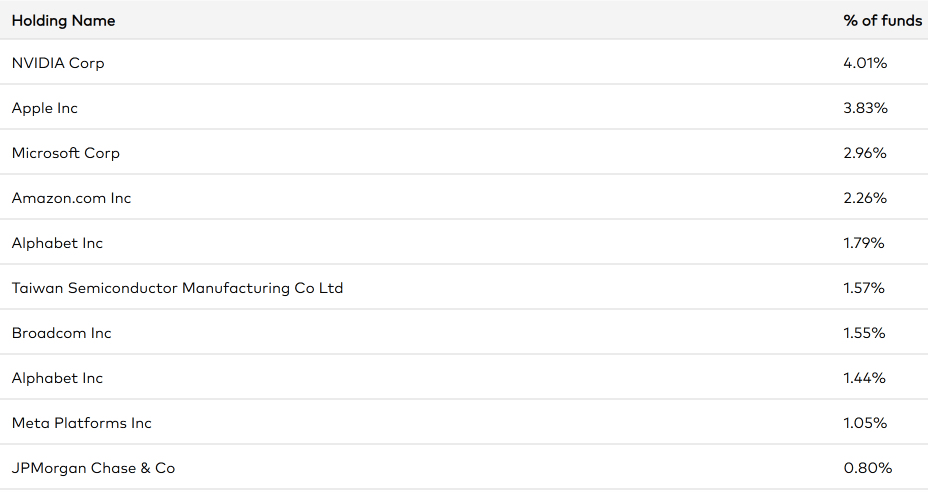
It would be ironic for some of us to be in favour of pausing AI and invest money into it at the same time. I used to keep some of my money in such funds because that was always the financial advice for regular folk like me who don't know/think much about investments. But now I don't know what to do because this feels bad. I switch some of my funds to FTSE Developed Europe ex U.K. Equity Index Fund because that has maybe twice less investment into AI but that still feels not great. Any advice for me?
Edit: I think I want advice not only about where to invest (which is appreciated), but also whether it's the right way to think about it. Maybe it doesn't matter what I invest in because something something efficient markets, but I think this doesn't apply to AI hype? Or would I offset my investment by a relatively small donation to AI safety efforts? Or maybe not because it's often not even clear if those are net-positive...
A few thoughts:
a) "Rejected or never heard back at the first stage and left confused" - if someone clearly isn't good cultural fit, then identifying this at the first stage is the ideal outcome as it saves the time of both parties.
b) "Rejected at the final stage having wasted lots of time without useful feedback" - unfortunately, if someone is a bad cultural fit, then it's hard to provide feedback without coming off as rude. Additionally, it's hard to provide any feedback on this at all without making it easier for candidates to hide their lack of cultural fit.
c) "Many of the “unicorns” fall into one of two buckets with very few of the people I’ve spoken to falling in the middle. Many also swap between buckets without consistency" - Honestly, I'd take wrapping between the buckets without consistency as a red flag rather than a sign that the selectors were wrong. After all, in this case they seem to have failed both the immediate gut check and the more considered reflection of people who wanted to be open minded and let them advanced.
d) "It also seems like many orgs want ops people (even those on the hard ops side) to have excellent AIS knowledge and fluency, even though this is not required for the role" - I think there's a lot of benefits of having a unified organisational culture so you're all rowing in the same direction. If you hire someone who is only suited for a particular role, then you have less flexibilty in the future to promote them into other roles. You're also providing them with an implicit endorsement which may lead to them being hired into roles they'd be unsuited for in the future by other folks.
e) "A few hiring managers I’ve spoken to are very wary of hiring senior folks who haven’t come from EA/ rat circles citing individual bad experiences with such people. This feels pretty uncharitable given how many bad students there are compared to the few good students who get hired" - Is it charitable to dismiss the accounts of folks who wanted to be open minded and tried hiring such folks and then learned lessons from it? I'm not saying these hires can't work, just that the reasons for why they may not work are very subtle and I'd be much more enthuastic about your project if you were better able to steelman the opposing perspective (see also Chesterton's Fence).
f) "While it is true a bad senior hire can be more expensive than a bad junior hire, we can get far more information about the track record of senior people from their experience." - that doesn't really help if the issue is that the candidate is highly competent, but a poor cultural fit.
g) "Frustratingly, lots of these candidates do well/ are silver medalists in hiring rounds and are never passed on anywhere else" - If a candidate was just not quite good enough to land the role, you might want to pass them on. On the other hand, if a candidate is a poor culture fit, you definitely wouldn't want to pass them on.
h) "I would push these people to consider whether increased legibility of AI Safety due to recent warning shots and political salience could unlock much faster transitions that we aren’t capitalising on" - warning shots likely helps because it reduces the epistemic distance between the AIS community and the rest of the world, but I'm unsure why you think political salience would help rather than hurt. I tend to agree with Eliezer that Politics is the Mindkiller.
i) "Most of these people have done several BlueDot courses" - I've also facilitated for BlueDot. These courses do a lot of things well, but we shouldn't be expecting these courses to be fixing the problem of cultural fit. Cultural fit is the kind of thing that is hard to address with an online format. I expect BlueDot's Context Week is much more likely to be the right format for this. I also agree that local hubs are a good way of supporting this (I'm trying to do what I can at the Sydney AI Safety Space).
i) Despite everything I've said, seeing how many rounds closed without a hire suggests that we desperately need more talent and so I really do hope your project goes well, even if I think the challenge is much harder than you anticipate. Feel free to reach out if I can assist in any way.
This resonates with me, thanks for sharing.
I suspect you're a lot less alone on this one than you are with donating to effective charities and were being early to COVID. (I also suspect you agree, but spelling this out for other readers).
It's tricky to get meaningful information from surveys, but this one from June finds that a slight majority of respondents thought a superintelligence would seek to take control of humanity. AI existential risk awareness is also steadily climbing, this survey says up to 34%. I would bet that still only a very small % of people are as worried as you and me and many in this community, but lots of people are somewhat worried and could probably quite quickly get more worried and be activated to do something about it.
I think this points to saying what we're worried about, and saying it clearly (like this!), especially how quickly loss of control risks are becoming very real. I'm very bullish on AI safety comms, and expect there's lots we can do there.
I got "0 conflicts, 1 bullet bitten", with the bullet being the repugnant conclusion.
Does this mean that you have 6 bullets you'd prefer over having to bite the repugnant conclusion? :)





People in AI safety/EA spheres should reorient now towards stopping continued AI capabilities escalation.
Historically, people have been unwilling to straightforwardly say “This AI situation is disgustingly dangerous, and we need to stop” and then actually work towards making this happen. I think a lot of this is downstream of deference to high status people who weren’t willing to take positions that seemed extreme.
The current situation is very, very bad, and there is no plan to make it better if we continue increasing AI capabilities at the current rate.
We need to stop things as soon as possible, so the community and the world can orient and work out what to do. We don't need to have the full plan yet, we just need to get to a state where we aren't in imminent danger.
I predict that this position will become increasingly obvious, and people will wish they reoriented earlier. I think this will be clear ex ante; when people look back they will think that they should have reoriented earlier, given the information they had at the time.