Comments
64
...

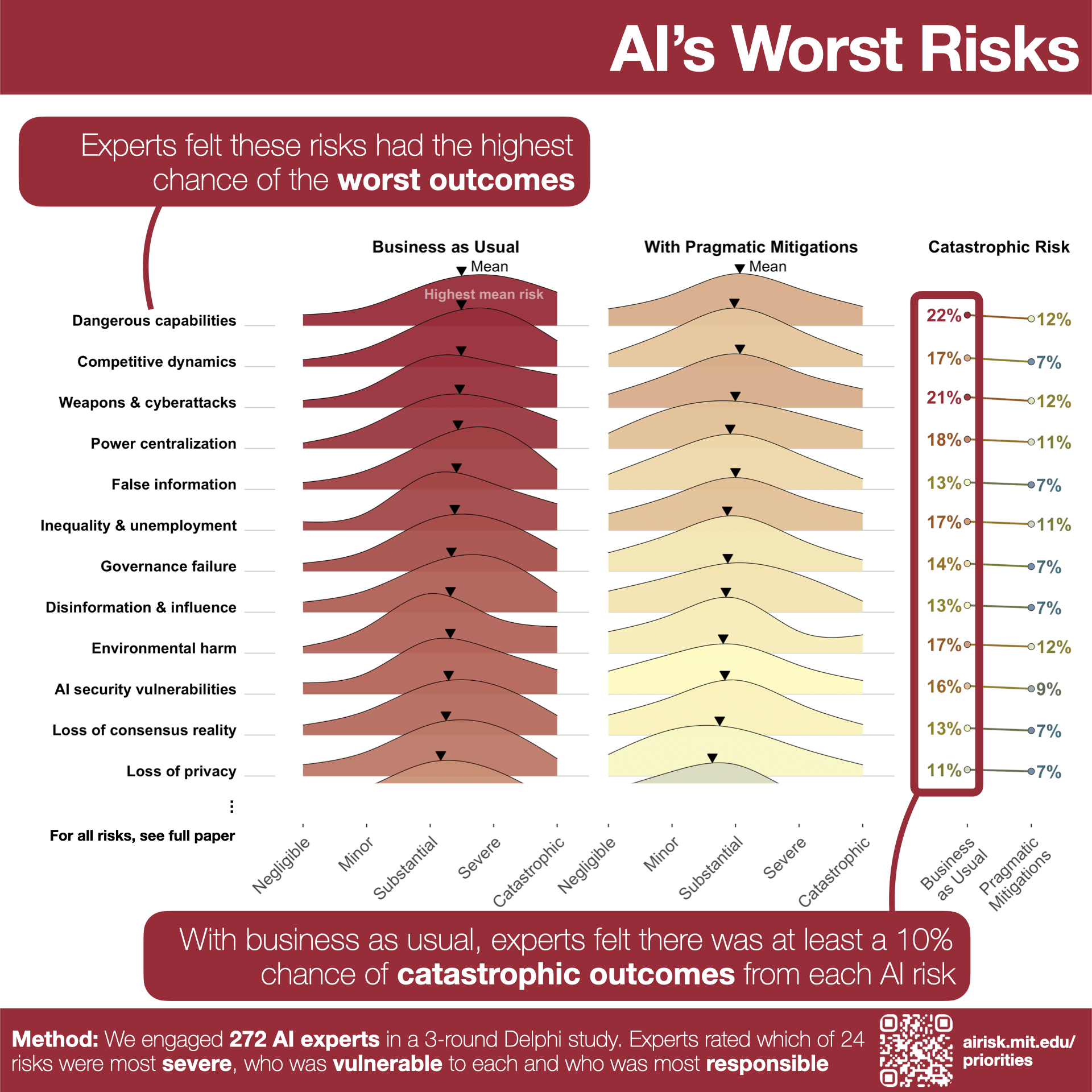
TL;DR: We ran a Delphi study with 272 international AI experts to prioritize 24 AI risk domains from the MIT AI Risk Domain Taxonomy. In a business-as-usual scenario, experts judged a more than 10% chance of catastrophic outcomes (i.e., ‘more than 1 million human deaths or more than a USD 100B in financial loss or civilizational-scale intangible impacts’) from 18 of our 24 AI risk domains over the next five years.
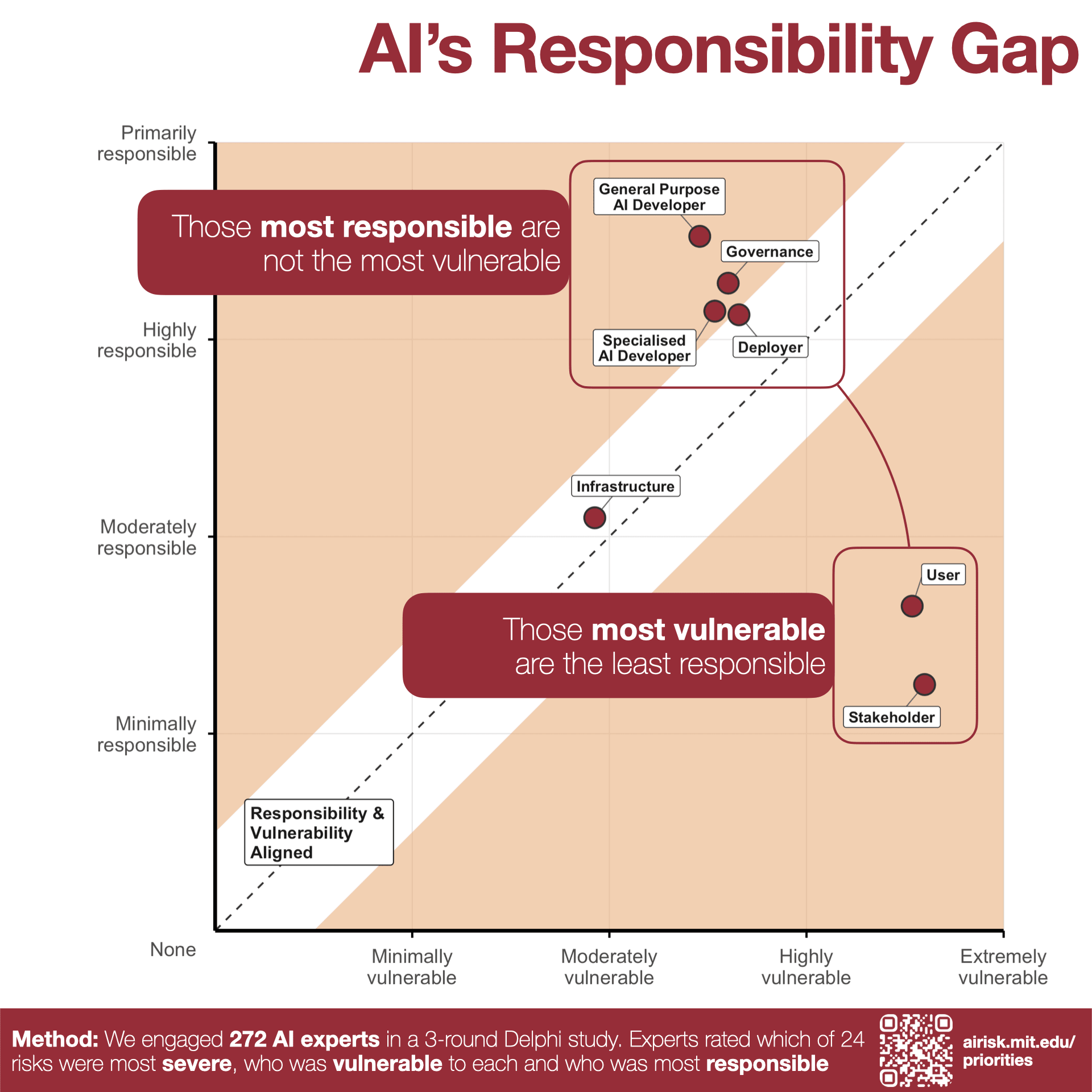
They also identified a responsibility gap: AI users and affected stakeholders are most vulnerable, while general-purpose AI developers and governance actors are seen as most responsible for reducing the risks.
Below are three of the key findings and related visualizations.
18 of 24 risks were judged to have a more than a 10% chance of causing catastrophic outcomes (which could include more than one million deaths, more than $100 billion in financial losses, or other harms) by 2030 under a business as usual scenario.
According to experts, general-purpose AI developers and governance actors such as governments, regulators, and standards bodies hold primary responsibility for addressing AI risks. In contrast, AI system users and affected stakeholders such as members of the public are most vulnerable to AI risks.
This mismatch means that those who are most responsible for addressing AI risks are not those who are most vulnerable, leading to misaligned incentives in addressing the most important AI risks.
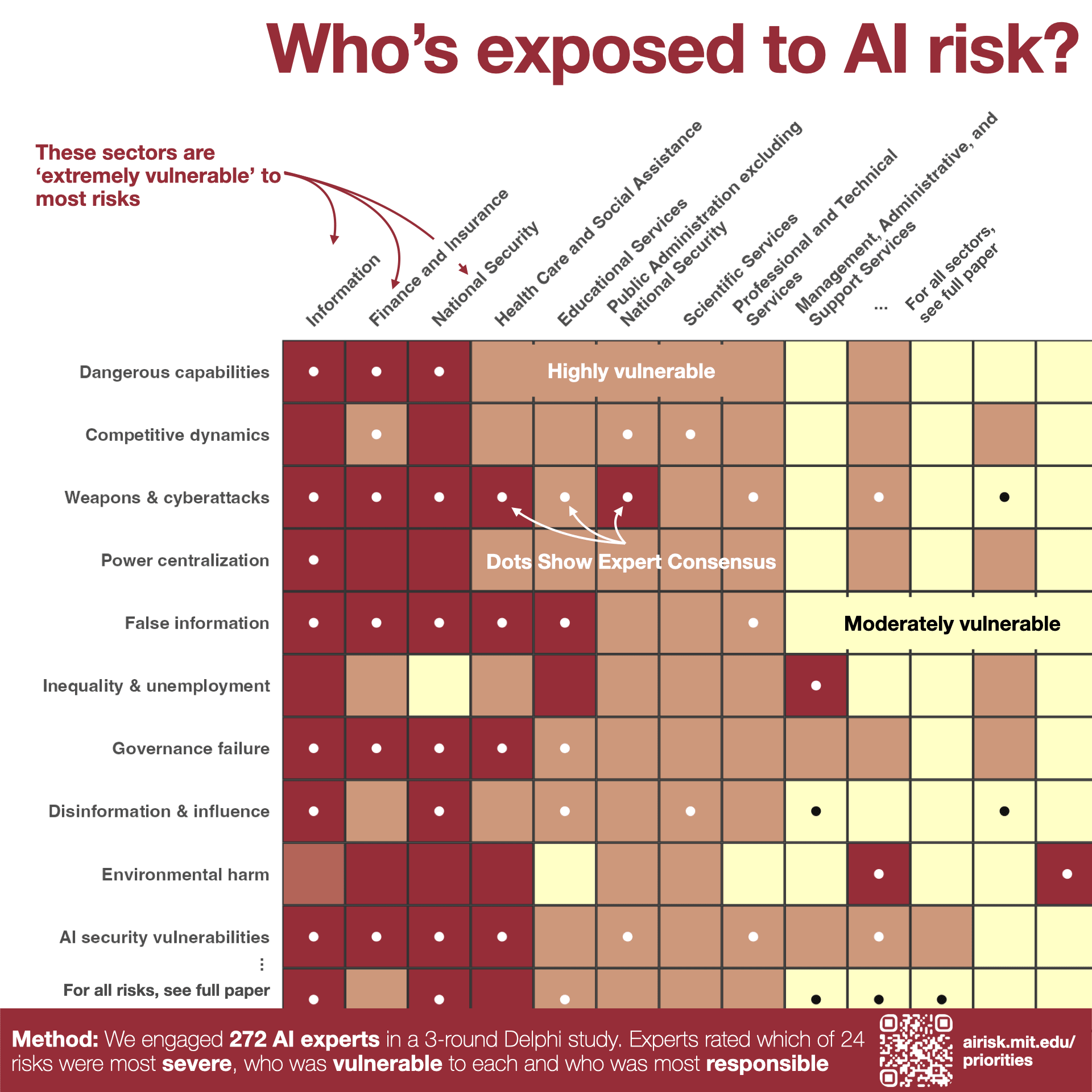
Across most risks, experts identify information, finance & insurance, and national security as the most vulnerable sectors. The results also show how vulnerability differs across sectors and risk categories.
Read our paper and explore the interactive results here.
Disclosure: I used an LLM to help generate the first draft of content in this post. I then rewrote and reviewed the text, and I endorse the final version. We also used LLMs as part of the research and communication, for instance, in generating the images and interactives.

Hi Peter.
I wonder how much the probabilities would change if they were about all sources of risk instead of just AI. If they would not change much, could it be that AI has not increased the risks, but simply became associated with all risks because it is in the process of being integrated into practically everything that is relevant for assessing the risks you covered?