Quick takes
USAID took down its archive of evaluation reports, but a high school student happened to have downloaded them for a ML project, and they are now available online again:
https://www.aiddata.org/blog/before-reimagining-development-data-remember-what-weve-learned
Ridglan Farms, the notorious beagle-breeding facility in Wisconsin raided twice by activists this year, is officially shutting down. The pressure on them has been intense because the case has attracted quite a sizeable national attention: Glenn Greenwald, Jennifer Welch (I've Had It podcast), Lara Trump and Robert F. Kennedy have all commented on Ridglan decrying the horrors there. Lewis Bollard tweeted this out recently: https://x.com/Lewis_Bollard/status/2066542219134452209
Figured I'd share this since some EAs (including myself) were involved in the campaign to get it shut down. A big part of our theory of change was to get this kind of attention. The real question is how to extend to animals more broadly than just dogs, of course, but even this counts as a big win.
I liked GiveDirectly's recent update via GWWC's email newsletter:
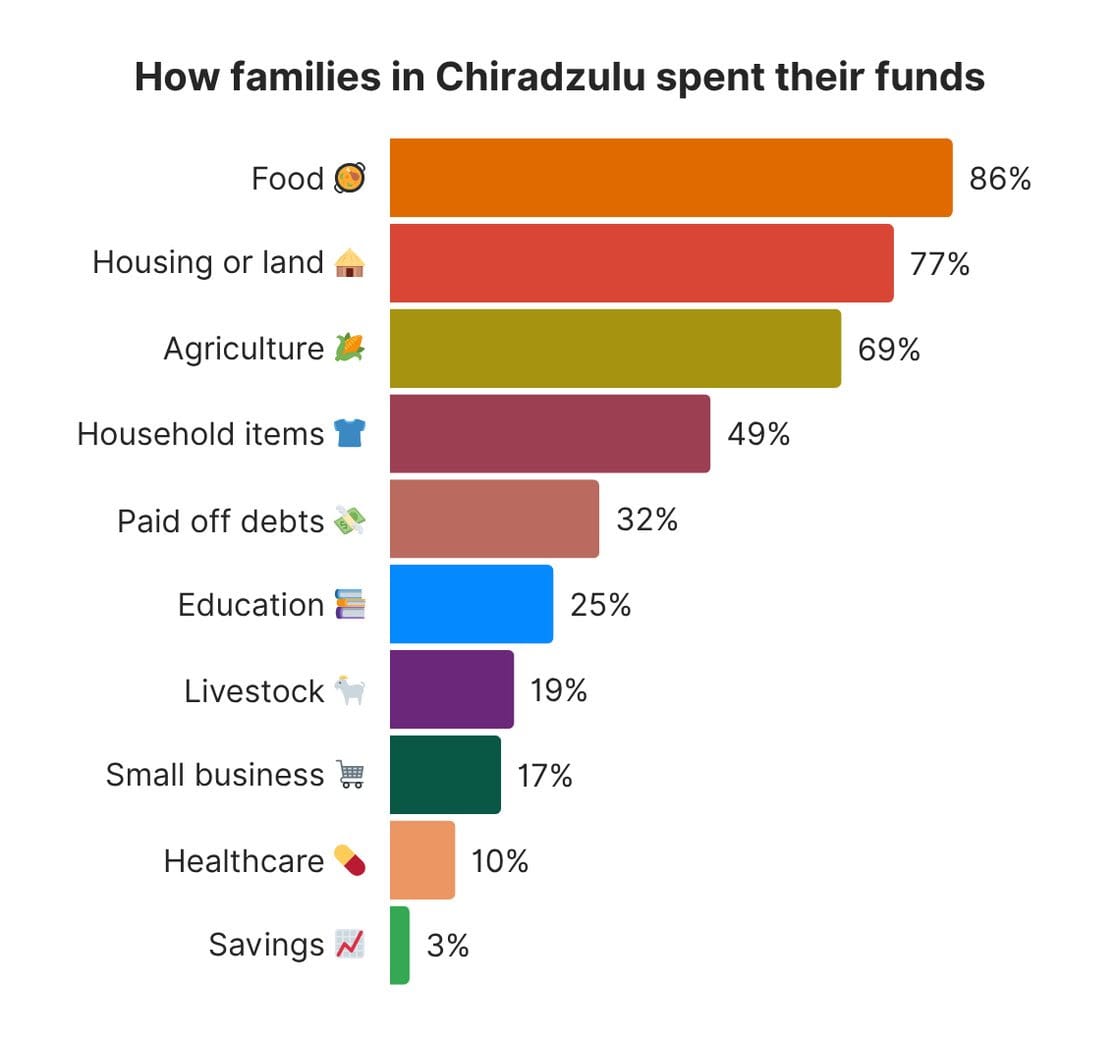
Donations from Giving What We Can community members were delivered to Masauli, Chirtera, and Mtembo villages in Chiradzulu district in Malawi. Together, we funded transfers for 954 Malawians in poverty across all three villages.
How did families spend their transfers? Here’s what follow-up surveys show:
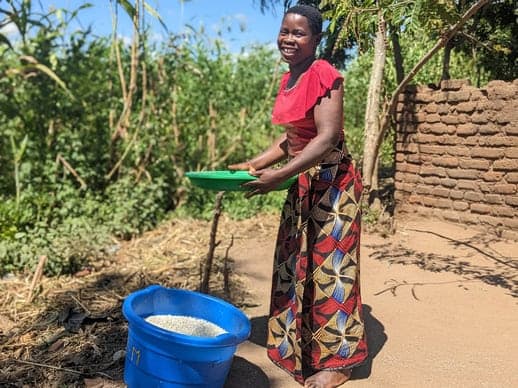
Hear directly from Emily and David, who are just a few of the people in Masauli village who received transfers from you and other GWWC members:
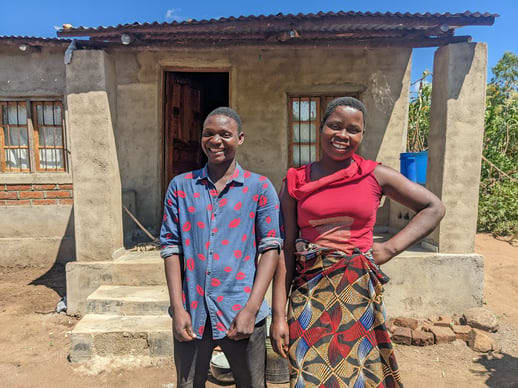
Emily and her husband, Evance
“My husband and I relied on farming and casual labor to survive,” said Emily. “We grow maize, tomatoes, and cabbage, but without fertilizer, our harvests were always small. Our house also had no windows, and we used sacks instead of a proper door. I always felt unsafe because I worried people could steal from us.”
“When I received my first cash payment, I used it to buy fertilizer. This changed everything. Our harvest increased from six bags to ten, and now we have enough food to last until the next harvest. This has brought a sense of peace since we know we have food.
With the second payment, I focused on improving my home. I bought 11 bags of cement and used them to put in a proper floor, plaster the house, and add windows and doors. Now my house is safer, and I feel proud of it.
I also started thinking about the future. I bought a goat as an investment and started a small business selling beans. I’m making sure I don’t just spend the money, but use it to build something for my family.
My husband and I had been sleeping on a mat since we got married. Now, we sleep on a mattress. No more body pains when we wake up. We can sleep comfortably, something we only heard about from other people before. I also bought a bicycle, so I no longer have to borrow from my neighbors when I want to go to the hospital, market, or maize mill.
When other women talk about how nice my house looks, it makes me feel proud. I can see the difference in my life now. I have more dignity, security, and hope for the future.”
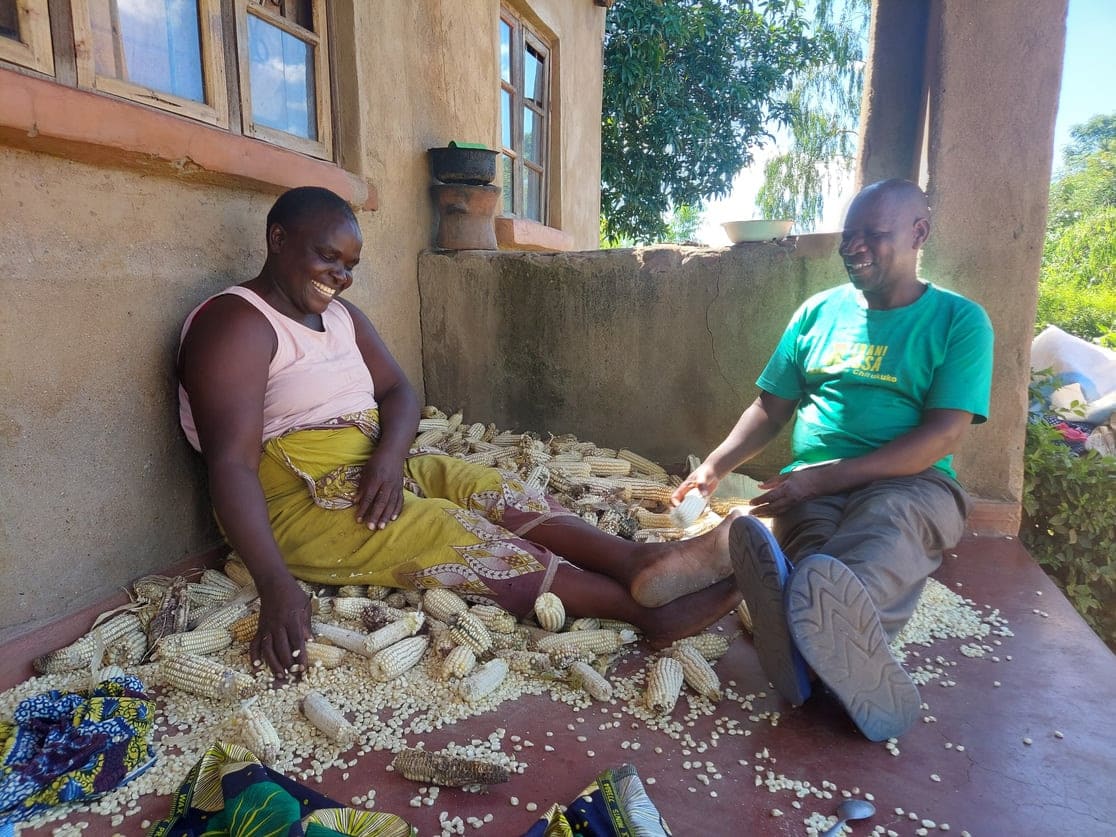
David and his wife, Lucy, with their harvest
“Every year, we harvested between 15 to 20 bags of maize, but even with all that, we could not develop our home,” said David. “We had three children in secondary school, so all our money went to their education. As parents, we chose to sacrifice for them, but we always wanted to do more.”
“We thought about starting a business, because farming is no longer reliable: the weather changes, and farm inputs like fertilizer are expensive. But we never had enough capital to start.
Then GiveDirectly came. With our transfer, we opened a small shop using K200,000 (~$115). At first, we sold simple things, like eggs, drinks, and bread. These were the items that people bought most. The business started well, and we were making K40,000-50,000 (~$23-29) a day.
We followed one important rule we were told by a friend: never keep money without restocking. Every day, we used the money to buy more goods: salt, biscuits, sweets, and more. The shop kept growing, and now we’re planning ahead. We want to build a proper shop structure.
We’ve already bought 22 iron sheets and 3 bags of cement. We are waiting for the rains to pass so we can mold bricks. We’e also planning to build two rental houses for students from a nearby secondary school.
We also want to buy livestock, goats, pigs, and cows, so that we can continue supporting our son who is still in school. For us, this money did not just start a business. It gave us a new path.”
All this for slightly over $800 per beneficiary. Hell of a benchmark, cash transfers.
More EA undergrads should do political volunteering. It's impactful AND fun.
Choose an election that's impactful (e.g. AI safety candidate) and neglected (e.g. primaries in always-blue/red places), couch-crash the weekend there, and volunteer with the campaign.
I say this after doing 15 hours of street canvassing myself. I was surprised by how anecdotally impactful and fun it was. If you like people-watching, talking to strangers, and/or joining passionate projects for a weekend, I think you'll also love this.
I wish I thought of this earlier.
Literature on the impact (Claude-generated): Kalla & Broockman's meta-analysis of 49 field experiments finds zero average persuasive effect in general elections, but effects do show up when voters lack a partisan cue (i.e. primaries and ballot measures). Mann & Haenschen (2024) find mobilization effects (e.g. canvassing) are 33-76% larger in low-attention races than in high-attention ones. Your marginal volunteer hour goes much further in a primary.
Cool news: Jesse Eisenberg donated a kidney to a stranger, and said it was after hearing a podcast on 'effective altruism' where they talked about kidney donations. He mentioned it in this podcast. I assume this might lead back to Dylan Matthews.
The UK is set to pass a law that bans the sale of tobacco to anyone born after 2008. Once the king signs it into law, the UK will become the second country in the world to introduce a generational smoking ban, after the Maldives did so last November. (New Zealand also considered such a ban a few years ago, but did not go through with it.)
Shoutout to LEEP for (being recognized for) their great work in South Africa !
I wrote a case study on the School for Moral Ambition's storytelling. I came to SMA from EA, and many of its ideas sounded familiar. What surprised me was how far a new organization got with them. It seemed to reach people EA rarely reaches, with much less pushback than EA tends to get. That's an impression I can't measure.
I think SMA rewrites the usual nonprofit cast. The reader is the hero, a system is the villain, and history is the judge. Every cause comes with a named opponent, like the tobacco industry or tax rules that favor billionaires, and the reader stays off the list of suspects. Its food explainer goes after intensive animal agriculture, and veganism doesn't come up.
Is an easier version of these ideas a fair price for reaching people EA never reached? I'm unsure. Pushback welcome, and suggestions for who to look at next.
https://annapit.substack.com/p/hero-villain-judge-how-the-school?r=2fkhlo