Comments
Thank you for all your hard work.
Moderating when the whole FTX thing went down must have been incredibly stressful!
Best of luck in your role with Foresight, hopefully you find that kind of work is a good fit!
Thank you for all your hard work.
Moderating when the whole FTX thing went down must have been incredibly stressful!
Best of luck in your role with Foresight, hopefully you find that kind of work is a good fit!
Thanks so much for all your contributions Lizka! :) I really appreciated your presence on the forum, like a friendly, alive, and thoughtful soul that was attending to and helping grow this part of our ecosystem.
Really interesting post Lizka - thanks a lot for writing and your reflections! I found the criticism parts quite useful. The reaction from Ben about your mistake is so wholesome - it’s definitely the kind of manager I aim to be! Running a community myself I found moderation surprisingly hard too. It seems very minor but the actual emotional experience of moderation turned out to be much bigger than I thought it would be. It can take days to resolve and comes out of nowhere - a very online community specific experience. Definitely can relate! Thanks for all your hard work on the Forum and good luck with your next role!
Thanks for all your great work Lizka. I learned a lot working with you- especially from the example of focus and dedication that you gave. I'd love to get a chance to work together again in the future.
Also- great post!
Thanks for your time Lizka! As someone who has shared a bunch of feedback on the forum, I appreciated your willingness to always engage and stay curious.
Moderation is one of important and invisible jobs where it's really hard to please everyone. i think you / the team did a really good job in what was probably the hardest period of time to be a mod on this forum.
Thanks so much for all your work Lizka!

TLDR: I’ve recently started as a “Research Fellow” at Forethought (focusing on how we should prepare for a potential period of explosive growth and related questions).
I left my role on the CEA Online Team, but I still love the Forum (and the Forum/CEA/mod teams) and plan on continuing to be quite active here. I’m also staying on the moderation team as an advisor.
➡️ If you were planning on reaching out to me about something Forum- or Online-related, you should probably reach out to Toby Tremlett or email [email protected].
I had some trouble writing this announcement; I felt like I should post something, but didn’t know what to include or how to organize the post. In the end, I decided to write down and share assorted reflections on my time at CEA, and not really worry about putting everything into a cohesive frame or narrative. So the result includes:

I’ve been focusing mostly on non-Forum-related projects[1] for some months now.
Earlier this year, I started exploring whether I should work on something else, and handing off most of my Forum-related responsibilities.
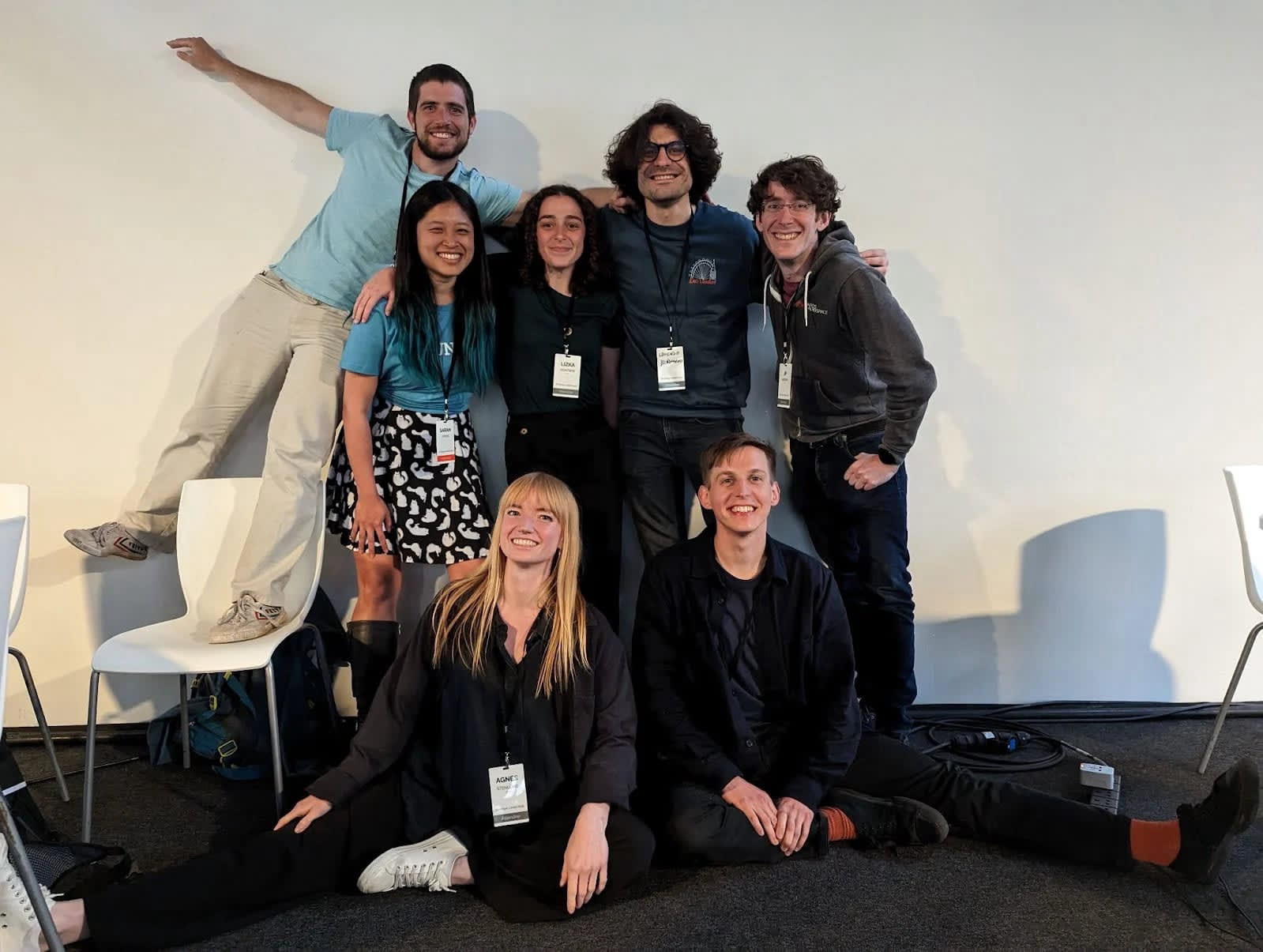
The Forum team now consists of @Sarah Cheng, @Agnes Stenlund, @Will Howard🔹, @JP Addison🔸, @Ollie Etherington, and @Toby Tremlett🔹, and moderation is being run by @JP Addison🔸 .
I ended up thinking that the best thing for me to work on was probably either a “Courses” program at CEA or research (or distillation) on (non-alignment) topics related to how society can prepare for transformative AI.
By default, this position is temporary, and I’m not really sure what I’ll be doing in the longer term. I hope to learn, explore new areas, and try new things, and then re-evaluate.[2]
I’ve left CEA, but I want to be clear that I’m still involved in EA, and I expect I’ll spend at least a bit of my time and energy on “meta EA” work.[3] I continue to think EA is one of the most promising positive forces in the world.
I’m also optimistic about CEA and the Online Team, and hopeful that they will nurture EA and support this community.
Separately, I’m also really grateful to the Online Team (and the rest of CEA), who’ve been incredibly supportive. I feel honored to have worked with them, and I’d be excited to work with them again in the future.

Meetings with my managers (@Amy Labenz, @Ben_West🔸, and @JP Addison🔸) helped me push forward complicated projects (and get better at project management skills in the process), stop worrying as much about things like minor mistakes, feel like I could do more ambitious things, and more.
I’ve also learned a lot by working in a team and adopting the practices and mindsets that I saw and liked. (I’ve written a bit about some of these things before, e.g. shipping fast and iterating, setting weekly goals, and the value of user interviews.)
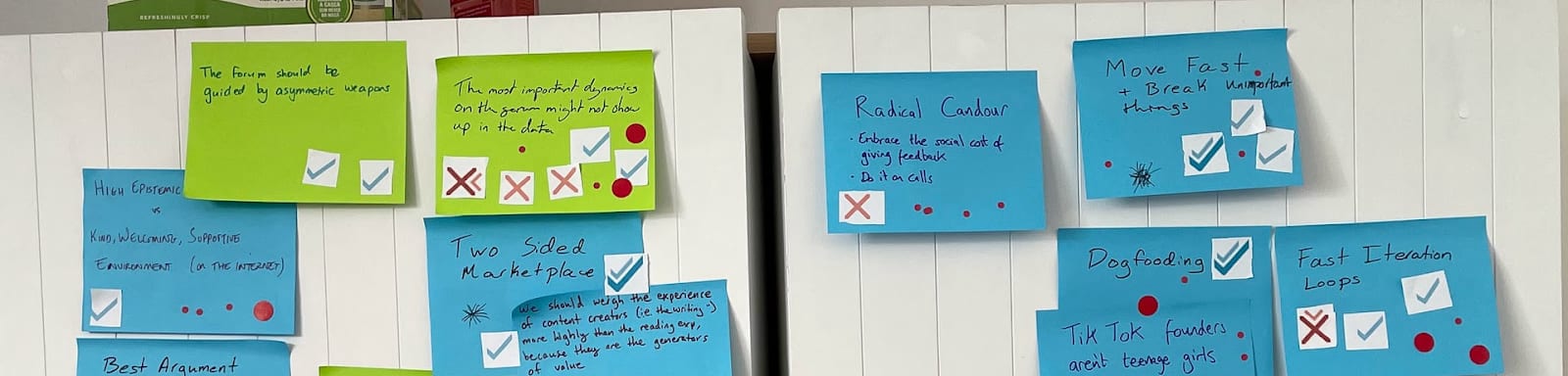
I’m instinctively somewhat snobbish about things that sound remotely corporate or pretentious, and I bet that my reaction when I first read them was something like “sounds good but probably just words.”
But I was impressed at how much I saw these values in practice at CEA. Some examples:
This sounds obvious, but I think that kindness is generally under-appreciated, and that people in EA are sometimes viewed — including by others in EA, at least implicitly — as “cold” (utilitarians). I personally was probably expecting that CEA staff would be polite, but extremely focused on their professional goals, at the expense of things like warmth, friendliness, and encouragement. This hasn’t been true for me, and I’m really grateful for that; it made me more motivated, and I think I become kinder when I’m surrounded by kindness and generosity.
Examples of what I mean:
Coworkers and strangers have reached out to me with messages of support, unprompted, because they guessed — based on e.g. an uptick in heated discussions on the Forum — that I might be having a rough time.[5]
People in this community set up random calls with cold-emailers because they think the call might help the person.[6]
The key downsides were probably:
(See also this Quick Take about criticism.)
To be clear, I think a lot of the underlying confusion is not these people’s fault (in fact, I was also pretty confused about what CEA is or does before I joined). But it sometimes made me feel defensive about CEA (or my decisions) and stressed out about what other people at CEA were doing.
Here are some examples:
My actions — including things like how I worded an announcement, what I included in a Forum Digest, or how I approached a moderation incident — were sometimes discussed as if they were part of a broader CEA plan to push the EA community in some particular direction. This was pretty weird for me. (A bit more in this footnote.[7])
In practice, the teams are pretty independent, staff generally make a lot of decisions on their own and often (strongly but almost always amicably) disagree with each other, and when CEA doesn’t do something, it’s generally because the relevant staff and teams don’t think it’s worth the CEA capacity or resources or just haven’t thought of it. (And I think that’s fine.[8])
For instance, the monthly EA Newsletter seems quite valuable, and I had many ideas for how to improve it that I wanted to investigate or test. But I was also running the Moderation and Facilitation teams, running the Forum Digest, supporting other Online projects, etc. Each of those things seemed worth prioritizing. I had a bit of capacity for bigger or more proactive projects, but that capacity was scarce and competition was tight, so I never prioritized doing a serious Newsletter-improvement project. (And by the time I was actually putting it together every month, I’d have very little time or brain space to experiment.[9]) Similar things happened with moderation, and to a lesser extent with some of my other projects.
It’s also notable to me that my current job (at least, so far) involves less than a tenth of the email and Slack volume that I faced at CEA.
I don’t know what exactly made moderation stressful, but here are some factors that played a role:
(More notes here, and some stats on moderation/facilitation here.)
While I’m talking about moderation, a shout-out: I’m extremely grateful to the other moderators. A special shout-out to @Lorenzo Buonanno🔸 and @Ben_West🔸, who were the only two active moderators (besides me) during what was, for me, the worst period on this front. I honestly can’t imagine what would have happened if they weren’t helping. I’m also extremely grateful for the moderators who are making sure the Forum works now.
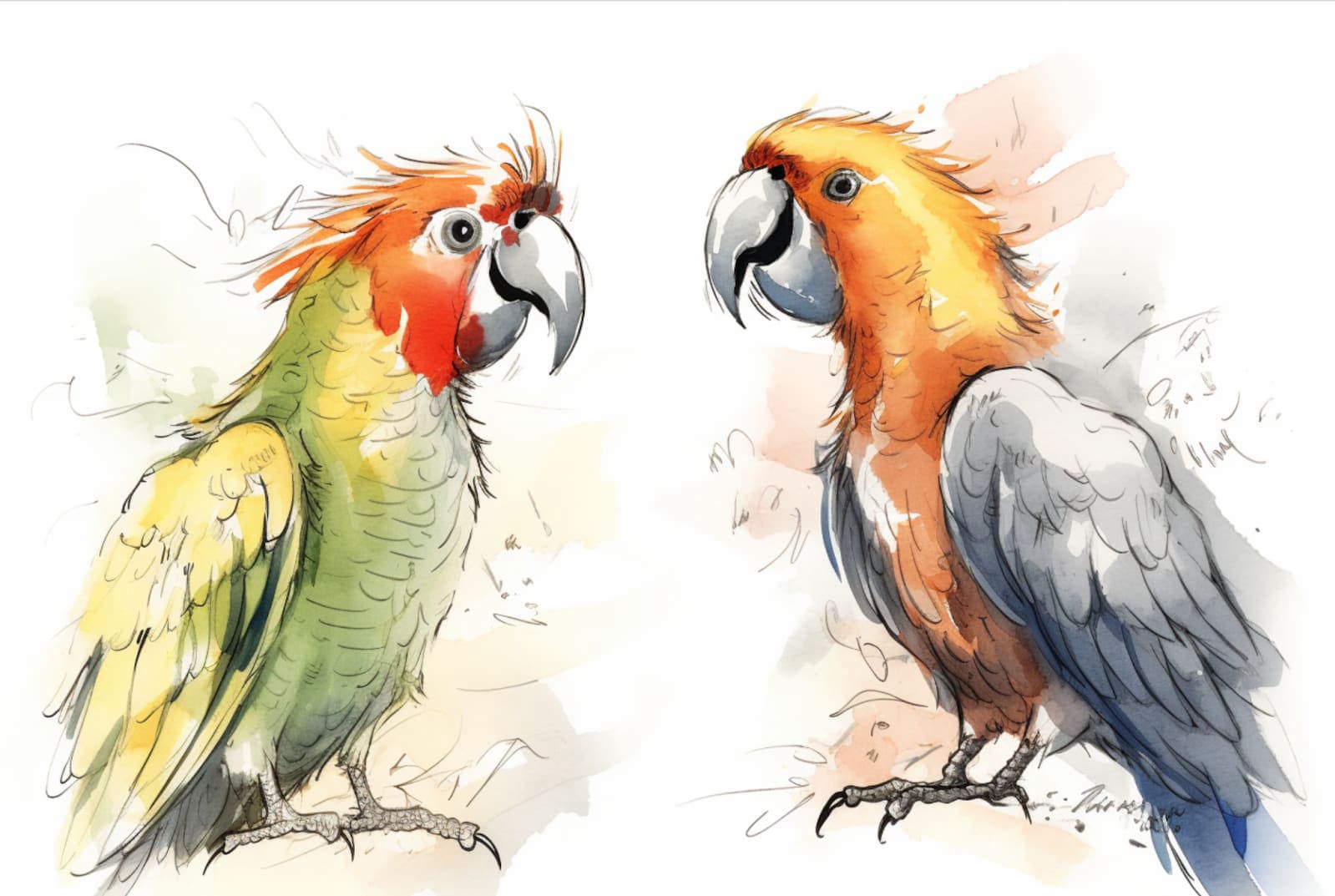
Besides projects listed below, here are a few things I’m proud of: I apparently published ~145 posts during my time at CEA — although a lot of these are admin-like posts or link-posts (if you want, you can see some of my “selected” posts here) — which I think is pretty cool.[11] I also learned and changed a lot over this period. And I made a bunch of EA-themed (and other) art.
Overview of my major projects on the Online Team
Note: this will have a decent amount of overlap with what I wrote in About my job: "Content Specialist".
People have sometimes asked me some version of “What even is there to do in the ‘Content Specialist’ role? Why does there need to be a role like this?” (usually more politely or euphemistically)
So I thought it might be useful to share quick notes on what I actually worked on:
I’m really grateful to my coworkers, to the wonderful mods and Forum facilitators, to the folks who’ve written thoughtful Forum posts and comments, and to many others I’ve interacted with over my time at CEA. I’ll be seeing many of you on this platform and around!
Also, thanks to Aaron, Jonathan, and others for giving feedback on a draft of this post!
This includes spending time on non-Forum-oriented projects for CEA, applying to various jobs, and more.
I wouldn’t be too surprised if I ended up back at CEA at some point.
I think it’s probably quite useful for people to do a mix of community-building and “direct” work — see also this post.
Spending a summer as a Research Fellow at Rethink Priorities (and being managed by @Linch) was my first exposure to how incredibly useful management can be. (My previous experience was limited and mostly in (math) academia.)
CEA turned me into a card-carrying member of the management-can-be-amazing society.
Imagine if it was normal to react to online drama by sending a compassionate email to the head moderator after guessing she might be sad.
In early 2021, I reached out to Aaron Gertler with a very timid email asking if he had any advice for someone who wanted to use writing or art skills to work on impactful projects. I mostly had the idea that my skills were useless because I was studying pure math and literature, and didn’t want to be an engineer or an economist. Aaron offered to have a call.
(We're now friends! It's not clear if there's a direct causal link here.)
One example that got discussed like this is the decision to add a “Community” section to the Frontpage. I know that some people thought it was motivated by a desire to reduce the visibility of criticisms of CEA (or other things in this genre). This wasn’t the case; I was one of the people most involved in the decision, and the reasoning was what is outlined here.
Another example: I’ve seen discussions that speculated that the Criticism Contest wasn’t actually interested in hard-hitting or foundational criticisms of EA — I am in fact interested in these, although I also believe they’re harder to do well[A] — and some discussions that assumed things about me or my intentions (as one of the people who ran it and wrote the announcement post) that were just straightforwardly not true.
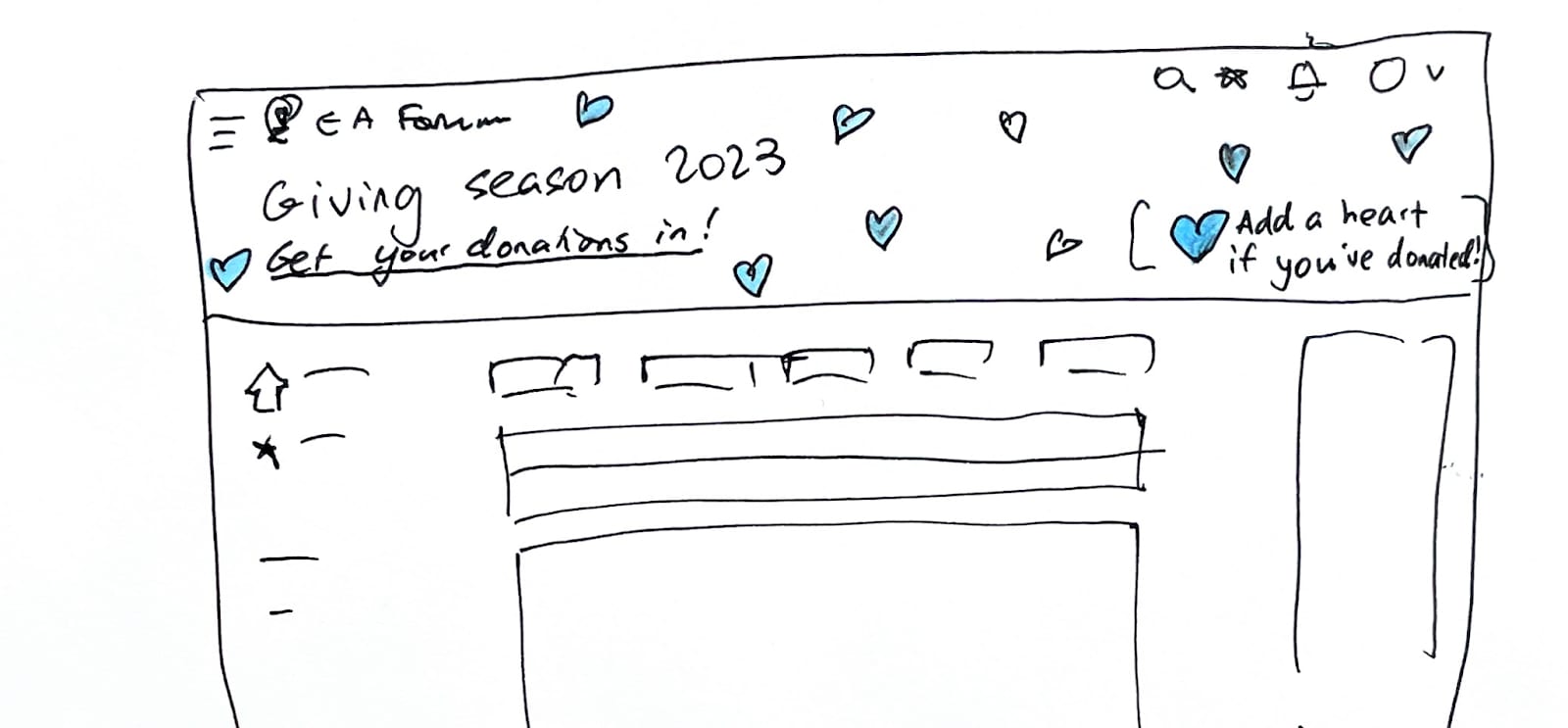
I might be forgetting something, but when I try to think of actions I took that I think could accurately be described as “part of a broader CEA plan to direct the EA community”, the closest thing that comes to mind is what I/we did for Giving Season on the EA Forum in 2023; various people at CEA, across different teams, had agreed that we should try to boost the visibility of “effective giving” in EA.
But this seems quite different in important ways.
Note that ascribing intentions to CEA staff is different from suggesting that they might be biased in some predictable way (e.g. in favor of projects they’ve worked on, or by virtue of being selected to work at CEA). I'm focusing on the former thing here.
[A] For what it’s worth, one example of a “fundamental” criticism of EA that seems potentially true (at least to an important degree) and important to me is related to this thread from Emmett Shear.
(I realize that it’s a bit absurd to include a footnote in a footnote. Oh well.)
IMO there are benefits to being on the opposite end of the decentralized-to-monolith spectrum (i.e. if CEA were an organization with a strong vision, where some central decision-makers fairly tightly control all outputs, etc.). But I also think there would be real downsides, and would personally prefer a version of CEA that’s closer to where it currently is.
I often felt like I was in a local maximum, but in a very narrow way; if I had a bit more wiggle room or slack I would be able to reach better maxima.
Moderation is often considered “inherently stressful,” but I know some folks who don’t seem to feel nearly as affected, and I want to be careful about extrapolating from my experience here. (Beware the typical mind fallacy!)
Most importantly, of course, it got me a lot of karma.


There's a lot in this post that I strongly relate to. I also recently left CEA, although after having worked for a much smaller period of time: only 6 months. To give some perspective on how much I agree with Lizka, I'll quote from the farewell letter I wrote to the team:
So I want to second Lizka's thoughts: I feel very honored to have worked with them.