I'm actively learning Spanish but am nowhere near fluency, would my presence be disruptive/counterproductive to community building goals?
To be clear, from my perspective this is a plus (since part of what's exciting to me is some foreign language immersion), but I wouldn't want to make folks feel like they needed to default to English.
Hi Alex, one of the goals of the fellowship is to give the opportunity to EAs in Mexico and LATAm to be in contact with the international community, so we are keeping in mind that English will be used commonly in the activities.
Also, as Pablo mentions in another comment, in the Spanish speakers' community we often have conversations in English, and the majority of the members are comfortable with both. So Non-Spanish speakers are completely welcome and, we will offer Spanish lessons for people interested in learning.
Do you intend most of the EA-related ‘technical and professional’ conversation to be in English or in Spanish? How likely do you think it will go either way?
Maybe worth having some 'recap discussions in Spanish' or a few Spanish-only sessions for the remaining 20%. I expect there are a good number of people who are comfortable in English but much more comfortable, much more efficient, and more willing to speak out in their native language.
I like Numbeo and have used it for various purposes, though in this case, looking at the indices for Mexico City as a whole might not be that informative, given a) how huge Mexico is and b) the fact that fellows would likely spend most of their time in the safest parts of the city.
True, but I think it gives a broader perspective rather than just homicides. Also to be fair, in comparing it to Chicago, EAs visiting Chicago also probably tend to stay in the wealthier and safer neighborhoods.
Anyways, I'm not trying to argue that CDMX is dangerous, I just like presenting balanced statistics.
Coincidence: I’m currently staying at this coliving space, so if anyone have any questions I’m happy to share. A few weeks in— it’s nice! Good location, good people, kind and welcoming staff. A few of the rooms have some noise issues with a nearby bar/club.
I'm so happy to see the EA community trying to increase la comunidad de EA para mi gente en Latino America!
However, a common criticism of EAs and the EA community seems to be showing up again. In the New Yorker piece on William MacAskill and EA, one of the criticisms was that EAs, like Sam Bankman-Fried, will live in luxurious areas (the Bahamas) and houses.
I recall a fellow EA telling me how when he temporarily lived in Peru, the country where my parents are from and I hold citizenship and share a strong culture, he lived in Mira Flores, an upper echelon of the capital where the wealthy and most fortunate reside.
I hope EAs in the fellowship err away from living in the aristocratic communities and instead try to live among the common, working-class (or middle-class) citizens of Mexico. Especially, if you plan on addressing issues in Mexico that affect the people.
Best of look on this fellowship! ¡Mucha suerte en los proyectos, hermanos y hermanas!
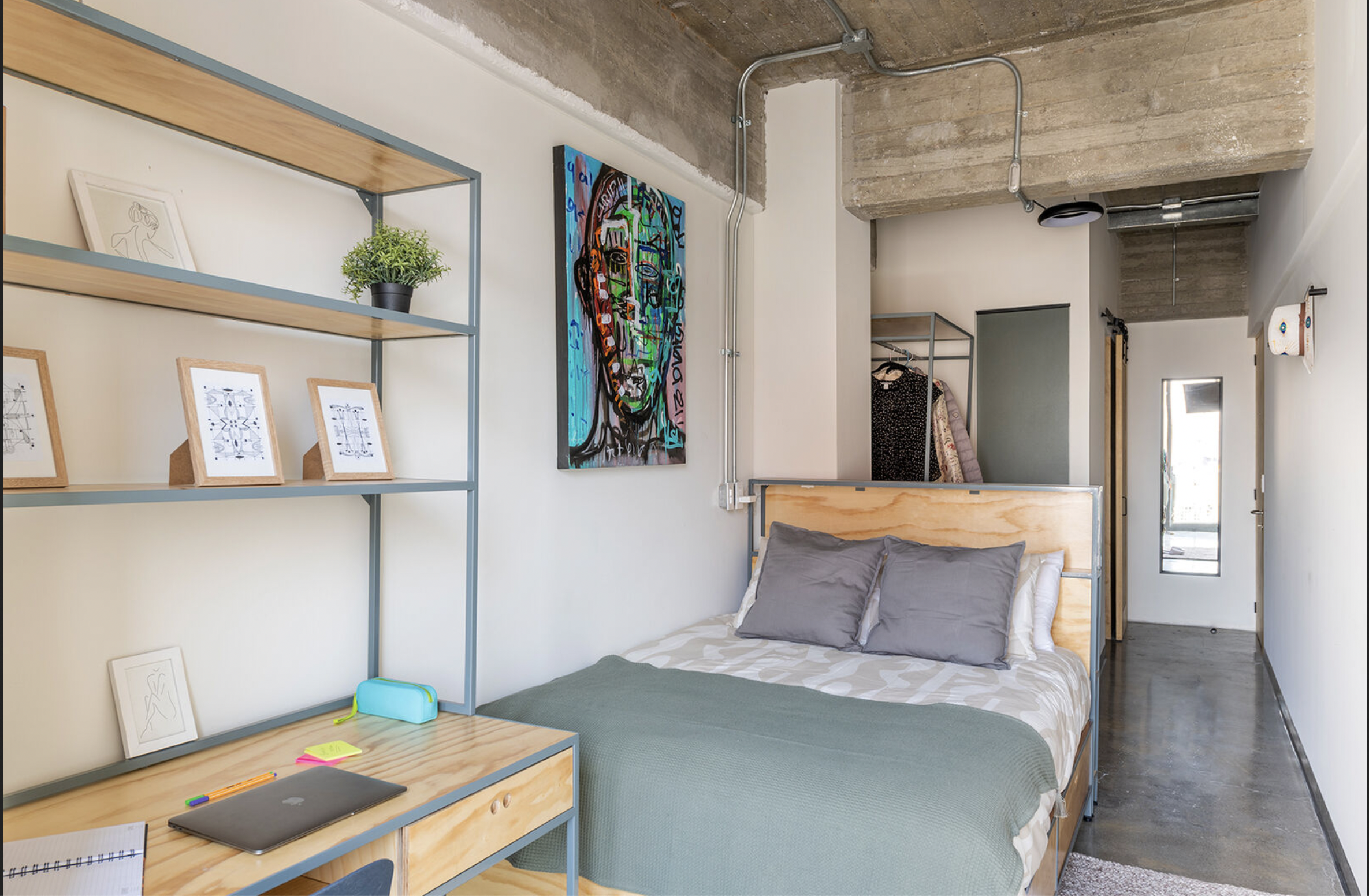
Hello Mati. Yes, the program is family-friendlyin but the accommodation is a hotel with austere rooms (as in the photo of the post). You can send an email to [email protected] so that they can give you more exact information on the type of accommodation options and if it adapts to the specific needs of your family.
I sent an email with a group application on September 18th (https://docs.google.com/document/d/1ERZ7spGHZYJjixaY3ln4eVxu_GKkOWqvB9rpz3Abd6M/), but still haven't received a reply; I hadn't used the Google Form given it was a group application -- Did you receive my application? :/
Manifold had an offsite in Mexico City recently. It has good public transit, lots of plants, low cost of living, and a big expat community (which we didn’t speak to much). I strongly recommend the city.
TL;DR: Come work remotely in Mexico City from November to January while you help us support the existing EA community! Sign up here.
We are excited to announce the 2022 EA fellowship program in Mexico City (CDMX). We will be hosting ~35 people at any given time from 1 November 2022 to 30 January 2023: including 20 permanent fellows for the whole duration, with the remaining 15 places reserved for rotating visitors.
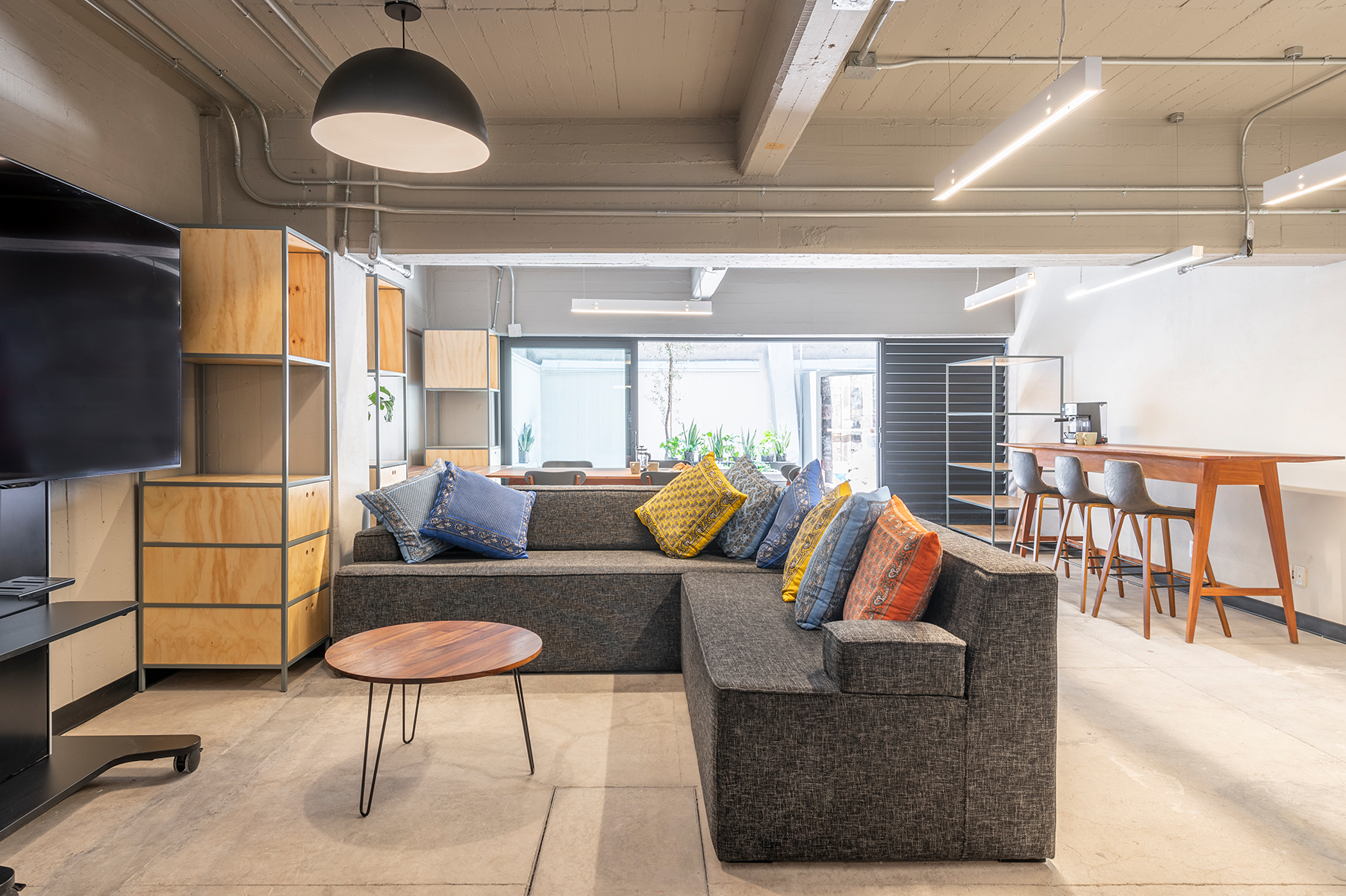
Living room in co-living space
The program will convene seasoned professionals from the international EA community and promising Spanish speakers. We believe this is an exciting opportunity to meet and support the community in Latin America!
This program is for EAs from all over the world, though we especially welcome Spanish speakers and people from underrepresented backgrounds. We think this will be especially exciting for people who can work remotely and want to try living in an EA hub.
You are welcome to apply as a fellow for the full length of the program (we will grant around 20 fellowships), or as a visitor between two to four weeks (with the option for those who apply for December to extend their stay until January 10 to attend the EAGx)
One of the goals of the fellowship is to give the opportunity to EAs in Mexico and LATAm to be in contact with the international community, so we are keeping in mind that English will be used commonly in the activities. In the Spanish speakers community, we often have conversations in English, and the majority of the members are comfortable with both. So non-Spanish speakers are completely welcome.
During the fellowship, we will support participants in their day-to-day lives. Accommodation and office space will be provided free-of-charge, near the center of the city. The coworking space is equipped with desks, chairs, and common areas. Breakfast and lunch will be provided for free during weekdays. We will organise some social activities for participants, potentially including dancing, Spanish classes, and community dinners. Also, we could offer travel support in some cases. Our goal is to keep everyone as productive and happy as they can be!
The accommodation we offer consists of a private room with a bathroom. The co-living space has several common areas such as a terrace, a patio, and a couple of living rooms.
Room
In exchange, we will ask fellows to take part in some community-building activities. Examples of such activities include talks at universities, mentorship of the younger fellows, and participating in camps for university students. We expect a commitment of 4-8 hours per month to this endeavor.
The program overlaps with the dates of EAGx LATAM 6, 7, and 8 of January 2023, also in CDMX. Fellows will be automatically invited!
You can apply to participate here. The last day to submit your application is 20th of September. Applications received before the 10th of September will be replied to by the 12th of September. The remaining applications will receive an answer by the 24th of September.
If you are already living in Mexico City or want to join us without accommodation can apply just for space in the coworking office here.
About Mexico City
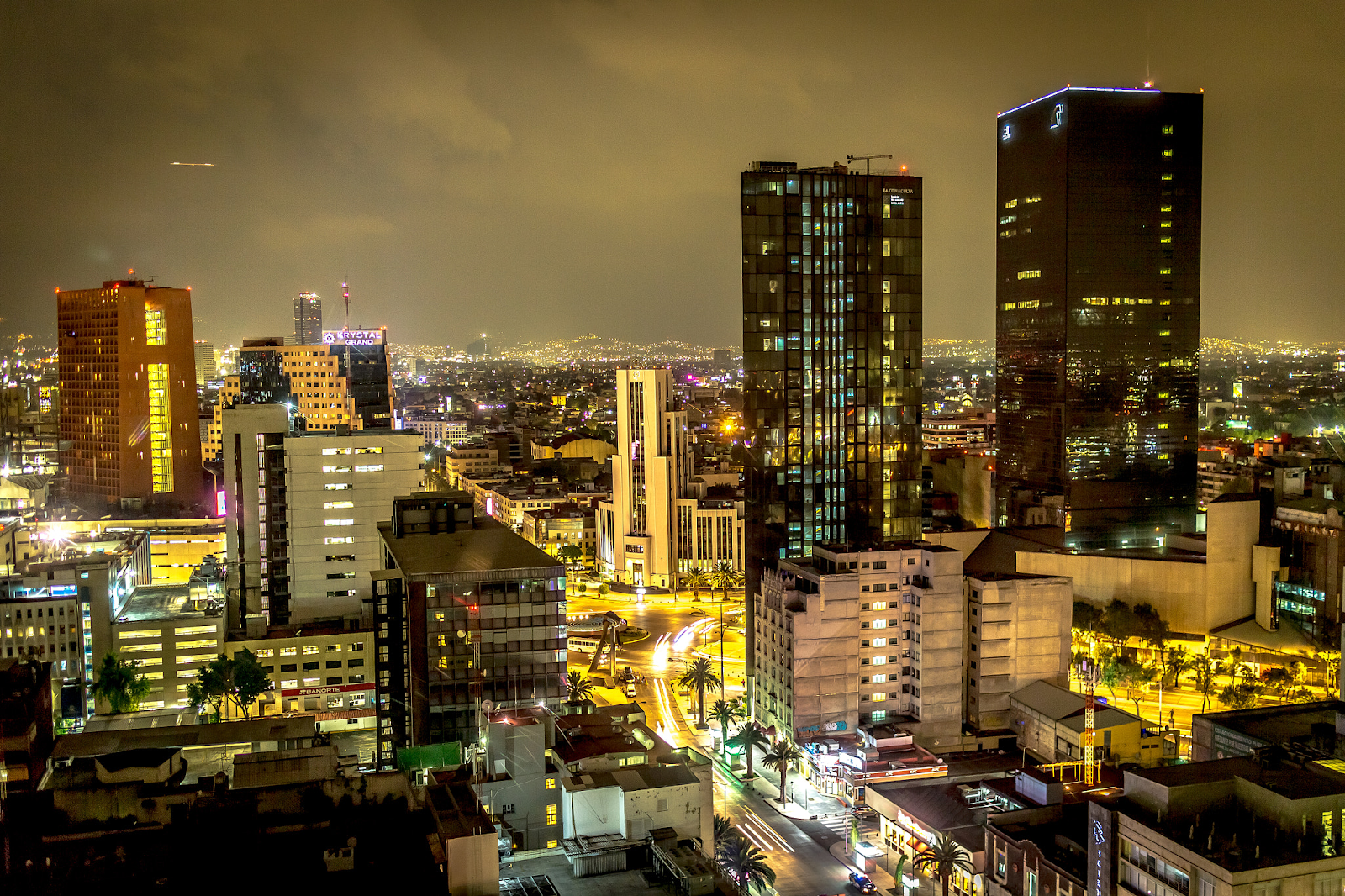
Mexico City is a friendly and vibrant city with many amenities and attractions.
Immigration to Mexico is relatively easy, and we expect participants from US, Europe, UK and most of LATAM to be able to enter the country and work remotely without requiring a visa. We will provide support and guidance to accepted participants who require a visa.
Food is cheap and varied, including many vegan options. Transport in the city is easy and cheap thanks to Uber and the underground network. Some people we spoke to about this program were concerned about the apparently high crime rate in CDMX. However, in reality the amount of crime in CDMX is comparable to US cities like Chicago or Los Angeles. None of the EAs living in the relevant areas of CDMX consider safety to be an issue[1].
A bigger downside is language. Only 10% of Mexico inhabitants speak English, though we expect the proportion to be higher in CDMX especially in the Universities and in the neighbourhoods where we will live and work.
In terms of violence (number of homicides per 100,000 residents), CDMX borough Cuahtémoc had a rate of 16.6, Miguel Hidalgo stood at 6.6 and Benito Juárez at 4.1. These numbers are comparable to Chicago (20.7 in 2018) or Los Angeles (6.4 in 2018). Even the most dangerous parts of CDMX are still safer than the top 35 most dangerous cities in the United States in 2019 (St. Louis being #1 with 64.5 and Savannah, Georgia being #35 with 16.61).
I was born at the end of the cold war, unaware of the danger we were emerging from. Duck and cover drills (as if those could protect schoolchildren from a nuclear blast) were a curiosity of the past.
The farmer-poet Wendell Berry, who wrote about the dread of nuclear war, died recently. From his 1968 “The peace of wild things”:
When despair for the world grows in me
and I wake in the night at the least...
Summary
Over the course of a year, the Fieldshaper program develops you into a field-leading grantmaker. You’ll steward $1,000,000 in grant capital, receive a $125,000 annual stipend, and deploy that capital within a sub-field of one of three key areas (farmed animals, global health, or philanthropic infrastructure); building the track record to become a grantmaker who can shape a field.
Role Details
* Title: Grantmak...


Out of curiosity, who's funding this program? (If that information is public).
Mexico EA Fellowship is an initiative sponsored by the FTX Future Fund Regranting Program. Information added to the post :)